
Match the following writers from Madhya Pradesh with their respective works: (a) Keshav Das (b) Bhawani Prasad Mishra (c) Padmakar (d) Mulla Ramuji; (i) Gangalahari (ii) Gulabi Urdu (iii) Gandhi Panchsati (iv) Kavipriya
- (a)(a)-(iv) (b)-(iii) (c)-(i) (d)-(ii)
- (b)(a)-(ii) (b)-(iv) (c)-(iii) (d)-(i)
- (c)(a)-(i) (b)-(ii) (c)-(iii) (d)-(iv)
- (d)(a)-(iii) (b)-(i) (c)-(iv) (d)-(ii)
Correct — A: (a)-(iv), (b)-(iii), (c)-(i), (d)-(ii). Keshav Das → Kavipriya: Keshavdas (c. 1555-1617), the acharya-poet of the Bundela court at Orchha, wrote Kavipriya as a treatise on poetics in Braj verse, alongside Rasikpriya and Ramchandrika. Bhawani Prasad Mishra → Gandhi Panchsati: the Hoshangabad-born modern Hindi poet, known for 'Geet Farosh' and 'Satpura ke Ghane Jangal', collected his Gandhian poems as Gandhi Panchsati. Padmakar → Gangalahari: Padmakar (Padmakar Bhatt, 1753-1833), the last great poet of the riti tradition, wrote Jagatvinod, Padmabharan, Himmatbahadur Virudavali, Ram Rasayan and Gangalahari. Mulla Ramuji → Gulabi Urdu: the Hindi humourist-satirist is remembered for Gulabi Urdu, his satire on the affected, Urdu-heavy Hindi of his day. One anchor decides the whole question: only option A pairs Keshav Das with Kavipriya.
- (b)(a)-(ii) (b)-(iv) (c)-(iii) (d)-(i) — Puts Keshav Das with Gulabi Urdu and Bhawani Prasad Mishra with Kavipriya — a four-century mismatch in both directions. Kavipriya is a riti-kaal work of about 1601; Gulabi Urdu is modern Hindi satire.
- (c)(a)-(i) (b)-(ii) (c)-(iii) (d)-(iv) — Hands Gangalahari to Keshav Das (it is Padmakar's), Gulabi Urdu to Bhawani Prasad Mishra, and Gandhi Panchsati to Padmakar — who died more than three decades before Gandhi was born.
- (d)(a)-(iii) (b)-(i) (c)-(iv) (d)-(ii) — Makes Keshav Das the author of Gandhi Panchsati, which is chronologically impossible, and moves Kavipriya to Padmakar. Only the last pair, Mulla Ramuji with Gulabi Urdu, survives.
This list quietly spans two very different eras of writing from the region. Keshavdas and Padmakar are Braj poets of the riti-kaal, court poets whose reputation rests on works of poetics and panegyric — Keshavdas at Orchha in Bundelkhand, Padmakar in the courts that patronised him a century and a half later. Bhawani Prasad Mishra and Mulla Ramuji belong to modern Hindi: the first a Gandhian poet of the post-Chhayavad generation from Hoshangabad, the second a humourist whose Gulabi Urdu mocked pretentious language. Once you sort the four names by period, half the wrong options fall away on chronology alone.
MPPSC match-the-following rarely needs all four pairs. Find the pair you are surest of, then eliminate. Here the safest anchor is Keshavdas-Kavipriya, a pairing MPPSC itself has tested more than once, and it appears in only one of the four options. If that anchor fails you, use the chronology test: Gandhi Panchsati cannot belong to a poet who died in 1833 or one who wrote in 1601, so any option that assigns it to Keshav Das or Padmakar is dead.
- Keshavdas (c. 1555-1617) — court poet of Orchha; Kavipriya, Rasikpriya, Ramchandrika, Ratnabavani
- Bhawani Prasad Mishra (1913-1985) — born in Hoshangabad (now Narmadapuram) district; 'Geet Farosh', 'Satpura ke Ghane Jangal', Gandhi Panchsati; Sahitya Akademi Award 1972 for 'Buni Hui Rassi'
- Padmakar (1753-1833) — late riti-kaal poet; Jagatvinod, Padmabharan, Himmatbahadur Virudavali, Ram Rasayan, Gangalahari
- Mulla Ramuji — Hindi humour and satire; remembered for 'Gulabi Urdu'
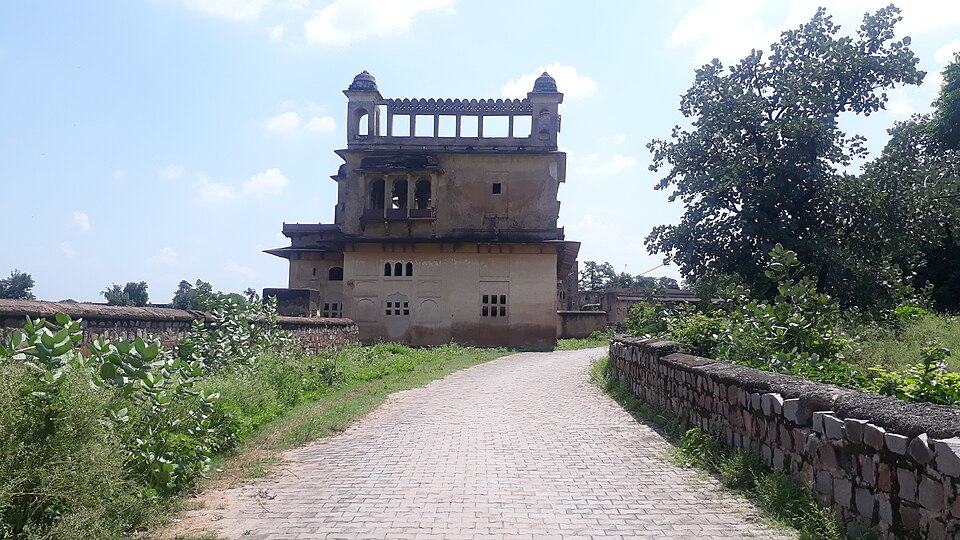
- Assuming every name in a match list belongs to the same century — this one mixes 1601 with the twentieth century
- Confusing Padmakar's Braj 'Gangalahari' with Jagannatha Panditaraja's Sanskrit 'Ganga Lahari'
- Assigning 'Ram Rasayan' to Keshavdas — MPPSC 2025 asked precisely this, and the answer is that he did not write it
MPPSC asks author-to-work in three shapes: a match list like this, 'whose famous work is X', and 'which pair is NOT correctly matched'. UPSC keeps to the same skill but with pan-Indian authors, so build a two-column list of writer and signature work and revise it in both directions.
Prem Vatika, poems on the life of Krishna, was composed by
- (a) Bihari
- (b) Surdas
- (c) Raskhan
- (d) Kabir
Answer(c) Raskhan
The same recall in UPSC's hands — attach a named Braj-Hindi work to the right poet, which is exactly what the Kavipriya and Gangalahari pairs demand.
Match List-I with List-II and select the correct answer using the code given below the Lists: List-I (Author) A. Bankimchandra B. Dinabandhu Mitra C. Premchand List-II (Work) 1. Shatranj Ke Khilari 2. Debi Chaudhurani 3. Nil-Darpan 4. Chandrakanta
- (a) A-2 B-4 C-1
- (b) A-3 B-4 C-2
- (c) A-2 B-3 C-1
- (d) A-3 B-1 C-4
Answer(c) A-2, B-3, C-1 — Bankimchandra wrote Debi Chaudhurani, Dinabandhu Mitra Nil-Darpan, and Premchand Shatranj Ke Khilari.
Identical question architecture — an author-to-work match list solved by anchoring on the one pair you are certain of and eliminating.
Whose famous work is “Ramchandrika”?
- (a) Padmakar
- (b) Bhushan
- (c) Keshavdas
- (d) Bhavabhuti
Answer(c) Keshavdas
Same two poets, same skill — MPPSC has already asked candidates to separate Keshavdas's corpus from Padmakar's.
Which of the following books was not written by Keshavdas ?
- (a) Ramchandrika
- (b) Kavipriya
- (c) Ratan Bavani
- (d) Ram Rasayan
Answer(d) Ram Rasayan
Tests the Keshavdas-Kavipriya link from the opposite side, one year before the 2026 paper reused it as the anchor pair.
- practice — not a real PYQ
'Kavipriya' and 'Rasikpriya' were composed by which poet of the Orchha court?
- (a)Keshavdas
- (b)Padmakar
- (c)Bhushan
- (d)Bihari
Answer(a) Keshavdas — the acharya-poet of the riti tradition at Orchha. - practice — not a real PYQ
The well-known Hindi poem 'Satpura ke Ghane Jangal' was written by:
- (a)Bhawani Prasad Mishra
- (b)Makhanlal Chaturvedi
- (c)Gajanan Madhav Muktibodh
- (d)Harishankar Parsai
Answer(a) Bhawani Prasad Mishra — the same poet who wrote 'Geet Farosh' and Gandhi Panchsati.