UPSC Current Affairs

13 topicsGS-1: 3GS-2: 1GS-3: 9
0/13 done
GS-3Economy

1.GDP Base Year Revised 2022-23 (GDP Base Year)

Indian Express

What & Where

GDP base year = benchmark year used to calculate constant-price GDP and growth rates

India shifting base year from 2011-12 to 2022-23; release slated 27 Feb 2026 by MoSPI

Revision aligns GDP, IIP (2022-23) and CPI (2023-24) datasets for national accounts

Quick Facts for MCQs

Timeline

  • EighthRevision follows series starting 1948-49→1960-61, last in 2015
  • 2017-18 plan scrapped due to PLFS, CES data issues, demonetisation, GST, Covid
  • 2022-23 chosen as post-pandemic normal year capturing GST and PLI effects

Rationale

  • StructuralShift includes digital services, gig work, renewables, drops obsolete industries
  • DataAccuracy gained via MCA-21, updated NSSO, SNA-2008 alignment
  • InflationNeutrality through updated price weights ensuring real-growth purity

Challenges

  • CorporateBias MCA-21 under-captures small firms, inflates large profit share
  • SingleDeflation may misstate manufacturing growth versus recommended double deflation
  • BackSeries reconstruction tough, risks political and analytical disputes

Reform Suggestions

  • HybridData merge MCA-21, ASI, NSSO, big-data from UPI, GST, EPFO
  • DoubleDeflation adopt separate output-input deflators, especially for manufacturing, agriculture
  • Transparency publish white paper, allow IMF-World Bank peer review, institutionalise 5-year updates

Key Data Points

FeatureData-Point
Present GDP base year2011-12
New GDP base year2022-23
Release date of revised series27 Feb 2026
IIP new base year2022-23
CPI new base year2023-24
Advisory panel size26 members
Advisory chairBiswanath Goldar
Last base change30 Jan 2015 (2004-05→2011-12)
Planned but dropped base2017-18
Ideal revision gap5-10 years
Previous revisions countSeven; upcoming is eighth
First national income committee1949, P C Mahalanobis
Services share in GDP≈ 55 %
Informal workforce share93 % (Eco Survey 2018-19)

Related UPSC Prelims PYQs

CAPF_GAI, GS1 2000PYQ 1

The new Gross Domestic Product (GDP) series released by the Central Statistical Organisation (CSO) in February 1999 is with reference to base price of

CAPF_GAI, GS1 2024PYQ 2

हाल के वर्षों में, निम्नलिखित में से कौन-सा, भारतीय अर्थव्यवस्था में, अवरोही क्रम में, माँग का स्रोत रहा है?
GS-3Infrastructure

2.FASTag Annual Pass Launch (Electronic Tolling)

Hindustan Times
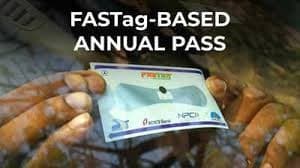
Illustration for FASTag Annual Pass Launch (Electronic Tolling)

What & Where

FASTag = RFID-based electronic toll collection active on National Highways, India

New Annual Pass: prepaid FASTag product for private non-commercial vehicles

Geography: valid across all NHAI toll plazas country-wide

Quick Facts for MCQs

Tech & Schemes

  • Sticker-based FASTag uniquely mapped to vehicle; non-transferable
  • Multiple procurement channels: banks, e-commerce, mobile apps, NHAI outlets

Economic Angle

  • Prepaid lump sum lowers per-trip toll for frequent users, incentivises highway travel
  • Reduced idle time cuts fuel wastage, aiding macro fuel import bill

Operational Benefits

  • Seamless RFID scan slashes queue length, congestion, dispute incidents at plazas
  • Cashless model pushes Digital India agenda, widens formal transaction footprint

Key Data Points

FeatureData-Point
Pilot launch2014, Ahmedabad–Mumbai corridor
Mandatory from15 Feb 2021 (all 4-wheelers)
Lead ministryMoRTH
Implementing agencyNHAI
Core technologyPassive RFID sticker on windshield
Payment linkPrepaid wallet / bank account
Annual pass cost₹3,000
Vehicle classCars, jeeps, vans (non-commercial)
Validity cap1 year or 200 trips, whichever earlier
Distance focusTrips between plazas < 60 km
Activation modeRajmarg Yatra app, NHAI/MoRTH websites
Roll-out date15 Aug 2024 (announced)

Related UPSC Prelims PYQs

CDS_GK 2023PYQ 1

भारतीय राष्ट्रीय राजमार्ग प्राधिकरण (NHAI) के बारे में निम्नलिखित में से कौन-सा कथन सही नहीं है?

GS-1Mapping

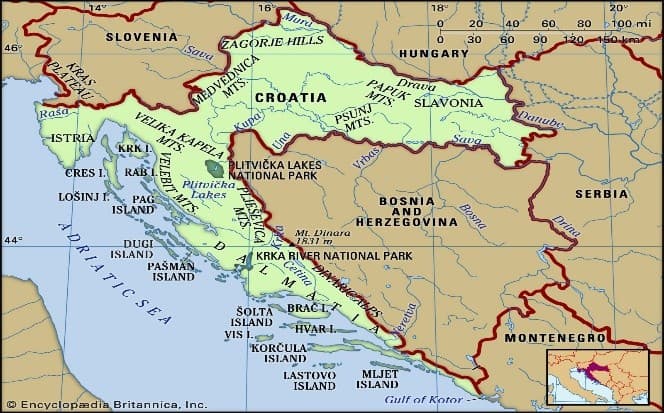
4.Croatia Geographical Snapshot (European Geography)

TW
Illustration for Croatia Geographical Snapshot (European Geography)

What & Where

Croatia: Central–Southeast European nation, eastern Adriatic coastline; capital Zagreb.

Strategic crossroads: maritime access to Mediterranean, land links to Pannonian Basin & Balkans.

News-hook: first-ever Indian Prime-Ministerial visit (part of post-G7 3-nation tour).

Quick Facts for MCQs

Physical Geography

  • Dinaric Alps shield Dalmatian coast; limestone karst, tourism potential.
  • Sava & Drava join Danube basin; hydro & transport significance.
  • Zagorje hills north of Zagreb: vineyards, orchards bolster agri-exports.

Neighbourhood

  • Landlocked borders give gateway to EU (Slovenia, Hungary) and Western Balkans (Serbia, Bosnia, Montenegro).
  • Adriatic frontage opposite Italy enables Trieste–Rijeka maritime corridor.

Bilateral Relations

  • 1992: India recognises newly independent Croatia; resident missions in Zagreb & New Delhi.
  • Regular Foreign Office Consultations; MoUs on defence, culture, science & tech.

Economic Angle

  • Shipyards (Rijeka, Pula) invite Indian investments under ‘Make in India–Make for Europe’.
  • Joint working group on green hydrogen, solar integration planned for 2024-25.

Key Data Points

FeatureData-Point
CapitalZagreb
Sea CoastEastern Adriatic
Neighbour StatesSlovenia, Hungary, Serbia, Bosnia-Herzegovina, Montenegro, Italy (maritime)
Highest PeakDinara, 1 831 m
Major RiversSava, Drava, Kupa, Una, Krka, Cetina
Key PlainPannonian
Diplomatic Ties with IndiaSince 1992
First Indian PM Visit2025 (current tour)
Core Trade ItemsPharma, engineering goods, chemicals
Emerging SectorsIT, shipbuilding, renewables

Related UPSC Prelims PYQs

GS1 2002PYQ 1

Consider the following countries:

GS-3Environment

5.UN Ocean Conference 2025 Initiatives (Ocean Conservation)

The Hindu

What & Where

UNOC-3 2025, Nice-France; platform for SDG-14 acceleration

One Ocean Finance: global blended-finance mechanism for blue economy & restoration

High Ambition Coalition for a Quiet Ocean: inter-state pact to curb underwater noise

Quick Facts for MCQs

Financial Mechanisms

  • Blended-finance tools de-risk private capital for ocean projects
  • Platform complements existing funds, channels billions toward ecosystems & coastal resilience
  • Targets blue economy transition, not limited to member-state contributions

Conservation & Biodiversity

  • Noise reduction aim: enhance marine species health and ecosystem resilience
  • Funding gap closure expected to boost restoration and protected-area coverage
  • Policies align capital with marine ecosystem protection mandates

International Cooperation

  • Open call for nations, investors, civil society under One Ocean Finance
  • Quiet Ocean coalition seeks harmonised regulations on ship noise & industrial activity
  • Both initiatives reinforce SDG-14 within broader UN ocean governance

Key Data Points

FeatureData-Point
UNOC edition3rd
Host city/yearNice, 2025
SDG-14 annual need≈ $175 billion
Present SDG-14 funding< $10 billion
One Ocean Finance leadUN multi-agency coalition
Finance approachInclusive, agile, scalable blended finance
Quiet Ocean foundersCanada & Panama
Current supporting states35
Primary pollutant targetedHuman-generated underwater noise
Science basisOne Ocean Science Congress inputs

Related UPSC Prelims PYQs

CAPF_GAI 2021PYQ 1

Which one of the following is the theme of the World Ocean Day, 2021?

GS-3Species

6.Gharial Conservation in Chambal (Gharial Conservation)

Times of India

What & Where

Conservation programme securing endangered gharial Gavialis gangeticus via captive rear-and-release

Core geography Chambal River, Etawah district, Uttar Pradesh; rearing hub Kukrail Centre, Lucknow

Operational since 1975; golden-jubilee observed on World Crocodile Day, 17 Jun 2024

Quick Facts for MCQs

Tech & Schemes

  • Artificial incubation maintains optimal temperature-humidity boosting hatch success
  • Marked juveniles released in protected river segments ensuring post-release monitoring
  • Rear-and-release mirrors Project Tiger’s translocation logic for genetic diversification

Community Participation

  • Fisherfolk engaged through alternative livelihoods reducing net entanglement deaths
  • Awareness drives promote gharial as river health indicator fostering local pride
  • Village committees assist nest guarding during peak laying season

Environmental Requirements

  • Pristine deep sandy river bends essential for basking and nesting
  • Low anthropogenic disturbance crucial as gharial highly riverine-specialist
  • Sand mining and bank erosion flagged as primary habitat threats

International Support

  • UNDP-FAO funding catalysed early infrastructure and staff training
  • Programme showcased globally as model for crocodilian recovery in developing nations
  • Data from project feeds into IUCN Crocodile Specialist Group assessments

Key Data Points

FeatureData-Point
Launch year1975
StateUttar Pradesh
River stretchChambal
Breeding facilityKukrail Gharial Rehabilitation Centre, Lucknow
Implementing bodiesUP Forest Dept + Society for Conservation of Nature
International supportUNDP & FAO
Key methodCaptive breeding with rear-and-release
Juvenile release age3–5 years
Egg sourceNatural nests collected in wild
Commemoration dayWorld Crocodile Day, 17 June

Related UPSC Prelims PYQs

GS1 2017PYQ 1

If you want to see gharials in their natural habitat, which one of the following is the best place to visit?

GS1 2013PYQ 2

Consider the following fauna of India:

GS-3S&T

7.Uranium Enrichment Process Explained (Nuclear Enrichment)

DH

What & Where

Definition: Uranium enrichment raises U-235 content from natural 0.7 % to reactor- or weapon-grade levels

Key processes: UF₆ conversion, ultrafast gas-centrifuge separation, multi-stage cascade concentration

Geography spotlight: Natanz & Fordo enrichment plants; Isfahan conversion/processing hub in central Iran

Quick Facts for MCQs

Process Flow

  • Conversion: Yellowcake → UF₆ gas for efficient isotope separation
  • Centrifugation: Spinning creates radial mass separation; lighter U-235 concentrates centrally
  • Cascade: Hundreds of linked stages incrementally boost enrichment

Key Sites

  • Natanz: Largest Iranian underground enrichment complex, target of multiple sabotage events
  • Fordo: Deep mountain facility, built for resilience against airstrikes
  • Isfahan: Handles uranium ore refining, UF₆ production, fuel-plate fabrication

Civilian Applications

  • Energy: LEU fuels ~440 commercial reactors worldwide
  • Medicine: Enriched uranium enables Mo-99, I-131 isotope generation for imaging & therapy
  • Research: TRIGA and other research reactors rely on ≤20 % enriched fuel

Security Dimension

  • Dual-use concern: Same centrifuges can swiftly shift from LEU to HEU production
  • Proliferation trigger: 60 % enrichment narrows technical gap to weapons-grade, raises regional tensions
  • Geopolitics: Israeli strikes aim to delay breakout timeline, preserve non-proliferation balance

Key Data Points

FeatureData-Point
Natural U-235 share≈ 0.7 %
LEU range3–5 % U-235
HEU (weapons-grade)≈ 90 % U-235
Iran’s current enrichment~60 % U-235
Centrifuge speed~70 000 rpm
UF₆ full formUranium hexafluoride
Electricity share (global)≈ 9 % from nuclear
Main medical outputDiagnostic & cancer isotopes

Related UPSC Prelims PYQs

GEO_GS 2025PYQ 1

Separation of the isotope of uranium requires a physical method rather than a chemical method. It is so mainly because

GS-3S&T

8.IIT-DRDO Quantum Secure Communication (Quantum Communication)

The Hindu
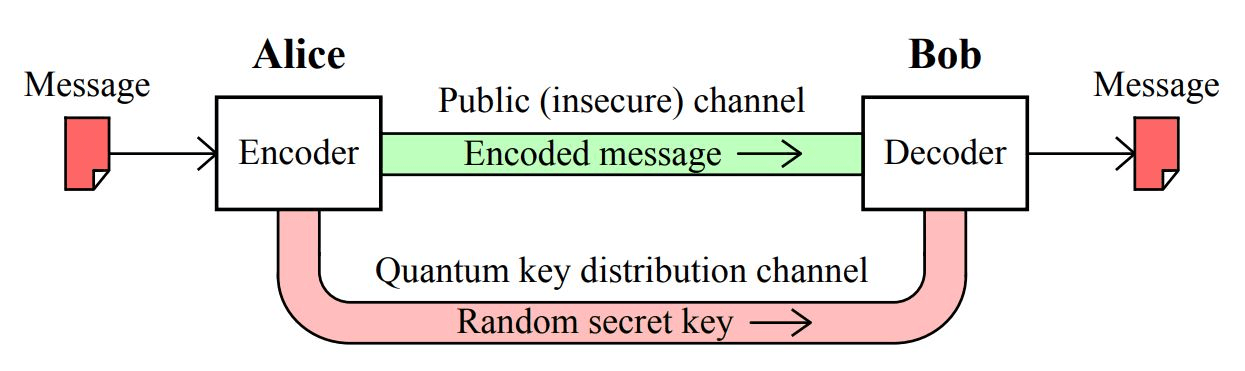
Illustration for IIT-DRDO Quantum Secure Communication (Quantum Communication)

What & Where

Concept: Entanglement-based Quantum Key Distribution secures photon-key exchange, flagging any eavesdropping.

Venue: IIT Delhi-DRDO demo over 1 km free-space link above Delhi campus.

Geography: Builds on fibre QKD links — Vindhyachal-Prayagraj (2022) and 380 km telecom route (2023).

Quick Facts for MCQs

Tech & Schemes

  • Hardware: Polarisation-entangled photon pairs withstand turbulence, detector noise, city lighting.
  • Support: National Quantum Mission funds satellite QKD, 4 Thematic Hubs, 50-1000 qubit computers.
  • Protocols: Prepare-and-Measure and Entanglement-Based QKD underpin post-quantum cryptography drive.

Security Dimension

  • Tamper-evident: Interception disturbs qubits, raising Quantum Bit Error Rate beyond threshold.
  • Defence: DRDO crafting quantum-resilient algorithms safeguarding strategic, satellite, banking communication.
  • Post-Quantum: SETS & C-DoT deploy PQC for FIDO, IoT, quantum-secure IP phones.

Milestones

  • 2022: First intercity fibre QKD Vindhyachal–Prayagraj using commercial cable.
  • 2023: 380 km standard telecom fibre QKD attained; QBER recorded 1.48 %.
  • 2025: 1 km free-space entanglement QKD demo, secure key 240 bps.

Key Data Points

FeatureData-Point
Demo distance1 km free-space
Secure key rate240 bps
Demonstration year2025
QKD variantEntanglement-based
First intercity fibre linkVindhyachal–Prayagraj 2022
Longest Indian fibre QKD380 km (2023, QBER 1.48 %)
Mission windowNQM 2023-24 to 2030-31
Satellite QKD target> 2000 km ground link

Related UPSC Prelims PYQs

CDS_GK, NDA_GAT 2024PYQ 1

Which one of the following is an ‘end-to-end secure mobile ecosystem’ developed recently by the Indian Army?

CDS_GK, NDA_GAT 2024PYQ 2

स्क्वायर (वर्ग) किलोमीटर एरे (SKA) परियोजना के संबंध में निम्नलिखित में से कौन-सा/कौन-से कथन सही है/हैं ?

GS-3S&TQuick Bite

9.Epigenetic Lamarckian Inheritance Discovery (Epigenetic Inheritance)

The Hindu

What & Where

Epigenetic cold-tolerance observed in Oryza sativa after deliberate low-temperature exposure.

Involves heritable gene-expression changes; underlying DNA sequence untouched.

Trait persisted across five laboratory-grown generations.

Quick Facts for MCQs

Evolutionary Debate

  • Lamarck 1809: use–disuse, environment molds inheritable traits; later eclipsed.
  • Darwin 1859: random genetic variation + survival of fittest drives evolution.
  • Mendel & Weismann: stable genes, no acquired-trait passage.

Key Experiments

  • Weismann: amputated mouse tails → normal-tailed progeny.
  • Brink: maize showed non-DNA sequence inheritance of gene expression.
  • 2025 rice study: cold-triggered epigenetic marks endure five generations.

Agricultural Angle

  • Cold-tolerant rice enables expansion into cooler latitudes, higher altitudes.
  • Epigenetic tweaks quicker, sidestep transgenic regulatory hurdles.
  • Stress pre-conditioning eyed for broader climate-resilient crop portfolio.

Key Data Points

FeatureData-Point
Validated conceptLamarckian inheritance via epigenetics
Biological mechanismChemical tags (e.g., DNA methylation) switch genes on/off
Test organismRice plant (Oryza sativa)
Induced traitCold tolerance
Heritability span5 successive generations
Classic refutation studyWeismann’s tailless mice, 1890s
First epigenetic inheritance reportRoyal Brink, maize, 1956
Key epigenetic hypothesisArthur Riggs, 1975
Dominant rival theoryDarwin’s natural selection, 1859
GS-3S&TQuick Bite

10.Hydraulic Systems Working and Uses (Hydraulic Systems)

The Hindu
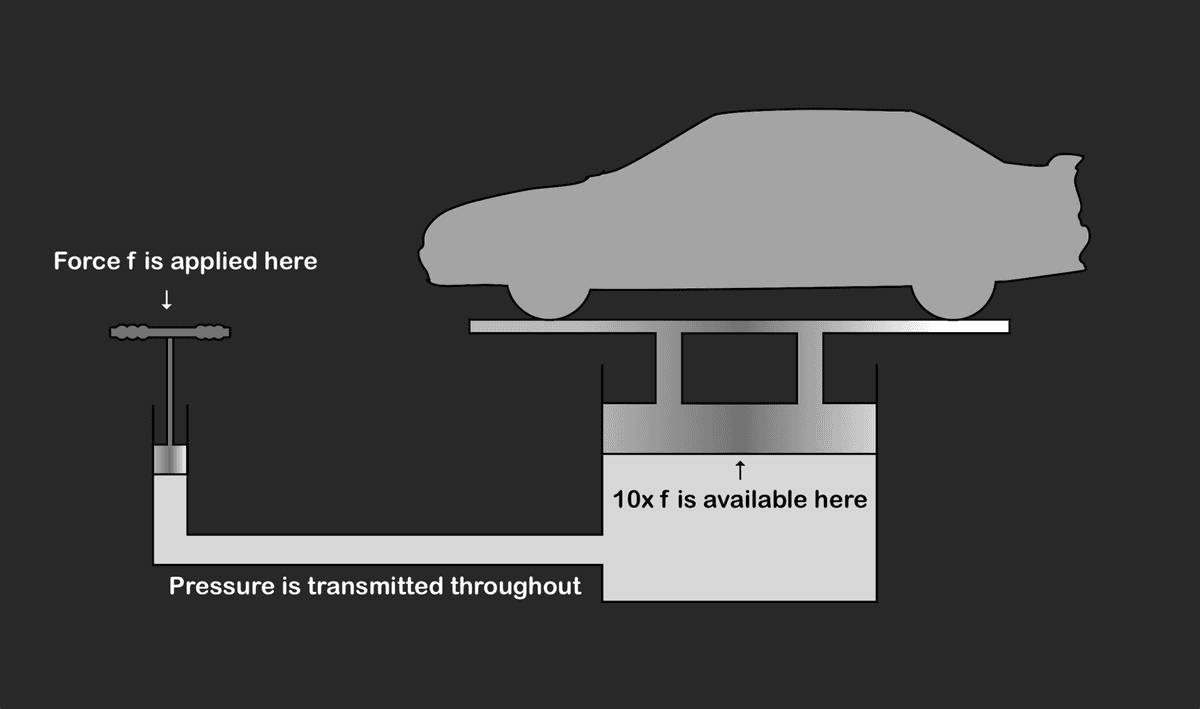
Illustration for Hydraulic Systems Working and Uses (Hydraulic Systems)

What & Where

Hydraulic system: closed circuit using incompressible fluid (usually oil) to magnify force between two pistons.

Works via Pascal’s law: externally applied pressure transmits uniformly, letting small input area deliver large output force.

Deployed in cranes, excavators, automotive brakes/clutches, aircraft landing gear, presses, lifts, farm tractors.

Quick Facts for MCQs

Physics Fundamentals

  • Pressure uniformity enables identical P across unequal areas, delivering mechanical advantage without extra energy.
  • Fluid incompressibility critical; air bubbles cause spongy response, reducing efficiency and precision.
  • Heat generated by viscous flow dissipates through reservoir and fluid circulation, safeguarding components.

Industrial Applications

  • Construction: excavators, bulldozers, tower cranes rely on cylinders, motors, pumps for boom, bucket, jib movement.
  • Automotive: hydraulic brakes multiply pedal force; clutches use slave cylinders for smooth gear shift.
  • Aviation & space: landing gear retraction, flight-control actuation, cargo-bay doors employ redundant hydraulic loops.

Performance Advantages

  • Power-to-weight ratio high, allowing compact actuators to lift multi-ton loads.
  • Motion smoothness superior to pneumatic or mechanical drives, aiding fine positioning tasks.
  • System modularity permits precise, remote, simultaneous control of multiple actuators via common pump.

Key Data Points

FeatureData-Point
Governing lawPascal’s law (1653)
Typical working fluidMineral or synthetic hydraulic oil
Pressure SI unitPascal = 1 N m⁻²
Core formulaP = F⁄A (pressure constant across system)
Force gainOutput/Input force = Output/Input piston area
Key benefitHigh power-to-weight ratio

Related UPSC Prelims PYQs

GEO_GS 2025PYQ 1

Why do we prefer to have a liquid and not a gas to be used as the fluid in a hydraulic machine?

GS-2Security

11.Operation Sindhu Evacuation Mission (Evacuation Mission)

Times of India

What & Where

Operation Sindhu: MEA-led air-evacuation of Indians from conflict-hit northern Iran via Yerevan (Armenia) to New Delhi.

Process: Embassy monitoring, land transfer to Armenia, chartered flight to India, 24×7 MEA control room support.

Geography: Departure—northern Iran; transit—Yerevan, Armenia; arrival—IGI Airport, New Delhi.

Quick Facts for MCQs

Security Dimension

  • Threat: Escalating Iran-Israel conflict prompting pre-emptive extraction of civilians.
  • Safety: Land corridor to Armenia avoids volatile Iranian airspace.
  • Monitoring: Continuous risk assessment by MEA & embassy teams.

Diplomatic Coordination

  • Bilateral support: Armenia provides transit entry & airport clearance.
  • Multilateral liaison: Indian embassies liaise with Iranian, Armenian authorities for permits, escorts.
  • Control-room integration: Real-time passenger tracking and consular assistance.

Comparative Operations

  • Continuity: Sindhu extends India’s playbook of yearly evacuation drives since 2020.
  • Distinction: First Indian mission using Armenia as staging ground.
  • Pattern: Naming convention mirrors rivers—Ganga, Kaveri, Sindhu—signifying national connect in crises.

Key Data Points

FeatureData-Point
Launching ministryMinistry of External Affairs (2025)
Supporting missionsIndian Embassies in Iran & Armenia
First flight details110 students, landed New Delhi
Core objectiveSafe evacuation of Indian nationals from Iran conflict zone
Evacuation routeIran ➔ Yerevan (Armenia) ➔ New Delhi
MEA facility24×7 control room, New Delhi
Priority groupIndian students in war-affected areas
Recent comparable missionsDevi Shakti, Ganga, Kaveri, Ajay, Vande Bharat

Related UPSC Prelims PYQs

CAPF_GAI, GS1 2023PYQ 1

‘Operation Kaveri’ is a rescue operation launched by the Government of India to evacuate Indian citizens who were stranded in:

CAPF_GAI, GS1 2007PYQ 2

What was the purpose of Operation Sukoon launched by the Government of India?

GS-3Security

12.Iran Fattah Hypersonic Missile (Hypersonic Missile)

ITV
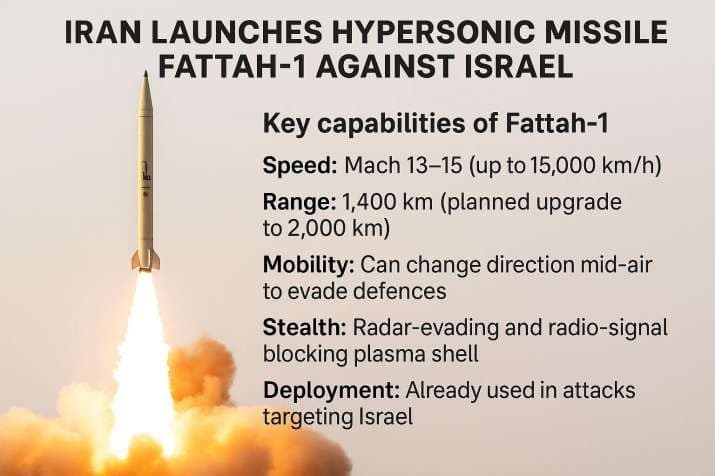
Illustration for Iran Fattah Hypersonic Missile (Hypersonic Missile)

What & Where

Fattah: medium-range hypersonic ballistic missile developed by Iran’s Islamic Revolutionary Guard Corps (IRGC).

Geography: Designed, produced and test-fired in Iran; showcased during recent Iran–Israel strikes.

Purpose: Precision strike capability that outmanoeuvres modern missile-defence nets such as Iron Dome.

Quick Facts for MCQs

Technical Specs

  • Solid-fuel booster enables quick launch and reduced logistical footprint.
  • Nose-cone glide vehicle allows sustained hypersonic flight within atmosphere.
  • Plasma layer dissipates heat while masking radar signature.

Security Dimension

  • Hypersonic speed plus erratic trajectory overwhelms layered defences like Iron Dome, Arrow-3 or Patriot.
  • Enhances Iran’s anti-access/area-denial posture in Persian Gulf and Levant.
  • Raises global arms-race concerns alongside Russian, Chinese hypersonic deployments.

International Examples

  • Russia fields Avangard boost-glide and Kinzhal air-launched systems.
  • China operationalised DF-17; North Korea tested Hwasong-8.
  • India–Russia joint BrahMos-II targets Mach 7+ capability under development.

Key Data Points

FeatureData-Point
DeveloperIRGC Aerospace Force
First unveiledNov 2022 (tribute to Hassan Tehrani Moghaddam)
Inducted2023 into IRGC arsenal
Speed bandMach 13–15 (≈ 15,000 km/h)
Stated range1,400 km; Fattah-2 aims 2,000 km
ManoeuvrabilityUp/down & lateral shifts, non-parabolic path
Stealth aidPlasma shield lowering radar cross-section, jamming radios
Warhead typeHypersonic glide vehicle on solid-fuel booster
Recent combat useIran’s 2024 retaliatory strikes on Israel
Comparable systemsRussia Kinzhal, China DF-17, USA ARRW, India BrahMos-II (dev)
GS-1Scheme

13.Performance Grading Index 2.0 Findings (School Education)

The Print
Illustration for Performance Grading Index 2.0 Findings (School Education)

What & Where

Definition Evidence-based index grading school education performance of all Indian States/UTs

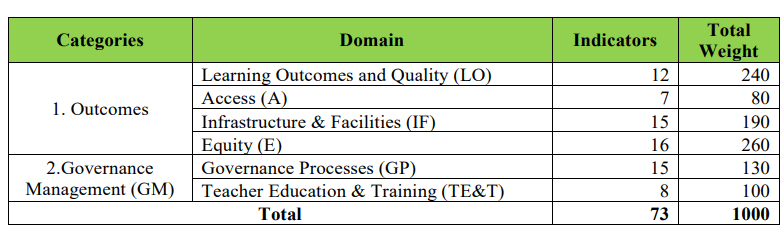
Mechanism 0-1000 score across 6 domains & 73 indicators, 10 bands from Daksh to Akanshi-3

Coverage 2022-24 cycles: Chandigarh highest 703 (Prachesta-1); Meghalaya lowest 417 (Akanshi-3)

Quick Facts for MCQs

Positive Trends

  • Improvement 24 States/UTs gained points post-pandemic strengthening
  • Infrastructure Delhi J&K Telangana upgraded toilets electricity digital rooms meeting NEP targets
  • Equity Gender parity and SC/ST enrolment gaps steadily narrowing

Persisting Gaps

  • Learning No State reached Daksh or Utkarsh in Learning Outcomes
  • Disparity 286-point gap between Chandigarh and Meghalaya underscores regional inequality
  • Decline 12 jurisdictions including Bihar Karnataka West Bengal saw score drops

Policy Focus

  • FLN Prioritise foundational literacy numeracy through NIPUN Bharat and Mission Bunyadi
  • Governance Scale UDISE+ dashboards, teacher training, transparent fund tracking
  • Infrastructure Ensure functional toilets labs libraries digital classrooms in aspirational districts

Key Data Points

FeatureData-Point
Launch year2017; upgraded as PGI 2.0
PublisherMinistry of Education, GoI
Policy alignmentNEP 2020 & SDG-4
Domains6 (Learning, Access, Infra, Equity, Governance, Teacher Ed)
Total indicators73
Grading bands10; Daksh = 951-1000 top
Top scorer 2023-24Chandigarh 703
Lowest scorer 2023-24Meghalaya 417
States improved (2023-24)24
States declined (2023-24)12
Odisha Access gradeDaksh
Score gap Top-Bottom~286 points

Related UPSC Prelims PYQs

CAPF_GAI, CDS_GK 2023PYQ 1

शिक्षा मंत्रालय द्वारा वर्ष 2020-2021 के लिए प्रकाशित प्रदर्शन ग्रेडिंग सूचकांक (PGI) में, निम्नलिखित में से किस राज्य/संघ राज्य-क्षेत्र का स्थान शीर्ष दस में शामिल नहीं है?

CAPF_GAI, CDS_GK 2022PYQ 2

Based on the scoring on SDG (Sustainable Development Goals) India Index, the NITI Aayog has classified various States into certain categories. Which one of the following is not one of the categories?

Ready to practice?

Test your knowledge with our UPSC test series.

Start Free Trial