UPSC Current Affairs

13 topicsGS-1: 2GS-2: 2GS-3: 9
0/13 done
GS-2Polity

1.Subordinate Judiciary Reforms (District Courts)

LiveMint
Illustration for Subordinate Judiciary Reforms (District Courts)

What & Where

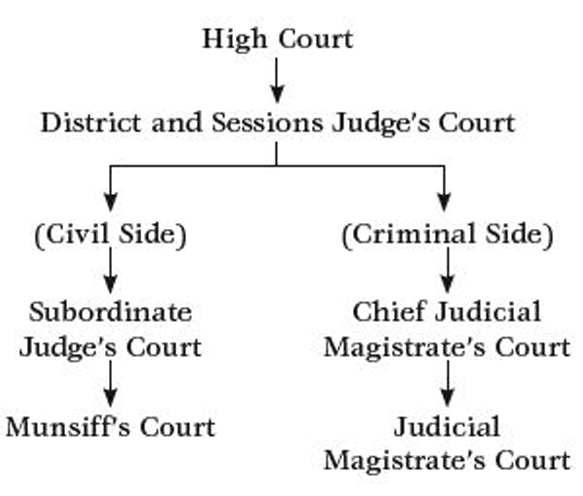
Subordinate courts = district & lower courts under High Court supervision; handle 87.5 % of India’s litigation.

Organised in three tiers: District & Sessions Court, subordinate civil/criminal courts, special courts (metro, small-causes, panchayat).

Constitutional anchor Articles 233-237, jurisdiction across all Indian states; appeals lie to respective High Courts.

Quick Facts for MCQs

Economic Angle

  • Backlog costs 0.5 % GDP yearly blocking ₹1.5 trn output
  • World Bank vacancy cut 25→15 % predicted to spur investment confidence
  • Case delays immobilise land, capital, labour and enlarge shadow economy

Legal & Policy

  • Articles 233-237 confer HC control over postings, promotions, leave of subordinate judiciary
  • Governor appoints district judges with HC concurrence; lower posts via PSC + HC consultation
  • Three-year practice prerequisite restricts pool; AIJS proposal seeks uniform, merit-based hiring

HR & Infrastructure Gaps

  • Vacancies make judges tackle 746 cases annually against ideal 200-300
  • Only 6.7 % courts women-friendly; lacks safety, lactation, childcare amenities
  • Decentralised recruitment yields uneven quality and slow vacancy resolution

Tech & Schemes

  • Fragmented e-Courts leads to hybrid filing and manual tracking bottlenecks
  • Proposed unified digital platform with AI analytics to prioritise backlog, enable paperless courts
  • Village Legal Kiosks and multilingual AI interfaces planned for rural assisted e-filing

International Examples

  • Singapore mandates pre-litigation mediation solving 80 % disputes outside court
  • Kenya reforms trimmed commercial case cycle 465→346 days boosting efficiency
  • Thailand and Brazil show digital case-management success with fully electronic proceedings

Key Data Points

FeatureData-Point
Subordinate-court caseload share87.5 %
Pending cases in district courts≈ 45 million
GDP drag from backlog0.5 % GDP ≈ ₹1.5 trn/yr
Judge vacancies (lower courts)5,388 posts
Avg. cases per Indian judge746/yr
Global best-practice load200–300/yr
Woman-friendly district courts6.7 %
Ease of Doing Business rank (2020)163rd
IMF growth gain if efficient+0.28 pp GDP per capita
Practice years needed for district judge3 years (current rule)

Related UPSC Prelims PYQs

CAPF_GAI, GS1 2004PYQ 1

Consider the following statements:

CAPF_GAI, GS1 2022PYQ 2

Which one of the following is correct in respect of the appointment of District Judges?
GS-3Economy

2.Inclusive National Pension Framework (Pension Reforms)

The Hindu

What & Where

Pension: Financial security post-retirement; income stream when earning capacity drops

Key-schemes: NPS, Atal Pension Yojana, Unified Pension Scheme across formal, informal, govt segments

India-stats: Assets 17 % of GDP vs 80 % OECD; only 12 % workforce covered

Quick Facts for MCQs

Demographic Pressure

  • Ageing: Old-age dependency forecast 30 % by 2050; mounting fiscal and social burden
  • Informality: 85 % workforce informal; majority excluded from pension nets
  • Growth-goal: Adequate pensions deemed vital for developed-economy ambition by 2047

Existing Schemes

  • NPS: Voluntary, market-linked; assets 4.5 % of GDP; covers 5.3 % population with APY
  • APY: 6.29 crore subscribers; 93.7 % opt ₹1k monthly due to affordability constraints
  • UPS: August 2024 launch; guarantees minimum ₹10k pension for government staff

Systemic Issues

  • Coverage-gap: Only 12 % workforce enrolled across schemes
  • Fragmentation: Multiple parallel designs raising administrative cost, user confusion
  • Adequacy-risk: Mercer index down to 34.2; asset-liability mismatch fears as demographics shift

Reform Proposals

  • Tiered-framework: Basic mandatory flat pension; employer plans opt-out; voluntary top-ups
  • Auto-enrol: Behavioural nudges akin UK; default contributions unless worker opts out
  • Tech-push: UPI-enabled payments; mobile apps for onboarding and tracking

Gender & Inclusion

  • Women-uptake: Female APY share rose to 52 % FY24, overtaking males
  • Child-focus: NPS Vatsalya extends coverage to minors, fostering early financial literacy
  • Literacy-drive: Embed superannuation education in schools modelled on Australia

Key Data Points

FeatureData-Point
Pension assets/GDP17 % (India)
OECD benchmark80 %
Workforce coverage12 %
Old-age dependency 205030 %
Informal workforce share85 %
APY subscribers FY246.29 crore; 93.7 % pick ₹1k option
Mercer Adequacy Index 202434.2 (41.9 in 2023)

Related UPSC Prelims PYQs

ESE_GS, GS1 2022PYQ 1

Which one of the following statements is NOT correct regarding the Pension Fund Regulatory and Development Authority (PFRDA)?

ESE_GS, GS1 2017PYQ 2

Who among the following can join the National Pension System (NPS)?

GS-3Economy

3.Tea Board of India Functions (Tea Regulation)

The Hindu
Illustration for Tea Board of India Functions (Tea Regulation)

What & Where

Tea Board of India: statutory regulator (Tea Act 1953) for cultivation, marketing, R&D of Indian tea.

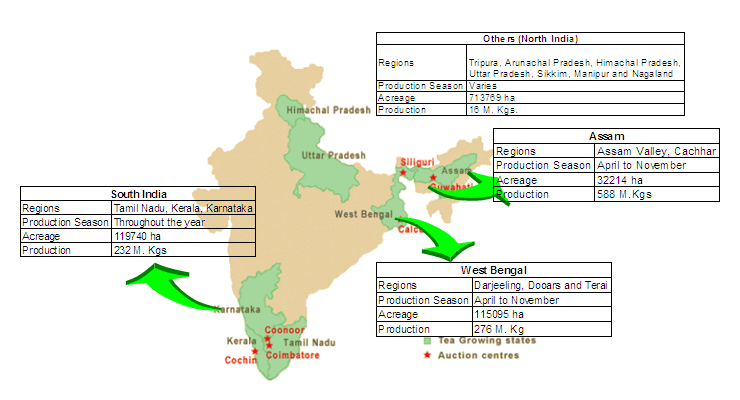
Production hub: Assam & West Bengal dominate national output; Dooars, Terai, Darjeeling key sub-regions.

2024 alert: deficient rains may cut Assam output 40 %, West Bengal 23–50 %.

Quick Facts for MCQs

Legal & Policy

  • Statutory; Board extends financial, technical, marketing support and drives R&D.
  • Composition; MPs, producers, traders, brokers, consumers, state reps, unions integrated.
  • Network; 23 zonal/​regional/​sub-regional offices operational nationwide.

Agro-Climatic Needs

  • Temperature; growth stunted below 10 °C or above 35 °C.
  • Soil; slightly acidic, well-drained porous sub-soil essential.
  • Climate; hot, humid tropical–subtropical belt delivers optimum yields.

Production Outlook

  • Deficit; Uneven 2024 rainfall to slash Assam output ~40 %, West Bengal 23–50 %.
  • Beverage; Tea second most consumed worldwide, anchors North-East rural economy.
  • Consumer; Domestic demand absorbs ~30 % global output, moderating export shocks.

Health Angle

  • Antioxidants; Polyphenols neutralise ROS, lowering cancer and infection risks.
  • Iron binding; Tannins curb non-heme iron absorption, heightening anaemia threat.
  • ICMR; Recommends caffeine moderation to avoid dependence and CNS stimulation.

Key Data Points

FeatureData-Point
Establishment (origin)Indian Tea Cess Bill 1903
Present legal basisTea Act 1953; operative 1 Apr 1954
Parent ministryCommerce & Industry
Board strength31 members including Chairman
Reconstitution intervalEvery 3 years
Head officeKolkata, West Bengal
Ideal temperature20–30 °C
Annual rainfall need150–300 cm, well distributed
Soil preferenceSlightly acidic, porous, calcium-free
India’s global rank2nd producer, largest consumer (~30 % world output)

Related UPSC Prelims PYQs

GS1 2022PYQ 1

With reference to the “Tea Board” in India, consider the following statements:

GS1 2008PYQ 2

Match List-I with List-II and select the correct answer using the code given below the Lists:

GS-1Environment

4.Lightning Strikes Phenomenon (Lightning Hazard)

TW
Illustration for Lightning Strikes Phenomenon (Lightning Hazard)

What & Where

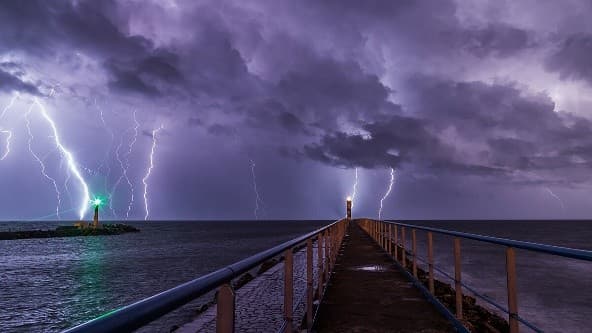
Lightning — sudden electrostatic discharge inside or between clouds or cloud-ground, producing flash and thunder

Process — charge separation in cumulonimbus, earth surface positive, field exceeds air insulation, discharge equalises charges

Indian hot-spots — Bihar, Jharkhand, Odisha, West Bengal, Assam; parts of MP, Chhattisgarh, Maharashtra, hill belts

Quick Facts for MCQs

Hazard Profile

  • Mortality — leading weather killer after heatwaves, high rural exposure
  • Livelihood impact — crop loss, labour downtime, climate vulnerability multiplier

Tech & Schemes

  • Infrastructure — Lightning Detection Network plus Doppler radars provide strike mapping
  • Digital tools — Damini app pushes location-specific warnings, multilingual interface
  • Governance — NDMA guidelines urge risk zoning, shelters, data sharing

Recent Incident

  • Bihar 24-hr strikes killed 13 persons, government issued ₹4 lakh relief each
  • Advisory issued urging compliance with safety protocols during thunderstorms

Key Data Points

FeatureData-Point
Peak plasma temperature~50,000 °F
Annual India deaths>2,000
Damini alert lead-time≈40 min
Lightning Resilient India goal80 % death reduction
Common victim groupFarmers & outdoor workers
IMD nowcast window2–3 hours
Ex-gratia Bihar (Jun-24)₹4 lakh per fatality
Main discharge typesCloud-cloud, intra-cloud, cloud-ground
GS-1Mapping

5.Strait of Hormuz Chokepoint (Strategic Strait)

Times of India

What & Where

Strategic maritime chokepoint linking Persian Gulf with Gulf of Oman & Arabian Sea.

Only 33 km wide at narrowest; busiest global oil/LNG corridor.

Borders: Iran (north), UAE & Oman’s Musandam exclave (south).

Quick Facts for MCQs

Geographical Features

  • Width: Narrowest 33 km, widest 95 km; shipping lane 3 km each way.
  • Islands: Qishm, Hormuz, Hengam provide military and navigational leverage.
  • Borders: Iran, UAE, Omani Musandam control surveillance choke points.

Energy Significance

  • Oil: ~20 % of world supply, 20 mn bpd transits daily.
  • LNG: ~30 % of global cargo, predominantly from Qatar.
  • Chokepoint: Blockade, cyberattack or collision can spike global prices.

India Angle

  • Imports: 85 % crude, ~50 % LNG for India pass via Hormuz.
  • LNG Source: Qatar meets 80 % of Indian LNG demand through this route.
  • Operation: Navy’s Operation Sankalp escorts Indian-flagged vessels since 2019.

Key Data Points

FeatureData-Point
Narrowest width33 km
Widest width95 km
Total length~167 km
Shipping lane per direction3 km
Islands insideQishm, Hormuz, Hengam
Share of global oil flow≈20 % / 20 mn barrels day
Share of global LNG flow≈30 %
Indian crude via strait≈85 % of imports
Indian LNG via strait≈50 % of imports
Qatar share of India’s LNG≈80 %
Indian naval missionOperation Sankalp (2019–)
GS-3Scheme

6.Revised Green India Mission (Afforestation Mission)

Indian Express
Illustration for Revised Green India Mission (Afforestation Mission)

What & Where

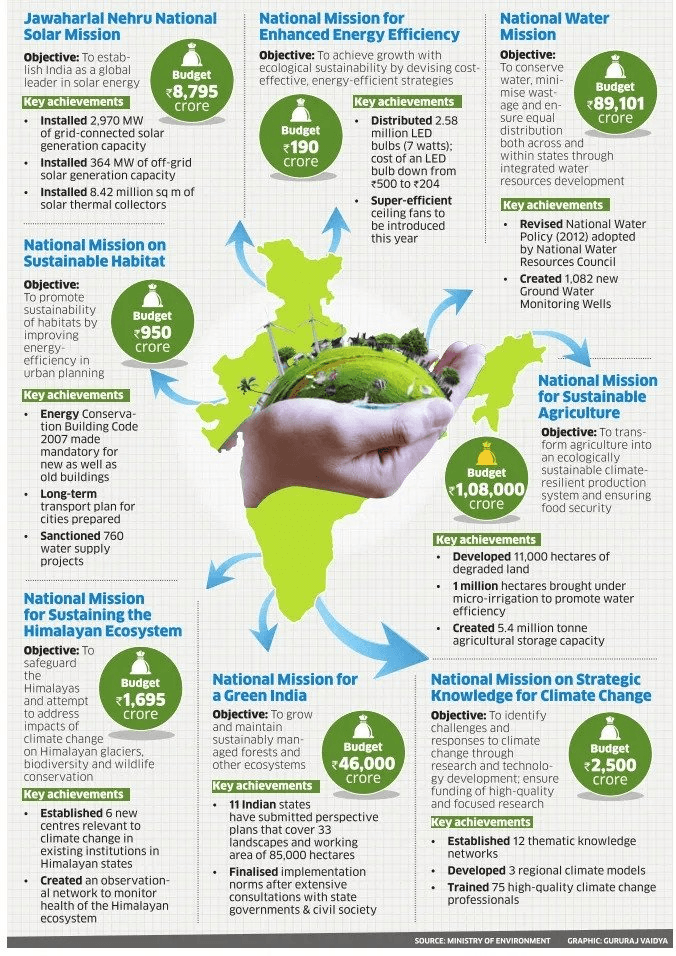
Green India Mission (GIM): forest-centric climate mission under India’s 2008 NAPCC, launched 2014, revised plan 2021-30.

Primary process: afforestation + ecosystem restoration for carbon sink & adaptation.

Focus landscapes: Aravallis, Western Ghats, Indian Himalaya, coastal mangroves, arid northwest.

Quick Facts for MCQs

Legal & Policy

  • Alignment: revised GIM dovetails with India’s NDC under Paris Agreement.
  • CAMPA law offsets diversion; 90 % funds flow to States.
  • Convergence allowed with MGNREGS, Bamboo Mission, CSR.

Targets & Monitoring

  • Afforest/restore 24–25 mha, sequester up to 3.39 billion t CO₂ by 2030.
  • 5-tier M&E: national GIS cell, self-checks, Gram Sabha audits, FSI satellites, third-party reviews.
  • Sub-missions trimmed to 3 for sharper focus on quality & livelihoods.

Implementation Challenges

  • Funding gaps persist despite CAMPA inflows.
  • Invasive species plantations dilute ecological gains.
  • Protection of old-growth forests remains inadequate.

Key Data Points

FeatureData-Point
Revising authorityMoEFCC, 17 Jun 2025
World Day theme 2025“Restore the Land. Unlock the Opportunities”
UNCCD adoption year1994
GIM original launchFeb 2014
Revised plan window2021-2030
NAPCC missions count8
Core carbon-sink goal2.5–3 billion t CO₂-eq by 2030
Total area targeted24–25 mha (convergence); 1 mha via GIM
Past plantations (2015-21)11.22 mha
National forest-cover aim33 % of land
Revised sub-missions3 (quality, restoration, livelihoods)
Monitoring layers5-tier incl. GIS dashboard, FSI, social audit
CAMPA fund share to States90 %
Urban greening schemeNagar Van Yojana 2020
Afforestation programme mergedNAP (2000) into GIM

Related UPSC Prelims PYQs

CAPF_GAI, GS1 2016PYQ 1

Which of the following best describes/describe the aim of 'Green India Mission' of the Government of India?

CAPF_GAI, GS1 2025PYQ 2

Which of the statements given below is/are correct?

GS-3Environment

7.International Big Cat Alliance (Big Cat Conservation)

LiveMint
Illustration for International Big Cat Alliance (Big Cat Conservation)

What & Where

Definition Multinational alliance led by India to conserve seven big-cat species across their global ranges

Geography HQ and permanent secretariat in India; 95 potential range countries across Asia, Africa, Americas

Coordination National Tiger Conservation Authority, Ministry of Environment, Forest & Climate Change, GoI

Quick Facts for MCQs

Governance & Structure

  • Presidency India’s Environment Minister unanimously elected first IBCA President
  • Secretariat India hosts HQ under Headquarters Agreement signed 2025
  • Decision-making General Assembly of member states; NTCA acts as coordinating secretariat

Membership

  • Range nations 95 eligible where any covered species naturally occurs
  • Non-range UN states allowed via diplomatic Note Verbale
  • Early joiners Bangladesh, Nigeria, Peru, Ecuador among first 25 members

Finance

  • Seed-fund India committing ₹150 crore for 2023-28 setup and capacity building
  • Resource pool Plan to mobilise global financial, technical, institutional support for low-resource members
  • Technology uptake Funds channelled for advanced surveillance, anti-poaching tech, habitat restoration

Functions & Activities

  • Repository Collects proven conservation strategies, scientific studies for scalable adoption
  • Capacity building Conducts trainings, technical workshops, institutional exchanges among members
  • Enforcement support Shares data, intelligence to tackle poaching and illegal wildlife trade

Key Data Points

FeatureData-Point
Launch yearMarch 2024
Covered speciesTiger, Lion, Leopard, Snow Leopard, Cheetah, Jaguar, Puma
Eligible range countries95
Members joined by Sep 202425
First General Assembly16 June 2025, New Delhi
First PresidentBhupender Yadav
Indian funding pledge₹150 crore (2023-28)
Secretariat HQIndia (ratified 2025)
Coordinating bodyNTCA, MoEFCC
Joining mode for any UN stateNote Verbale
GS-3Environment

8.Bonn 2025 Climate Conference (UNFCCC Meeting)

Indian Express
Illustration for Bonn 2025 Climate Conference (UNFCCC Meeting)

What & Where

Annual mid-year UNFCCC conference in Bonn, Germany; reviews scientific, technical and implementation issues.

Convenes permanent bodies SBI & SBSTA to draft groundwork for forthcoming COP.

2025 edition hosts 5,000+ delegates, centring on Global Goal on Adaptation (GGA).

Quick Facts for MCQs

Legal & Policy

  • SBI tracks NDC execution; drafts compliance reviews.
  • Bonn conclusions shape legal text options later adopted at COP29.
  • GGA negotiations seek measurable, equitable adaptation targets for vulnerable states.

Science–Policy Interface

  • SBSTA distils latest IPCC findings into negotiator briefs.
  • Sessions align debates with Sixth Assessment data cycles.
  • Outputs list datasets needed for adaptation indicator baselines.

Finance & Tech Transfer

  • Deliberations gauge adequacy of climate finance to developing countries.
  • Technology Mechanism discussions target scalable adaptation tools.
  • Capacity-building pathways highlighted for least-developed and small-island nations.

Key Data Points

FeatureData-Point
Governing frameworkUNFCCC
First held1995
Organised byUNFCCC Secretariat
Host cityBonn, Germany
Subsidiary bodiesSBI & SBSTA
2025 delegates~5,000
Core 2025 themeOperationalising GGA
Prepares forCOP29 (Azerbaijan)

Related UPSC Prelims PYQs

CAPF_GAI, GEO_GS 2024PYQ 1

Which one among the following statements with regard to the United Nations Climate Change Conference (COP28) is NOT correct?

CAPF_GAI, GEO_GS 2026PYQ 2

The United Nations Framework Convention on Climate Change (UNFCCC) was first signed during

GS-3Species

9.Oligocene Nothopegia Fossil Leaves (Fossil Discovery)

DD News
Illustration for Oligocene Nothopegia Fossil Leaves (Fossil Discovery)

What & Where

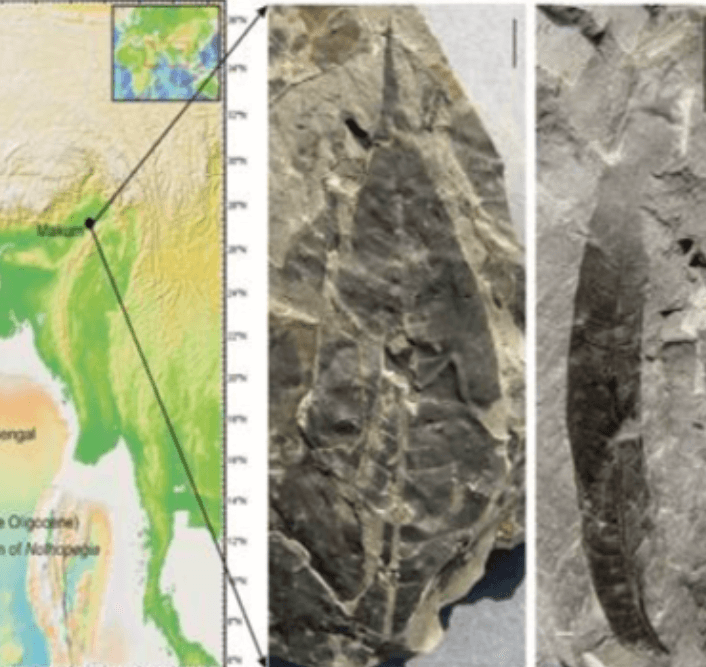
Nothopegia: Anacardiaceae genus; 24-million-year-old fossil leaves unearthed represent oldest known genus record

Discovery site: Makum Coalfield, Tinsukia district, Assam within Dibrugarh–Tinsukia coal belt rich in Tertiary fossils

Present habitat: Genus now restricted to Western Ghats indicating past Northeast distribution and subsequent range contraction

Quick Facts for MCQs

Paleoclimate Clues

  • Leaf venation signals high rainfall and evergreen tropical climate in late Oligocene Assam
  • Findings support models linking Himalayan uplift with strengthening monsoon circulation

Biogeographic Shift

  • Nothopegia migrated southward as Northeast cooled and dried post-uplift
  • Western Ghats acted as stable climatic refuge preserving genus diversity
  • Example showcases tectonics-driven floristic turnover across Indian subcontinent

Site Significance

  • Makum Coalfield offers diverse Tertiary biota aiding continental correlation studies
  • Peat and coal seams enable precise palaeoenvironmental dating
  • Region valuable for reconstructing Cenozoic biodiversity and monsoon evolution

Key Data Points

FeatureData-Point
Geological epochLate Oligocene (24–23 Ma)
Fossil age~24 million years
Plant familyAnacardiaceae
Oldest fossil recordNothopegia leaves
Discovery locationMakum Coalfield, Assam
Current natural rangeWestern Ghats
Indicative paleo-climateWarm, humid tropics
Local extinction driverHimalayan uplift & climate shift
Makum resource typePeat-based coal & Tertiary fossils
GS-3S&T

10.India Quantum Communication Breakthrough (Quantum Communication)

Business Standard
Illustration for India Quantum Communication Breakthrough (Quantum Communication)

What & Where

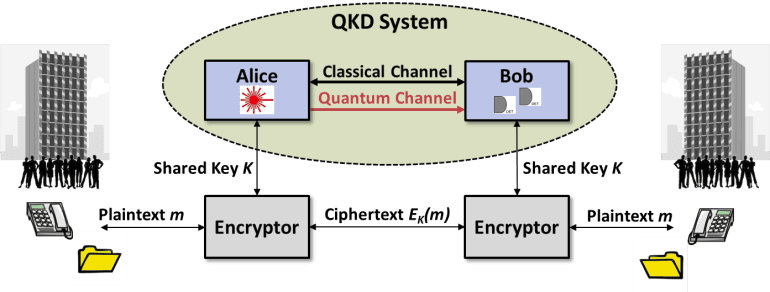
Quantum Key Distribution; open-air entanglement demo enabling unbreakable encryption keys

Conducted between two rooftop stations ~1 km apart in Delhi campus zone

Executed by DRDO + IIT-Delhi; first indigenous free-space quantum link in India

Quick Facts for MCQs

Tech & Schemes

  • Entanglement-based QKD; photons share correlated states, disturbance flagged instantly
  • Open-air link removes fibre need; suits drone, satellite, battlefield nodes
  • Indigenous hardware advances Atmanirbhar Bharat & Quantum Mission roadmap

Security Dimension

  • Provides military-grade, banking, governance encryption immune to classical hacking
  • Quantum no-cloning theorem prevents undetected interception
  • Real-time intrusion alert lowers risk of data compromise in strategic networks

Strategic Significance

  • Positions India with US, China in quantum networking race
  • Lays foundation for metropolitan quantum rings, secure command networks
  • Enhances technological sovereignty critical for defence and digital economy

International Context

  • China’s Micius satellite pioneered 1,200 km QKD; US, EU running pilot networks
  • India joins limited club demonstrating field-deployable entanglement link
  • Global push driven by post-quantum cryptography and cyber-espionage concerns

Key Data Points

FeatureData-Point
Demonstrating agenciesDRDO & IIT Delhi
Distance achieved1 kilometre, free space
Secure key rate240 bits per second
Quantum Bit Error Rate< 7 %
Hardware origin100 % indigenous photonic components
National alignmentSupports National Quantum Mission
Eavesdropping detectionState collapse alerts users
GS-3Security

11.Exercise Shakti 2025 Drill (Indo-French Drill)

ANI
Illustration for Exercise Shakti 2025 Drill (Indo-French Drill)

What & Where

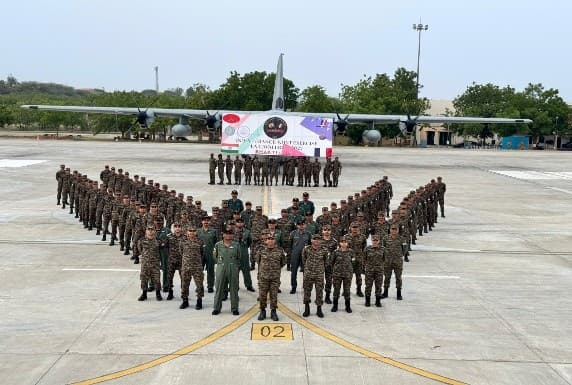
Nature: Biennial Indo-French Army field exercise on sub-conventional warfare and UN Chapter VII peacekeeping

Venue: Camp Larzac, La Cavalerie, Southern France

Edition & Dates: 8th iteration, 18 June – 1 July 2025

Quick Facts for MCQs

Participants

  • Composition: Infantry troops, combat support elements, observers from both armies
  • Leadership: JAK RIF commanding Indian side; 13ᵉ DBLE leading French side
  • Goal: Build cross-cultural cohesion and common Standard Operating Procedures

Training Modules

  • Tactics: Room clearing, cordon-and-search, convoy protection under insurgent threat
  • Technology: Familiarisation with modern small arms, surveillance drones, C4I systems
  • Physique: Endurance marches, obstacle courses to strengthen team spirit

Security Dimension

  • Diplomacy: Reinforces India-France defence partnership and Indo-Pacific cooperation
  • Interoperability: Harmonises command, communications, logistics for combined deployments
  • Peacekeeping: Prepares contingents for future UN missions in volatile theatres

Key Data Points

FeatureData-Point
FrequencyBiennial
Edition8th
Exercise window18 Jun – 1 Jul 2025
Host countryFrance
Training locationCamp Larzac, La Cavalerie
Indian contingentJammu & Kashmir Rifles
French contingent13ᵉ Foreign Legion Half-Brigade (13ᵉ DBLE)
Core focusSub-conventional ops & UN PKO interoperability
Terrain profileSemi-urban, asymmetric scenario
UN Charter chapterVII

Related UPSC Prelims PYQs

CAPF_GAI, CDS_GK 2023PYQ 1

The 16th edition of Indo-Nepal annual joint training exercise in jungle warfare and counter-terrorism operations was held in December 2022 at Nepal Army Battle School, Saljhandi. What is the name of this exercise?

CAPF_GAI, CDS_GK 2023PYQ 2

Exercise Ajeya Warrior is a biennial training event between the Indian Army and the army of:

GS-2Scheme

13.PM-WANI Public Wi-Fi Scheme (Public Wi-Fi)

BL
Illustration for PM-WANI Public Wi-Fi Scheme (Public Wi-Fi)

What & Where

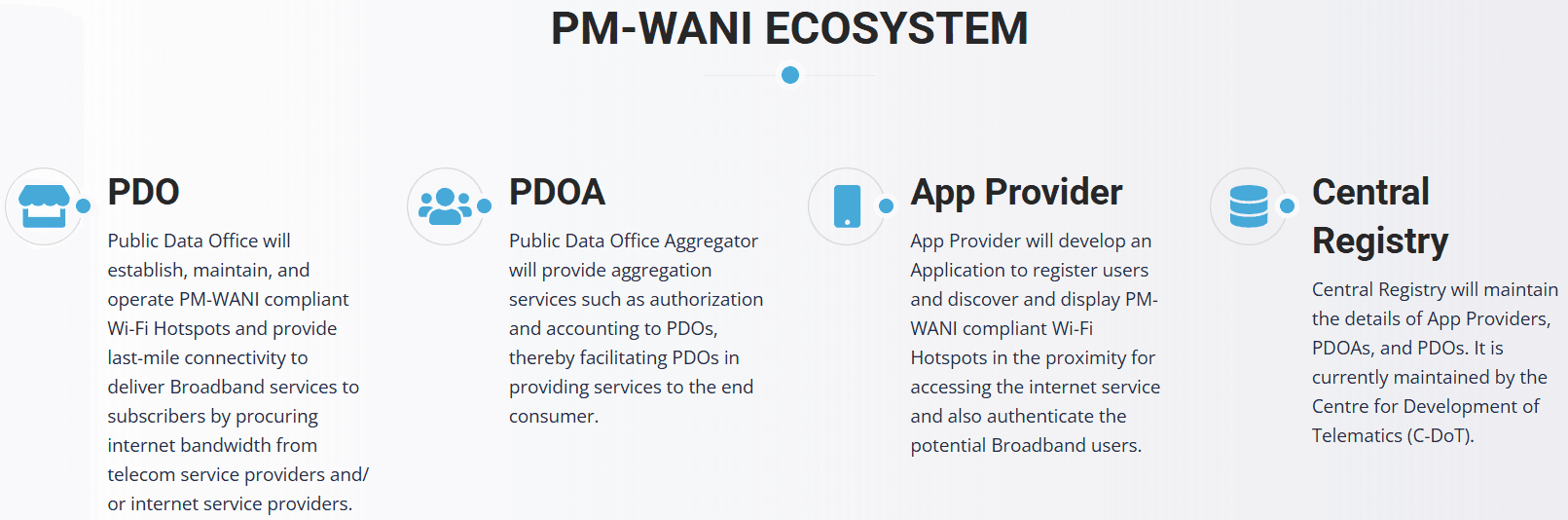
Definition; PM-WANI (2020, DoT) deploys public Wi-Fi nationwide to bridge digital divide

Order; TRAI Jun 2025 caps ISP/TSP charge to PDOs at ≤2× retail tariff for ≤200 Mbps plans

Geography; hotspots prioritise urban poor, villages, islands leveraging local shops as PDOs

Quick Facts for MCQs

Tech & Schemes

  • Access; user downloads app, chooses hotspot, pays digitally to start session
  • Spectrum; scheme rides on unlicensed Wi-Fi bands using existing ISP backhaul
  • Entrepreneurship; zero licence fees let kirana or tea stalls become Public Data Offices

Legal & Policy

  • Regulation; TRAI Act 1997 establishes regulator; 2000 amendment separates adjudication via TDSAT
  • Telecom; Act 2023 and Right of Way Rules 2024 simplify fibre deployment permissions
  • Policy; National Digital Communications Policy 2018 targets affordable broadband and entrepreneurship

Connectivity Initiatives

  • BharatNet; amended 2023 aims fibre to 2.64 lakh GPs with ring topology plus demand-based villages
  • Submarine; Chennai–Andaman OFC operational May 2025 with 243.31 Gbps utilised bandwidth
  • Portal; Gati Shakti Sanchar 2022 single-window approvals for OFC and towers

Key Data Points

FeatureData-Point
RegulatorTRAI (1997 Act)
Tariff cap≤2× retail broadband for PDOs
Cap speed slabPlans up to 200 Mbps
Scheme launchDecember 2020
Nodal ministryDepartment of Telecommunications
PDO licence feeNil
Ecosystem actorsPDO, PDOA, App Provider, Central Registry
Registry custodianC-DoT; autonomous R&D body (est. 1984)
Broadband Mission 2.02025 – 30
Appellate authorityTDSAT (since 2000)

Ready to practice?

Test your knowledge with our UPSC test series.

Start Free Trial