UPSC Current Affairs

12 topicsGS-1: 6GS-2: 3GS-3: 3
0/12 done
GS-3Economy

1.CCI Regulations on Predatory Pricing (Competition Law)

DH

What & Where

Predatory pricing = dominant firm sells below cost to expel rivals, later hikes prices.

Key forms: Direct below-cost, cross-subsidisation, discriminatory segment pricing.

India; CCI’s Determination of Cost of Production Regulations 2025 (6 May 2025) assess prices using Average Total Cost.

Quick Facts for MCQs

Legal & Policy

  • ATC replaces vague “market value”, delivering uniform cost benchmark.
  • Experts mandated for complex assessments; CCI must publish reasoning when deviating from AVC.
  • Rules align with OECD competition guidance, boosting global credibility.

Market Dynamics

  • Predatory pricing grants short-term consumer savings, long-term monopoly losses.
  • Deep capital pools and network externalities sustain below-cost campaigns.
  • Judicial delays, intent-proof hurdles dilute deterrence.

Digital Economy

  • Real-time market monitoring equips CCI to curb BigTech predation.
  • Data-driven lock-ins raise entry barriers for emerging digital platforms.

MSME & Startups

  • Stronger cost norms shield MSMEs from deep-pocketed price wars.
  • Earlier capture fears discouraged innovation in AI, FinTech segments.

Key Data Points

FeatureData-Point
Notifying bodyCompetition Commission of India
Notification date6 May 2025
Replaces2009 Cost Regulations
Benchmark metricAverage Total Cost (ATC)
Must record reasons when diverging fromAverage Variable Cost (AVC)
Applicable lawSection 4, Competition Act 2002
Only pre-2025 successful Indian caseNSE vs MCX predatory pricing
GS-1History

2.International Day of Yoga 2025 (Yoga Day)

DD News
Illustration for International Day of Yoga 2025 (Yoga Day)

What & Where

Annual UN-recognised observance on 21 June showcasing yoga as holistic mind–body–nature practice.

Celebrated in 175 UN member states, coordinated by India’s Ministry of AYUSH and overseas missions.

11th edition in 2025 carries theme “Yoga for One Earth, One Health”, linking personal and planetary well-being.

Quick Facts for MCQs

Timeline & Participation

  • Surge: participants rose 2.7× from 2018 to 2024.
  • Milestone: 24.53 crore practitioners logged worldwide in 2024.
  • Continuity: observed uninterrupted every year since 2015.

Institutional Support

  • Coordination: AYUSH ministry partners state govts, Indian embassies, UN bodies for mass events.
  • Outreach: inclusive logo, multilingual guides promote unity and eco-consciousness.
  • Platforms: Common Yoga Protocol disseminated through schools, armies, prisons, corporate offices.

Soft Power Impact

  • Diplomacy: reinforces India as cradle of yoga and global wellness leader.
  • Branding: low-cost, accessible practice enhances India’s cultural appeal abroad.
  • Sustainability: theme aligns yoga with climate action, health-for-all narrative in multilateral forums.

Key Data Points

FeatureData-Point
UNGA resolution69/131, 11 Dec 2014
First global celebration21 June 2015
Fixed date each year21 June (Summer Solstice)
2025 edition number11th
2025 themeYoga for One Earth, One Health
2018 global participants9 crore
2024 global participants24.53 crore
Member states backing175
Lead Indian ministryAYUSH
AlignmentIndia’s G20 vision “One Earth”

Related UPSC Prelims PYQs

CDS_GK, NDA_GAT 2021PYQ 1

Which one of the following is the theme of the International Day of Yoga 2021?

CDS_GK, NDA_GAT 2023PYQ 2

Match List I with List II and select the correct answer using the code given below the Lists:

GS-1History

3.Sahitya Akademi Youth and Children Awards (Literary Awards)

The Hindu

What & Where

Awards: Sahitya Akademi’s Yuva Puraskar (≤35 yrs) and Bal Sahitya Puraskar (children’s lit) span 24 recognised Indian languages.

Geography: Managed by Sahitya Akademi, HQ New Delhi; regional centres Kolkata, Bengaluru, Mumbai, Chennai, Agartala.

Process: Public call → referee screening → three-member language jury → Executive Board ratification → annual declaration.

Quick Facts for MCQs

Eligibility Norms

  • Originality: Translations, abridgements, theses, e-books, NRI/PIO dual-citizen works excluded from Yuva consideration.
  • Pagination: Yuva submission must be ≥ 49 pages; Bal requires at least three qualifying books in that language pool.
  • Posthumous: Allowed only for Bal if author died within five-year window; forbidden for Yuva category.

Selection Steps

  • Referees: Preliminary panel short-lists entries before language-specific three-member jury deliberation.
  • Transparency: Names of referees/jury remain confidential until award announcement to prevent lobbying.
  • Board: Sahitya Akademi Executive Board’s final sign-off is mandatory for both award lists.

Akademi Structure

  • Legal: Registered 1956 under Societies Registration Act 1860; autonomous yet Ministry of Culture supported.
  • Mandate: Encourages inter-lingual dialogue, translations, journals, encyclopaedias, bibliographies, literary histories.
  • Other Honours: 24 Literary Awards, 24 Translation Awards, Bhasha Samman, Fellowships (Anand Coomaraswamy, Premchand).

Key Data Points

FeatureData-Point
Yuva Puraskar – Instituted2011
Bal Sahitya Puraskar – Instituted2010
Age Limit (Yuva)≤ 35 years
Reader Target (Bal)9 – 16 years
Languages Covered24, incl. English
Cash Prize (each)₹ 50,000
Yuva Prize ExtrasEngraved copper plaque + citation
Bal Prize ExtrasPlaque + shawl + citation
Publication WindowPrevious 5 years
Minimum Pages (Yuva)49
Max Awards per AuthorOnce per language
Organising BodySahitya Akademi (autonomous, 1954)
GS-1MappingQuick Bite

4.Mount Denali Geographic Profile (North America Peak)

LiveMint
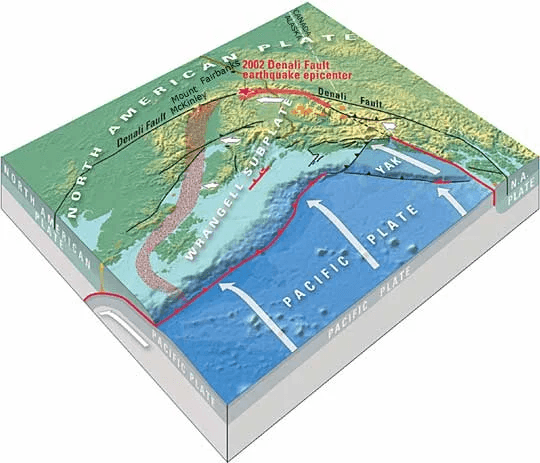
Illustration for Mount Denali Geographic Profile (North America Peak)

What & Where

Denali/Mount McKinley; 6 190 m; tallest peak of North America in Alaska Range, USA

Core of Denali National Park & Preserve; 3rd-highest of global Seven Summits

Massive granite block uplifted by Wrangellia–North American plate collision ~60 Ma

Quick Facts for MCQs

Geological Build

  • Granite composition indicates deep crustal crystallisation
  • Orogeny via terrane accretion; continuing tectonism sustains elevation
  • Vertical relief second only to Himalayas in base-to-summit rise

Physical Traits

  • Two main summits joined by 1.6 km ridge
  • Permanent snowfields nourish five valley glaciers
  • Sub-arctic climate brings −40 °C temperatures, 150 km/h winds

Naming Timeline

  • 1896 prospector dubbed peak Mount McKinley after US presidential candidate
  • 1917–2015 federal usage Mount McKinley; Alaska Board used Denali from 1975
  • 2025 presidential proclamation reinstated Mount McKinley nationwide

Recent Incident

  • June 2025 Kerala mountaineer team stranded during Operation Sindoor banner mission
  • Rescue complicated by sudden storms and sheer West Buttress route gradients
  • Event re-highlights Denali’s reputation for deadly weather volatility

Key Data Points

FeatureData-Point
Elevation6 190 m
ContinentNorth America
Mountain rangeAlaska Range
Country/StateUSA, Alaska
Seven Summits rank3rd highest
SummitsTwo; southern higher
Rock typeGranite block
Tectonic eventWrangellia–NA plate collision
Uplift began~60 million years ago
National parkDenali NP & Preserve
Glaciers fedKahiltna, Muldrow, Peters, Ruth, Traleika
2015 official nameDenali
Indigenous groupKoyukon
2025 official nameMount McKinley
GS-1Mapping

5.Armenia Location and Physical Features (South Caucasus)

TN
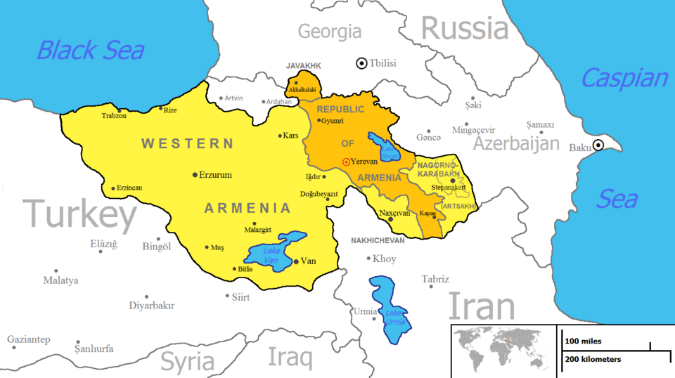
Illustration for Armenia Location and Physical Features (South Caucasus)

What & Where

Armenia — land-locked, mountainous republic in South Caucasus, bridging Eastern Europe & Western Asia

Lies between Georgia (N), Azerbaijan & its Nakhchivan exclave (E & SW), Iran (S) and Turkey (W)

Key physiography: Lesser Caucasus ranges, Ararat Plain, Lake Sevan basin; average height ~1 800 m

Quick Facts for MCQs

Physical Geography

  • Relief: Rugged Lesser Caucasus ridges dominate north-central landscape
  • Elevation gradient restricts arable land; farming concentrated in Ararat Plain
  • Climate: Continental, moderated by altitude variation

Hydrography

  • Aras River drains south-east, forms segments of borders with Iran & Turkey
  • Hrazdan River flows from Lake Sevan toward Aras; harnessed for hydro-power
  • Lake Sevan supplies freshwater, tourism, inland fisheries

Seismic Risk

  • Tectonics: Convergence of Anatolian & Arabian plates triggers frequent quakes
  • 1988 Spitak M 6.8 event flattened northern towns; global aid response
  • Building codes progressively tightened post-1988

Security Dimension

  • Operation Sindu: MEA route Tehran evacuees through Yerevan airport to India
  • Armenia’s neutral ties with Iran, India, Russia aid safe corridors
  • Geopolitical position grants strategic overflight alternative in West Asia crises

Key Data Points

FeatureData-Point
CapitalYerevan
RegionSouth Caucasus, Eurasia
NeighboursGeorgia, Azerbaijan, Iran, Turkey
Exclave borderingNakhchivan (Azerbaijan)
Highest peakMt Aragats 4 090 m
Dominant river basinAras River
Major tributariesAkhuryan, Hrazdan, Arpa, Vorotan
Largest plainArarat Plain (core farm belt)
High-altitude lakeLake Sevan
Average elevation~1 800 m
Seismic natureActive zone; 1988 Spitak quake ~25 000 deaths
Recent India's opOperation Sindu: evac via Armenia amid Israel-Iran tension
GS-3S&T

6.Delhi Artificial Rain Pilot Project (Cloud Seeding)

Business Standard

What & Where

Artificial rain: cloud-seeding technique inducing precipitation to wash airborne pollutants.

Process: aircraft disperse silver iodide / rock salt into 50 %+ moisture nimbostratus clouds.

Location: Delhi NCR; first urban pilot targeting ~100 km² high-pollution winter hotspots.

Quick Facts for MCQs

Tech & Schemes

  • Advanced-seeding: aircraft-mounted flares release micronised salt crystals for rapid condensation.
  • Precision-targeting: GPS flight paths align with densest pollution plumes identified via AQI maps.
  • Military-grade protocols govern reagent loading, cloud selection, safety clearances.

Operational Plan

  • Flights spaced across severe-pollution days of November-December inversion period.
  • Each sortie covers layered passes to maximise nucleation within chosen cloud mass.
  • Data loggers capture humidity, temperature, particle counts for post-mission assessment.

Environmental Impact

  • Objective: immediate wet deposition of particulate matter, lowering AQI from ‘Severe’ to ‘Poor/Moderate’.
  • Washout expected to suppress secondary aerosol formation for 24–48 hours.
  • Findings to inform scalability for other high-pollution Indian metros.

Institutional Framework

  • Governance: Delhi Cabinet nod under ‘Right to Clean Air’ initiative.
  • Scientific steering: IIT-Kanpur designs protocol; IMD vets meteorological windows.
  • Multi-agency control room coordinates aviation, meteorology, environment, disaster-management clearances.

Key Data Points

FeatureData-Point
Pilot cost₹3.21 crore
Lead agencyDelhi Government
Technical partnersIIT-Kanpur, IMD
Main cloud typeNimbostratus
Seeding agentsSilver iodide, rock salt, iodised salt
Aircraft sorties5 planned
Each flight~90 minutes
Target coverage≈100 km²
Moisture criterion≥50 % cloud moisture
Monitoring toolCAAQMS real-time AQI
Key pollutants aimedPM2.5, PM10
Prior trials baseIIT-Kanpur drought cloud-seeding success

Related UPSC Prelims PYQs

GS1 2019PYQ 1

In the context of which of the following do some scientists suggest the use of cirrus cloud thinning technique and the injection of sulphate aerosol into stratosphere?

GS1 2025PYQ 2

वायु प्रदूषण माप करने हेतु भूमि-पृष्ठ-स्तर के तरीकों में किसका प्रयोग होता है?

GS-3S&TQuick Bite

7.WHA Declares Skin Health Priority (Skin Disease Priority)

The Hindu

What & Where

WHA-78, Geneva 2025, passed first-ever resolution making skin diseases a global public-health priority.

Resolution spans prevention, early detection, treatment, environmental resilience; Global Action Plan to be ready by WHA-80 (2027).

Burden highest in LMICs, including India; about 1.9 billion people affected worldwide.

Quick Facts for MCQs

Legal & Policy

  • Resolution elevates skin diseases to global public-health priority, equating importance with other NCDs
  • Mandates member states create national registries and align budgets in upcoming Global Action Plan
  • Links skin health with equity and dignity, shifting narrative from cosmetic to rights-based

Health Systems

  • Integration of dermatology services into primary health centres and frontline capacity building emphasised
  • Urges wider access to affordable medicines, insurance coverage, and robust supply chains in LMICs
  • Strengthened surveillance for antimicrobial resistance and climate-linked dermatoses mandated

Research & Innovation

  • Prioritises inclusive research for skin of colour and neglected tropical dermatoses
  • Encourages international data sharing and multicentre trials under WHO coordination
  • Calls for low-cost diagnostic tools to improve early detection in resource-poor settings

Key Data Points

FeatureData-Point
WHA session78th (2025)
Resolution title“Skin diseases as a global public health priority”
Lead sponsorsCôte d’Ivoire, Nigeria, Togo
Global disease burden~1.9 billion people
Action Plan deadlineWHA-80 (2027)
Core pillarsPrevention, early detection, treatment, resilience
System level urgedPrimary-care integration
Surveillance focusDiagnostics, antimicrobial resistance
Research prioritySkin of colour & neglected dermatoses
India angleScope to expand public care, insurance cover
GS-2Security

8.Nuclear Non-Proliferation Treaty Overview (Nuclear Treaty)

TW

What & Where

Treaty; global pact stopping nuclear-weapon spread while enabling peaceful atomic energy and ultimate disarmament

Processes; IAEA safeguards, export controls, Article-10 withdrawal with 3-month notice

Geography; 191 parties worldwide, outliers India Pakistan Israel, Iran now debating exit

Quick Facts for MCQs

Legal & Policy

  • Article-10; unilateral exit lawful yet diplomatically costly
  • P5 privilege; only pre-1967 testers allowed permanent nuclear status
  • Universality; widest arms-control accord despite non-accession criticisms

Security Dimension

  • Iran-Israel escalation; Tehran hints NPT exit to gain leverage
  • Proliferation risk; withdrawal removes IAEA full-scope inspections
  • Global stability; any pull-out undermines disarmament architecture

India Angle

  • Non-signatory stance; treaty seen as discriminatory against late entrants
  • Record; maintains credible export-control laws and NSG engagement without NPT signature
  • Policy; advocates universal, non-discriminatory disarmament framework

Key Data Points

FeatureData-Point
Signing year1968
Force year1970
Current parties191
Recognised N-weapon statesUSA UK Russia France China
Monitoring bodyIAEA
Withdrawal clauseArticle 10; 3-month notice citing security
Iran statusParty since 1970; exit Bill in Majlis
Not-signatoriesIndia Pakistan Israel; DPRK quit 2003

Related UPSC Prelims PYQs

GS1 2015PYQ 1

Consider the following countries:

GS1 2018PYQ 2

किसी देश के “नाभिकीय आपूर्तिकर्ता समूह” (NSG) का सदस्य बनने का क्या परिणाम है/हैं?

GS-2Scheme

9.Green India Mission Revised Roadmap (Forestry Mission)

Indian Express

What & Where

Mission flagship afforestation + ecosystem-restoration arm of National Action Plan on Climate Change

Coverage nationwide; 2025 roadmap spotlights Aravallis, Western Ghats, Himalayas, coastal mangroves

Targets 5 mha new tree/forest cover plus quality upgrade on 5 mha, dovetailing 26 mha land-restoration pledge

Quick Facts for MCQs

Targets & Metrics

  • Sequestration goal 2.5–3 bn t CO₂ by 2030 under India NDC
  • Open-forest restoration offers extra 1.89 bn t CO₂ sink potential

Geographic Focus

  • Aravalli range anchors 1,400 km Green Wall against desertification and dust
  • Western Ghats and Himalayas tagged as biodiversity-rich priority zones
  • Mangrove belts slated for climate-resilient coastal defence and carbon storage

Implementation Mechanisms

  • Convergence CAMPA funds, Green Wall Project, mining-rehab schemes for finance and synergy
  • Science-based site selection via FSI data and ecological mapping maximises survival and carbon yield
  • Participatory micro-plans integrate works with MGNREGS, watershed and agro-forestry programmes

Community Dimension

  • Livelihood boost for forest-fringe households through NTFP value-addition, eco-tourism, wage labour
  • Community institutions manage joint monitoring ensuring gender inclusion and benefit-sharing

Key Data Points

FeatureData-Point
Launch year2014
Implementing ministryMoEF&CC
Parent frameworkNAPCC
New plantation target5 million ha
Quality improvement targetanother 5 million ha
Carbon sink goal2.5–3 billion t CO₂ by 2030
Land-restoration pledge link26 million ha by 2030
Revised roadmap year2025

Related UPSC Prelims PYQs

CAPF_GAI, GS1 2016PYQ 1

Which of the following best describes/describe the aim of 'Green India Mission' of the Government of India?

CAPF_GAI, GS1 2025PYQ 2

Which of the statements given below is/are correct?

GS-2Scheme

10.Bhashini Multilingual Governance Mission (Language Technology)

News on Air

What & Where

Bhashini = National Language Translation Mission; AI platform enabling real-time speech/text conversion among Indian languages.

MoU links Bhashini with Ministry of Panchayati Raj e-governance portals for Panchayati Raj Institutions.

Coverage: Rural India; platforms like eGramSwaraj accessed at village, block, district levels.

Quick Facts for MCQs

Tech & Schemes

  • AI-Driven Translation ensures real-time multilingual interface without manual intervention.
  • Digital public infrastructure model mirrors UPI, Open Network concepts.
  • Supports rural digital literacy by lowering language barriers.

Governance Impact

  • Streamlines service delivery at Gram Sabha, Panchayat levels through language-neutral dashboards.
  • Promotes accountability; information dissemination in local scripts builds trust.
  • Facilitates data entry/reporting by field officials in mother tongues.

Social Inclusion

  • Empowers non-Hindi/English speakers; aligns with constitutional linguistic diversity.
  • Encourages wider citizen participation in decentralised planning.
  • Bridges rural-urban tech divide via vernacular access.

Key Data Points

FeatureData-Point
Mission acronymNLTM (Bhashini)
Parent ministryMeitY
Partner ministry in MoUMoPR
Core objectiveMultilingual, inclusive e-governance for PRIs
Tech backboneAI speech-to-text & text-to-text translation
Key portals targetedeGramSwaraj, other MoPR rural governance tools
User focusCitizens interacting in native languages
Governance benefitEnhanced transparency & participatory democracy
GS-1Misc

11.QS World University Rankings 2026 Release (Higher Education)

PIB

What & Where

Annual QS World University Rankings, UK-based Quacquarelli Symonds assesses 1,500+ universities worldwide

Measures research, teaching, employability, sustainability, internationalisation for transparent global comparison

India hosts 54 ranked institutions in 2026, placing fourth after USA, UK, Mainland China

Quick Facts for MCQs

India Performance

  • Expansion fivefold since 2015 signals rapid higher-education scaling
  • Nearly half of Indian entries show upward momentum year-on-year
  • Six institutions breach top-250 threshold, improving global visibility

Institutional Highlights

  • IIT Delhi leads India at 123rd, up from 150th previous cycle
  • IIT Madras registers notable 47-place leap to 180th position
  • Eight debutant Indian universities join 2026 table, record single-year addition

Global Comparison

  • United States tops count with 192 ranked universities, followed by UK 90, China 72
  • India overtakes nations like Germany, Australia in representation numbers
  • QS employs 9 indicators including Academic Reputation, Employer Reputation, Sustainability

Key Data Points

FeatureData-Point
First edition year2004
Publisher HQLondon, UK
Total Indian universities 202654
India’s representation rank4th globally
New Indian entrants 20268 (highest by any country)
Indian universities 201511
Five-fold growth period2015 → 2026
Indian universities improved rank48 % of 54
Indian institutes in top 2506
Highest-ranked Indian instituteIIT Delhi, 123rd
Biggest Indian climberIIT Madras, +47 places to 180
IITs in list12

Related UPSC Prelims PYQs

CDS_GK, ESE_GS 2021PYQ 1

According to the National Institutional Ranking Framework 2020, which institute was on the top in overall ranking ?

CDS_GK, ESE_GS 2024PYQ 2

विश्व बौद्धिक संपदा संगठन द्वारा प्रकाशित ‘ग्लोबल इनोवेशन इंडेक्स-2023’ में भारत के स्थान (रैंक) के संदर्भ में, निम्नलिखित में से कौन-सा/कौन-से कथन सही है/हैं?

GS-1Misc

12.MoU to Strengthen Inclusive Education (Inclusive Education)

Economic Times
Illustration for MoU to Strengthen Inclusive Education (Inclusive Education)

What & Where

Inclusive education = common classrooms for disabled & non-disabled children; curriculum, pedagogy adapted (RPWD Act 2016).

Operational nationwide via Samagra Shiksha; new 2025 MoU binds DEPwD-NIOS-NCERT, tags some special schools as SAIEDs.

Aligns with Article 21A, RTE 2009, UN-CRPD 2007, SDG 4, NEP 2020 targets.

Quick Facts for MCQs

Legal & Policy

  • Article 21A & RTE 2009 guarantee free, compulsory 6-14 yrs education covering CWSN.
  • RPWD 2016 mandates accessible infrastructure, assistive devices, inclusive pedagogy.
  • NEP 2020 embeds disability inclusion across schooling, teacher training, assessment.

Government Schemes

  • Samagra Shiksha funds aids, home-based education, girl stipend (Classes I–XII), resource rooms.
  • NIOS offers adapted curricula; MoU enables DDRS schools to become Secondary/ Sr. Secondary SAIEDs.
  • NCERT’s “Barkha” series provides print-digital material in multiple formats, languages.

Challenges & Gaps

  • Infrastructure deficit: many schools lack ramps, Braille, accessible toilets, inclusive TLM.
  • Human resource crunch: ~28k special teachers vs nationwide demand.
  • Data void: UDISE+ lacks type/severity details; hinders targeted planning.

Key Data Points

FeatureData-Point
Children (0-19 yr) with disabilities7 % (Census 2011)
Share of CWSN in primary enrolment0.98 % (UDISE+ 2019-20)
CWSN supported under Samagra Shiksha21 lakh (2018-19)
Special/resource teachers available27,774 (Samagra data)
Annual inclusion grant per CWSN₹3,500
MoU signing year2025
Accessible reading seriesNCERT “Barkha”, UDL-based

Related UPSC Prelims PYQs

CDS_GK, GS1 2025PYQ 1

NEP 2020 के दिशा-निर्देश के अनुसार, 'पोषण और पढ़ाई पूर्व' (PPBP), निम्नलिखित में से किस कार्यक्रम के अंतर्गत प्रारंभ की गई है?

CDS_GK, GS1 2011PYQ 2

India is home to lakhs of persons with disabilities. What are the benefits available to them under the law?

Ready to practice?

Test your knowledge with our UPSC test series.

Start Free Trial