 View answer copy →
Deepali MahtoRank 36CSE 2025
Answered a very similar question
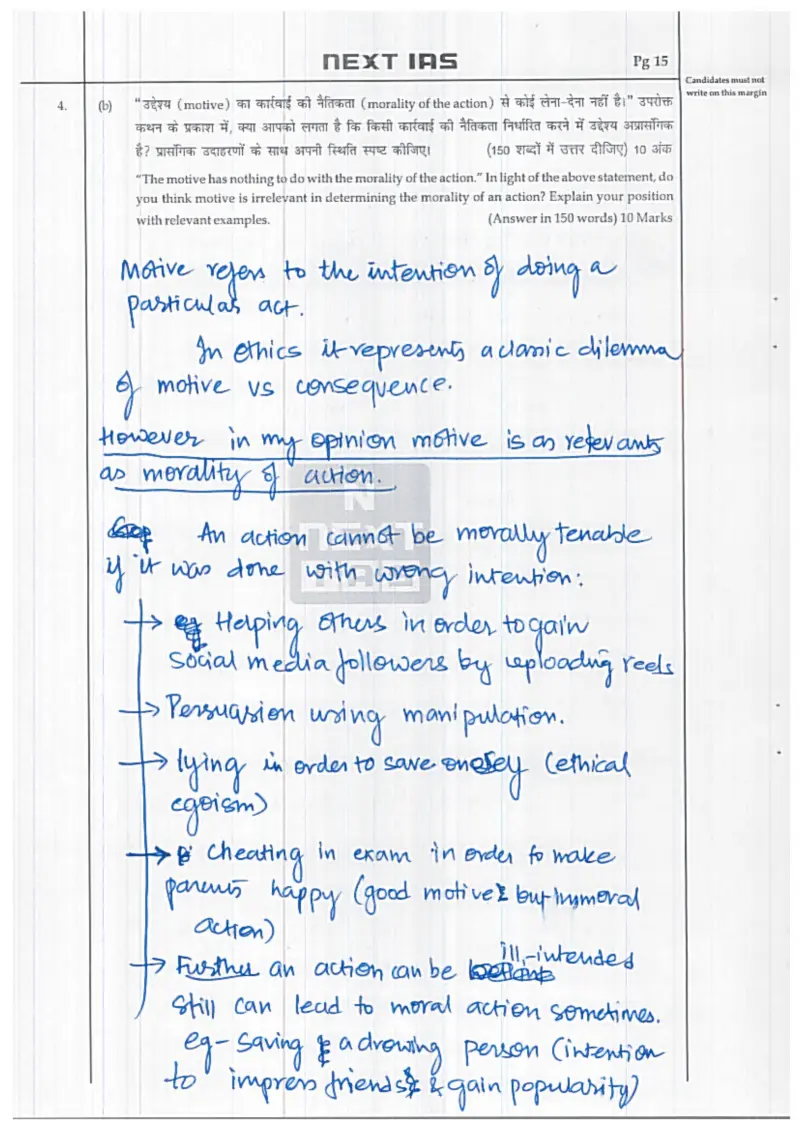
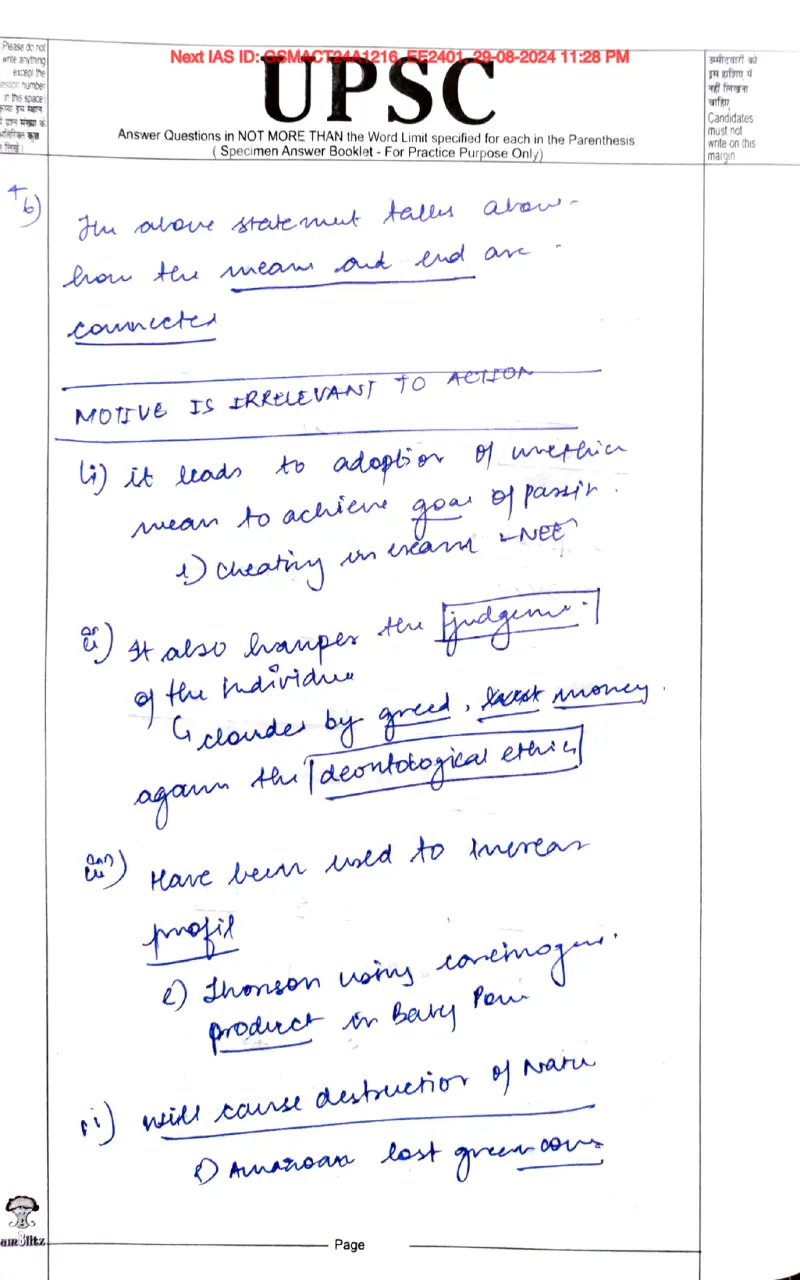
Their question: “Means vs ends / 'motive is irrelevant to action' — when motive matters in judging morality”
Kant's quote that a man is ethically guilty if he only thinks of a wrong is exactly the motive-vs-consequence debate Deepali resolves by weighing deontological and utilitarian lenses.
Key learnings from their answer
- ›She deliberately ran both ethical lenses against each other rather than picking one, weighing utilitarian vs deontological reasoning on the economic-sanctions dilemma (Q5b), and threading Nishkam Karma, Kant's categorical imperative and Aristotle's golden mean through the action-and-consequences questions (Q6b). -> Show the examiner you can hold competing moral frameworks in tension and then resolve them; balanced reasoning beats a one-sided verdict in Ethics.
- ›Theory answers followed a consistent, examiner-friendly skeleton: open by unpacking the prompt/quote or a definition, develop a sub-pointed (i, ii, iii) body with examples, and close with a 'Hence...' line tied back to a thinker, with key terms boxed and keywords underlined throughout. -> A repeatable structure plus visual signposting lets an evaluator find your argument fast under time pressure; standardise your own template so quality holds across all 12 answers.