 View answer copy →
Aakash GargRank 5CSE 2024
Answered a closely related question
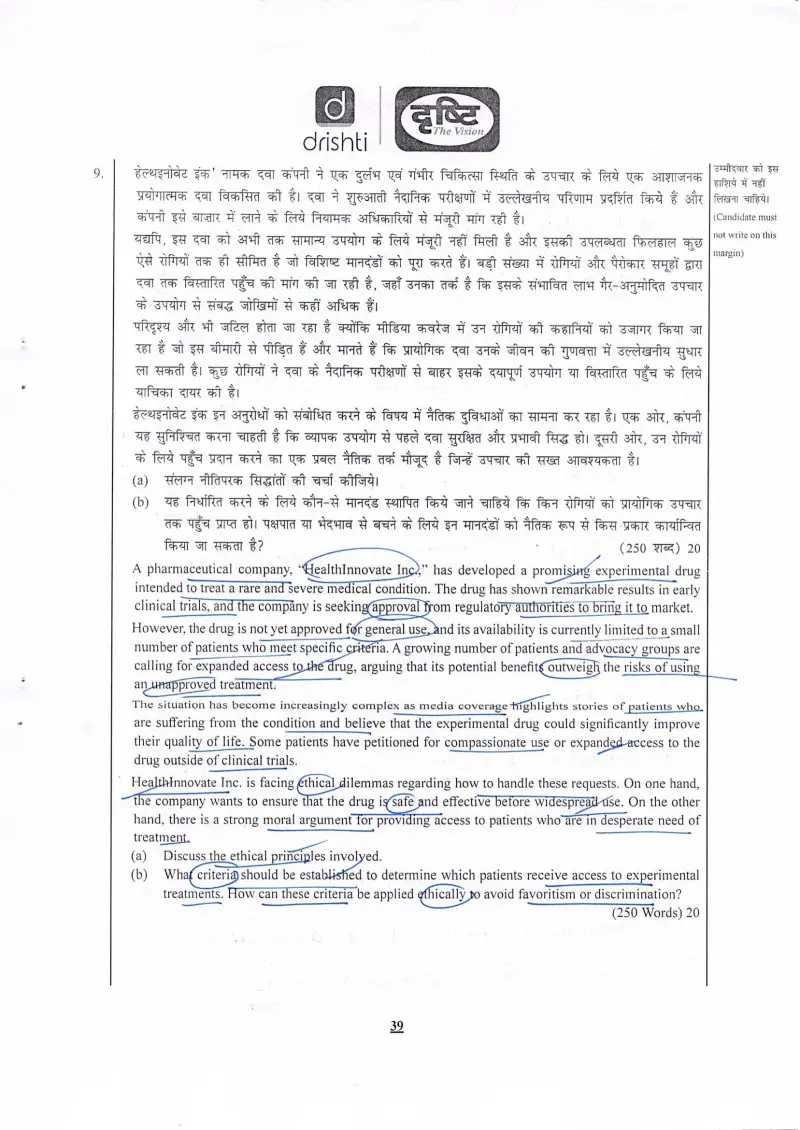
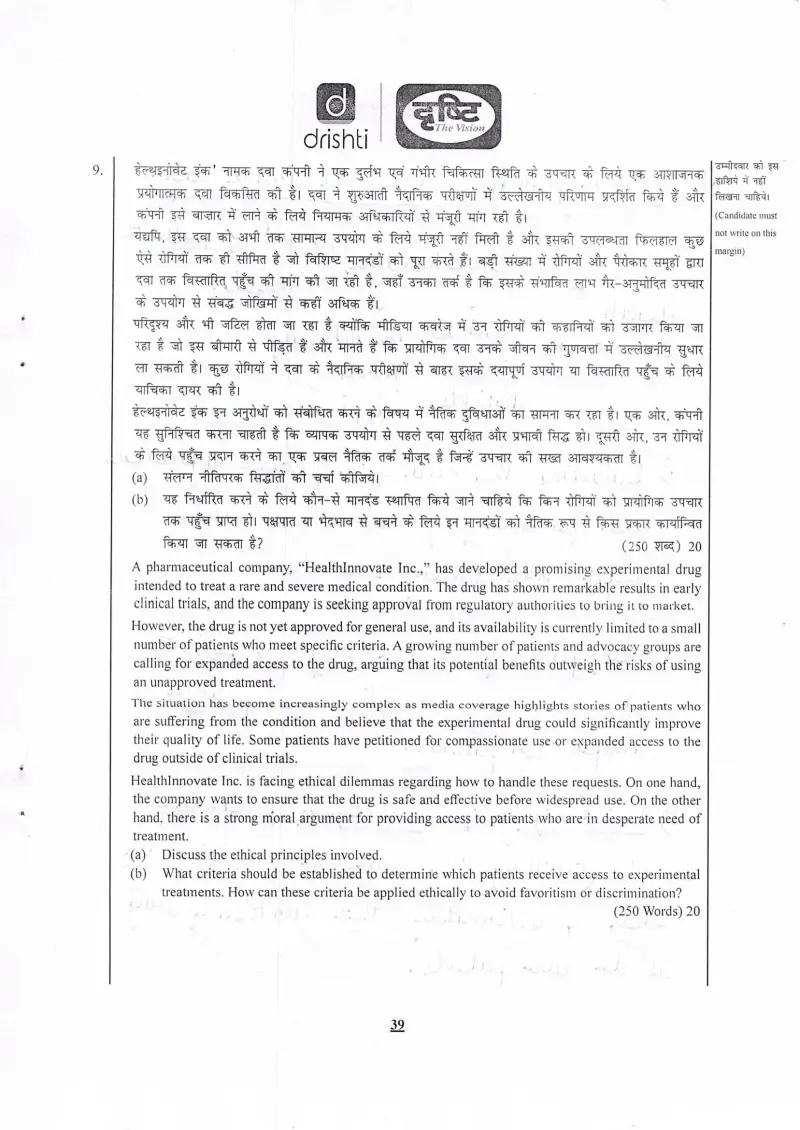
Their question: “Case study — HealthInnovate Inc. experimental drug / compassionate-use access; ethical principles and fair access criteria (max 20)”
The 2015 case asks a pharma CEO whether to develop and provide a costly cure for a poor population with no market; Aakash's decisive case method (identify stakeholders, commit to a defensible best course) transfers to weighing commercial viability against fair access for the needy.
Key learnings from their answer
- ›Every case study (Q7-Q12, 20 marks each) consistently opens with a stakeholder list, then explicitly commits to a single 'best course of action' instead of hedging, e.g. Sonia Patel should disclose and seek a formal inquiry, and Collector Ravi Kumar should disclose maximum information to avoid panic -> in case studies, identify stakeholders up front and take a clear, defensible decision; evaluators reward a candidate who chooses and justifies over one who lists options and sits on the fence.