
 View answer copy →
Gyanendra BhartiRank 537CSE 2023
Answered this exact question
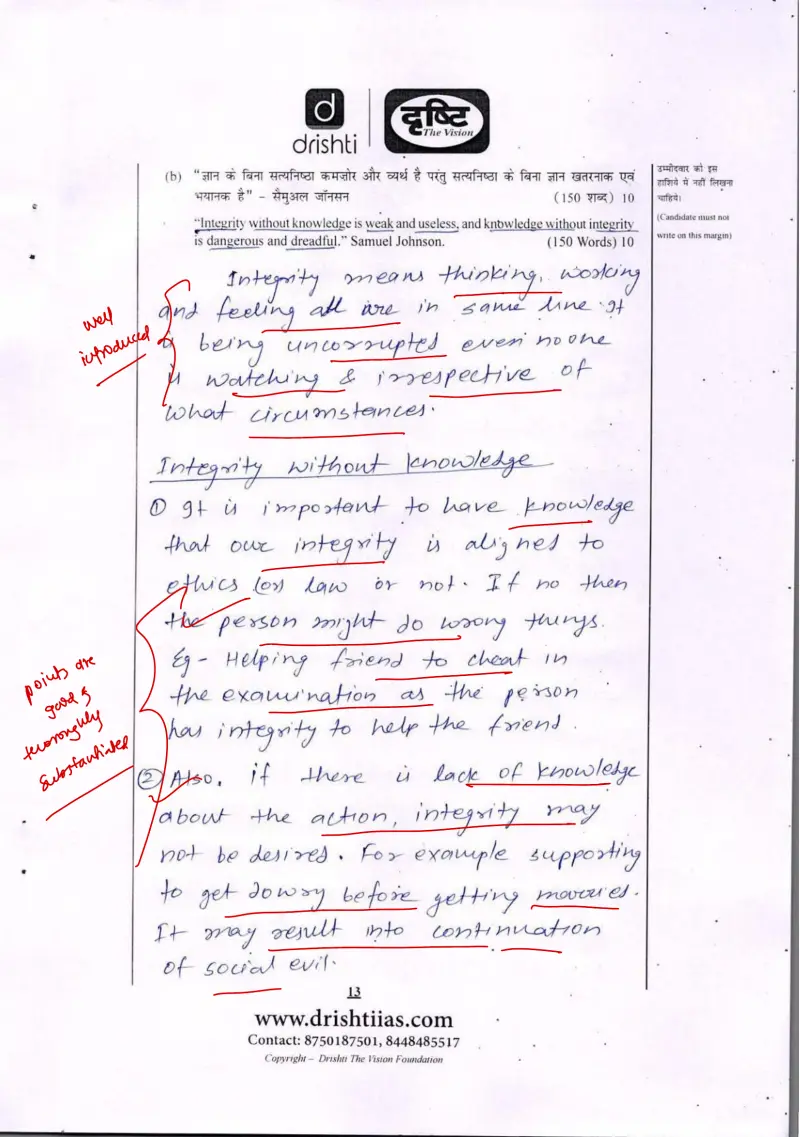
The 2014 PYQ is verbatim the same statement the topper interpreted, so his framing and paired examples (integrity-without-knowledge vs knowledge-without-integrity) map directly onto this PYQ.
Key learnings from their answer
- ›Every answer opened by defining the key term, underlined, which the evaluator singled out twice ('very well defined the key term', 'your habit of introducing with defining key terminologies is good') -> lead each ethics answer with a crisp definition of the central concept (aptitude, probity, ethical dilemma) before any discussion; it is a low-cost, repeatable opening that examiners reward.
- ›He sourced examples widely and matched each to the exact point: Armstrong Pame (IAS) building a ~100 km road without government funds for attitude/leadership, the Odisha 'millet lady' reviving 30+ native millets, Satyam scam and Rajat Gupta insider trading for corporate-governance failures, and Osama Bin Laden as 'knowledge without integrity' for the Samuel Johnson quote -> keep a small bank of versatile real examples (an IAS innovator, a corporate scandal, an unconventional changemaker) and deploy the specific one that fits the prompt's exact theme, not a generic name-drop.
What they cited: Osama Bin Laden - had knowledge but used it for destruction (knowledge without integrity, Q3b) · Helping a friend cheat in an exam; supporting dowry before marriage (integrity without knowledge, Q3b)
Quotes used: “Samuel Johnson - 'Integrity without knowledge is weak and useless, and knowledge without integrity is dangerous and dreadful' (Q3b prompt)”