
Match List – I with List – II and choose the correct answer using the code given below the lists. List – I (Iron-ore Mines) A. Gurumahisani B. Bailadila C. Noamundi D. Kudremukh List – II (State) 1. Jharkhand 2. Karnataka 3. Odisha 4. Chhattisgarh Code :
- (a)A-3, B-4, C-2, D-1
- (b)A-4, B-3, C-2, D-1
- (c)A-4, B-3, C-1, D-2
- (d)A-3, B-4, C-1, D-2
Correct — D, A-3, B-4, C-1, D-2. Every pair in this code holds. (A) Gurumahisani — properly Gorumahisani — lies in Rairangpur tahsil of Mayurbhanj district, ODISHA (3); the town is famous for iron-ore mines that are described as the first iron-ore mines developed in India, opened in 1910 by Maharaja Sriram Chandra Bhanj Deo, the ruler of the princely state of Mayurbhanj. (B) Bailadila is a range located near Kirandul town in Dantewada district of southern CHHATTISGARH (4); the hematite raised there is very high grade and is railed to Visakhapatnam port for export to Japan and South Korea, and the deposits are worked by the National Mineral Development Corporation. (C) Noamundi is a census town in West Singhbhum district in JHARKHAND (1), and its mines are run by Tata Steel — a Tata Steel pelletising plant also operated in the town between 1972 and 1986. (D) Kudremukha is a mountain range and peak in Chikmagalur district, KARNATAKA (2), where the state-owned Kudremukha Iron Ore Company Limited (KIOCL) mined for almost thirty years before closing in 2006 on environmental grounds, the Supreme Court having barred the company from operating inside the protected area. Only option (d) puts all four in the right state.
- (a)A-3, B-4, C-2, D-1 — This is the closest near-miss and the option that catches most candidates. It gets the two eastern mines right — Gurumahisani in Odisha and Bailadila in Chhattisgarh — but then swaps the last pair, putting Noamundi in Karnataka and Kudremukh in Jharkhand. It is the other way round: Noamundi is a town in West Singhbhum district, Jharkhand, and Kudremukh is a Western Ghats peak in Chikmagalur district, Karnataka.
- (b)A-4, B-3, C-2, D-1 — Every one of the four pairs is wrong. It makes both of the possible swaps at once — Gurumahisani is shifted to Chhattisgarh and Bailadila to Odisha, while Noamundi is shifted to Karnataka and Kudremukh to Jharkhand. Correctly, Gurumahisani is in Mayurbhanj district, Odisha, and Bailadila is near Kirandul in Dantewada district, Chhattisgarh.
- (c)A-4, B-3, C-1, D-2 — This option is the mirror image of (a): it fixes the second half correctly — Noamundi in Jharkhand and Kudremukh in Karnataka — but reverses the first pair. Gurumahisani does not belong to Chhattisgarh and Bailadila does not belong to Odisha. Gurumahisani is Odisha's Mayurbhanj-district mine; Bailadila is Chhattisgarh's Bastar-region range, near Kirandul in Dantewada district.
India's iron ore is concentrated in one broad arc of the peninsular shield, running through Odisha, Jharkhand and Chhattisgarh, with a second, separate concentration in Karnataka. Three of the four names in this question sit inside that eastern arc — Gurumahisani in Mayurbhanj (Odisha), Noamundi in West Singhbhum (Jharkhand) and Bailadila in Dantewada (Chhattisgarh) — while Kudremukh is the odd one out, lying far to the south-west in the Western Ghats of Chikmagalur district, Karnataka. Together, these four states supply the overwhelming bulk of India's iron-ore output, which is why UPPSC keeps returning to them.
The fastest route through a four-pair match-list is to fix the one pair you are surest of and let it delete options. Kudremukh is the giveaway here: it is a Western Ghats peak in Karnataka, associated with KIOCL and with the national park that eventually shut the mining down, so D must be 2. That single decision kills options (a) and (b) and leaves only (c) and (d). Those two differ solely in the first pair, so one more fact settles it — Gurumahisani is the Mayurbhanj mine in Odisha, so A must be 3, which forces option (d). The trap is the pairing of Gurumahisani with Bailadila: both are unfamiliar eastern-belt names, both sit in the Odisha-Chhattisgarh neighbourhood, and a candidate who has only skimmed them will swap them and land on (c).
- Gorumahisani (Gurumahisani) is in Rairangpur tahsil, Mayurbhanj district, Odisha; its iron-ore mines are described as the first developed in India, opened in 1910 by Maharaja Sriram Chandra Bhanj Deo of the princely state of Mayurbhanj
- The Bailadila Range lies near Kirandul town in Dantewada district of southern Chhattisgarh; the hematite mined there is very high grade and is exported from Visakhapatnam port to Japan and South Korea
- Noamundi is a census town in West Singhbhum district, Jharkhand; the mines there are run by Tata Steel, which also operated a pelletising plant in the town from 1972 to 1986
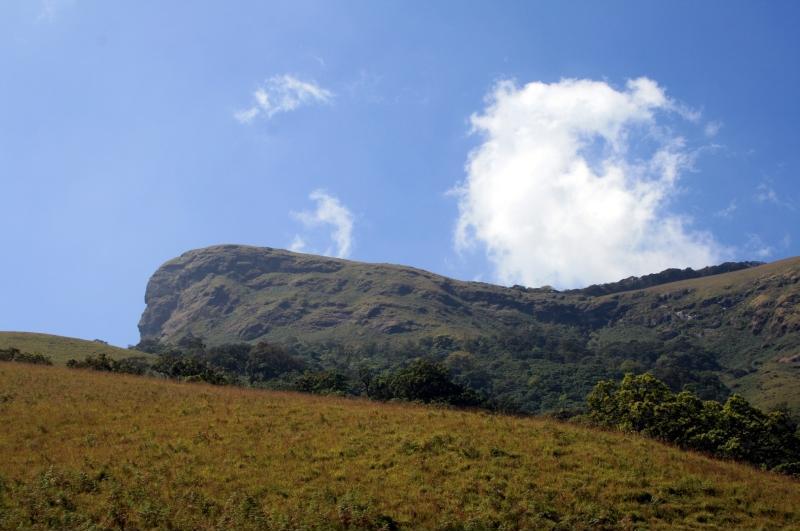
- Kudremukha is a mountain range and peak in Chikmagalur district, Karnataka; Kudremukha Iron Ore Company Ltd (KIOCL) worked it for almost thirty years and closed in 2006 on environmental grounds, the Supreme Court barring operations inside the protected natural reserve
- Odisha, Chhattisgarh, Jharkhand and Karnataka together account for the great majority of India's iron-ore production, which is why these four states supply almost every mine name UPPSC and UPSC use
- Swapping Gurumahisani (Odisha) and Bailadila (Chhattisgarh) — the two least familiar names in the list, and the swap that produces option (c)
- Placing Noamundi in Odisha because the Singhbhum ore field straddles the Odisha-Jharkhand border; the town itself is in West Singhbhum district, Jharkhand
- Assuming Kudremukh is in Kerala or Tamil Nadu because it lies in the Western Ghats — it is in Chikmagalur district, Karnataka
UPPSC almost always sets mineral geography as a match-list or a 'which pair is NOT correctly matched' item — it asked mineral-to-mining-city and country-to-iron-ore-area in 2020 and Mount Newman in 2023 — while UPSC prefers statement-based questions on mining law, ore grades and which state holds which deposit.
Which of the following minerals are found in a natural way in the State of Chhattisgarh? 1. Bauxite 2. Dolomite 3. Iron ore 4. Tin Select the correct answer using the code given below:
- (a) 1, 2 and 3 only
- (b) 1 and 3 only
- (c) 2 and 4 only
- (d) 1, 2, 3 and 4
Answer(d) 1, 2, 3 and 4
Tests the same fact from the other side — that Chhattisgarh is an iron-ore state. The high-grade iron ore the UPSC answer refers to is precisely the Bailadila range, item B of this match-list.
Consider the following statements: 1. In India, State Governments do not have the power to auction non-coal mines. 2. Andhra Pradesh and Jharkhand do not have gold mines. 3. Rajasthan has iron ore mines. Which of the statements given above is/are correct?
- (a) 1 and 2
- (b) 2 only
- (c) 1 and 3
- (d) 3 only
Answer(d) 3 only
The same skill — knowing which Indian state holds which ore deposit — asked as a statement set rather than a match-list, and turning on an iron-ore location just as this question does.
Which of the following are NOT correctly matched ? (Mineral) (Mining City) 1. Copper – Chitradurga 2. Iron ore – Ballari 3. Manganese – Bhilwara 4. Bauxite – Katni Select the correct answer from the codes given below. Codes :
- (a) 1 and 2
- (b) 2 and 3
- (c) 1 and 3
- (d) 2 and 4
Answer(c) 1 and 3
The same mineral-to-place matching skill, and it turns on an iron-ore pair too — Ballari (Bellary) in Karnataka, the state's other great iron-ore district alongside Kudremukh in this question.
Which one of the following is NOT correctly matched ? (Country) — (Iron-Ore Producing Area)
- (a) Kazakhstan — Karaganda
- (b) Ukrain — Krivoy Rog
- (c) Germany — Normendy
- (d) France — Pyrenees
Answer(c) Germany — Normendy
The identical construction — iron-ore mining areas paired against the territory they belong to — set on the world map rather than on India. UPPSC has now used the iron-ore-plus-location pairing in both 2020 and 2025.
- practice — not a real PYQ
The Bailadila iron-ore range is located in which one of the following States?
- (a)Odisha
- (b)Jharkhand
- (c)Chhattisgarh
- (d)Karnataka
Answer(c) Chhattisgarh — the range lies near Kirandul town in Dantewada district of southern Chhattisgarh, and its high-grade hematite is exported through Visakhapatnam port.
- practice — not a real PYQ
Iron-ore mining at Kudremukh in Karnataka was brought to an end mainly because
- (a)the ore body was completely exhausted
- (b)the mining area lay inside a protected forest and the Supreme Court barred operations there
- (c)the ore was of too high a grade for Indian steel plants to use
- (d)the operating company was privatised and shut the field down
Answer(b) the mining area lay inside a protected forest and the Supreme Court barred operations there — KIOCL mined for almost thirty years and closed in 2006 on environmental grounds.