
'BHARATPOL', an online portal for International Police Co-operation has been developed by which of the following ? 1. Central Bureau of Investigation 2. Research and Analysis Wing 3. Intelligence Bureau 4. Enforcement Directorate Select the correct answer from the code given below :
- (a)2 and 3
- (b)Only 3
- (c)3 and 4
- (d)Only 1
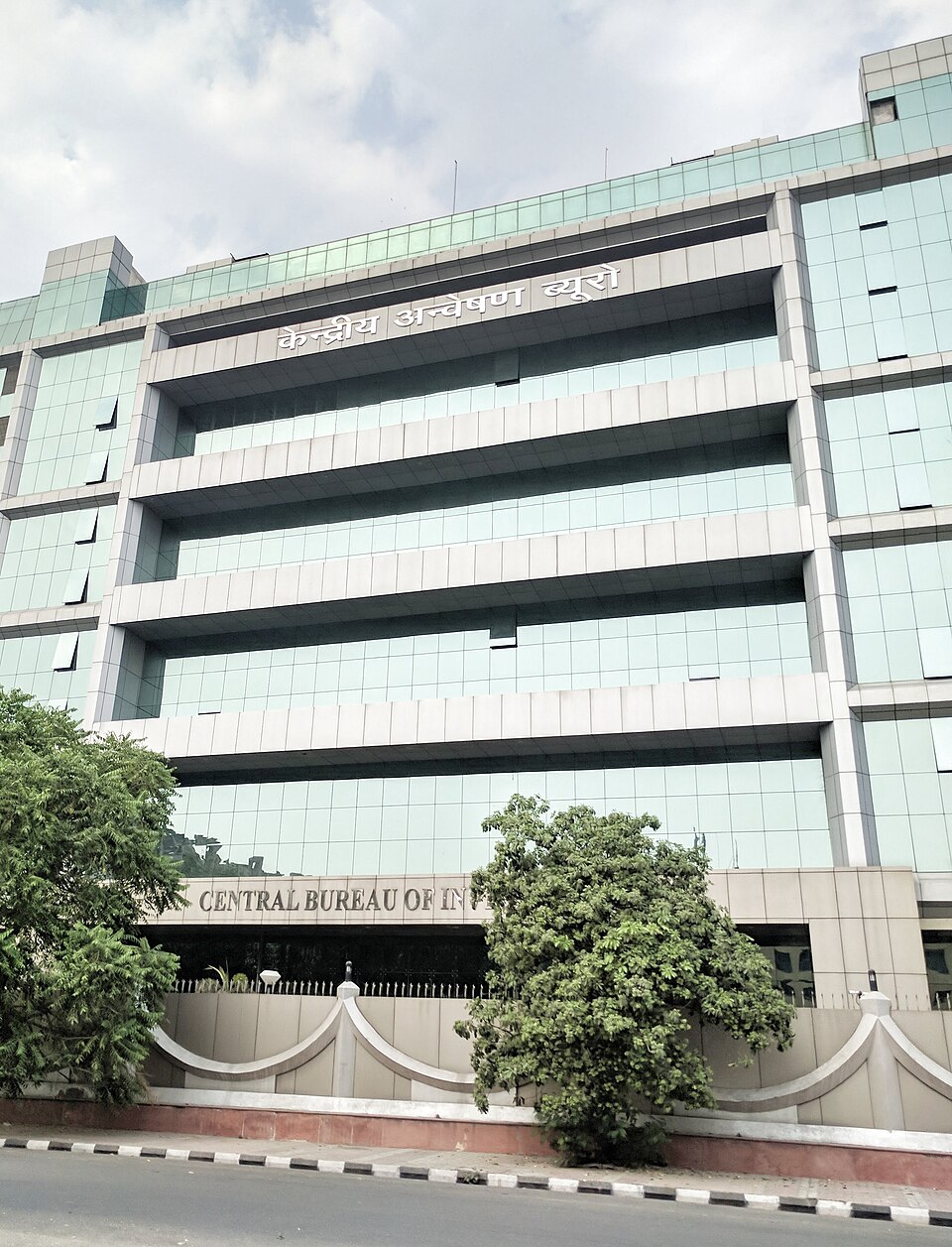
Correct — D, Only 1 (the Central Bureau of Investigation). BHARATPOL is an online portal developed by the CBI and launched on 7 January 2025 by Union Home Minister Amit Shah — about nine months before this exam was held on 12 October 2025. The reason it had to be the CBI is institutional, not incidental: INTERPOL works only through National Central Bureaus, and India's designated National Central Bureau is the CBI. Every Indian request that goes to INTERPOL, and every INTERPOL communication that comes to India, passes through that desk. Until BHARATPOL, a state police unit that needed an INTERPOL notice or assistance from a foreign force had to send its request up by letter or e-mail and wait; the portal puts state police forces and central agencies on one platform with five modules — Connect, INTERPOL Notices, References, Broadcast and Resources — so requests for Red, Blue, Yellow and other notices, and for help on cybercrime, narcotics, arms and human trafficking, terrorism and economic offences, move in real time. The Research and Analysis Wing, the Intelligence Bureau and the Enforcement Directorate had no part in building it, so only item 1 belongs.
- (a)2 and 3 — The Research and Analysis Wing and the Intelligence Bureau are intelligence organisations, not India's police channel to INTERPOL — R&AW handles external intelligence and the IB internal intelligence. Neither is the National Central Bureau, and neither developed BHARATPOL.
- (b)Only 3 — The Intelligence Bureau is India's internal-intelligence agency under the Ministry of Home Affairs. It gathers and assesses intelligence; it is not the agency that routes India's INTERPOL business, and it did not develop this portal.
- (c)3 and 4 — Adds the Enforcement Directorate to the IB. The ED investigates money laundering and foreign-exchange contraventions under the PMLA and FEMA and is certainly a user of international cooperation channels — but it is a consumer of INTERPOL assistance, routed through the CBI, not the builder of the platform.
INTERPOL does not operate on member states' territory; it works through National Central Bureaus, one designated agency per country, which connect that country's police to INTERPOL's General Secretariat at Lyon in France. India's National Central Bureau is the Central Bureau of Investigation. BHARATPOL is simply the digital plumbing for that role — a single platform on which state police forces and central agencies raise and track international requests instead of routing them on paper. It is a coordination and communication tool: it does not confer on the CBI any investigative jurisdiction it did not already have.
The distractor set here is a test of mandates rather than of memory. Ask one question — which of these four is India's link to INTERPOL? — and only the CBI qualifies. R&AW sits under the Cabinet Secretariat and works on external intelligence; the IB sits under the Ministry of Home Affairs and works on internal intelligence; the ED sits under the Department of Revenue and works on financial offences. All three have foreign-facing work, which is what makes them plausible, but none of them is the National Central Bureau. Note also the wording: the question asks who DEVELOPED the portal. The Union Home Minister launched it; the CBI built it — the two are not the same and examiners exploit that gap.
- BHARATPOL was developed by the Central Bureau of Investigation and launched on 7 January 2025 by Union Home Minister Amit Shah
- The CBI is India's National Central Bureau for INTERPOL — all Indian requests to INTERPOL are routed through it
- The portal has five modules: Connect, INTERPOL Notices, References, Broadcast and Resources
- It is meant to speed the request and circulation of INTERPOL notices — Red, Blue, Yellow and others — in cases of cybercrime, drug and arms trafficking, human trafficking, terrorism and economic offences
- The CBI is not a body created by its own statute: it was set up by a Ministry of Home Affairs resolution in 1963 and draws its police powers from the Delhi Special Police Establishment Act, 1946
- INTERPOL, headquartered at Lyon in France, has no power of arrest; a Red Notice is a request to locate and provisionally arrest a person pending extradition, not an international arrest warrant
- Assuming an intelligence agency (IB or R&AW) must handle 'international police cooperation' — that is a police, not an intelligence, function, and it belongs to the National Central Bureau
- Reading 'developed by' as 'launched by' — the Home Minister launched BHARATPOL, the CBI developed it
- Assuming the CBI is a statutory body created by its own Act; its powers come from the Delhi Special Police Establishment Act, 1946
UPPSC asks who developed or launched a newly announced portal or scheme, and in which month or year. UPSC comes at the same ground through mandate and law — which agency acts under which statute, what an INTERPOL notice can and cannot do, and how extradition actually works.
No directly related past PYQ was found.
- practice — not a real PYQ
The Central Bureau of Investigation derives its power to investigate primarily from
- (a)a special Act of Parliament passed in 1963
- (b)the Delhi Special Police Establishment Act, 1946
- (c)Article 324 of the Constitution of India
- (d)the Code of Criminal Procedure alone
Answer(b) the Delhi Special Police Establishment Act, 1946 — the CBI itself was created by a Ministry of Home Affairs resolution in 1963, not by a statute of its own.
- practice — not a real PYQ
An INTERPOL 'Red Notice' is best described as
- (a)an international arrest warrant binding on all member countries
- (b)a request to locate and provisionally arrest a person pending extradition
- (c)a warning about a person's criminal activities
- (d)a request for information about an unidentified body
Answer(b) a request to locate and provisionally arrest a person pending extradition — INTERPOL cannot itself order an arrest; the Blue Notice seeks information on a person, and the Black Notice concerns unidentified bodies.