
With reference to 'Operation Olivia', which of the following statements is/are correct ? 1. It is an initiative of Indian coast Guards to protect Olive Ridley turtles along the coast of Odisha. 2. Operation Olivia is carried out during the month of August which is the nesting time of Olive Ridley turtles. Select the correct answer from the code given below : Code :
- (a)Only 2
- (b)Both 1 and 2
- (c)Neither 1 nor 2
- (d)Only 1
Correct — D, Only 1. Statement 1 is accurate on every element: Operation Olivia is an Indian Coast Guard operation, it is conducted along the Odisha coast, and its purpose is to protect Olive Ridley sea turtles. The ICG has been running it since the early 1980s, using surface ships, hovercraft and Dornier air sorties to keep mechanised trawlers out of the turtle congregation and no-fishing zones off Gahirmatha, the Rushikulya river mouth and the Devi river mouth. Statement 2 fails on the month. The Olive Ridleys begin gathering off the Odisha coast around November, and the Coast Guard's deployment runs with that breeding-and-nesting season through the winter and spring — not in August, which falls in the south-west monsoon when there is no congregation and no arribada to guard. Because statement 1 stands and statement 2 does not, the answer is 'Only 1'.
- (a)Only 2 — This asks you to reject the one statement that is fully correct and accept the one with the factual error. Statement 1 correctly names the agency (Indian Coast Guard), the coast (Odisha) and the species (Olive Ridley); statement 2 misplaces the operation in August, which is outside the turtles' Odisha nesting season.
- (b)Both 1 and 2 — This is the intended trap. A candidate who recognises 'Indian Coast Guard + Odisha + Olive Ridley' as familiar and correct tends to tick both statements without auditing the month. Statement 2 embeds a single wrong detail — August — inside otherwise plausible wording, and that detail is enough to make it false.
- (c)Neither 1 nor 2 — Statement 1 is verifiably correct, so 'neither' cannot hold. Operation Olivia is a named, long-running Indian Coast Guard operation off Odisha for the protection of Olive Ridley turtles — it is not a mis-attribution planted by the examiner.
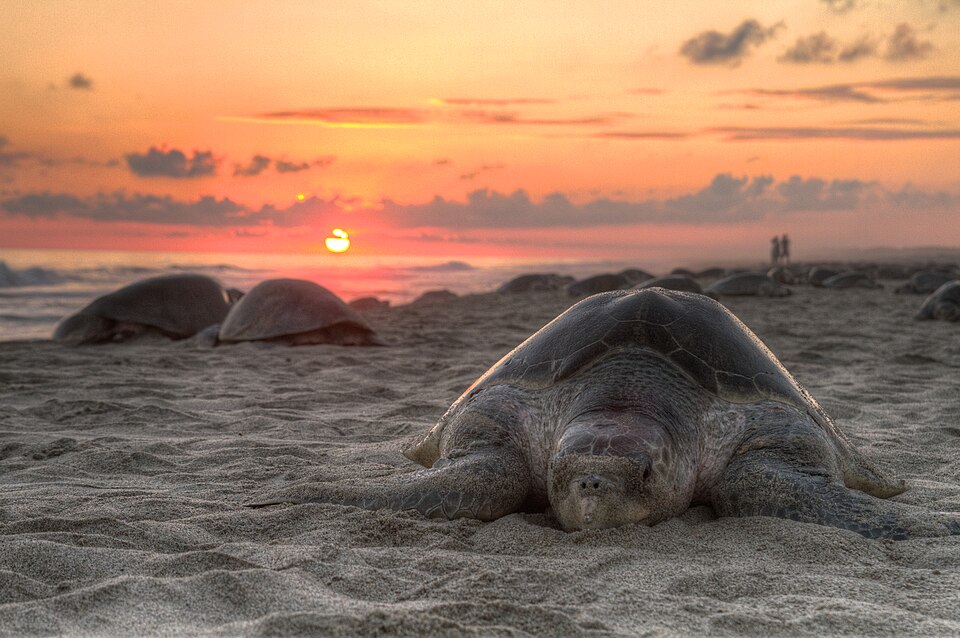
The Olive Ridley (Lepidochelys olivacea) is the world's most abundant sea turtle and is famous for arribada — synchronised mass nesting in which hundreds of thousands of females come ashore on the same few beaches over a handful of nights. India's Odisha coast holds three such rookeries: Gahirmatha inside the Bhitarkanika ecosystem, which is the largest known Olive Ridley rookery in the world, the Rushikulya river mouth in Ganjam district and the Devi river mouth. The single largest killer of these turtles is not poaching but incidental capture in mechanised trawl nets in the shallow congregation waters just offshore. Protecting them is therefore a maritime enforcement problem, which is why the job sits with the Indian Coast Guard rather than with a forest department alone.
Two-statement UPPSC items are almost always decided by one planted error, and the examiner usually puts it in a number, a date or a month rather than in the headline fact. Here everything about statement 1 is designed to feel right — and it is right. Statement 2 then repeats a true-sounding frame ('carried out during the nesting time') and slips in August. The check is seasonal logic: mass nesting on the Odisha coast is a post-monsoon-to-spring event; the turtles start arriving around November and the arribadas fall in the following months, so an operation timed only to August would guard an empty sea. Note the exam's phrasing 'Indian coast Guards' — the actual force is the Indian Coast Guard, a single armed force of the Union under the Ministry of Defence.
- Operation Olivia is run by the Indian Coast Guard along the Odisha coast and has been conducted since the early 1980s to protect Olive Ridley turtles
- The Coast Guard's deployment follows the turtles' breeding-and-nesting season, which begins around November and extends into the spring — August is monsoon season and lies outside it
- Odisha's three mass-nesting sites are Gahirmatha (Bhitarkanika), the Rushikulya river mouth (Ganjam) and the Devi river mouth; Gahirmatha is the world's largest known Olive Ridley rookery
- Synchronised mass nesting is called arribada; the Rushikulya river mouth recorded a record arribada in 2025, reported at close to seven lakh turtles
- Mechanised trawling is banned in the congregation zone during the season and trawlers must fit Turtle Excluder Devices (TEDs) — enforcing this at sea is the core of the operation
- The Olive Ridley is listed in Schedule I of the Wildlife (Protection) Act, 1972 and in Appendix I of CITES
- Ticking 'both' because the agency and the coast are right, without auditing the month — the whole question turns on August
- Assuming a wildlife-protection operation must be run by the environment ministry or the Navy; at sea, enforcement against trawlers is Coast Guard work
- Confusing the nesting season on the Odisha coast (post-monsoon into spring) with the monsoon months
UPPSC gives the operation a name and tests whether you know the agency, the state and the season attached to it; UPSC prefers the ecology and the law behind it — which coast the arribada happens on, what a Turtle Excluder Device does, and which schedule or CITES appendix the species sits in.
The sea coast of which one of the following states has become famous as a nesting place for the giant Olive Ridley turtles from South America?
- (a) Goa
- (b) Gujarat
- (c) Orissa
- (d) Tamil Nadu
Answer(c) Orissa
The same fact from the other side — UPSC asks which coast the Olive Ridleys nest on, UPPSC asks who guards them there. Both hang on knowing that Odisha's Gahirmatha-Rushikulya-Devi stretch is the Indian arribada coast.
- practice — not a real PYQ
Gahirmatha, the largest known mass-nesting site (rookery) of Olive Ridley turtles in the world, lies in which State?
- (a)Andhra Pradesh
- (b)Odisha
- (c)Tamil Nadu
- (d)West Bengal
Answer(b) Odisha — Gahirmatha lies in the Bhitarkanika ecosystem of Kendrapara district; the Rushikulya and Devi river mouths are Odisha's other two rookeries.
- practice — not a real PYQ
A 'Turtle Excluder Device' is fitted to which of the following?
- (a)Trawl nets used by mechanised fishing vessels
- (b)Hatcheries maintained by the forest department
- (c)Coast Guard patrol vessels
- (d)Offshore oil rigs
Answer(a) Trawl nets used by mechanised fishing vessels — the grid lets an incidentally caught sea turtle escape from the net while the catch is retained.