
Iron dome missile defence system belongs to which of the following countries ? 1. France 2. United States of America 3. Israel Select the correct answer from the code given below : Code :
- (a)1 and 2
- (b)2 and 3
- (c)Only 3
- (d)Only 1
Correct — C, Only 3, Israel. Iron Dome is an Israeli mobile all-weather air-defence system developed by Rafael Advanced Defense Systems together with Israel Aerospace Industries. It was declared operational and first deployed near Beersheba on 27 March 2011, and on 7 April 2011 it made its first successful interception of a rocket fired from Gaza. It is built to knock down short-range rockets and artillery shells launched from between 4 and 70 kilometres away, and — the feature that makes it affordable to run — it engages only those projectiles whose trajectory would bring them down on an Israeli populated area, letting the rest fall in open ground. Neither France nor the United States owns or fields it as its own system.
- (a)1 and 2 — Neither France nor the United States built Iron Dome. France has no role in the programme at all, and the American role — described under option (b) — is money and manufacturing support for an Israeli system, not authorship of it.
- (b)2 and 3 — This is the option the question is built to catch, because the American involvement is real and large: the United States contributed about US$1.6 billion to Iron Dome between 2011 and 2021, with a further US$1 billion approved by Congress in 2022, and since July 2014 Raytheon has been the major US partner co-producing major components of the Tamir interceptor missile. But funding a system and manufacturing parts of it is not the same as the system belonging to you — Iron Dome was designed by Rafael and Israel Aerospace Industries and is fielded by Israel.
- (d)Only 1 — France has nothing to do with Iron Dome. French ground-based air defence rests on the Franco-Italian SAMP/T system with Aster missiles, a completely separate programme.
Modern air and missile defence is layered: each layer is tuned to a different threat speed, altitude and range, because one interceptor cannot economically cover them all. Iron Dome is Israel's bottom layer, meant for short-range rockets and mortar/artillery fire from 4 to 70 km. Above it sit David's Sling for medium-range threats and the Arrow family against ballistic missiles. A single Iron Dome unit is a battery, not one launcher: a tracking radar, a battle-management and weapon-control centre that computes where each incoming rocket will land, and launchers firing Tamir interceptors. Because the control centre only fires at rockets predicted to hit a populated area, most incoming rounds are deliberately ignored.
The examiner is testing whether you can separate ownership from sponsorship. Iron Dome is one of the most heavily American-funded foreign weapons programmes in the world and its interceptor is partly built in the United States, so 'USA and Israel' feels generous and safe. But the question asks which country the system belongs to, and on that test only Israel qualifies. Whenever a question asks who a weapon 'belongs to', identify the designing and operating country, not the payer or the co-manufacturer.
- Iron Dome is an Israeli mobile all-weather air-defence system developed by Rafael Advanced Defense Systems and Israel Aerospace Industries
- It was declared operational and first deployed near Beersheba on 27 March 2011, and made its first successful interception of a Gaza-fired rocket on 7 April 2011
- It is designed against short-range rockets and artillery shells fired from 4 to 70 km away, and engages only those whose trajectory would take them into a populated area
- The United States contributed about US$1.6 billion between 2011 and 2021 and Congress approved another US$1 billion in 2022; from July 2014 Raytheon became the major US partner co-producing components of the Tamir interceptor
- Israel's air defence is layered — Iron Dome for short-range rockets, David's Sling for medium-range threats and the Arrow series against ballistic missiles
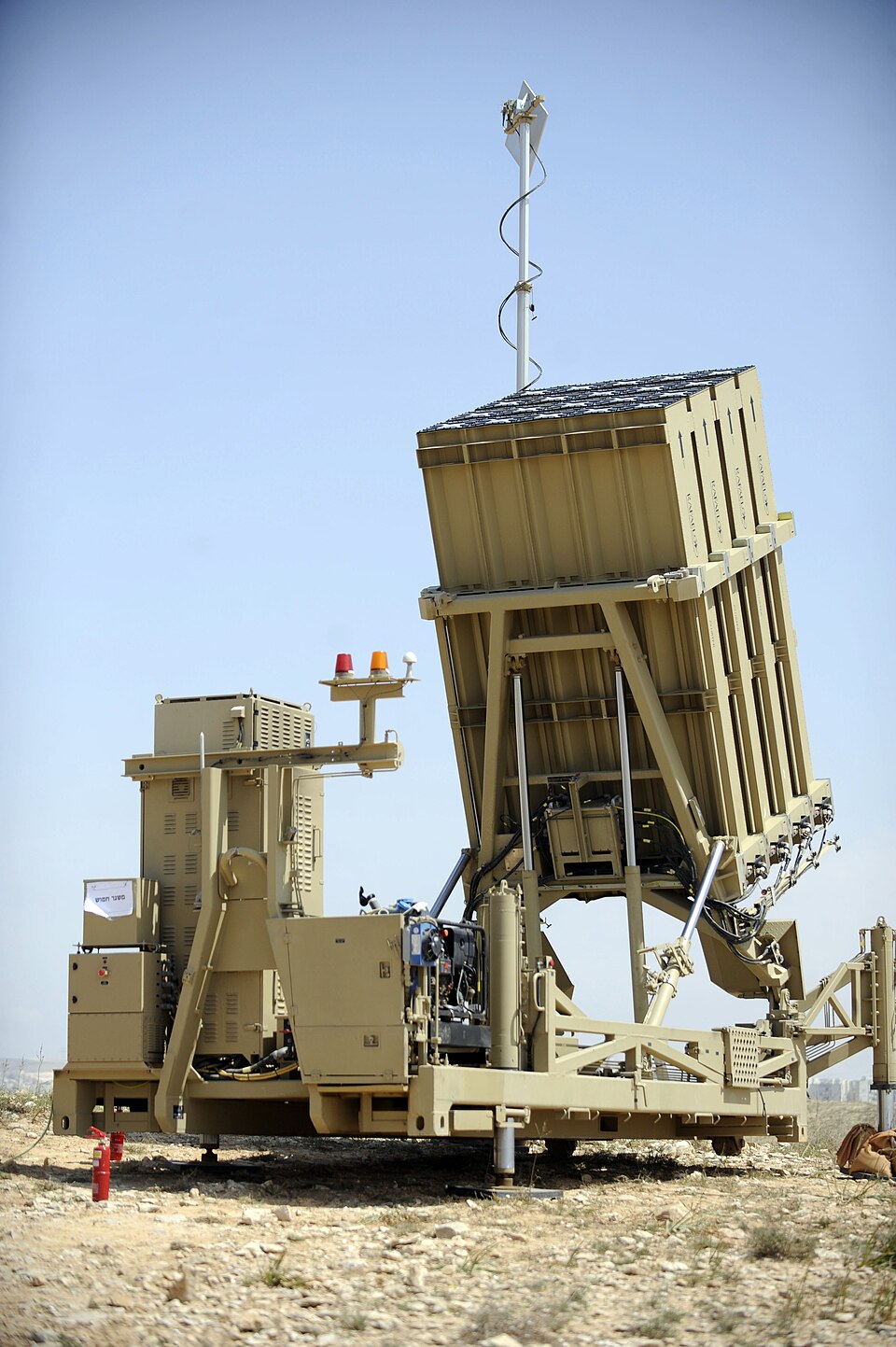
- Marking the USA because America funds Iron Dome and Raytheon co-produces its interceptor — paying for and manufacturing a system is not the same as owning it
- Confusing Iron Dome, which handles short-range rockets and artillery shells, with a ballistic-missile shield such as Arrow or India's BMD
- Treating every famous Israeli missile name as Iron Dome — Barak, David's Sling and Arrow are separate systems with separate roles
UPPSC asks it as a plain country-of-origin item; UPSC prefers the technology and the India angle — what a given system is designed to intercept, or which country India bought or co-developed a system with, as it did with Barak in 2008.
From which one of the following did India buy the Barak anti-missile defence systems?
- (a) Israel
- (b) France
- (c) Russia
- (d) USA
Answer(a) Israel
The same identification skill applied to the other Israeli air-defence name a student is likely to meet: matching a missile-defence system to the country behind it. Barak came from Israel's Rafael, the same company that developed Iron Dome, and the later Barak-8 was co-developed with Israel Aerospace Industries.
- practice — not a real PYQ
The Iron Dome air-defence system is designed primarily to intercept:
- (a)Intercontinental ballistic missiles
- (b)Short-range rockets and artillery shells
- (c)Stealth fighter aircraft
- (d)Satellites in low earth orbit
Answer(b) Short-range rockets and artillery shells — fired from roughly 4 to 70 km away, and only those headed for a populated area.
- practice — not a real PYQ
The Barak-8 / MR-SAM surface-to-air missile has been jointly developed by India's DRDO with which country?
- (a)France
- (b)Russia
- (c)Israel
- (d)United States of America
Answer(c) Israel — the Barak-8 variants were developed jointly with Israel Aerospace Industries.