
Given below are two statements, one is labelled as Assertion (A) and the other as Reason (R). Assertion (A) : The Himalayas form source of several large perennial rivers. Reason (R) : The higher ranges of Himalayas are snow covered throughout the year. Select the correct answer from the code given below : Code :
- (a)Both (A) and (R) are true, but (R) is not the correct explanation of (A)
- (b)(A) is true, but (R) is false
- (c)(A) is false, but (R) is true
- (d)Both (A) and (R) are true and (R) is the correct explanation of (A)
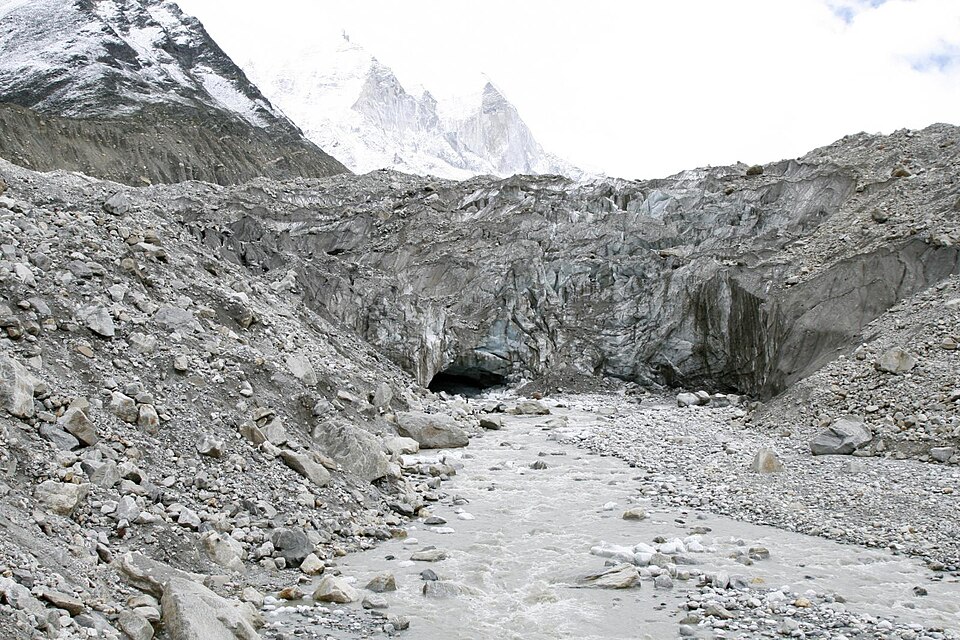
Correct — D, both (A) and (R) are true and (R) is the correct explanation of (A). Read the printed options before you answer anything else: this booklet places 'both true and R IS the explanation' at option (d) and 'both true but R is NOT the explanation' at option (a) — the reverse of the layout most candidates have drilled. Every assertion-reason question in this 2025 paper is arranged that way. On the substance, the Assertion is true. The Indus, the Ganga and the Brahmaputra, with their great tributaries, all rise in or beyond the Himalaya and flow all the year round; that is the standard contrast drawn in Indian geography between the Himalayan rivers and the peninsular rivers such as the Godavari, Krishna and Mahanadi, which depend on rain alone and shrink dramatically in the dry months. The Reason is also true as the textbooks state it. The Greater Himalaya, the Himadri, has an average height above about 6,000 metres and stands above the permanent snowline, so its higher ranges carry snow and glacier ice through the year — which is what the name Himadri, hima + adri, the snow mountain, records — it is Himalaya, hima + alaya, that means the abode of snow. And the Reason genuinely explains the Assertion. A river is perennial only if it has a water supply in the season when it does not rain. Himalayan rivers have exactly that: as summer temperatures rise, the snow and glacier ice of the higher ranges melt and feed the channels through the hot pre-monsoon months, so the flow never stops. Gangotri feeds the Bhagirathi, Yamunotri the Yamuna, Bandarpunch and Siachen and Zemu feed their own streams. Peninsular rivers have no such reservoir and therefore no such guarantee. Strip away the permanent snow of the higher ranges and the Himalayan rivers would still swell in the monsoon but would run dry like the Deccan rivers in April and May — which is the test of a correct explanation. One honest refinement worth carrying: in volume, most of the annual discharge of these rivers still comes from monsoon rain, not from melt; what the snow and ice do is guarantee the lean-season flow, and that is precisely what makes a river perennial rather than seasonal.
- (a)Both (A) and (R) are true, but (R) is not the correct explanation of (A) — This is the dangerous option in the 2025 booklet, because a candidate trained on the usual UPSC code may tick (a) believing it says R does explain A. Here it says the opposite. On the merits it also fails. Perennial snow on the higher ranges is not a fact that merely sits beside the perenniality of the rivers; it is the mechanism that produces it. The melt supplies the water in the dry months, and without a dry-season source a river is seasonal by definition.
- (b)(A) is true, but (R) is false — The Reason is not false. The Greater Himalaya averages well above 6,000 metres and lies above the permanent snowline, which in this part of the world runs at roughly 4,500 to 6,000 metres depending on aspect and latitude; those ranges hold snow and glacier ice all year, and the glaciers themselves — Siachen, Gangotri, Zemu, Bara Shigri — are the visible proof. The statement is about the higher ranges, not about the Shivaliks or the Lesser Himalaya, where seasonal snow does melt away.
- (c)(A) is false, but (R) is true — The Assertion is not false either. The Indus, Ganga and Brahmaputra systems are the textbook examples of large perennial rivers, and their perenniality is the single most-tested contrast with the seasonal, rain-fed rivers of the peninsula. Note that some of the greatest of them — the Indus, the Sutlej and the Brahmaputra — actually rise north of the Great Himalaya in Tibet and cut through the range in deep gorges; that makes them trans-Himalayan and antecedent, but it does not make the Assertion any less true, since they are still fed by Himalayan snow and ice on their way through.
Indian rivers divide into two great families. The Himalayan rivers — the Indus, Ganga and Brahmaputra systems — are perennial, because they draw on two sources: the summer monsoon and the melting of snow and glacier ice in the high ranges. The peninsular rivers — Godavari, Krishna, Mahanadi, Kaveri and the rest — are fed by rain alone and are therefore seasonal, running full in the monsoon and thin or dry in the hot months. The Himalaya itself is conventionally read as three parallel belts: the Greater Himalaya or Himadri, averaging above 6,000 metres and permanently snow-covered, which holds the glaciers; the Lesser Himalaya or Himachal, roughly 3,700 to 4,500 metres; and the outer Shivaliks. It is the first of these, above the permanent snowline, that stores the water the rivers release in the dry season.
Work an assertion-reason item in three separate steps — is A true on its own, is R true on its own, and only then does R actually account for A. Both halves here are safely true, so the question reduces to whether the Reason explains the Assertion, which means the real contest is between the two 'both true' options. That is exactly when reading the printed code becomes non-negotiable: in this 2025 booklet, and in all twenty of its assertion-reason questions, (a) means 'both true, R is NOT the explanation' and (d) means 'both true and R IS the explanation' — inverted from the familiar UPSC arrangement. Then apply the explanation test itself. Remove the permanent snow and ice from the higher ranges and the Assertion loses its basis: the rivers would still flood in the monsoon but would have nothing to carry them through April and May. That dependence is the signature of a correct explanation, so the answer is the 'R IS the explanation' option — here printed as (d).
- Himalayan rivers are perennial because they have two sources — the summer monsoon and the melting of snow and glaciers — while peninsular rivers are rain-fed and therefore seasonal
- The Greater Himalaya (Himadri) averages above about 6,000 metres and lies above the permanent snowline, so it carries snow and glacier ice all year; the Lesser Himalaya and Shivaliks below it do not
- Named glaciers feed named rivers: Gangotri the Bhagirathi, Yamunotri the Yamuna, Bandarpunch the Yamuna headwaters, Bara Shigri the Chandra and so the Chenab, Siachen the Nubra, Zemu the Teesta
- The Indus, Sutlej and Brahmaputra rise north of the Great Himalaya in Tibet and cut across it through deep gorges — they are trans-Himalayan, or antecedent, rivers, older than the range they cross
- In volume the monsoon still supplies most of the annual discharge of Himalayan rivers; the contribution of snow and glacier melt is what sustains flow through the dry pre-monsoon months, and that is what makes them perennial
- The 2025 booklet's inverted assertion-reason code: (a) here means 'both true but R is NOT the explanation' and (d) means 'both true and R IS the explanation'. Read the printed option text every single time, never the remembered UPSC layout
- Extending 'snow covered throughout the year' to the whole Himalaya. It is true of the higher ranges, above the permanent snowline; the Shivaliks and much of the Lesser Himalaya lose their snow every summer
- Assuming glacier melt supplies most of the water in Himalayan rivers. It supplies the dry-season flow, which is what makes them perennial; the monsoon still supplies most of the annual volume
- Forgetting that the Indus, Sutlej and Brahmaputra rise beyond the Great Himalaya in Tibet — a favourite one-line question in its own right
UPPSC sets Himalayan drainage either as an assertion-reason pair on why the rivers behave as they do, as here and as it did in 2021 with river capture and the Teesta, or as a one-line item asking which river is trans-Himalayan. UPSC prefers matched pairs of glaciers and rivers, or a statement set contrasting Himalayan with peninsular drainage.
Consider the following pairs: Glacier — River 1. Bandarpunch : Yamuna 2. Bara Shigri : Chenab 3. Milam : Mandakini 4. Siachen : Nubra 5. Zemu : Manas Which of the pairs given above are correctly matched?
- (a) 1, 2 and 4
- (b) 1, 3 and 4
- (c) 2 and 5
- (d) 3 and 5
Answer(a) 1, 2 and 4
The Reason of this question turned into a factual test. Each correct pair — Bandarpunch to the Yamuna, Bara Shigri to the Chenab, Siachen to the Nubra — is one instance of permanent Himalayan ice feeding a river, which is exactly the mechanism that makes those rivers perennial. Learning the glacier-river pairs is how the abstract claim in (R) becomes something you can verify.
If there were no Himalayan ranges, what would have been the most likely geographical impact on India? 1. Much of the country would experience the cold waves from Siberia. 2. Indo-Gangetic plain would be devoid of such extensive alluvial soils. 3. The pattern of monsoon would be different from what it is at present. Which of the statements given above is/are correct?
- (a) 1 only
- (b) 1 and 3 only
- (c) 2 and 3 only
- (d) 1, 2 and 3
Answer(d) 1, 2 and 3
The wider version of the same causal reasoning: what the Himalaya does to India. UPSC's answer credits the range with blocking Siberian cold, supplying the alluvium of the Indo-Gangetic plain and shaping the monsoon — all of them, like the perenniality of the rivers, consequences of the range's height rather than accidents beside it.
Given below are two statements, one is labelled as Assertion (A) and other as Reason (R): Assertion (A): Teesta river was earlier a tributary of Ganga now it is a tributary of Brahmaputra. Reason (R): River capturing is a major feature of Himalayan rivers. Select the correct answer using the codes given below.
- (a) Both (A) and (R) are true and (R) is correct explanation of (A)
- (b) Both (A) and (R) are true, but (R) is not correct explanation of (A)
- (c) (A) is true, but (R) is false
- (d) (A) is false, but (R) is true
Answer(a) Both (A) and (R) are true and (R) is correct explanation of (A)
UPPSC's other assertion-reason question on Himalayan drainage, and a warning in itself. The reasoning is the same — a general property of Himalayan rivers explaining a particular fact about one of them — but the 2021 code is the STANDARD one, where (a) means R does explain A. In 2025 that same meaning is printed at (d). Same commission, same topic, opposite layout: read the options, every time.
Which of the following rivers is a Trans-Himalayan river ?
- (a) Jhelum
- (b) Sutlej
- (c) Ganga
- (d) Ravi
Answer(b) Sutlej
Adds the refinement this card's Assertion glosses over. Several of the largest perennial rivers — the Sutlej, the Indus and the Brahmaputra — do not rise in the Himalaya at all but beyond it, in Tibet, and cut through the range as antecedent streams. They are still snow- and glacier-fed on the way, so the Assertion holds, but the distinction is exactly what UPPSC likes to test separately.
- practice — not a real PYQ
Which one of the following best explains why the peninsular rivers of India are seasonal while the Himalayan rivers are perennial?
- (a)Peninsular rivers flow through older and harder rocks
- (b)Peninsular rivers are fed only by rainfall, whereas Himalayan rivers also receive snow and glacier melt
- (c)Peninsular rivers have shorter courses and smaller catchments
- (d)Peninsular rivers flow in shallow valleys and lose more water by evaporation
Answer(b) Peninsular rivers are fed only by rainfall, whereas Himalayan rivers also receive snow and glacier melt — the melt sustains flow through the rainless months, which is what makes a river perennial.
- practice — not a real PYQ
Consider the following pairs: Glacier — River 1. Gangotri : Bhagirathi 2. Yamunotri : Yamuna 3. Zemu : Teesta How many of the pairs given above are correctly matched?
- (a)Only one
- (b)Only two
- (c)All three
- (d)None
Answer(c) All three — the Gangotri glacier feeds the Bhagirathi at Gaumukh, the Yamunotri glacier the Yamuna, and the Zemu glacier in Sikkim the Teesta.