
With reference to RudraM-II Missile, which of the following statements is/are correct ? 1. It is an air-to-air missile. 2. It was tested in Rajasthan in May 2024. Select the correct answer using the codes given below :
- (a)Only 2
- (b)Neither 1 nor 2
- (c)Only 1
- (d)Both 1 and 2
Correct — B, Neither 1 nor 2. Both statements are wrong, and each is wrong for a clean, checkable reason. Statement 1 misclassifies the weapon: RudraM-II is an air-to-SURFACE anti-radiation missile, not an air-to-air missile. It is launched from a fighter but it hunts targets on the ground — the enemy's radars, jammers and communication emitters that make up an integrated air-defence network. That is the whole point of the RudraM family: it is India's SEAD weapon (Suppression of Enemy Air Defences), homing on the radiation an enemy radar emits rather than on another aircraft. An air-to-air missile — Astra, R-73, Meteor — is designed to kill aircraft, a completely different mission. Statement 2 misplaces the test: the RudraM-II was flight-tested on 29 May 2024 from a Sukhoi Su-30MKI off the coast of ODISHA, over the Bay of Bengal, not in Rajasthan. Odisha is where DRDO's missile testing infrastructure sits — the Integrated Test Range at Chandipur and the Dr. A.P.J. Abdul Kalam Island launch complex — because a sea range lets a long-range missile fly out over empty water. Rajasthan hosts the Pokhran field firing ranges, used mainly for land-attack, armour and short-range trials, which is why 'Rajasthan' reads plausibly and traps candidates who remember only that India tests missiles in a desert somewhere. With statement 1 false on classification and statement 2 false on geography, the answer is (b), neither.
- (a)Only 2 — Would require the May 2024 test to have happened in Rajasthan. It did not: the RudraM-II was fired from a Su-30MKI off the Odisha coast on 29 May 2024, over the Bay of Bengal. DRDO's long-range missile trials run from the Integrated Test Range, Chandipur and from Dr. A.P.J. Abdul Kalam Island, both on the Odisha coast. Rajasthan's Pokhran ranges are a land range and were not the venue.
- (c)Only 1 — Would require RudraM-II to be an air-to-air missile. It is an air-to-surface anti-radiation missile: it is carried by a fighter, but its targets are surface-based radiation emitters — surveillance and tracking radars, jammers, communication nodes. It uses a passive homing head that locks on to the enemy radar's own transmissions, plus an imaging infrared seeker, and it has a range of roughly 300–350 km. India's air-to-air missiles are a different line altogether (Astra BVR, the imported R-73/R-77 and Meteor).
- (d)Both 1 and 2 — Doubles up both errors — wrong class of missile and wrong test location. RudraM-II is air-to-surface anti-radiation, and the 29 May 2024 trial was off the Odisha coast. Note the exam craft here: the setter has built a two-statement item in which BOTH statements are false, so a candidate who half-remembers the news and assumes at least one statement must be right walks straight into (a), (c) or (d).
An anti-radiation missile (ARM) is a weapon that homes on to the radio-frequency energy an enemy radar radiates. Because a radar must transmit to see, it gives away its own position; an ARM turns that transmission into a beacon. The mission is called SEAD — Suppression of Enemy Air Defences — and it is what a strike package does first, blinding the adversary's radar picture so that follow-on aircraft can operate. The RudraM series is DRDO's indigenous answer: RudraM-I (the New Generation Anti-Radiation Missile, NGARM), first fired from a Su-30MKI over the Bay of Bengal off Odisha on 25 January 2019 with a reach of roughly 150–200 km; RudraM-II, tested on 29 May 2024, an air-to-surface missile of 300–350 km with a two-stage rocket motor, a passive homing head and an imaging-infrared seeker; and the longer-ranged RudraM-III under development. All are launched from fighters — chiefly the Su-30MKI, with the Mirage 2000 and other platforms in the plan.
The examiner has picked the two most common ways a candidate mis-files a defence news item: the missile's launch-and-target combination, and where India tests things. Fix the vocabulary first. 'Air-to-air' means fighter versus aircraft. 'Air-to-surface' means fighter versus something on the ground or sea. 'Surface-to-surface' means Agni and Prithvi. 'Surface-to-air' means Akash and the S-400. RudraM is air-to-surface with a special anti-radiation role, so statement 1 is false on the face of the name itself. Then fix the map. Long-range and sea-skimming trials run from the Odisha coast — the Integrated Test Range at Chandipur and Dr. A.P.J. Abdul Kalam Island (formerly Wheeler Island) — precisely because the missile can fly out over the Bay of Bengal without endangering anyone. Rajasthan's Pokhran range is where land-attack systems, tank guns and short-range trials happen, and it was the site of the 1974 and 1998 nuclear tests. Once you carry 'Odisha coast = DRDO missile range' as a default, the second statement collapses immediately.
- RudraM-II is an air-to-surface anti-radiation missile developed by DRDO, with a range of about 300–350 km, a two-stage rocket motor, a passive homing head that locks on to enemy radar emissions and an imaging-infrared seeker.
- The RudraM-II was successfully flight-tested from a Sukhoi Su-30MKI off the coast of Odisha on 29 May 2024 — not in Rajasthan.
- RudraM-I, the New Generation Anti-Radiation Missile (NGARM), had its maiden flight trial from a Su-30MKI on 18 January 2018; a further trial off the Odisha coast followed on 25 January 2019, and the test usually reported as the missile's first under the Rudram-1 name was on 9 October 2020 from ITR Balasore; its range is about 150–200 km and it uses a dual-pulsed solid rocket motor with a passive homing head plus a millimetre-wave active seeker.
- The role these weapons perform is SEAD — Suppression of Enemy Air Defences — destroying the radars, jammers and communication emitters of an enemy air-defence network so that a strike package can operate.
- India's principal missile test ranges are the Integrated Test Range at Chandipur and the launch complex on Dr. A.P.J. Abdul Kalam Island, both on the Odisha coast; Pokhran in Rajasthan is a land firing range.
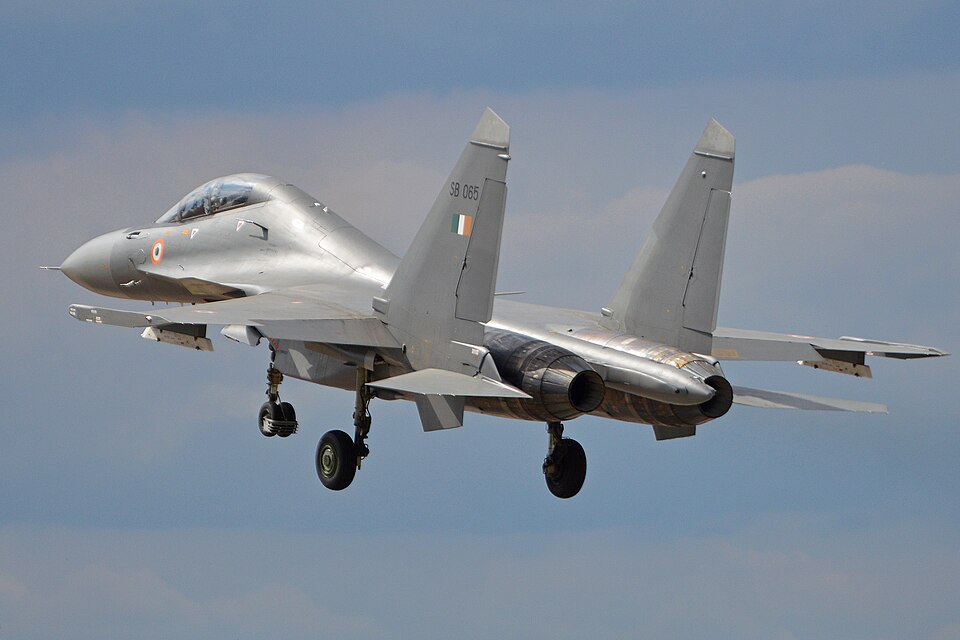
- Reading 'launched from a fighter aircraft' as 'air-to-air'. The launch platform tells you the first half of the name; the target tells you the second. RudraM is fired from the air AT surface radars, so it is air-to-surface.
- Assuming Indian missile tests happen at Pokhran, Rajasthan. Long-range and sea-range trials go from the Odisha coast; Pokhran is a land range associated with the 1974 and 1998 nuclear tests.
- Assuming that in a two-statement item at least one statement must be true. UPPSC deliberately offers 'Neither 1 nor 2' as a live option and uses it more often than candidates expect.
UPPSC asks defence items as 'With reference to X missile, which statements are correct' with a name, a class and a place or date to check; UPSC asks the same material conceptually — what kind of missile it is, how it is propelled, what mission it performs — so learn the classification, not just the headline.
With reference to Agni-IV Missile, which of the following statements is/are correct? 1. It is a surface-to-surface missile. 2. It is fuelled by liquid propellant only. 3. It can deliver one-tonne nuclear warheads about 7500 km away. Select the correct answer using the code given below.
- (a) 1 only
- (b) 2 and 3 only
- (c) 1 and 3 only
- (d) 1, 2 and 3
Answer(a) 1 only
The same item design on a different missile — UPSC gives the name and asks you to check the class, the propellant and the range. Agni-IV is a solid-propellant surface-to-surface missile of about 3,500–4,000 km, so only the class statement survives; practising that test is exactly what saves you on RudraM-II.
Consider the following statements : 1. Ballistic missiles are jet-propelled at subsonic speeds throughout their flights, while cruise missiles are rocket-powered only in the initial phase of flight. 2. Agni-V is a medium-range supersonic cruise missile, while BrahMos is a solid-fuelled intercontinental ballistic missile. Which of the statements given above is/are correct?
- (a) 1 only
- (b) 2 only
- (c) Both 1 and 2
- (d) Neither 1 nor 2
Answer(d) Neither 1 nor 2
Tests missile classification by deliberately swapping categories, and — like this UPPSC item — its answer is 'neither'. Both papers are teaching the same discipline: verify what class a missile belongs to instead of trusting a familiar name.
- practice — not a real PYQ
The RudraM series of missiles developed by DRDO is designed primarily for which of the following roles?
- (a)Intercepting incoming ballistic missiles
- (b)Destroying enemy radars and air-defence emitters (anti-radiation / SEAD)
- (c)Attacking enemy submarines from a helicopter
- (d)Engaging enemy fighter aircraft beyond visual range
Answer(b) Destroying enemy radars and air-defence emitters (anti-radiation / SEAD) — the RudraM family are air-to-surface anti-radiation missiles that home on the radio-frequency emissions of enemy radars, jammers and communication nodes. Beyond-visual-range air-to-air work is Astra's role.
- practice — not a real PYQ
Which one of the following pairs (Missile – Class) is NOT correctly matched?
- (a)Astra – Air-to-air missile
- (b)Akash – Surface-to-air missile
- (c)RudraM-II – Air-to-air missile
- (d)Agni-V – Surface-to-surface missile
Answer(c) RudraM-II – Air-to-air missile — RudraM-II is an air-to-surface anti-radiation missile, not an air-to-air missile. Astra is India's indigenous BVR air-to-air missile, Akash is a surface-to-air system and Agni-V is a surface-to-surface ballistic missile.