
Match List-I with List-II and choose the correct answer using the codes given below the lists : List-I (Person) A. Gopi Thotakura B. Dipa Karmakar C. Aroh Barjatya D. Dev Patel List-II (Reason) 1. First Indian Gymnast to win Gold at Asian Championship 2. Indian born NASA scientist who led the team to study solar ecliptic impact on ionosphere 3. First Indian Space Tourist 4. British actor who made his directorial debut with thriller "Monkey Man" Codes :
- (a)A-4, B-1, C-2, D-3
- (b)A-3, B-1, C-2, D-4
- (c)A-3, B-2, C-1, D-4
- (d)A-2, B-1, C-3, D-4
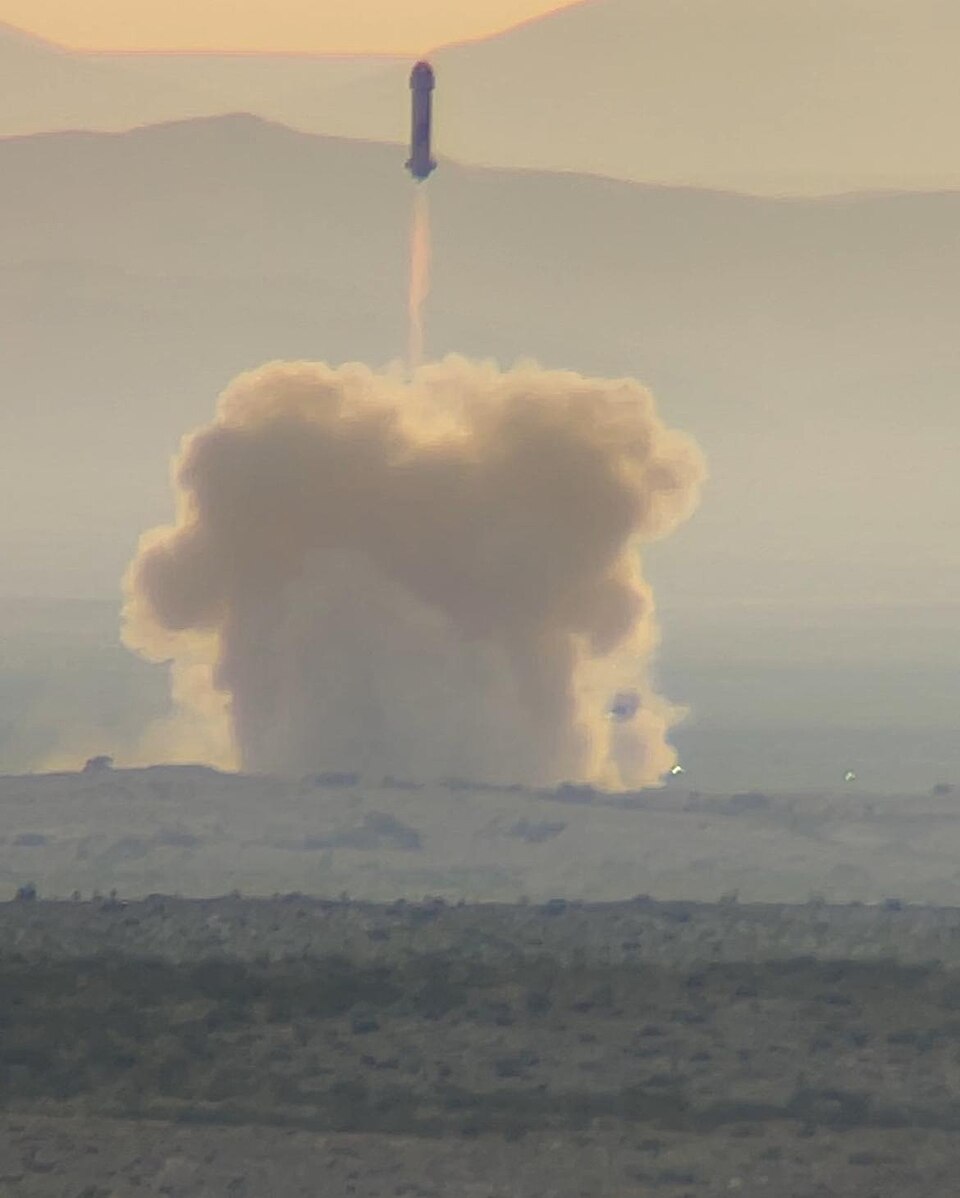
Correct — B, A-3, B-1, C-2, D-4. Every pair is a 2024 news item and every pair checks out. A-3: Gopichand "Gopi" Thotakura, an Andhra-born pilot and entrepreneur, flew on Blue Origin's New Shepard NS-25 suborbital mission on 19 May 2024 and became the first Indian space tourist — and only the second Indian citizen in space after Rakesh Sharma's Soyuz flight of 1984, the difference being that Sharma was a serving Air Force officer on a state mission while Thotakura bought a seat on a commercial suborbital hop. B-1: Dipa Karmakar won gold in the women's vault at the Asian Gymnastics Championships in Tashkent in May 2024, the first gold by an Indian gymnast at that championship; she had already been the first Indian female gymnast to compete at an Olympics, finishing fourth in the vault at Rio 2016, and she retired in October 2024. C-2: Aroh Barjatya, an Indian-American physicist who directs the Space and Atmospheric Instrumentation Lab at Embry-Riddle Aeronautical University, led NASA's APEP mission — Atmospheric Perturbations around Eclipse Path — which fired three Black Brant IX sounding rockets from Wallops during the total solar eclipse of 8 April 2024 to measure how the sudden loss of sunlight disturbs the ionosphere. That is exactly what List-II item 2 is describing in its clumsy phrase "solar ecliptic impact on ionosphere". D-4: Dev Patel, the British actor, made his directorial debut with the action thriller Monkey Man, which he also produced and co-wrote; it premiered at South by Southwest on 11 March 2024 and released theatrically on 5 April 2024. A-3, B-1, C-2, D-4 is the code in option (b).
- (a)A-4, B-1, C-2, D-3 — Wrong. It gets B and C right but swaps A and D, making Gopi Thotakura the British director of Monkey Man and Dev Patel the first Indian space tourist. List-II item 4 explicitly says 'British actor', which rules out Thotakura, and Dev Patel has never flown to space.
- (c)A-3, B-2, C-1, D-4 — Wrong. It fixes A and D correctly but swaps B and C, making Dipa Karmakar the NASA scientist studying the ionosphere and Aroh Barjatya the gymnast. Karmakar is India's best-known artistic gymnast, not a physicist, and Barjatya is a space-physics researcher at Embry-Riddle who led the APEP eclipse rockets.
- (d)A-2, B-1, C-3, D-4 — Wrong, and this is the sharpest trap in the set because the confusion it invites is real. It swaps A and C, making Thotakura the NASA scientist and Barjatya the space tourist. Both men genuinely have an Embry-Riddle Aeronautical University connection — Thotakura trained there as a pilot, Barjatya teaches and runs a lab there — so a candidate who has half-remembered 'Embry-Riddle' from the news can attach it to the wrong man. Separate them by role: Thotakura was a paying passenger on a Blue Origin suborbital flight, Barjatya was the principal investigator of a NASA sounding-rocket campaign.
This is a personalities-in-the-news match item, the format UPPSC uses most often for its current-affairs block, and every one of the four entries belongs to the first half of 2024 — the window the December 2024 paper was drawing from. Two of them turn on a 'first': the first Indian to fly as a paying space passenger, and the first Indian gymnast to take gold at the Asian Gymnastics Championships. The other two turn on identifying a person by profession: an Indian-origin space physicist leading a NASA mission, and a British actor of Indian descent turning director.
The way to crack a four-by-four match list is never to verify all four pairs — it is to find the one pair you are surest of and let the codes do the elimination. Here, if you are certain only that Dev Patel is the British actor behind Monkey Man, D-4 alone kills option (a) and leaves three. If you then know Dipa Karmakar is a gymnast, B-1 kills option (c) and you are down to (b) versus (d), which differ only in whether Thotakura or Barjatya was the space tourist. One clean fact — that Thotakura flew on New Shepard — closes it. Anchor all of this to the exam date: this paper was sat on 22 December 2024, so 'first Indian space tourist' means as of late 2024, and it remains true today. Dipa Karmakar retired from gymnastics in October 2024, two months before the exam, so a 2026 reader should treat that pair as a historical achievement rather than a current status.
- Gopichand 'Gopi' Thotakura flew on Blue Origin's New Shepard NS-25 suborbital mission on 19 May 2024 as the first Indian space tourist, and was the second Indian citizen in space after Rakesh Sharma (1984).
- Dipa Karmakar won gold in the women's vault at the Asian Gymnastics Championships in Tashkent in May 2024 — the first gold by an Indian gymnast at that event. She was earlier the first Indian female gymnast at an Olympics (Rio 2016, fourth in the vault) and retired in October 2024.
- Aroh Barjatya of Embry-Riddle Aeronautical University led NASA's APEP (Atmospheric Perturbations around Eclipse Path) mission, which launched three Black Brant IX sounding rockets during the total solar eclipse of 8 April 2024 to study eclipse-driven disturbances in the ionosphere.
- Dev Patel, a British actor, made his directorial debut with the action thriller Monkey Man (2024), which he also produced and co-wrote; it premiered at SXSW on 11 March 2024 and released on 5 April 2024.
- Both Thotakura and Barjatya are linked to Embry-Riddle Aeronautical University — Thotakura as a pilot trainee, Barjatya as a faculty researcher — which is precisely the overlap the distractor (d) exploits.
- Calling Gopi Thotakura 'the first Indian in space'. He was the first Indian space tourist; Rakesh Sharma flew in 1984. The qualifier is the whole question.
- Mixing up Thotakura and Barjatya because both are tied to Embry-Riddle Aeronautical University. One bought a seat on a commercial rocket, the other ran a NASA science mission.
- Reading List-II item 4 carelessly. 'British actor' is a deliberate signpost — Dev Patel is British-born of Gujarati Indian descent, and the nationality word is there to let you eliminate the Indian names in one step.
UPPSC packs its current-affairs personalities into four-by-four match lists like this one and rewards the candidate who has read a year's news headlines rather than one who has memorised a static list. UPSC almost never asks 'who is this person' directly; it prefers to embed the achievement in a statement question about the underlying science or scheme.
Match List I (Name of the Lady) with List II (Achievement) and select the correct answer using the codes given below the lists: List I (Name of the lady) A. Chinna Pillai B. Kaveri Thakur C. Mira Nair D. Yasoda Ekambaram List II (Achievement) 1. Winner of Neerja Bhanot Award 2. Recipient of Stree Shakti Puraskar 3. Became the fastest swimmer in Asia at the age of 16 years 4. Recipient of the Golden Lion at Venice Film Festival Codes:
- (a) 3 2 1 4
- (b) 2 3 4 1
- (c) 3 2 4 1
- (d) 2 3 1 4
Answer(b) 2 3 4 1
The same instrument in an earlier decade — four newsworthy individuals set against four achievements, one of them a film-festival prize. It shows that the elimination technique, not exhaustive recall, is what the format is testing.
Match List - I with List - II and select the correct answer from the codes given below the lists : List - I A. Thomas Cook B. Greta Thunberg C. Dr. Usha Kiran D. Carrie Lam List - II 1. Recipient of Bharat-Bharati Award 2. Hong Kong Leader 3. Environmental Activist 4. British Tour and Travel Company Codes :
- (a) A-1, B-2, C-3, D-4
- (b) A-4, B-2, C-3, D-1
- (c) A-1, B-3, C-4, D-2
- (d) A-4, B-3, C-1, D-2
Answer(d) A-4, B-3, C-1, D-2
UPPSC running exactly this format five years earlier — names in the previous year's headlines matched to what made them news, with one entry deliberately not a person at all. Same reading discipline: use the one pair you are certain of to kill codes.
- practice — not a real PYQ
Who became the first Indian space tourist, flying on Blue Origin's New Shepard NS-25 mission in May 2024?
- (a)Aroh Barjatya
- (b)Gopichand Thotakura
- (c)Shubhanshu Shukla
- (d)Prasanth Balakrishnan Nair
Answer(b) Gopichand Thotakura — he flew on the suborbital NS-25 mission on 19 May 2024, becoming the second Indian citizen in space after Rakesh Sharma (1984) and the first as a paying passenger.
- practice — not a real PYQ
NASA's APEP mission, which launched sounding rockets during the total solar eclipse of 8 April 2024, was designed to study
- (a)Disturbances in the Earth's ionosphere caused by the sudden loss of sunlight
- (b)The chemical composition of the solar corona
- (c)Ozone depletion over the Antarctic
- (d)Gravitational lensing by the Moon
Answer(a) Disturbances in the Earth's ionosphere caused by the sudden loss of sunlight — APEP stands for Atmospheric Perturbations around Eclipse Path; three Black Brant IX rockets were flown before, during and after peak eclipse under Aroh Barjatya of Embry-Riddle Aeronautical University.