
Given below are two statements, one is labelled as Assertion (A) and the other as Reason (R). Assertion (A) : The concept of Sustainable Development was popularised by the Brundtland Report. Reason (R) : The Brundtland Report is also known as "The Limits to Growth". Select the correct answer from the codes given below :
- (a)Both (A) and (R) are true, but (R) is not the correct explanation of (A).
- (b)(A) is false, but (R) is true.
- (c)Both (A) and (R) are true and (R) is the correct explanation of (A).
- (d)(A) is true, but (R) is false.
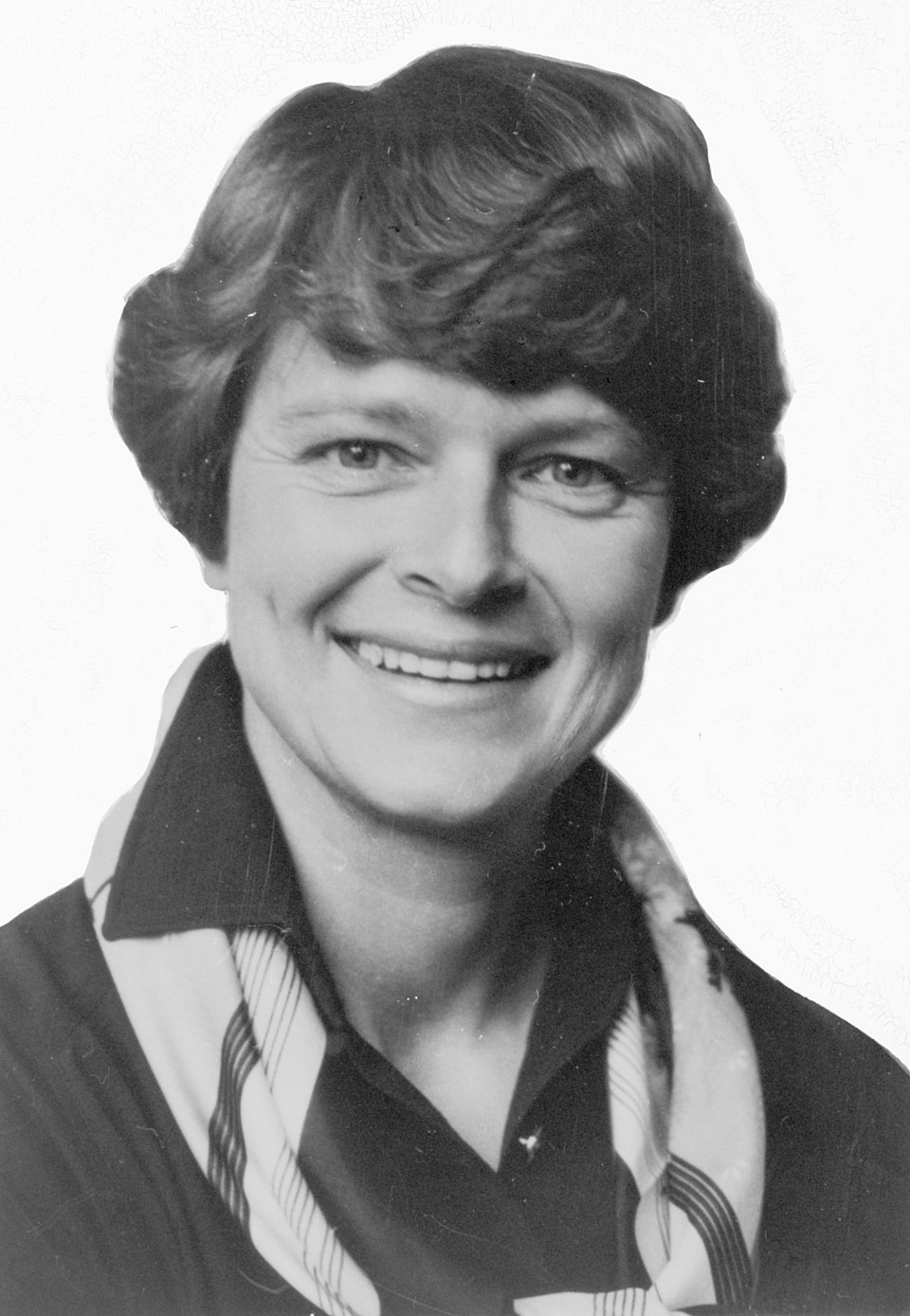
Correct — D, (A) is true but (R) is false. Take them one at a time, which is what an assertion-reason item demands. The Assertion is true. The World Commission on Environment and Development, set up by the United Nations General Assembly in 1983 and chaired by Gro Harlem Brundtland of Norway, submitted its report to the UN in 1987. That report gave the world the sentence every candidate should be able to recite — development that meets the needs of the present without compromising the ability of future generations to meet their own needs — and it is from this report that 'sustainable development' passed into general political and academic use, carrying on to the Rio Earth Summit of 1992 and eventually to the Sustainable Development Goals. The Reason is false, and falsified by nothing subtler than a title. The Brundtland Report is known as 'Our Common Future'. 'The Limits to Growth' is a different book from a different decade by different authors: published in 1972, commissioned by the Club of Rome, written by a Massachusetts Institute of Technology team led by Donella Meadows, and built on the World3 computer model of population, food, industrial output, resources and pollution. Its argument was also different — that exponential growth on a finite planet would hit physical limits within a century — whereas 'Our Common Future' argued that growth and environmental protection could be reconciled if development were made sustainable. Since (R) is false, options (a) and (c), which need both statements to be true, fall away, and so does (b), which needs (A) to be false. That leaves (d).
- (a)Both (A) and (R) are true, but (R) is not the correct explanation of (A). — This option accepts the Reason as true, and it is not. The Brundtland Report's title is 'Our Common Future'; 'The Limits to Growth' is the Club of Rome's 1972 report. Candidates arrive here by a half-memory that both texts are foundational environmental documents and by a rule of thumb that an assertion-reason pair with two plausible-sounding sentences is usually (a) or (b).
- (b)(A) is false, but (R) is true. — Both halves are wrong. The Assertion is true — 'Our Common Future' (1987) is precisely the document credited with popularising sustainable development — and the Reason is false. This is the exact inversion of the correct answer and is the option chosen by a candidate who has the two titles swapped in memory.
- (c)Both (A) and (R) are true and (R) is the correct explanation of (A). — It fails at the first test, the truth of (R), so the question of explanation never arises. Even if the title had been right, note that a report's alternative name could not explain why a concept became popular — an alias is not a cause. Checking each statement for truth before ever asking about explanation is the discipline that saves marks in this format.
Two reports, fifteen years apart, frame the modern environment-and-development debate. 'The Limits to Growth' (1972), commissioned by the Club of Rome and produced by an MIT team led by Donella Meadows using the World3 model, projected that continued exponential growth in population and industrial output would run into resource and pollution limits within a hundred years; it appeared in the same year as the Stockholm Conference on the Human Environment, out of which UNEP was created. 'Our Common Future' (1987), the report of the World Commission on Environment and Development chaired by Gro Harlem Brundtland, took the opposite temper: not limits to growth but a different kind of growth, defined as development that meets present needs without compromising the ability of future generations to meet theirs. That report led directly to the UN Conference on Environment and Development at Rio in 1992, to Agenda 21, and through the Millennium Development Goals to the Sustainable Development Goals of 2015.
Assertion-reason questions in UPPSC are usually decided on a single verifiable detail, and here it is a title. Note the careful verb in the Assertion — 'popularised', not 'coined'. That wording is deliberate and accurate: the phrase sustainable development was in circulation before 1987, notably in the World Conservation Strategy published in 1980 by IUCN with UNEP and WWF, and it was the Brundtland Report that carried it into mainstream politics with a usable one-sentence definition. Had the Assertion claimed the report invented the term, it would have been shakier. The method to carry into the hall is mechanical: test (A), test (R), and only if both survive ask whether (R) explains (A). Here (R) dies on the title, so three of the four options are eliminated without any judgement about explanation at all.
- The World Commission on Environment and Development was constituted by the UN General Assembly in 1983 and chaired by Gro Harlem Brundtland of Norway; its report, submitted in 1987, is titled 'Our Common Future' and is universally called the Brundtland Report.
- Its definition: sustainable development is 'development that meets the needs of the present without compromising the ability of future generations to meet their own needs.'
- 'The Limits to Growth' (1972) was commissioned by the Club of Rome and written by an MIT team led by Donella Meadows, using the World3 systems model of population, food, industry, resources and pollution.
- Chronology worth memorising: The Limits to Growth and the Stockholm Conference, 1972 → Our Common Future, 1987 → Montreal Protocol in force, 1 January 1989 → Rio Earth Summit, 1992 → Sustainable Development Goals, 2015.
- The phrase 'sustainable development' predates the Brundtland Report — it appears notably in the World Conservation Strategy of 1980 (IUCN with UNEP and WWF) — which is why the Assertion says 'popularised' rather than 'coined'.
- 'Our Common Future' led to the UN Conference on Environment and Development (the Rio Earth Summit) of 1992, which produced Agenda 21 and opened the UNFCCC and the Convention on Biological Diversity for signature.
- Swapping the two titles. Brundtland Report = 'Our Common Future' (1987, WCED); 'The Limits to Growth' = Club of Rome, 1972.
- Assuming the Brundtland Report coined the term. It popularised and defined it; the phrase had already appeared in the 1980 World Conservation Strategy.
- Attributing 'The Limits to Growth' to the United Nations. It was a Club of Rome commission carried out at MIT, not a UN report.
- Answering the 'is (R) the explanation of (A)' question before checking whether (R) is true at all — in this item the truth test alone settles the answer.
UPPSC likes this area in two shapes — an assertion-reason pair turning on a title or a date, and a chronological ordering of environmental landmarks — while UPSC prefers to test the content of the concept, for instance by linking the Brundtland definition to carrying capacity or by attaching 'The Limits to Growth' to the Club of Rome in a statement-based item.
Sustainable development is described as the development that meets the needs of the present without compromising the ability of future generations to meet their own needs. In this perspective, inherently the concept of sustainable development is intertwined with which of the following concepts ?
- (a) Social justice and empowerment
- (b) Inclusive Growth
- (c) Globalization
- (d) Carrying capacity
Answer(d) Carrying capacity
Quotes the Brundtland definition word for word and then pushes one step further into its logic — resource use within the environment's carrying capacity — so it tests the same document from the concept side rather than the title side.
Consider the following statements: 1. The Sustainable Development Goals were first proposed in 1972 by a global think tank called the 'Club of Rome'. 2. The Sustainable Development Goals have to be achieved by 2030. Which of the statements given above is/are correct?
- (a) 1 only
- (b) 2 only
- (c) Both 1 and 2
- (d) Neither 1 nor 2
Answer(b) 2 only
The mirror image of this question's trap — there the examiner attaches the Club of Rome's 1972 work to the wrong outcome, here he attaches its title to the wrong report; both are settled by knowing that 1972 belongs to 'The Limits to Growth' and to nothing else.
The discussion on 'Sustainable Development' was started after submitting a report on environment to the United Nation in 1987. That report was
- (a) First Report on Climate Change
- (b) Our Common Future
- (c) Second Report on Climate Change
- (d) Fifth Assessment Report
Answer(b) Our Common Future
UPPSC has already asked for the Brundtland Report's real title directly — 'Our Common Future', 1987 — which is exactly the fact that makes the Reason in this 2024 item false.
Arrange the following events in chronological order and select the correct answer from the codes given below : I. Rio Earth Summit II. Publication of Brundtland Commission Report III. Enforcement of Montreal Protocol IV. Publication of 'The Limit to Growth' Report Codes :
- (a) I, IV, III, II
- (b) IV, II, III, I
- (c) IV, III, II, I
- (d) IV, I, III, II
Answer(b) IV, II, III, I
Puts both reports in one question and separates them by fifteen years — 'The Limits to Growth' in 1972, the Brundtland Report in 1987 — which is the single fact this 2024 assertion-reason item turns on.
Given below are two statements, one is labelled as Assertion (A) and the other as Reason (R). Assertion (A) : Sustainable development is important for well being of human society. Reason (R) : Sustainable development is a kind of development that meets the needs of the present without compromising the ability of future generations to meet their own needs. Select the correct answer from the codes given below :
- (a) Both (A) and (R) are true and (R) is the correct explanation of (A)
- (b) Both (A) and (R) are true but (R) is not the correct explanation of (A)
- (c) (A) is true, but (R) is false
- (d) (A) is false, but (R) is true
Answer(a) Both (A) and (R) are true and (R) is the correct explanation of (A)
The same commission's definition in the same assertion-reason format, with the Reason true this time — a useful pair to study together, because it shows how the identical topic yields opposite answers depending on one checkable detail.
- practice — not a real PYQ
'Our Common Future', the report that gave sustainable development its standard definition, was submitted in 1987 by
- (a)the Club of Rome
- (b)the World Commission on Environment and Development
- (c)the United Nations Environment Programme
- (d)the Intergovernmental Panel on Climate Change
Answer(b) the World Commission on Environment and Development — set up by the UN General Assembly in 1983 and chaired by Gro Harlem Brundtland, which is why the report is known as the Brundtland Report.
- practice — not a real PYQ
'The Limits to Growth' (1972), which used the World3 model to project the consequences of exponential growth on a finite planet, was commissioned by
- (a)the Club of Rome
- (b)the World Bank
- (c)the United Nations General Assembly
- (d)the International Union for Conservation of Nature
Answer(a) the Club of Rome — the study was carried out by an MIT team led by Donella Meadows and published in 1972, fifteen years before the Brundtland Report and with a very different message.