
Which of the following is the correct sequence of phases of Biotic succession ?
- (a)Ecesis – Migration – Reaction – Stabilisation
- (b)Ecesis – Migration – Stabilisation – Reaction
- (c)Migration – Reaction – Stabilisation – Ecesis
- (d)Migration – Ecesis – Reaction – Stabilisation
Correct — D, Migration – Ecesis – Reaction – Stabilisation. This is the textbook order of ecological (biotic) succession, and each step physically depends on the one before it. Migration is the arrival of propagules — seeds, spores, fruits, rhizome fragments — carried into the bare area by wind, water, animals or gravity. Ecesis is the establishment of those arrivals: germination, growth to maturity and successful reproduction at the new site. Only a small fraction of what migrates manages to ecise, and the survivors form the pioneer community. As their numbers rise, aggregation and then competition and coaction set in, and the community begins to Reaction — the phase in which the organisms themselves modify the habitat by adding humus, holding moisture, changing soil chemistry and altering light and temperature. Reaction is the engine of succession, because the modified habitat usually suits the next community better than it suits the one that made it, so one seral community replaces another. When the modification no longer produces a change of community, the sequence reaches Stabilisation — the climax, a self-perpetuating community in equilibrium with the regional climate. Nothing can arrive after it has established, and nothing can stabilise before the habitat has been reworked, which is exactly what the three wrong options violate.
- (a)Ecesis – Migration – Reaction – Stabilisation — It puts establishment before arrival. Ecesis is the germination and successful growth of a propagule that has already reached the site, so it cannot precede migration. The last two terms are in the right order, which makes this the most tempting wrong option.
- (b)Ecesis – Migration – Stabilisation – Reaction — Wrong twice. It inverts migration and ecesis, and it also places stabilisation before reaction — the climax cannot arrive before the habitat modification that drives the community changes leading to it.
- (c)Migration – Reaction – Stabilisation – Ecesis — It opens correctly with migration but then leaves ecesis until after the climax. Arrivals that never establish cannot modify a habitat or build a stable community, so establishment must come second, not last.
Ecological or biotic succession is the orderly, directional replacement of one biotic community by another in the same area until a relatively stable climax community is reached. The full sequence taught in Indian syllabi runs: nudation (creation of a bare area) → invasion, which itself has three steps of migration, ecesis and aggregation → competition and coaction → reaction → stabilisation or climax. The whole series of communities that occupy the site one after another is called a sere, and each intermediate community is a seral stage.
The question gives four of these terms and simply asks for their order, so the reasoning is causal rather than mnemonic: arrival must precede establishment, establishment must precede any modification of the habitat, and modification must precede the stable end-state. Two further distinctions are worth carrying. Primary succession begins on a surface that has never supported a community — bare rock, a fresh lava flow, a new sand dune, a newly formed pond — and is slow because soil must be built from scratch; secondary succession begins where a community has been destroyed but the soil and seed bank remain, as on abandoned farmland or a burnt forest, and is much faster. And the starting medium names the sere: a xerarch succession begins on a dry site (lithosere on rock, psammosere on sand, halosere on saline soil) while a hydrarch succession begins in water, and both converge on a mesic climax.
- Order of ecological succession: nudation → invasion (migration → ecesis → aggregation) → competition and coaction → reaction → stabilisation (climax).
- Migration is the dispersal of propagules to the bare area; ecesis is their successful germination, growth and reproduction there. The first community to establish is the pioneer community.
- Reaction is the phase in which the community alters its own habitat — soil, moisture, nutrients, light — usually making it less suitable for itself and more suitable for the next seral community. It is the phase that drives succession forward.
- The entire sequence of communities that replace one another in an area is a sere; the intermediate communities are seral stages; the stable end-point is the climax community.
- Primary succession starts on a never-colonised surface such as bare rock or a lava flow; secondary succession starts where soil and a seed bank survive, as on abandoned farmland, and is therefore much faster.
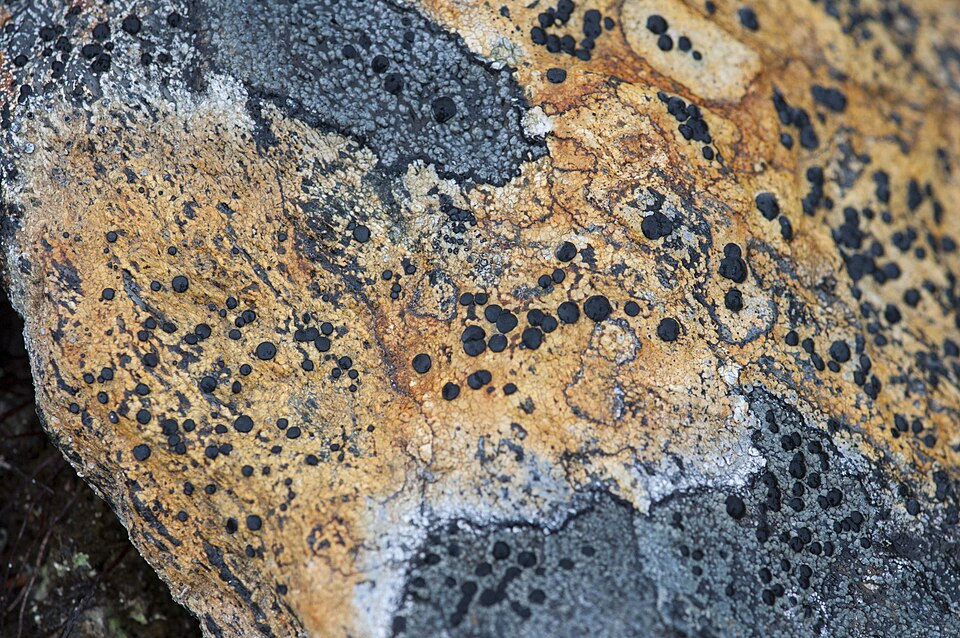
- Crustose lichens are the classic pioneers on bare rock — a symbiosis of a fungus with an alga or cyanobacterium — and their acids weather the rock into the first thin soil.
- Swapping migration and ecesis. Migration is arrival, ecesis is establishment — and the sequence is impossible the other way round.
- Placing stabilisation before reaction. The climax is the outcome of habitat modification, not its cause.
- Confusing the terms: succession is the process, a sere is the whole sequence of communities, and the climax is the stable end-community.
UPPSC prefers the sequence-ordering form and one-line definitions ('the entire sequence of communities … is called'), while UPSC tends to embed succession in a real setting — lichens on bare rock, or why grasslands are not replaced by forest.
Lichens, which are capable of initiating ecological succession even on a bare rock, are actually a symbiotic association of
- (a) algae and bacteria
- (b) algae and fungi
- (c) bacteria and fungi
- (d) fungi and mosses
Answer(b) algae and fungi
The same process caught at its first two phases — lichens are the organisms that migrate onto bare rock and ecise there, forming the pioneer community of a lithosere.
In the grasslands, trees do not replace the grasses as a part of an ecological succession because of
- (a) insects and fungi
- (b) limited sunlight and paucity of nutrients
- (c) water limits and fire
- (d) None of the above
Answer(c) water limits and fire
The same sequence seen where it stops short — recurrent fire and water scarcity arrest the sere at the grassland stage, so stabilisation is reached without the woody climax.
The entire sequence of communities that successively change in a particular area are called
- (a) Ecological succession
- (b) Sere
- (c) Community dynamics
- (d) Pyramid of biomass
Answer(b) Sere
Names the very thing whose phases this question orders — the sere is the whole chain of communities that the migration-to-stabilisation sequence produces.
The movement of nutrient elements through the various components of an ecosystem is called
- (a) Bio-geo-chemical cycle
- (b) Bio-geological cycle
- (c) Ecological succession
- (d) Biological cycle
Answer(a) Bio-geo-chemical cycle
Uses 'ecological succession' as its trap option, which is the boundary worth fixing — succession is the replacement of communities over time, not the circulation of nutrients within an ecosystem.
- practice — not a real PYQ
In ecological succession, the phase in which a migrated propagule germinates, grows and successfully reproduces in the new area is called:
- (a)Migration
- (b)Ecesis
- (c)Aggregation
- (d)Nudation
Answer(b) Ecesis — establishment at the new site. Migration is only the arrival of the propagule, aggregation is the subsequent crowding of individuals of the same species, and nudation is the creation of the bare area at the very start.
- practice — not a real PYQ
Which phase of ecological succession is chiefly responsible for one seral community being replaced by the next?
- (a)Nudation
- (b)Migration
- (c)Reaction
- (d)Stabilisation
Answer(c) Reaction — the community modifies its own habitat (soil, moisture, nutrients, light), usually rendering it less suitable for itself and more suitable for the community that follows. That is why reaction is called the driving phase of succession.