
With reference to the Age of Consent Act, 1891 consider the following statements : 1. It was Behramji Malabari, a Parsi reformer from Bombay, who advocated for this legislation. 2. The Act was supported by the extremist wing led by Bal Gangadhar Tilak. Which of the above statements is/are correct ?
- (a)Only 2
- (b)Neither 1 nor 2
- (c)Only 1
- (d)Both 1 and 2
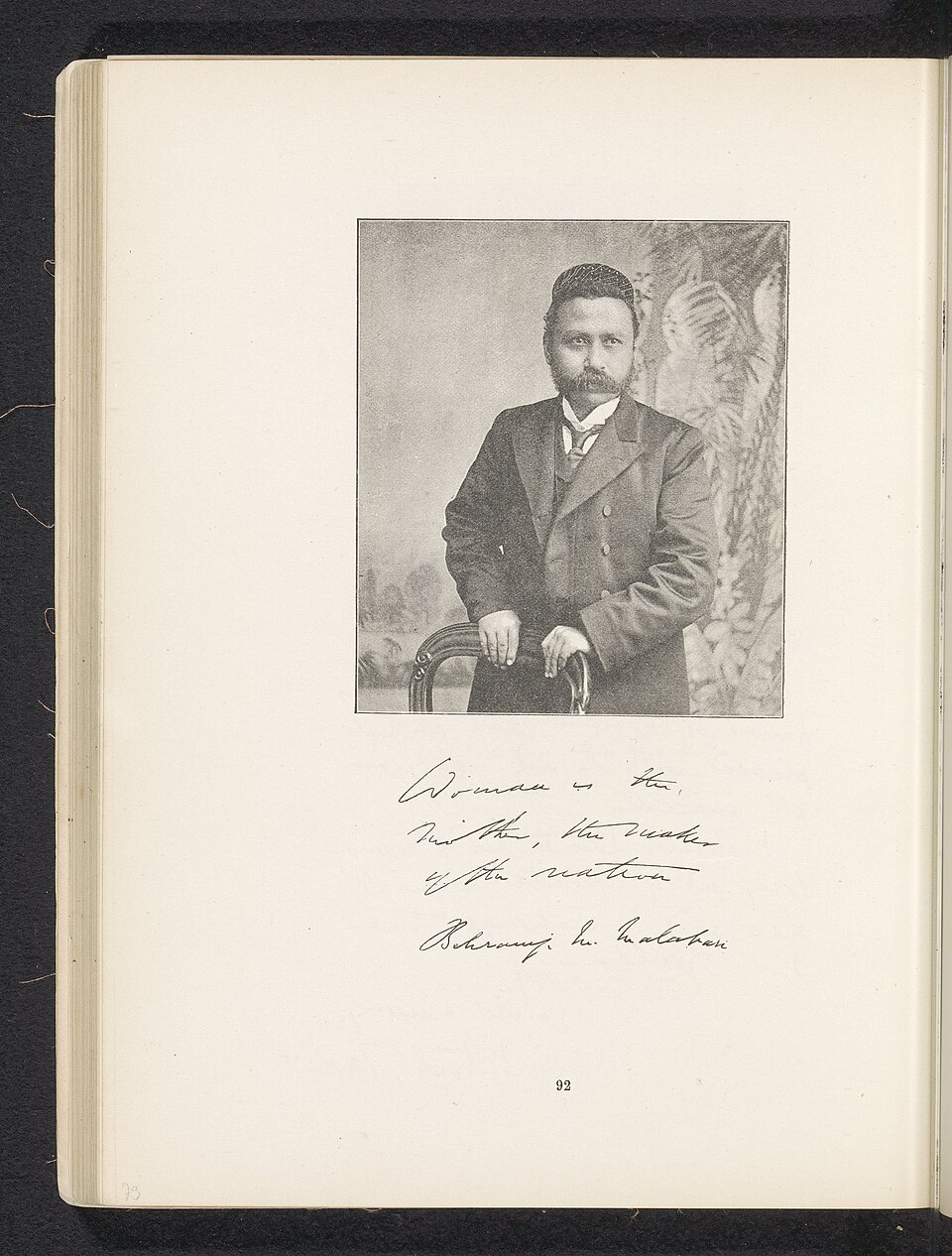
Correct — C, Only 1. Statement 1 is true: Behramji Merwanji Malabari (1853–1912), a Parsi poet and journalist who edited the Indian Spectator in Bombay, is the man most closely identified with this legislation. In 1884 he circulated his 'Notes on Infant Marriage and Enforced Widowhood' to the Government of India and to leading Indians, and then carried the campaign to England, and it was that agitation — sharpened by the Rakhmabai case and by the death of the child-wife Phulmoni Dasi in Bengal — that produced Act X of 1891, raising the age of consent for girls, married or unmarried, from ten to twelve. Statement 2 is false, and in two separate ways. Bal Gangadhar Tilak was among the Bill's most prominent opponents, attacking it in Kesari and Mahratta on the ground that an alien government had no business legislating on Hindu religious and social custom — reform, he argued, must come from within the community. And the 'Extremist' wing of the Congress was not yet a wing in 1891: that faction crystallised only around the Swadeshi years of 1905–07. So only statement 1 stands.
- (a)Only 2 — It rejects the one statement that is true and accepts the one that is false. Malabari's authorship of the campaign is well documented, while Tilak publicly opposed the 1891 Bill.
- (b)Neither 1 nor 2 — Statement 1 is correct. Malabari, a Parsi reformer based in Bombay, is precisely the figure whose 1884 'Notes on Infant Marriage and Enforced Widowhood' set the Age of Consent campaign in motion.
- (d)Both 1 and 2 — This is the trap for students who remember Tilak as a champion of Indian causes and assume he backed a reform Act. He did not: Tilak opposed the Age of Consent Bill as unwarranted state interference in Hindu custom, even while accepting that early marriage was an evil to be corrected by society itself.
The Age of Consent Act, 1891 (Act X of 1891) amended the Indian Penal Code so that intercourse with a girl below twelve was rape, whether or not she was the man's wife — raising the earlier limit of ten. It did not prohibit child marriage; it only criminalised consummation below the new age. The Bill was introduced by Sir Andrew Scoble in the Imperial Legislative Council and became law in March 1891.
The question is really about who stood where in the great reform-versus-orthodoxy split of the late nineteenth century. On one side stood the reformers who were willing to use the colonial state's law-making power — Malabari, M. G. Ranade, K. T. Telang, Gopal Ganesh Agarkar. On the other stood nationalists and orthodox leaders who saw legislation by a foreign government as an assault on the community's right to reform itself, and Tilak was their loudest voice in Maharashtra. Remembering the Act's two immediate triggers helps: Rakhmabai's refusal to live with the husband she had been married to as a child (litigated 1884–88), and the death of Phulmoni Dasi in Bengal — her age is given as ten or eleven depending on the source — whose husband was tried in 1890.
- Age of Consent Act, 1891 (Act X of 1891) raised the age of consent for girls from 10 to 12, for married and unmarried girls alike; it did not ban child marriage itself.
- Behramji Merwanji Malabari, Parsi journalist and editor of the Indian Spectator, Bombay, launched the campaign with his 'Notes on Infant Marriage and Enforced Widowhood' (1884).
- Bal Gangadhar Tilak opposed the Bill through Kesari and Mahratta as illegitimate interference by a foreign government in Hindu social and religious life; Gopal Ganesh Agarkar, his one-time colleague, supported it.
- The Congress 'Moderate–Extremist' division dates from the Swadeshi period (1905–07) and the Surat split of 1907, so there was no 'extremist wing' in 1891.
- The next step in this line of legislation was the Sarda Act — the Child Marriage Restraint Act, 1929 — which fixed minimum marriage ages of 14 for girls and 18 for boys.
- Assuming that because Tilak was a nationalist he supported every reform law — he opposed the 1891 Act on grounds of self-rule in social matters, not because he defended child marriage.
- Confusing the Age of Consent Act, 1891 (age of consent 10 → 12) with the Sarda Act, 1929 (minimum age of marriage 14 for girls, 18 for boys).
- Reading an 'extremist wing' into 1891 — that Congress faction only took shape after 1905.
UPPSC and UPSC both build this area as statement-pairs or match-the-reformer items: a reformer's name against his tract or his Act, and the reformer-versus-orthodoxy alignment on a particular Bill.
In the context of Indian history, the Rakhmabai case of 1884 revolved around 1. Women's right to gain education 2. Age of consent 3. Restitution of conjugal rights Select the correct answer using the code given below:
- (a) 1 and 2 only
- (b) 2 and 3 only
- (c) 1 and 3 only
- (d) 1, 2 and 3
Answer(b) 2 and 3 only
The same debate seen from its trigger — the Rakhmabai litigation is the case that pushed the age-of-consent question into national politics and ended in the 1891 Act.
His 'principal forte was social and religious reform. He relied upon legislation to do away with social ills and worked unceasingly for the eradication of child marriage, the purdah system …… To encourage consideration of social problems on a national scale, he inaugurated the Indian National Social Conference, which for many years met for its annual sessions alongside the Indian National Congress.' The reference in this passage is to
- (a) Ishwar Chandra Vidyasagar
- (b) Behramji Merwanji Malabari
- (c) Mahadev Govind Ranade
- (d) B. R. Ambedkar
Answer(c) Mahadev Govind Ranade
Tests the same cluster of reformers who used legislation against child marriage, with Malabari himself among the options — useful for keeping Malabari and Ranade apart.
Consider the following events and arrange them into chronological order : I. Sharda Act II. Nehru Report III. Constitution of Simon Commission IV. Dandi March Select the correct answer using the codes given below. Codes :
- (a) III, II, I and IV
- (b) I, II, III and IV
- (c) IV, III, II and I
- (d) I, IV, II and III
Answer(a) III, II, I and IV
The Sarda Act of 1929 in this list is the direct successor to the 1891 Act — the moment the state moved from regulating consent to fixing a minimum age of marriage.
Which of the following statement/s is/are correct ? 1. Akbar tried to fix the age of marriage for boys and girls. 2. Akbar gave freedom to girls to marry at their own will and not under parental pressure. Select the correct answer using the codes given below.
- (a) Only 1
- (b) Only 2
- (c) Both 1 and 2
- (d) Neither 1 nor 2
Answer(c) Both 1 and 2
The same theme — a ruling authority attempting to fix a minimum age of marriage and to secure the girl's own consent — asked of the Mughal period instead of the colonial one.
- practice — not a real PYQ
The Age of Consent Act, 1891 raised the age of consent for girls from:
- (a)10 years to 12 years
- (b)12 years to 14 years
- (c)12 years to 16 years
- (d)14 years to 16 years
Answer(a) 10 years to 12 years — Act X of 1891 applied to married and unmarried girls alike but did not itself prohibit child marriage.
- practice — not a real PYQ
Who among the following opposed the Age of Consent Bill of 1891 on the ground that a foreign government should not legislate on Hindu social and religious custom?
- (a)Bal Gangadhar Tilak
- (b)Gopal Ganesh Agarkar
- (c)Mahadev Govind Ranade
- (d)Kashinath Trimbak Telang
Answer(a) Bal Gangadhar Tilak — he attacked the Bill in Kesari and Mahratta, while Agarkar, Ranade and Telang supported it.