
Fathima Beevi died recently. Consider the following statements regarding her : 1. She was the first woman judge of the Supreme Court of India. 2. She served as the Governor of Kerala from 1997 – 2001. 3. She was the first Muslim woman to enter into higher judiciary. Select the correct answer from the codes given below :
- (a)1 and 2
- (b)1 and 3
- (c)Only 1
- (d)1, 2 and 3
Correct — B, 1 and 3. Statements 1 and 3 are both true and statement 2 fails on one word: the State. Statement 1 is true — M. Fathima Beevi was appointed a judge of the Supreme Court of India on 6 October 1989 and retired on 29 April 1992, the first woman ever to sit on that Bench in the forty years since the Court was constituted in 1950. Statement 3 is true — she was also the first Muslim woman appointed to any of the higher judiciaries in India, so the two firsts in her life are distinct and both real. Statement 2 is false, and this is the single point on which the question turns: she was Governor of TAMIL NADU, not Kerala, from 25 January 1997 to 3 July 2001. The confusion is deliberate and it is easy to fall for, because Kerala is where she came from — she was born on 30 April 1927 at Pathanamthitta in what was then Travancore — and because a great many published compilations repeat 'Governor of Kerala' as though it were settled. It is not. Her Raj Bhavan was in Chennai, and her governorship ended in July 2001 in a constitutional controversy over her appointing J. Jayalalithaa as Chief Minister in May 2001 despite her ineligibility; the Union Cabinet recommended her recall, she resigned, and the Supreme Court later held the appointment invalid. Born in Kerala, Governor of Tamil Nadu — hold those two apart and the item solves itself. Statements 1 and 3 stand, statement 2 falls, so the code is (b).
- (a)1 and 2 — Accepts the one false statement and discards a true one. Statement 2 is wrong on the State — Fathima Beevi was Governor of Tamil Nadu from 25 January 1997 to 3 July 2001, not of Kerala — while statement 3, that she was the first Muslim woman to enter the higher judiciary, is correct and should not have been dropped.
- (c)Only 1 — Correctly rejects statement 2 but is too cautious about statement 3. Being the first woman on the Supreme Court and being the first Muslim woman in the higher judiciary are two separate, separately documented firsts, and she holds both. This option is the trap for a candidate who spots the Kerala error and then stops reading.
- (d)1, 2 and 3 — The all-inclusive option, and it fails for the same reason (a) does. Everything in the biography checks out except the State of her governorship, and one false statement is enough to eliminate an 'all of the above' code.
M. Fathima Beevi (30 April 1927 - 23 November 2023) rose through the Kerala subordinate judiciary and the Kerala High Court to become, on 6 October 1989, the first woman appointed to the Supreme Court of India — an office no woman had held in the Court's first thirty-nine years. She retired on 29 April 1992, served as a member of the National Human Rights Commission from 1993 to 1997, and was then appointed Governor of Tamil Nadu, holding office from 25 January 1997 to 3 July 2001. She was also the first Muslim woman appointed to any of India's higher judiciaries. She was awarded the Kerala Prabha Award in 2023 and the Padma Bhushan in 2024, posthumously.
Anchor this to the paper. The exam was held on 22 December 2024, and 'died recently' points to her death on 23 November 2023 — a little over a year before the paper, which is well inside the window UPPSC treats as current affairs. Her Padma Bhushan was announced in 2024, before the exam, so a 2024 question about her is a live one and not an archival curiosity. The examiner has built the item the way personality questions are almost always built: two accurate biographical firsts wrapped around one substituted detail. The substituted detail here is a State name, and it is the most common error printed about her. Kerala is where she was born and where her judicial career was made, so 'Governor of Kerala' slides past the eye; the fact is that she was Governor of Tamil Nadu. When a question about a public figure gives you a term of office, check the office, the years and the jurisdiction as three separate facts — examiners falsify whichever of the three the candidate is least likely to have stored.
- Appointed a judge of the Supreme Court of India on 6 October 1989 and retired on 29 April 1992 — the first woman to sit on the Supreme Court of India.
- The first Muslim woman appointed to any of the higher judiciaries in India.
- Governor of TAMIL NADU from 25 January 1997 to 3 July 2001 — not Kerala. Widely mis-stated, and this is the falsifier the question is built on.
- Born 30 April 1927 at Pathanamthitta in the then Travancore, now Kerala; died 23 November 2023 aged 96.
- Member of the National Human Rights Commission from 1993 to 1997, between her retirement from the Supreme Court and her governorship.
- Awarded the Kerala Prabha Award in 2023 and the Padma Bhushan in 2024, posthumously.
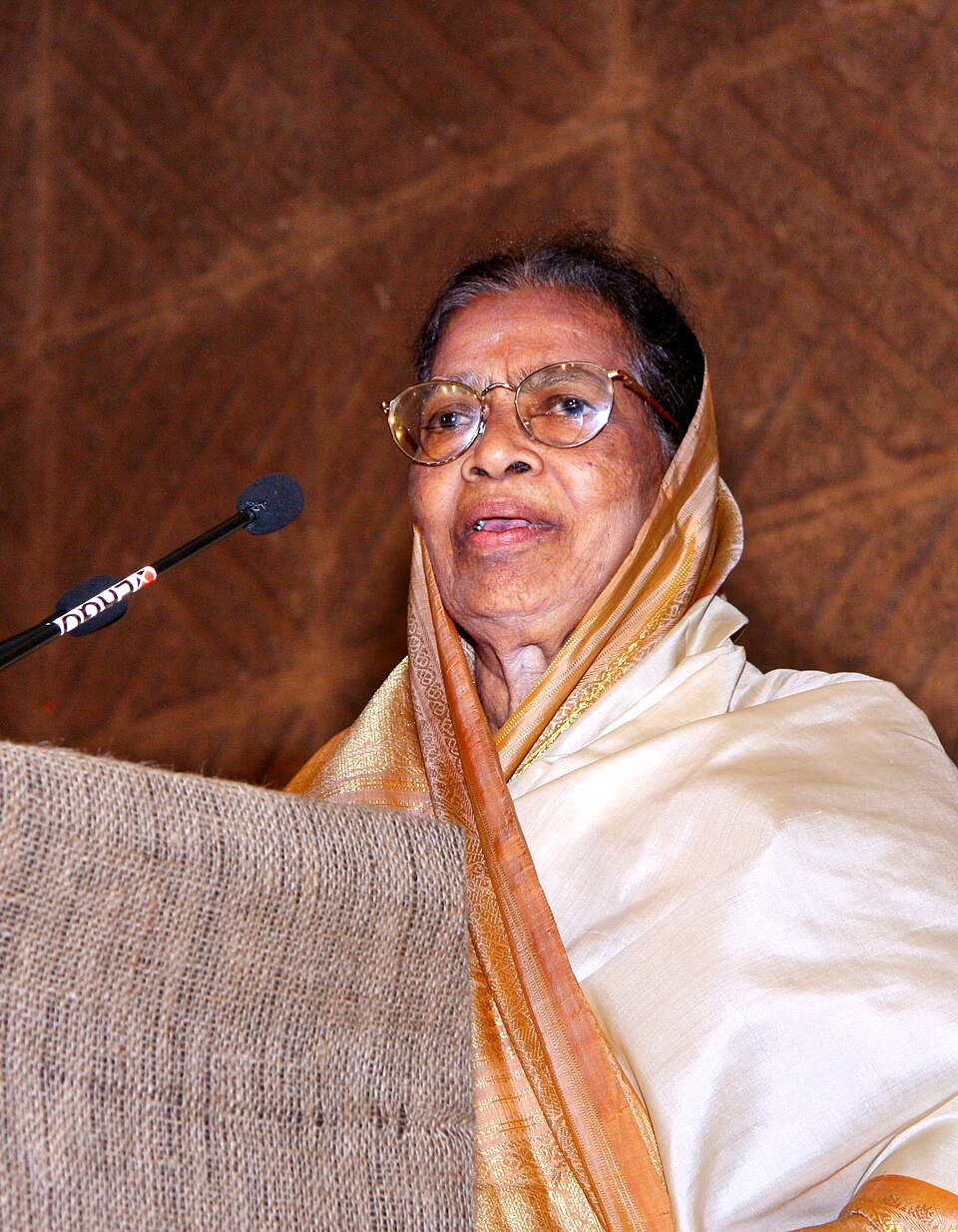
- Reading 'Kerala' as correct because she was born and made her career there. Her governorship was of Tamil Nadu, 1997-2001; birthplace and Raj Bhavan are two different facts.
- Assuming that because one statement in a personality question is false, the rest must be shaky. Statement 3 here is fully accurate and dropping it costs the mark just as surely as accepting statement 2 does.
- Confusing 'first woman judge of the Supreme Court' with 'first woman judge of a High Court' or with 'first woman Chief Justice of India' — India has still not had a woman Chief Justice of India, and Anna Chandy was the country's first woman High Court judge.
UPPSC asks recently deceased public figures as a three-statement code with one substituted detail — usually a State, a year or an office; UPSC prefers to test the same person through the constitutional office rather than the biography. Learn each notable figure as office plus jurisdiction plus dates, and the substitution becomes visible.
Consider the following statements: 1. Justice V. R. Krishna Iyer was the Chief Justice of India. 2. Justice V. R. Krishna Iyer is considered as one of the progenitors of public interest litigation (PIL) in the Indian judicial system. Which of the statements given above is/are correct?
- (a) 1 only
- (b) 2 only
- (c) Both 1 and 2
- (d) Neither 1 nor 2
Answer(b) 2 only
Built exactly like this one — two statements about a single Supreme Court judge's career, with the falsifier hidden in the office he is said to have held. Krishna Iyer sat on the Supreme Court but was never Chief Justice of India, just as Fathima Beevi governed Tamil Nadu and not Kerala.
Consider the following statements : 1. The first woman President of the Indian National Congress was Sarojini Naidu. 2. The first Muslim President of the Indian National Congress was Badruddin Tyabji. Which of the statements given above is/are correct?
- (a) 1 only
- (b) 2 only
- (c) Both 1 and 2
- (d) Neither 1 nor 2
Answer(b) 2 only
The same 'first woman / first Muslim office-holder' statement pair that Q144 uses, and the same lesson: one of the two firsts is accurate and the other has been quietly swapped, so each must be checked on its own.
Consider the facts given below: 1. Sukumar Sen was the first Chief Election Commissioner of India. 2. Rama Devi was the first woman Chief Election Commissioner of India. Choose the correct answer from the codes given below.
- (a) Only 1 is correct
- (b) Only 2 is correct
- (c) Both 1 and 2 are correct
- (d) Both 1 and 2 are incorrect
Answer(c) Both 1 and 2 are correct
UPPSC's standing habit of testing firsts in constitutional office, including the first woman to hold one. Rama Devi, the first woman Chief Election Commissioner, belongs in the same list of firsts as Fathima Beevi.
Who among the following is the first women Speaker in Lok Sabha?
- (a) Meira Kumar
- (b) Urmila Singh
- (c) Pratibha Patil
- (d) Sushma Swaraj
Answer(a) Meira Kumar
A straight recall version of the same theme — the first woman Speaker of the Lok Sabha. Build one list of women's firsts in Indian constitutional offices and both questions collapse into a single fact.
- practice — not a real PYQ
M. Fathima Beevi, the first woman judge of the Supreme Court of India, later served as the Governor of which State?
- (a)Kerala
- (b)Tamil Nadu
- (c)Karnataka
- (d)Andhra Pradesh
Answer(b) Tamil Nadu — she was Governor of Tamil Nadu from 25 January 1997 to 3 July 2001. She was born in Kerala, at Pathanamthitta, which is the source of the very common 'Governor of Kerala' error.
- practice — not a real PYQ
In which year was a woman appointed a judge of the Supreme Court of India for the first time?
- (a)1950
- (b)1975
- (c)1989
- (d)1997
Answer(c) 1989 — M. Fathima Beevi was appointed on 6 October 1989 and retired on 29 April 1992; the Supreme Court had functioned without a woman judge from its establishment in 1950 until then.