
With reference to Economic Growth, which of the following statements is/are correct ? 1. Indian Economy is an Underdeveloped Economy. 2. Indian Economy is a Mixed Economy. 3. J.M. Keynes is the Father of Economics. Select the correct answer from the codes given below :
- (a)Only 1 and 2 are correct.
- (b)Only 3 is correct.
- (c)Only 1 is correct.
- (d)Only 2 and 3 are correct.
Correct — A, Only 1 and 2 are correct. Statement 3 is the one that fails, and it fails cleanly: the title 'Father of Economics' belongs to Adam Smith, the Scottish moral philosopher whose An Inquiry into the Nature and Causes of the Wealth of Nations (1776) founded the discipline as a separate subject. John Maynard Keynes is called the father of modern macroeconomics, on the strength of The General Theory of Employment, Interest and Money (1936), which established the study of the economy as an aggregate and made government demand management respectable. Father of economics and father of macroeconomics are two different honorifics and the question swaps them. Statements 1 and 2 are both credited. Statement 2 is straightforward: India is a mixed economy, in which a large public sector built up under the Industrial Policy Resolutions of 1948 and 1956 and the Five Year Plans operates alongside a private sector, with the balance shifting decisively towards private enterprise after the reforms of 1991 but never abolishing either side. Statement 1 needs to be read the way an Indian economics textbook uses the phrase. Standard texts classify India as an underdeveloped and developing economy on structural grounds — low per capita income, a large share of the workforce still dependent on agriculture, widespread poverty and underemployment, low levels of technology and modest human-development indicators. That is a classification about per-head income and economic structure, not a statement that India is stagnant; in absolute size India is one of the world's largest and fastest-growing economies. Read in that textbook sense, statements 1 and 2 stand and statement 3 falls, which gives option (a).
- (b)Only 3 is correct. — Keeps the single false statement and discards the two true ones. Keynes did not found economics; Adam Smith did, with The Wealth of Nations in 1776, a century and a half before The General Theory. Keynes's title is father of modern macroeconomics.
- (c)Only 1 is correct. — Correctly rejects the Keynes claim but also rejects the description of India as a mixed economy, which is not defensible. Since 1948 India has deliberately run both a state sector and a private sector side by side, and even after three decades of liberalisation, disinvestment and privatisation the public sector remains substantial in banking, railways, defence production and energy. The mixed-economy label survives the reforms.
- (d)Only 2 and 3 are correct. — Gets the mixed economy right but carries the Keynes error and drops statement 1. A candidate reaches this by reasoning that India, as a fast-growing large economy, cannot be called underdeveloped. That reasoning confuses size with per-head development; on the textbook criteria of per capita income, occupational structure and human development, the classification the examiner is using still holds.
Three separate ideas are packed into one question. The first is the classification of an economy: standard Indian textbooks describe India as an underdeveloped and developing economy, meaning low per capita income, dependence of a large workforce on agriculture, capital scarcity, mass poverty and underemployment, and low human-development indicators — a description of structure, not of momentum. The second is the ownership question: a capitalist economy leaves production to private ownership and the market, a socialist economy vests it in the state, and a mixed economy runs both together, which is what India chose. The third is a matter of intellectual history — who founded the subject, and who founded the branch of it that studies aggregates.
The examiner has built the item so that one obviously wrong statement decides it. If you know that Adam Smith, not Keynes, is called the father of economics, statement 3 is dead and options (b) and (d) go with it, leaving a choice between (a) and (c) that turns only on the mixed economy — which no candidate should doubt. That is the efficient path, and it is the general lesson of multi-statement questions: attack the statement you can falsify, not the one you find interesting. The statement that unsettles people is the first one, because 'underdeveloped' sounds outdated for an economy of India's present size. Hold on to the distinction the phrase is making. Growth is an increase in real output; development is a broader change in per-head income, structure and human welfare. India's absolute output is enormous and rising fast, while its per capita income and occupational structure still put it in the developing group — which is exactly why the textbooks keep the label, and why UPSC has repeatedly asked whether rising GNP by itself connotes development.
- Adam Smith (1723-1790) is described as the father of economics; his An Inquiry into the Nature and Causes of the Wealth of Nations was published in 1776. J.M. Keynes (1883-1946) is called the father of modern macroeconomics, for The General Theory of Employment, Interest and Money (1936).
- India is a mixed economy: the Industrial Policy Resolutions of 1948 and 1956 reserved commanding-heights industries for the state while leaving room for private enterprise, and the 1991 reforms shifted the balance towards the private sector without ending the mix.
- In standard Indian economics texts, 'underdeveloped and developing economy' is a structural classification — low per capita income, heavy dependence on agriculture for employment, capital scarcity, mass poverty and underemployment, low human-development indicators — not a claim about the rate of growth.
- Economic growth means a rise in real output (usually measured by real GDP or per capita real income); economic development is the wider change in structure, distribution and human welfare that growth may or may not deliver.
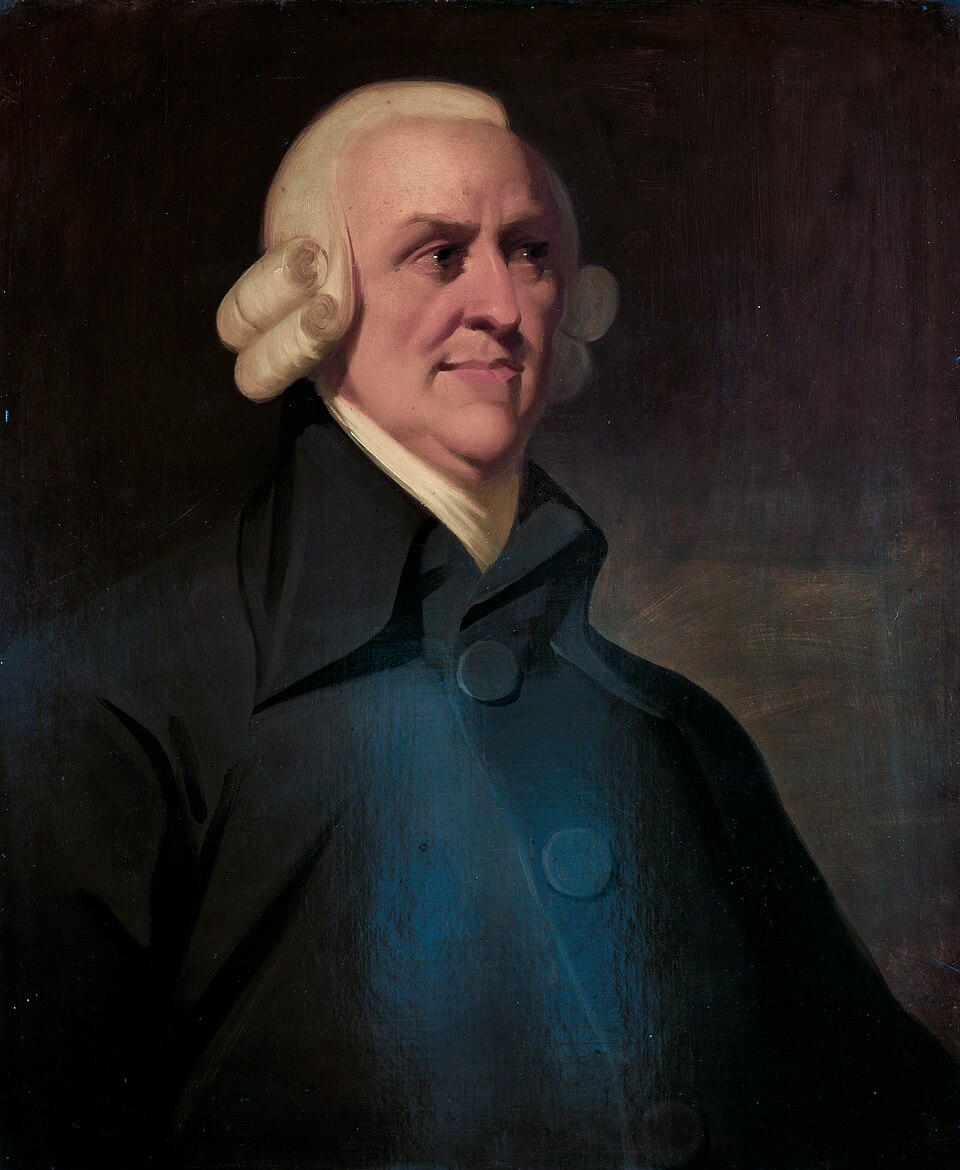
- Swapping Adam Smith and Keynes. Smith is the father of economics (1776); Keynes is the father of modern macroeconomics (1936). Examiners rotate this pair endlessly.
- Reading 'underdeveloped' as 'not growing'. In Indian textbooks it is a structural classification about per capita income and occupational structure; a large, fast-growing economy can still sit in the developing group.
- Assuming the 1991 reforms ended the mixed economy. Liberalisation shrank the state's share of production, but public and private sectors still operate side by side, which is what the term means.
UPPSC asks these definitional economics items as short multi-statement checks that mix a classification of the Indian economy with a who-said-what fact, and one obviously false statement usually decides the answer; UPSC prefers the conceptual version — what is the most appropriate measure of growth, when does rising GNP not amount to development, what necessarily causes growth. Learn the definitions precisely enough to survive both.
Increase in absolute and per capita real GNP do not connote a higher level of economic development, if
- (a) industrial output fails to keep pace with agricultural output.
- (b) agricultural output fails to keep pace with industrial output.
- (c) poverty and unemployment increase.
- (d) imports grow faster than exports.
Answer(c) poverty and unemployment increase.
The examinable substance behind statement 1. UPSC's point is that rising output, even per head, does not by itself make an economy developed if poverty and unemployment are rising — which is the reasoning that lets a large, fast-growing India still be classified as a developing economy.
Economic growth in country X will necessarily have to occur if
- (a) there is technical progress in the world economy
- (b) there is population growth in X
- (c) there is capital formation in X
- (d) the volume of trade grows in the world economy
Answer(c) there is capital formation in X
Pins down what 'economic growth' means, which is the heading this whole question sits under. Growth follows from capital formation inside the economy, and is a narrower idea than the development or the ownership structure the other two statements are about.
Which among the following is NOT a major factors of economic growth?
- (a) Accumulation of capital and reforms in technology
- (b) Change in population
- (c) Division of labour in specialised activities
- (d) Technocrats and Bureaucrats
Answer(d) Technocrats and Bureaucrats
UPPSC's own earlier question from the identical heading — capital accumulation, technological change, population and specialisation count as factors of economic growth, while categories of personnel do not. The commission tests the textbook vocabulary of growth theory, not applied data.
Role of Human Resources in Economic development, which of the following statement/s is/are correct? 1. Effects of economic development on population growth. 2. Effects of population growth in economic development. Select the correct answer using the code given below –
- (a) Only 1
- (b) Only 2
- (c) Neither 1 nor 2
- (d) Both 1 and 2
Answer(d) Both 1 and 2
Continues the same textbook-definition style into human resources and economic development, and confirms that UPPSC expects you to have read the standard growth-and-development chapter rather than the year's economic statistics.
- practice — not a real PYQ
Who among the following is generally described as the 'Father of Modern Macroeconomics'?
- (a)Adam Smith
- (b)David Ricardo
- (c)John Maynard Keynes
- (d)Alfred Marshall
Answer(c) John Maynard Keynes — his General Theory of Employment, Interest and Money (1936) founded the study of the economy in the aggregate. Adam Smith, with The Wealth of Nations (1776), is called the father of economics itself.
- practice — not a real PYQ
The description of India as a 'mixed economy' is best supported by which one of the following?
- (a)All means of production are owned by the State
- (b)Public sector and private sector enterprises operate side by side
- (c)Prices of all commodities are fixed by the Government
- (d)Foreign investment is prohibited in all sectors
Answer(b) Public sector and private sector enterprises operate side by side — this coexistence, set out in the Industrial Policy Resolutions of 1948 and 1956 and retained through the 1991 reforms, is precisely what 'mixed economy' means.