
Shivanasamudra and Kalpakkam are respectively important for -
- (a)Thermal Power and Nuclear Energy
- (b)Hydel Power and Nuclear Energy
- (c)Nuclear Energy and Hydel Power
- (d)Solar Power and Nuclear Energy
Correct — B, Hydel Power and Nuclear Energy. Shivanasamudra (Shivanasamudram) on the Kaveri (Cauvery) river in Karnataka is the site of one of Asia's oldest hydro-electric power stations (commissioned in 1902) — so it stands for hydel (hydro-electric) power. Kalpakkam in Tamil Nadu hosts the Madras Atomic Power Station and the Indira Gandhi Centre for Atomic Research — so it stands for nuclear energy. Read 'respectively', the pair is Hydel Power and Nuclear Energy.
- (a)Thermal Power and Nuclear Energy — Kalpakkam being nuclear is right, but Shivanasamudra is a hydro-electric (not thermal) station — it is powered by the fall of the Kaveri river, not by burning fuel.
- (c)Nuclear Energy and Hydel Power — This reverses the pair. Shivanasamudra is the hydel station and Kalpakkam is the nuclear centre, not the other way round.
- (d)Solar Power and Nuclear Energy — Kalpakkam is correctly nuclear, but Shivanasamudra is a hydro-electric project on the Kaveri, not a solar power plant.
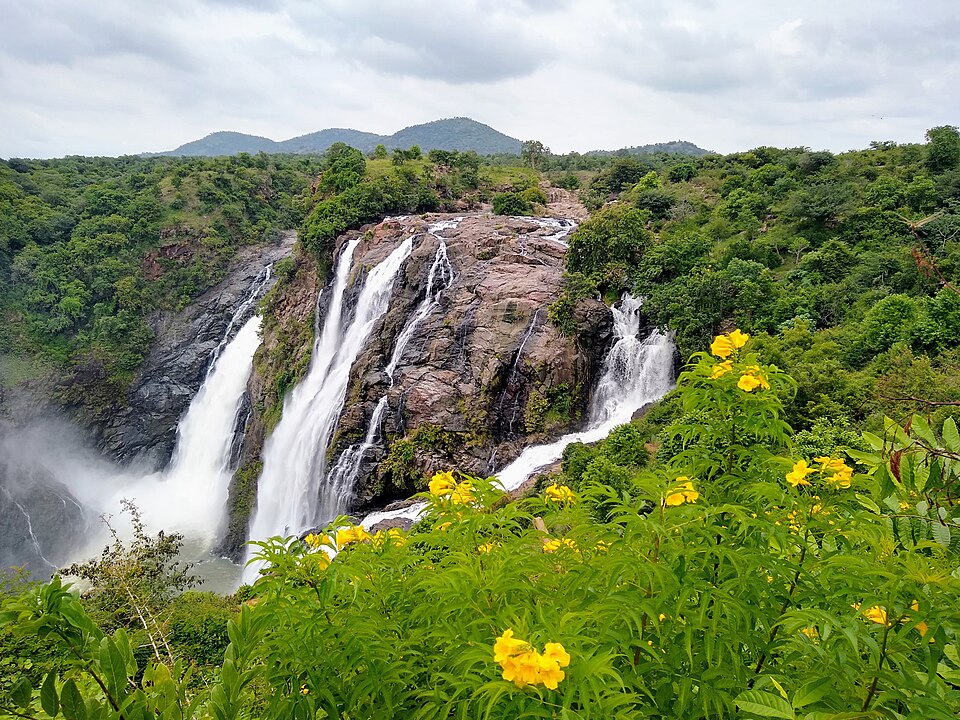
This item pairs two Indian energy sites. Shivanasamudram (Karnataka) is a historic hydro-electric station on the Kaveri, harnessing the Shivanasamudra falls; it was among the first hydel plants in Asia (1902). Kalpakkam (Tamil Nadu) is a major nuclear hub — the Madras Atomic Power Station (MAPS) plus the Indira Gandhi Centre for Atomic Research and the Prototype Fast Breeder Reactor.
Both options a and d get Kalpakkam right (nuclear); the discriminator is what Shivanasamudra stands for. Knowing it is a Kaveri-river hydel station rules out 'thermal' and 'solar', and knowing the correct order rules out the reversed option (c).
- Shivanasamudram, Karnataka — hydro-electric station on the Kaveri (falls), commissioned 1902, among Asia's earliest.
- Kalpakkam, Tamil Nadu — Madras Atomic Power Station (MAPS) and IGCAR; a nuclear energy centre.
- 'Respectively' fixes the order: Shivanasamudra = hydel, Kalpakkam = nuclear.
- Hydel power converts a river's fall into electricity; nuclear power uses fission heat to raise steam.
- Reading 'respectively' loosely and reversing the pair (option c)
- Assuming Shivanasamudra is thermal/solar rather than hydel
UPSC/UPPSC pair a place with its power-plant type, or ask to match power stations (thermal/hydel/nuclear) with their states.
Which of the following pairs are correctly matched? Waterfalls — River: 1. Kapildhara Falls : Godavari 2. Jog Falls : Sharavati 3. Sivasamudram Falls : Cauvery
- (a) 1 and 2 only
- (b) 2 and 3 only
- (c) 1 and 3 only
- (d) 1, 2 and 3
Answer(b) 2 and 3 only (Sivasamudram Falls is on the Cauvery)
Same site — confirms Shivanasamudram (Sivasamudram) falls, the hydel station here, is on the Kaveri/Cauvery.
Match List-I (Atomic Power Plants/Heavy Water Plants) with List-II (State): A. Thal B. Manuguru C. Kakrapar D. Kaiga; States: Andhra Pradesh, Gujarat, Maharashtra, Karnataka.
- (a) 2 1 4 5
- (b) 3 5 2 1
- (c) 2 5 4 1
- (d) 3 1 2 5
Answer(d) A-Maharashtra, B-Andhra Pradesh, C-Gujarat, D-Karnataka
Same theme — locating India's atomic (nuclear) power plants, the category Kalpakkam belongs to.
- practice — not a real PYQ
Shivanasamudram, one of the earliest hydro-electric power stations in Asia, is located on which river?
- (a)Krishna
- (b)Kaveri (Cauvery)
- (c)Godavari
- (d)Tungabhadra
Answer(b) Kaveri (Cauvery) — the Shivanasamudra falls power the station. - practice — not a real PYQ
Kalpakkam in Tamil Nadu is best known as a centre for:
- (a)Thermal power
- (b)Nuclear energy and research
- (c)Wind power
- (d)Ship building
Answer(b) Nuclear energy and research — MAPS and IGCAR are located here.