
Who among the following women freedom fighter was not associated with 'Quit India Movement'?
- (a)Matangini Hazra
- (b)Kanak Lata Barua
- (c)Shanti Ghosh
- (d)Aruna Asaf Ali
Correct — C, Shanti Ghosh. She belongs to an earlier, revolutionary phase of the freedom struggle: along with Suniti Choudhury she assassinated C. G. B. Stevens, the District Magistrate of Comilla (Bengal), on 14 December 1931 — more than a decade before Quit India. The other three are firmly linked to the Quit India Movement of 1942, so Shanti Ghosh is the one not associated with it.
- (a)Matangini Hazra — She WAS associated with Quit India — the elderly Gandhian was shot dead by police at Tamluk (Midnapore, Bengal) on 29 September 1942 while leading a procession, holding the national flag; so she is not the exception.
- (b)Kanak Lata Barua — She WAS associated with Quit India — the young Assamese activist was shot dead at Gohpur on 20 September 1942 while trying to hoist the national flag at a police station; not the exception.
- (d)Aruna Asaf Ali — She WAS associated with Quit India — she hoisted the Congress flag at Gowalia Tank Maidan, Bombay in August 1942 and became the underground 'heroine' of the 1942 movement; not the exception.
The Quit India Movement (August 1942) saw several women take a leading, often martyred, role: Aruna Asaf Ali unfurled the flag at Gowalia Tank and ran the underground; Matangini Hazra and Kanaklata Barua were shot dead in 1942 flag processions. Shanti Ghosh, by contrast, was a Bengal revolutionary of the early 1930s who took part in the 1931 assassination of the Comilla District Magistrate — a different movement and a different decade.
The question hides one revolutionary among three Quit India figures. The clue is the date: Quit India is 1942, but Shanti Ghosh's fame comes from 1931 armed revolutionary action in Bengal. Knowing that the other three were 1942 martyrs/organisers isolates Shanti Ghosh as the odd one out.
- Matangini Hazra — killed at Tamluk, Bengal, 29 Sept 1942, during Quit India, holding the flag.
- Kanaklata Barua — killed at Gohpur, Assam, 20 Sept 1942, during Quit India, hoisting the flag.
- Aruna Asaf Ali — hoisted the Congress flag at Gowalia Tank, Bombay (Aug 1942); underground leader of Quit India.
- Shanti Ghosh — with Suniti Choudhury, assassinated the Comilla District Magistrate on 14 Dec 1931; a 1930s revolutionary, not a Quit India figure.
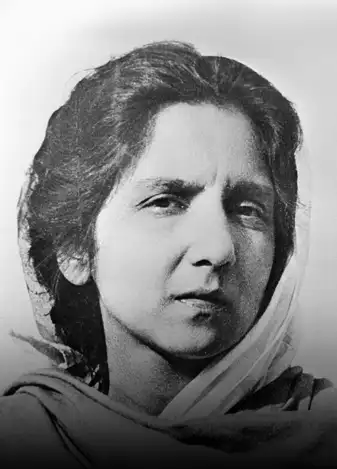
- Assuming any famous woman freedom fighter must have been part of Quit India — Shanti Ghosh belonged to the 1930s revolutionary phase.
- Confusing the revolutionary (armed) stream with the Congress-led mass movement of 1942.
UPPSC/UPSC ask 'who was / was not associated with' a named movement, testing whether you can place each freedom fighter in the correct movement and decade.
During the freedom struggle, Aruna Asaf Ali was a major woman organizer of underground activity in
- (a) Civil Disobedience Movement
- (b) Non-Cooperation Movement
- (c) Quit India Movement
- (d) Swadeshi Movement
Answer(c) Quit India Movement
Directly on point — it identifies Aruna Asaf Ali as a woman organiser of the Quit India Movement, one of the three figures the UPPSC question correctly associates with 1942.
Which one of the following observations is not true about the Quit India Movement of 1942 ?
- (a) It was a non-violent movement
- (b) It was led by Mahatma Gandhi
- (c) It was a spontaneous movement
- (d) It did not attract the labour class in general
Answer(b) It was led by Mahatma Gandhi
Same movement, same 'which is NOT true/associated' framing — tests precise knowledge of the character and participants of the 1942 Quit India Movement.
- practice — not a real PYQ
Matangini Hazra, killed while leading a procession in 1942, was a martyr of which movement?
- (a)Non-Cooperation Movement
- (b)Civil Disobedience Movement
- (c)Quit India Movement
- (d)Swadeshi Movement
Answer(c) Quit India Movement — she was shot at Tamluk in September 1942. - practice — not a real PYQ
Who hoisted the Congress flag at Gowalia Tank Maidan, Bombay, at the start of the Quit India Movement?
- (a)Sarojini Naidu
- (b)Aruna Asaf Ali
- (c)Sucheta Kripalani
- (d)Kamaladevi Chattopadhyay
Answer(b) Aruna Asaf Ali — the underground heroine of the 1942 movement.