
To whom does the credit goes for the development of coconut and sugarcane agriculture in Philippines?
- (a)Spanish and Americans
- (b)Hollanders
- (c)Britishers
- (d)French
Correct — A, the Spanish and the Americans. The Philippines was a Spanish colony from 1565 to 1898 and then an American colony until 1946. The Spanish first promoted commercial plantation crops, and under American rule tariff-free access to the huge U.S. market turned coconut (copra/coconut oil) and sugarcane into the islands' leading cash crops — so the development of these two crops is credited to the Spanish and the Americans, the two powers that actually ruled the Philippines.
- (b)Hollanders — The Dutch (Hollanders) built their plantation economy in the East Indies — modern Indonesia (Java) — not in the Philippines, which they never ruled.
- (c)Britishers — The British developed plantation agriculture in their own colonies such as Malaya (rubber) and India; they briefly occupied Manila (1762-64) but did not shape Philippine agriculture.
- (d)French — French plantation development was centred on Indo-China (Vietnam, rubber and rice), not the Philippines.
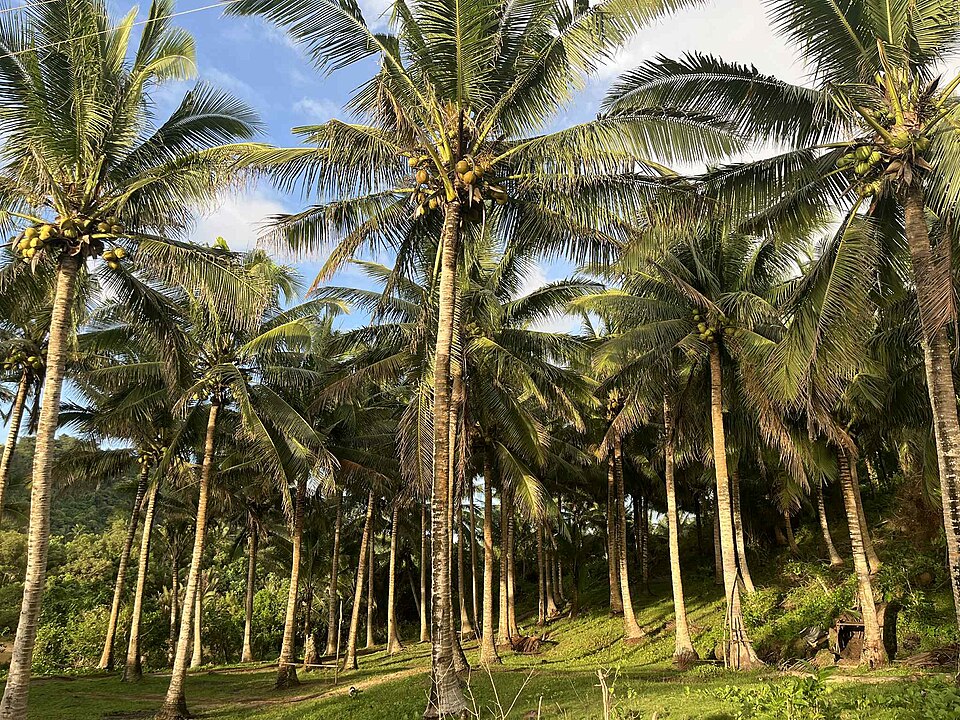
The commercial agriculture of the Philippines is a legacy of its two colonial rulers. Spain (1565-1898) introduced plantation cultivation of cash crops, and the United States (1898-1946) expanded it by giving Philippine coconut and sugar duty-free entry to the American market. Coconut (exported as copra and coconut oil) and sugarcane became the country's principal export crops.
The question is really a test of who colonised the Philippines. Match the crops to the correct colonial powers: only Spain and the U.S. ever governed the islands, so only they could have 'developed' its agriculture. The other options are classic distractors that pair colonial powers with the wrong territory — Dutch/Indonesia, British/Malaya, French/Indo-China.
- Philippines: Spanish colony 1565-1898, then U.S. colony 1898-1946.
- Coconut (copra, coconut oil) and sugarcane are the country's leading colonial-era cash crops.
- U.S. free-trade access to its market was the main driver that scaled up Philippine coconut and sugar exports.
- Colonial plantation pairings to remember: Dutch-Indonesia, British-Malaya, French-Indo-China, Spanish/American-Philippines.
- Pairing the wrong colonial power with the Philippines — the Dutch (Indonesia) and British (Malaya) are the tempting mismatches.
- Forgetting that the U.S., not just Spain, ruled and shaped the Philippines (1898-1946).
UPPSC/UPSC frame world-geography questions by linking a crop/region to its colonial developer or asking which power colonised a given country — accuracy on colonial-power/territory pairings is the key.
- practice — not a real PYQ
The Philippines was a colony of which country immediately before the United States took control in 1898?
- (a)Portugal
- (b)Spain
- (c)The Netherlands
- (d)France
Answer(b) Spain — Spanish rule (1565-1898) ended with the Spanish-American War. - practice — not a real PYQ
Dried coconut kernel, an important export of the Philippines, is known as:
- (a)Copra
- (b)Coir
- (c)Cassava
- (d)Copal
Answer(a) Copra — the source of coconut oil.