
With reference to Captain Hawkins, which of the following statements is/are correct? (1) He came to India in 1611 as an envoy of James I. (2) He was very well versed in the Turkish language. Select the correct answer using the code given below:
- (a)Both 1 and 2
- (b)Only 2
- (c)Only 1
- (d)Neither 1 nor 2
Per the official UPPSC key, the answer is D — Neither 1 nor 2. Statement (1) is incorrect as worded: Captain William Hawkins, commander of the ship Hector, actually reached Surat in August 1608 and arrived at Emperor Jahangir's court at Agra in 1609 carrying a letter from King James I of England — 1611 is roughly when he LEFT the court, not when he came to India, so the '1611' date makes the statement wrong. Statement (2) is the one the key marks as also incorrect; in honesty, though, standard accounts do credit Hawkins with knowing Turki — the Central-Asian Turkic tongue of the Mughal court — which is exactly why Jahangir could talk with him directly and favoured him. So statement (2) is historically defensible, and the key's 'Neither 1 nor 2' rests mainly on statement (1)'s clearly wrong date. This is a historically imperfect item on statement (2): author to the key (D) but know the underlying history.
- (a)Both 1 and 2 — Statement (1)'s date is wrong — Hawkins came to India in 1608, not 1611 — so both statements cannot be correct together.
- (b)Only 2 — On the history, 'Only 2' is the strongest reading (statement 1 false on its date, statement 2 defensible — Hawkins knew Turki). But the official UPPSC key does not mark B; it treats statement (2) as not correct and answers 'Neither 1 nor 2'. We author to the key.
- (c)Only 1 — Statement (1) is the false one (wrong 1611 date), so 'Only 1' is incorrect regardless of how statement (2) is read.
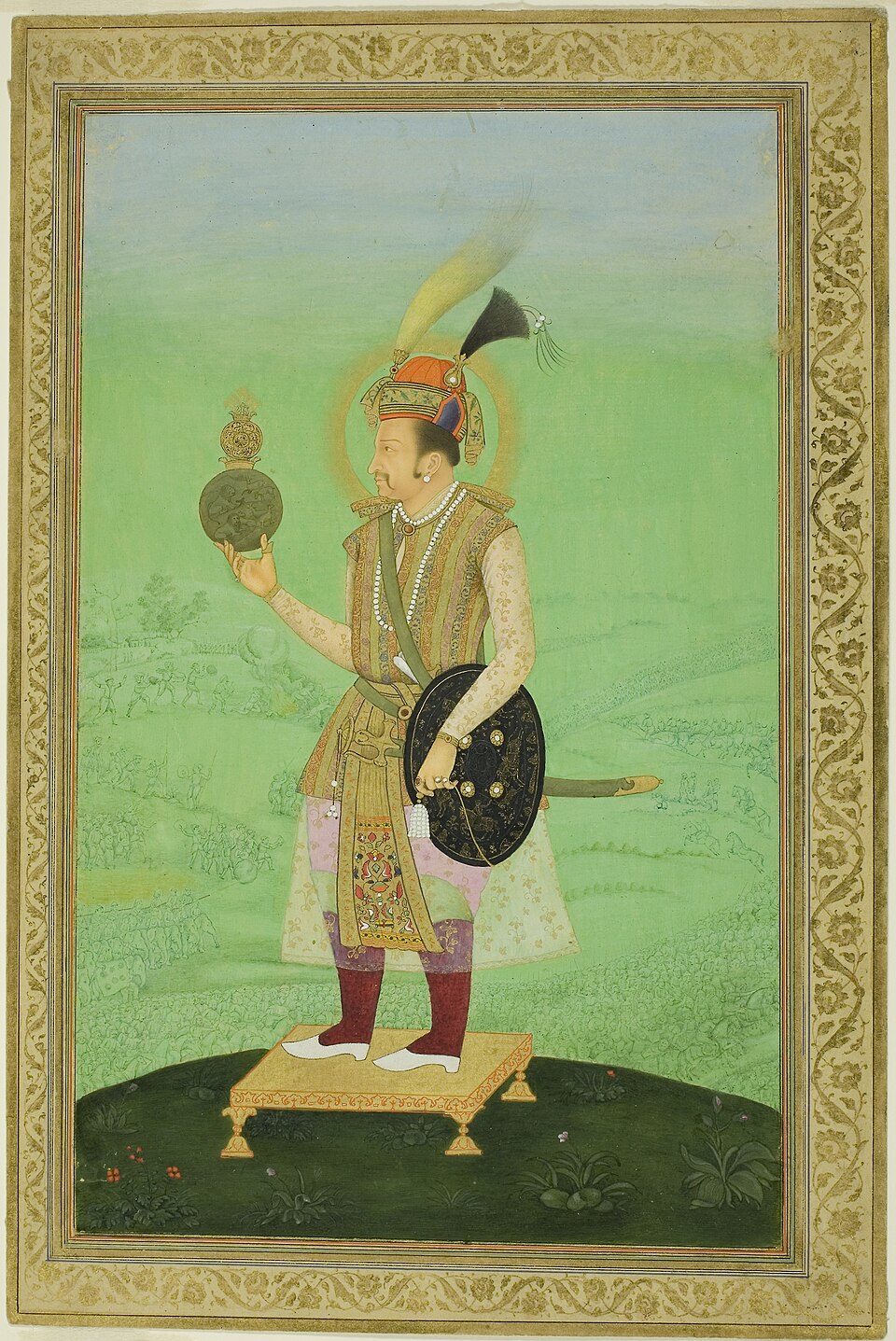
Captain William Hawkins commanded the English ship Hector and reached Surat in August 1608. He travelled to Emperor Jahangir's court at Agra in 1609 bearing a letter from King James I of England, seeking permission to trade. Widely reported to have known Turki (the Turkic tongue of the Mughal court), he conversed directly with Jahangir, who gave him a mansab and the title 'English Khan' (Inglis Khan). Portuguese intrigue and court rivalry forced him to leave the court around 1611.
The item hinges on the date. Hawkins came in 1608, not 1611 — so statement (1) is wrong. The official key marks the answer 'Neither 1 nor 2' (D); be aware that statement (2) about the Turkish/Turki language is historically defensible, so this is an imperfect question — go with the official key while understanding the true history. The English secured a farman for a factory at Surat in 1613, and Sir Thomas Roe's embassy (1615-19) firmed up their trading rights.
- Captain William Hawkins commanded the Hector and reached Surat in August 1608.
- He reached Jahangir's court at Agra in 1609 with a letter from King James I of England.
- He is widely reported to have known Turki (the Mughal court's Turkic tongue), so Jahangir engaged him and titled him 'English Khan'.
- He left the court around 1611; the English got a farman for a Surat factory in 1613, followed by Sir Thomas Roe's embassy (1615-19).
- Mixing up Hawkins (1608-11, Jahangir's court) with Sir Thomas Roe (1615-19)
- Trusting the 'came in 1611' date — Hawkins actually arrived in 1608
Modern/medieval history — the arrival of the English, Mughal-European contact, and the emperor (Jahangir) who permitted the first English factory at Surat.
With whose permission did the English set up their first factory in Surat?
- (a) Akbar
- (b) Jahangir
- (c) Shahjahan
- (d) Aurangzeb
Answer(b) Jahangir
Same episode — the English arrival under Jahangir (whose court Hawkins visited) that led to the first factory at Surat.
During the time of which Mughal Emperor did the English East India Company establish its first factory in India?
- (a) Akbar
- (b) Jahangir
- (c) Shahjahan
- (d) Aurangzeb
Answer(b) Jahangir
Tests the same Mughal-European contact — Jahangir's reign, when Hawkins' embassy opened the way for the first English factory.
- practice — not a real PYQ
Captain William Hawkins visited the court of which Mughal emperor?
- (a)Akbar
- (b)Jahangir
- (c)Shah Jahan
- (d)Aurangzeb
Answer(b) Jahangir — Hawkins reached his court in 1609. - practice — not a real PYQ
Sir Thomas Roe came to India as an ambassador of King James I during the reign of:
- (a)Akbar
- (b)Jahangir
- (c)Shah Jahan
- (d)Aurangzeb
Answer(b) Jahangir — Roe's embassy lasted 1615-19.