
Desert dwelling animals are called -
- (a)Arboreal animals
- (b)Xericoles animals
- (c)Terrestrial animals
- (d)Fossorial animals
Correct — B, Xericoles (xerocoles) animals. In ecology, animals are grouped by the habitat they are adapted to. 'Xerocole' (from Greek xeros = dry + Latin -cola = dweller) is the term for an animal adapted to live in a dry, desert environment — for example the camel, kangaroo rat and fennec fox. So desert-dwelling animals are called xericoles/xerocoles.
- (a)Arboreal animals — Arboreal animals are those adapted to live in trees (e.g. monkeys, sloths, many squirrels), not in deserts.
- (c)Terrestrial animals — 'Terrestrial' means land-dwelling in general (as opposed to aquatic or aerial); it is far too broad and does not specifically denote desert dwellers.
- (d)Fossorial animals — Fossorial animals are burrowing/digging species that live underground (e.g. moles, badgers); the term describes a burrowing habit, not desert habitation.
Ecologists classify animals by their habitat and mode of life: arboreal (tree-dwelling), aquatic (water), fossorial (burrowing/underground), volant (flying), terrestrial (land) and xerocole (desert/arid-land dwelling). A xerocole is any animal specially adapted to survive in a desert, where water is scarce and temperatures are extreme.
The question tests whether you can match an ecological adjective to its precise meaning. The trap is 'terrestrial', which is technically true (deserts are on land) but is a general category, whereas 'xerocole' is the exact term for a desert dweller. 'Arboreal' and 'fossorial' describe entirely different habitats (trees and burrows).
- Xerocole = an animal adapted to live in a desert / arid environment (from xeros 'dry').
- Typical adaptations: water conservation, concentrated urine, nocturnal habits, and heat tolerance.
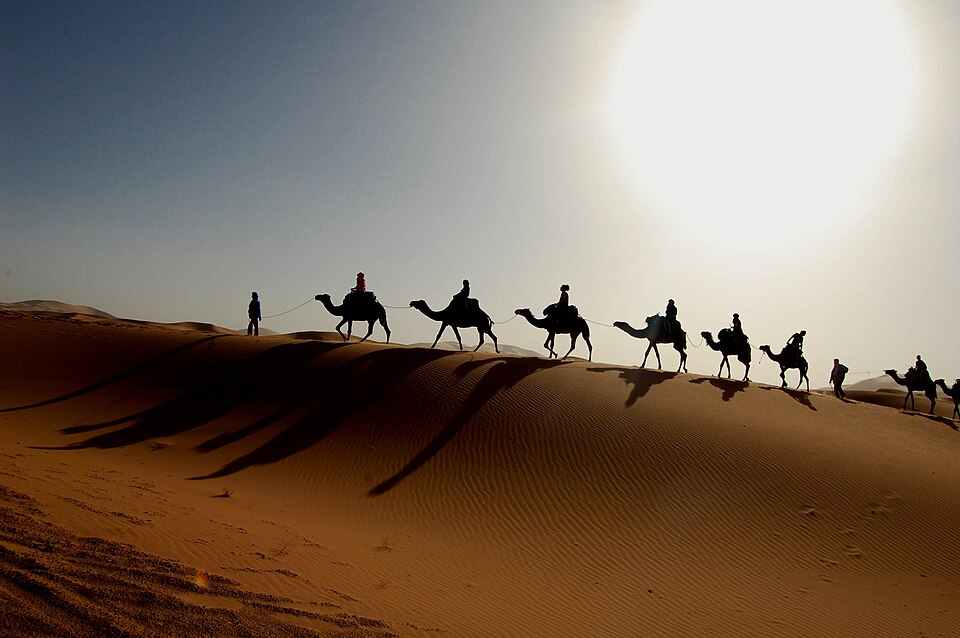
- Examples of xerocoles: camel, kangaroo rat, fennec fox, addax, jerboa.
- Contrast: arboreal = trees, aquatic = water, fossorial = burrows, terrestrial = land in general.
- Choosing 'terrestrial' (land in general) when the exact term for a desert dweller is xerocole
- Confusing 'fossorial' (burrowing) with desert life — burrowing animals need not be desert species
UPSC/UPPSC ask you to match an ecological adjective (arboreal, fossorial, xerocole, cursorial) to the habitat or adaptation it describes.
- practice — not a real PYQ
An animal adapted to live in trees is described as:
- (a)Fossorial
- (b)Arboreal
- (c)Xerocole
- (d)Cursorial
Answer(b) Arboreal — tree-dwelling animals such as monkeys and sloths. - practice — not a real PYQ
Which of the following is a common adaptation of xerocoles (desert animals) for water conservation?
- (a)Producing large volumes of dilute urine
- (b)Excreting highly concentrated urine and being active at night
- (c)Living permanently submerged in water
- (d)Migrating to the ocean to breed
Answer(b) Excreting highly concentrated urine and being nocturnal reduces water loss in the desert.