
Chandraprabha Wildlife Sanctuary is situated in which district of Uttar Pradesh?
- (a)Chandauli
- (b)Baharaich
- (c)Sonbhadra
- (d)Lakhimpur Khiri
Correct — A, Chandauli. Chandraprabha Wildlife Sanctuary lies in Chandauli district of Uttar Pradesh, about 65-70 km from Varanasi in the Vindhyan hill region. Established in 1957, it is famous as the site of India’s Asiatic lion reintroduction experiment (lions brought from Gir in 1957-58). So the sanctuary is in Chandauli district.
- (b)Baharaich — Bahraich district, in the Terai belt, is home to Katarniaghat Wildlife Sanctuary (part of Dudhwa Tiger Reserve), not Chandraprabha.
- (c)Sonbhadra — Sonbhadra is an adjacent Vindhyan district (with Kaimoor Wildlife Sanctuary nearby), but Chandraprabha Sanctuary falls within Chandauli, not Sonbhadra.
- (d)Lakhimpur Khiri — Lakhimpur Kheri is the district of Dudhwa National Park in the northern Terai — a different protected area, far from Chandraprabha in the south-east.
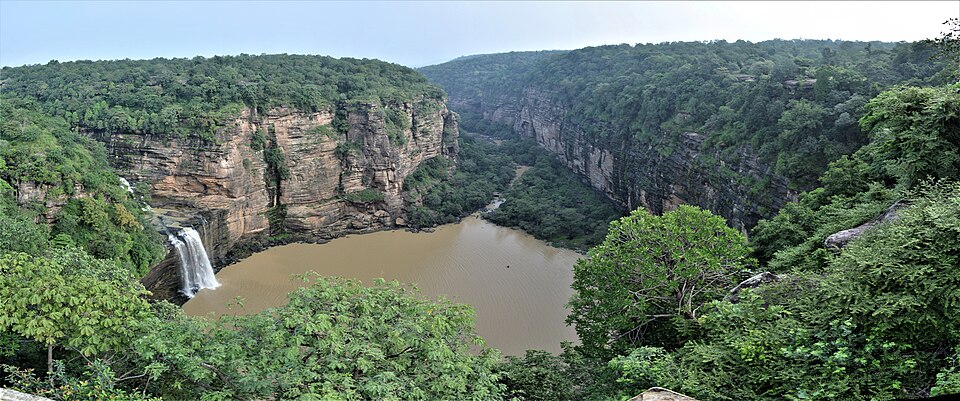
Chandraprabha Wildlife Sanctuary (established 1957) sits in the Vindhyan plateau of south-eastern Uttar Pradesh in Chandauli district. It is watered by the Chandraprabha and Karamnasha rivers and is known for the Devdari and Rajdari waterfalls. Historically it hosted an ambitious but ultimately failed attempt to establish a second home for the Asiatic lion outside Gujarat’s Gir forest.
All four options are Uttar Pradesh districts associated with forests/sanctuaries, so the trick is location recall. Bahraich and Lakhimpur Kheri belong to the northern Terai (Katarniaghat, Dudhwa); Sonbhadra is next-door in the Vindhyas — but Chandraprabha specifically lies in Chandauli.
- Chandraprabha Wildlife Sanctuary is in Chandauli district, Uttar Pradesh (Vindhyan region, near Varanasi).
- Established in 1957; named after the Chandraprabha river.
- Site of the 1957-58 Asiatic lion reintroduction from Gir (population reached ~11 by 1969, then died out).
- Known for the Devdari and Rajdari waterfalls.
- Placing Chandraprabha in Sonbhadra (adjacent Vindhyan district) instead of Chandauli
- Confusing it with the Terai sanctuaries in Bahraich (Katarniaghat) or Lakhimpur Kheri (Dudhwa)
UPPSC frequently asks to match a UP sanctuary/national park with its district; UPSC asks broader wildlife/protected-area questions.
Consider the following statements: 1. Asiatic lion is naturally found in India only. 2. Double-humped camel is naturally found in India only. 3. One-horned rhinoceros is naturally found in India only. Which of the statements given above is/are correct?
- (a) 1 only
- (b) 2 only
- (c) 1 and 3 only
- (d) 1, 2 and 3
Answer(a) 1 only
Same theme — the Asiatic lion, whose sole wild home is Gir; Chandraprabha is famous as the failed attempt to establish a second lion home outside Gir.
- practice — not a real PYQ
Chandraprabha Wildlife Sanctuary in Uttar Pradesh is historically associated with the reintroduction of which animal?
- (a)One-horned rhinoceros
- (b)Asiatic lion
- (c)Snow leopard
- (d)Great Indian bustard
Answer(b) Asiatic lion — lions from Gir were introduced here in 1957-58 in a now-failed experiment. - practice — not a real PYQ
The Devdari and Rajdari waterfalls are located in which Uttar Pradesh protected area?
- (a)Dudhwa National Park
- (b)Katarniaghat Wildlife Sanctuary
- (c)Chandraprabha Wildlife Sanctuary
- (d)Turtle Wildlife Sanctuary
Answer(c) Chandraprabha Wildlife Sanctuary — in Chandauli district, known for these Vindhyan waterfalls.