
'Poverty is regarded as a social problem' which was the outcome of a survey research on poverty in London. Who was the Scholar of this research ?
- (a)Henary George
- (b)Charles Booth
- (c)Sir Henary Maine
- (d)Kingsley Davis
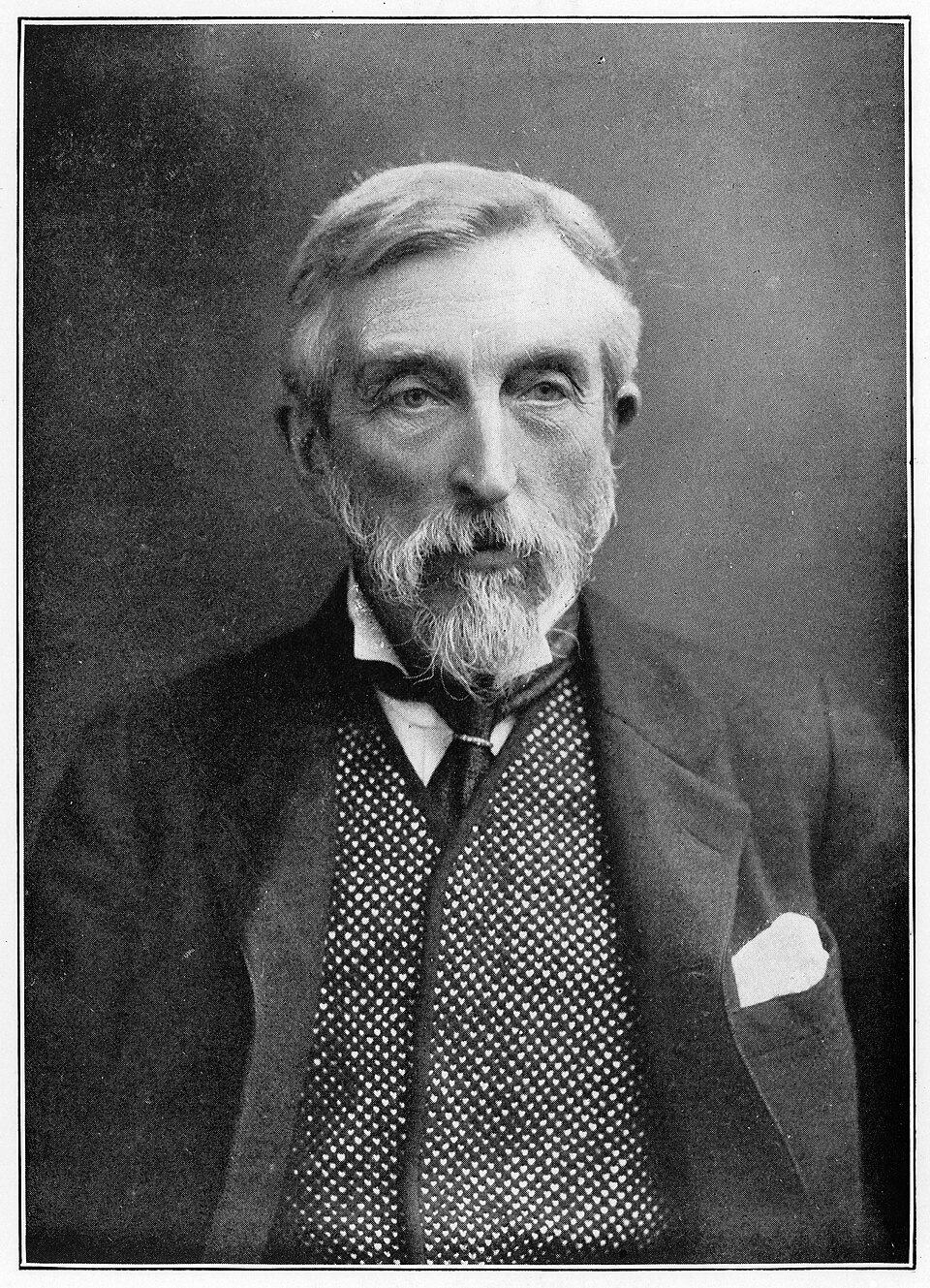
Correct — B, Charles Booth. Booth's survey of London, published as 'Life and Labour of the People in London', is the study the question describes. The first volume appeared in 1889 and the work grew to nine volumes between 1892 and 1897 and seventeen by 1902-03. Booth set out to investigate the East End expecting to disprove what he thought were exaggerated claims about destitution, and found instead that about 35 per cent of the population was living in abject poverty — a higher figure than the campaigners he doubted had alleged. That result is why the survey matters intellectually: it moved poverty out of the language of individual idleness and moral failure and into the language of social structure, showing it to be shaped by conditions such as employment, education, religion and administration. Booth is credited with initiating the systematic study of poverty in Britain, and his colour-coded street maps of London, grading every street by the condition of its inhabitants, are the origin of the poverty-map method still used today. Read alongside Seebohm Rowntree's York surveys from 1901, which produced the first quantified poverty line, Booth's work is the foundation of empirical poverty research.
- (a)Henary George — Henry George, the American political economist, wrote 'Progress and Poverty' (1879) — a theoretical argument that poverty accompanies progress because of private appropriation of land rent, and the source of the single-tax movement. It is an argument about causes, not a survey of London households.
- (c)Sir Henary Maine — Sir Henry Maine belongs to comparative jurisprudence, not poverty research. His 'Ancient Law' (1861) is remembered for the movement of progressive societies 'from status to contract' — a thesis about legal and social evolution.
- (d)Kingsley Davis — Kingsley Davis was a twentieth-century American demographer and sociologist, associated with the Davis–Moore thesis on social stratification and with popularising the term 'population explosion'. He is far too late, and in the wrong country, to be the author of a Victorian London survey.
The social-survey method is the idea that a social condition can be established by counting it. Before Booth, British debate about poverty ran on anecdote and moral assumption; Booth's contribution was to send investigators street by street, classify households, and publish the numbers. Once poverty could be measured, it could be argued about as a social problem with social causes and social remedies — which is the sentence the question quotes. This is the intellectual line that runs to Rowntree's poverty line in 1901, and eventually to every official poverty estimate any government publishes.
Three of the four names here are famous for something other than survey research, which is the discriminator: only Booth is a surveyor of a city. If the names are unfamiliar, note the phrase 'survey research on poverty in London' — Henry George is American and theoretical, Maine is a jurist, Davis is a mid-twentieth-century demographer, and none of them conducted a London household survey. The paper prints two of the names with non-standard spellings ('Henary'), which does not change who is meant.
- Charles Booth's 'Life and Labour of the People in London' began with a first volume in 1889 and grew to nine volumes (1892-97) and seventeen (1902-03).
- His East End survey found roughly 35 per cent of the population in abject poverty — more than the claims he had set out to disprove.
- Booth is credited with initiating the systematic study of poverty in Britain, and his colour-coded street maps are the origin of the poverty-mapping method.
- Seebohm Rowntree's York surveys, beginning in 1901, produced the first quantified poverty line and the distinction between primary and secondary poverty.
- Picking Henry George because his best-known book has 'Poverty' in the title. 'Progress and Poverty' is a theoretical treatise, not a survey.
- Treating any famous nineteenth-century British name as a possible answer. Maine is a jurist and belongs to a different literature entirely.
- Confusing Booth with Rowntree. Booth surveyed London from 1889; Rowntree surveyed York from 1901 and drew the first quantified poverty line.
UPPSC's General Studies Paper-I carries a distinct sociology strand — thinkers, concepts and classic studies — and asks it as 'who propounded / whose research was this'. UPSC rarely asks the thinker and instead tests the measurement apparatus that grew out of this tradition.
In a given year in India, official poverty lines are higher in some States than in others because
- (a) poverty rates vary from State to State
- (b) price levels vary from State to State
- (c) Gross State Product varies from State to State
- (d) quality of public distribution varies from State to State
Answer(b) price levels vary from State to State
The modern end of the tradition Booth started. Once poverty is treated as something to be counted rather than judged, the next question is how to draw the threshold — and this item tests exactly why that threshold is not a single number across a country.
Which of the following Committees recommended a poverty line based on nutritional requirements exclusively ?
- (a) Alagh Committee
- (b) Lakdawala Committee
- (c) Tendulkar Committee
- (d) Rangarajan Committee
Answer(a) Alagh Committee
India's own version of the Booth–Rowntree move: defining poverty by a measurable physical standard rather than by impression. The Alagh task force fixed the calorie norms that became India's first official poverty line, which is the direct methodological descendant of the surveys this 2022 question is about.
- practice — not a real PYQ
The survey 'Life and Labour of the People in London' is associated with which of the following?
- (a)Seebohm Rowntree
- (b)Charles Booth
- (c)Herbert Spencer
- (d)Emile Durkheim
Answer(b) Charles Booth — his multi-volume London survey, begun in 1889, established the systematic study of poverty in Britain and produced the famous colour-coded poverty maps.
- practice — not a real PYQ
The distinction between 'primary' and 'secondary' poverty, along with the first quantified poverty line, is associated with the surveys of which city?
- (a)London
- (b)Manchester
- (c)York
- (d)Liverpool
Answer(c) York — Seebohm Rowntree's surveys from 1901 defined a poverty line based on the minimum needed for physical efficiency, and separated primary poverty (income too low) from secondary poverty (income sufficient but spent otherwise).