
Tapa cloth is obtained from the plants of which one of the following family?
- (a)Asclepiadaceae
- (b)Moraceae
- (c)Graminae
- (d)Malvaceae
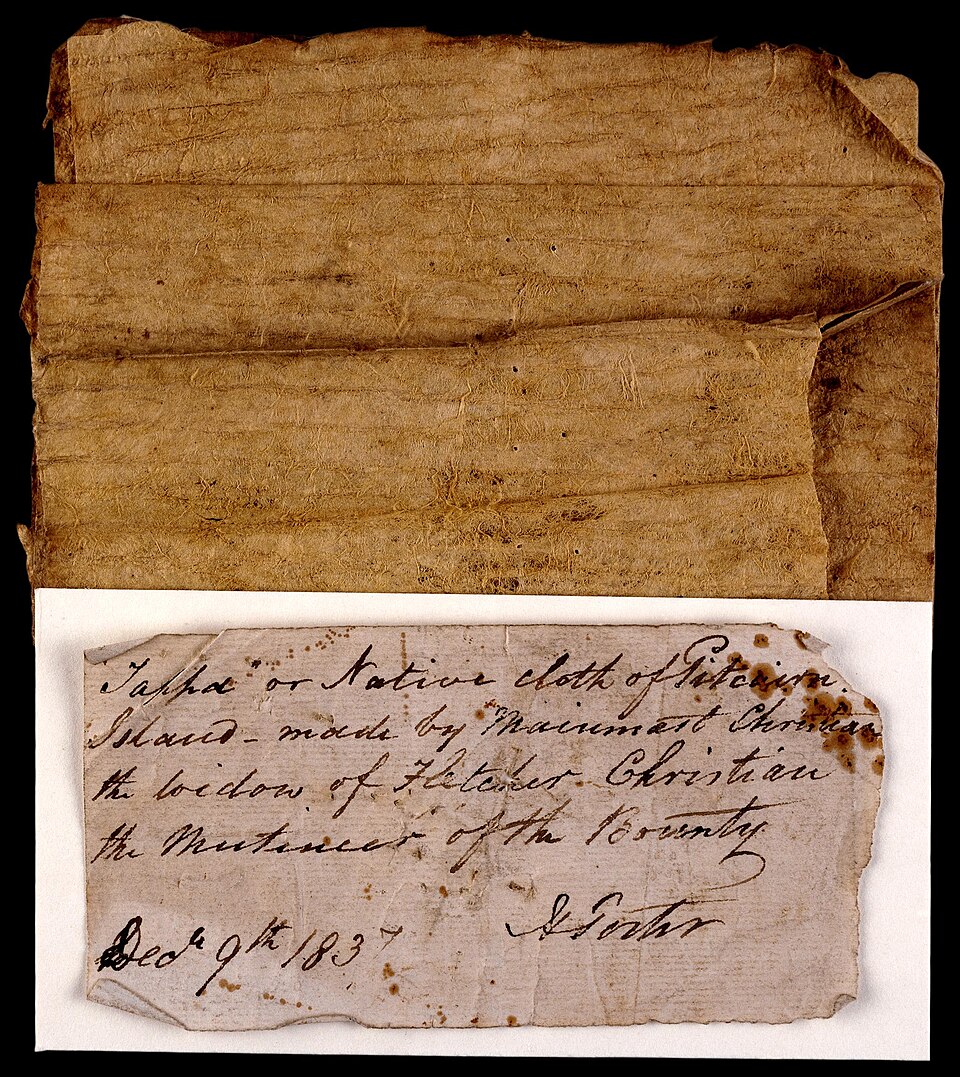
Correct — B, Moraceae (the mulberry/fig family). Tapa (barkcloth) is a non-woven cloth beaten from the inner bark of the paper mulberry, Broussonetia papyrifera. The paper mulberry — along with the other traditional tapa sources, breadfruit (Artocarpus) and fig (Ficus tinctoria) — all belong to the family Moraceae. So the plant family behind tapa cloth is Moraceae.
- (a)Asclepiadaceae — Wrong — this is the milkweed family (e.g. Calotropis/aak). Its plants yield latex and floss, not the bark used for tapa.
- (c)Graminae — Wrong — Graminae (Poaceae) is the grass family (cereals, bamboo, sugarcane). Tapa is bark cloth from a tree, not a grass product.
- (d)Malvaceae — Wrong — Malvaceae is the mallow family, which gives fibres like cotton and jute. It is a tempting trap because it produces fabric fibre, but tapa is beaten barkcloth, not a spun/woven Malvaceae fibre.
Tapa (also called kapa or masi) is a traditional barkcloth of the Pacific islands. It is made not by weaving but by soaking and beating the inner bark (bast) of certain trees until it felts into a broad, thin sheet. The classic and finest source is the paper mulberry, Broussonetia papyrifera; breadfruit and fig bark give coarser cloth. These trees are all members of Moraceae, the mulberry family.
The pull of the question is that a cloth 'should' come from a fibre crop like cotton (Malvaceae). But tapa is a bark product, and the tree that supplies it — paper mulberry — sits in the same family as the mulberry and the fig, i.e. Moraceae. Anchor on 'paper mulberry → mulberry family → Moraceae' and the answer follows.
- Tapa/barkcloth is beaten from the inner bark of the paper mulberry (Broussonetia papyrifera).
- Paper mulberry, breadfruit (Artocarpus) and fig (Ficus tinctoria) are all in family Moraceae.
- Moraceae = the mulberry and fig family (also includes jackfruit, banyan, peepal).
- It is a non-woven, felted cloth — different from spun fibres such as cotton (Malvaceae).
- Assuming any cloth-yielding plant must be Malvaceae (cotton) — tapa is barkcloth, not a spun fibre.
- Confusing Graminae/Poaceae (grasses) with fibre or bark sources.
UPPSC/UPSC test plant-family-to-product links directly ('X is obtained from which family?') or as match-the-pairs — keep the flagship product of each major family handy.
- practice — not a real PYQ
The paper mulberry, the source of tapa barkcloth, belongs to which plant family?
- (a)Malvaceae
- (b)Moraceae
- (c)Poaceae
- (d)Fabaceae
Answer(b) Moraceae — the mulberry/fig family, which also includes breadfruit and fig used for barkcloth. - practice — not a real PYQ
Which of the following fibres is obtained from a plant of the family Malvaceae?
- (a)Cotton
- (b)Silk
- (c)Wool
- (d)Coir
Answer(a) Cotton — Gossypium is a Malvaceae plant; silk and wool are animal fibres and coir is from coconut (Arecaceae).