
Which one of the following is NOT an element of rural community?
- (a)We-feeling
- (b)Cultural diversity
- (c)Territory
- (d)Self-sufficiency
Correct — B, Cultural diversity. Cultural diversity (heterogeneity) is a mark of URBAN, not rural, life; a rural community is characterised by cultural HOMOGENEITY — shared customs, language, caste patterns and way of life. So cultural diversity is NOT an element of a rural community. The other three are genuine elements: 'we-feeling' is the community sentiment that binds members, 'territory' is the definite locality every community occupies, and 'self-sufficiency' is the classic economic hallmark of the traditional village. Hence the odd one out is cultural diversity.
- (a)We-feeling — This IS an element — 'we-feeling' is the core of community sentiment (the sense of belonging that makes a group a community). It is present in a rural community, so it is not the answer.
- (c)Territory — This IS an element — territory (a definite locality/geographical area) is, along with community sentiment, one of the two basic elements of any community. A rural community occupies a village territory, so it is not the answer.
- (d)Self-sufficiency — This IS an element — self-sufficiency (the village meeting most of its own needs) is a recognised characteristic of the traditional rural community. Being a feature of rural life, it is not the odd one out.
In sociology, a community is a group of people living in a definite locality with a shared sense of belonging. Following MacIver & Page, the two essential elements of any community are (1) locality/territory and (2) community sentiment (the 'we-feeling', with role-feeling and dependency-feeling). A rural community additionally shows self-sufficiency, cultural homogeneity, dominance of agriculture, primary (face-to-face) relations and informal social control. Cultural diversity/heterogeneity is characteristic of urban communities, not rural ones.
Three options — we-feeling (community sentiment), territory (locality) and self-sufficiency — are standard features of a rural community. The odd one is cultural diversity: villages are traditionally culturally homogeneous, so diversity belongs to the urban community. Anchoring on 'rural = homogeneous, self-sufficient locality with strong we-feeling' isolates cultural diversity as the exception.
- Essential elements of a community (MacIver & Page): a locality/territory and community sentiment (we-feeling).
- Rural communities are marked by cultural homogeneity — NOT diversity.
- Self-sufficiency, dominance of agriculture and primary (face-to-face) relations typify rural communities.
- Cultural diversity/heterogeneity is a feature of the urban community.
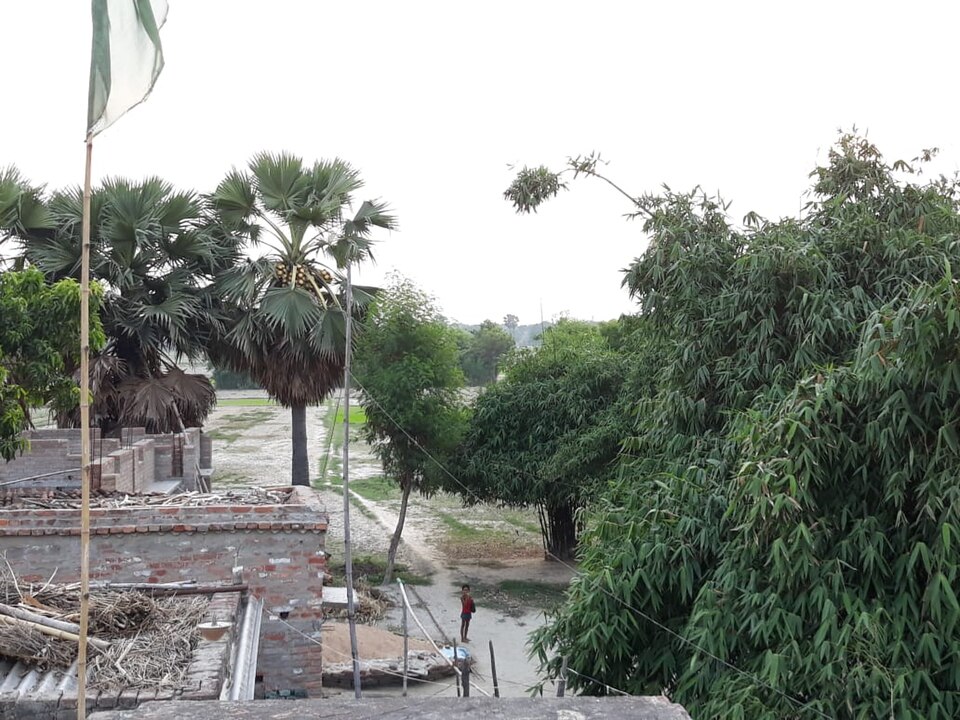
- Treating 'cultural diversity' as a community element — it marks urban, not rural, life (which is homogeneous).
- Confusing 'community' (natural, locality-based) with 'association' (deliberately formed for a specific purpose).
UPPSC's sociology/GS items ask which listed trait is (or is not) a feature of a rural community, or to distinguish community from association/institution — anchor on locality + we-feeling as core elements and rural = homogeneous.
- practice — not a real PYQ
According to MacIver, which TWO are the essential elements of a community?
- (a)Locality and community sentiment
- (b)Rules and government
- (c)Contract and division of labour
- (d)Money and market
Answer(a) Locality and community sentiment — a community needs a definite territory and a shared 'we-feeling'. - practice — not a real PYQ
Which one of the following is a characteristic feature of a rural community?
- (a)Cultural heterogeneity
- (b)Predominance of secondary relations
- (c)Self-sufficiency and homogeneity
- (d)Anonymity of individuals
Answer(c) Self-sufficiency and homogeneity — rural communities are small, culturally homogeneous and traditionally self-sufficient.