
In the contexts of Indian history, which of the following statement/s is/are correct regarding Vaikom Satyagraha? 1. It was a satyagraha against untouchability and caste discrimination. 2. Mahatma Gandhi participated in this Satyagraha. Select the correct answer using the codes given below. Codes:
- (a)1 only
- (b)2 only
- (c)Both 1 and 2
- (d)Neither 1 nor 2
Correct — C, Both 1 and 2. The Vaikom Satyagraha (1924–25), in Vaikom in the princely state of Travancore (present-day Kerala), demanded that so-called 'untouchable' and lower-caste people be allowed to use the public roads around the Vaikom Mahadeva Temple, from which they were barred. Statement 1 is therefore correct — it was directed squarely against untouchability and caste discrimination. Statement 2 is also correct — Mahatma Gandhi took part in the movement: he visited Vaikom in March 1925, held negotiations with the temple authorities and the Travancore regent, and lent his moral leadership to the campaign. Since both statements are true, the answer is 'Both 1 and 2'.
- (a)1 only — This drops the true statement 2. Gandhi did participate — he visited Vaikom in 1925 and negotiated on the satyagrahis' behalf — so limiting the answer to statement 1 alone is incomplete.
- (b)2 only — This wrongly rejects statement 1. The movement's entire purpose was to fight untouchability and caste bars on temple-road access, so statement 1 is definitely correct.
- (d)Neither 1 nor 2 — Both statements are historically accurate — the anti-untouchability aim and Gandhi's participation — so rejecting both is wrong.
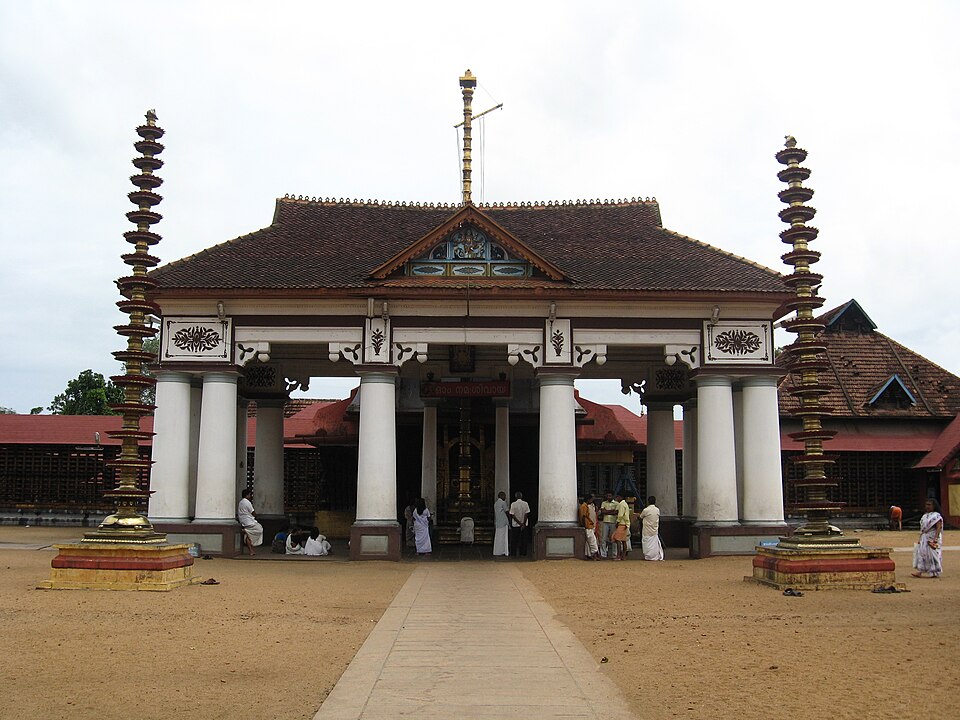
The Vaikom Satyagraha (1924–25) was one of the earliest organised temple-entry / anti-untouchability movements in India. Lower castes were forbidden even to walk on the public roads surrounding the Vaikom Mahadeva Temple in Travancore. The satyagraha, launched by leaders such as T.K. Madhavan, K.P. Kesava Menon and K. Kelappan, sought to open those roads to all castes and became a landmark in the struggle against caste discrimination.
Two safe anchors settle this question. First, 'Vaikom' is remembered as a temple-road access fight against untouchability, so statement 1 is clearly right. Second, Gandhi is closely tied to Vaikom — he visited in 1925 and negotiated — so statement 2 is right too. E.V. Ramasamy 'Periyar' also led the agitation actively (earning the title 'Vaikom Veerar'), but the question only tests Gandhi, whose participation is well documented, giving 'Both 1 and 2'.
- Vaikom Satyagraha (1924–25) at Vaikom, Travancore (present-day Kerala).
- Aim: open the public roads around the Vaikom Mahadeva Temple to lower castes — an anti-untouchability, anti-caste movement.
- Local leaders included T.K. Madhavan, K.P. Kesava Menon and K. Kelappan; Periyar E.V. Ramasamy was active (called 'Vaikom Veerar').
- Mahatma Gandhi visited Vaikom in March 1925 and negotiated with the temple authorities and Travancore regent.
- Assuming Gandhi 'led' Vaikom — he participated and negotiated; day-to-day leadership was local (Periyar, Kesava Menon, Madhavan)
- Confusing Vaikom (temple-road access, 1924–25) with the later Guruvayur temple-entry Satyagraha (1931–32)
UPPSC and UPSC test Vaikom by its aim (anti-untouchability / temple-road access), its place (Travancore/Kerala) and the personalities linked to it (Gandhi, Periyar, T.K. Madhavan).
Consider the following pairs (Movement/Organization : Leader): 1. All India Anti-Untouchability League : Mahatma Gandhi; 2. All India Kisan Sabha : Swami Sahajanand Saraswati; 3. Self-Respect Movement : E.V. Ramaswami Naicker. Which of the pairs given above is/are correctly matched?
- (a) 1 only
- (b) 1 and 2 only
- (c) 2 and 3 only
- (d) 1, 2 and 3
Answer(d) 1, 2 and 3
Same theme — the anti-untouchability struggle and its leaders. UPSC 2019 links Gandhi to the Anti-Untouchability League and Periyar to the Self-Respect Movement, the same two figures tied to the Vaikom Satyagraha that UPPSC 2021 tests.
- practice — not a real PYQ
The Vaikom Satyagraha (1924–25) took place in which princely state?
- (a)Mysore
- (b)Travancore
- (c)Hyderabad
- (d)Baroda
Answer(b) Travancore — Vaikom lies in the former princely state of Travancore, in present-day Kerala. - practice — not a real PYQ
Which leader, active in the Vaikom Satyagraha, later earned the title 'Vaikom Veerar' (Hero of Vaikom)?
- (a)K. Kamaraj
- (b)E.V. Ramasamy 'Periyar'
- (c)C. Rajagopalachari
- (d)Sree Narayana Guru
Answer(b) E.V. Ramasamy 'Periyar' — his role at Vaikom earned him the title 'Vaikom Veerar'.