
'Ringelmann scale' is used to measure density of
- (a)Smoke
- (b)Polluted water
- (c)Fog
- (d)Noise
Correct — A, Smoke. The Ringelmann scale (or Ringelmann chart) is a visual tool used to estimate the density, or opacity, of smoke emitted from a chimney or smokestack. Devised in the late 19th century by the French professor Maximilien Ringelmann, it is a card printed with a graduated series of shades from white through greys to black. An observer compares the darkness of the plume against the chart and reads off a number — so it is a measure of how dense/dark the smoke is, used in air-pollution monitoring.
- (b)Polluted water — Water pollution is measured by parameters like BOD, COD, dissolved oxygen, pH and turbidity — not by the Ringelmann chart, which reads the darkness of an air-borne smoke plume.
- (c)Fog — Fog is condensed water vapour; its extent is described by visibility range and it has nothing to do with the Ringelmann chart, which grades the blackness of combustion smoke.
- (d)Noise — Noise is measured in decibels (dB) with a sound-level meter. The Ringelmann scale is purely a visual comparison of smoke shade and cannot measure sound.
The Ringelmann scale is a simple, cheap method for visually grading the opacity of smoke from a chimney. The chart runs from level 0 (all white, clear) to level 5 (all black), in steps that correspond roughly to 20% increments of blackness. A trained observer standing at a distance matches the plume against the card, giving a quick field estimate of how much particulate the source is emitting, without instruments.
The word 'density' in the question is the clue: the Ringelmann chart grades how dense or dark a smoke plume looks. Link the name to smoke and the other options fall away — water uses BOD/COD, fog uses visibility, noise uses decibels. Only smoke is graded on a white-to-black shade scale.
- Ringelmann scale = visual chart to estimate the density/opacity of chimney smoke.
- Runs from 0 (white/clear) to 5 (fully black), in roughly 20% opacity steps.
- Named after French professor Maximilien Ringelmann (late 19th century).
- A no-instrument field method used in air-pollution monitoring of stationary sources.
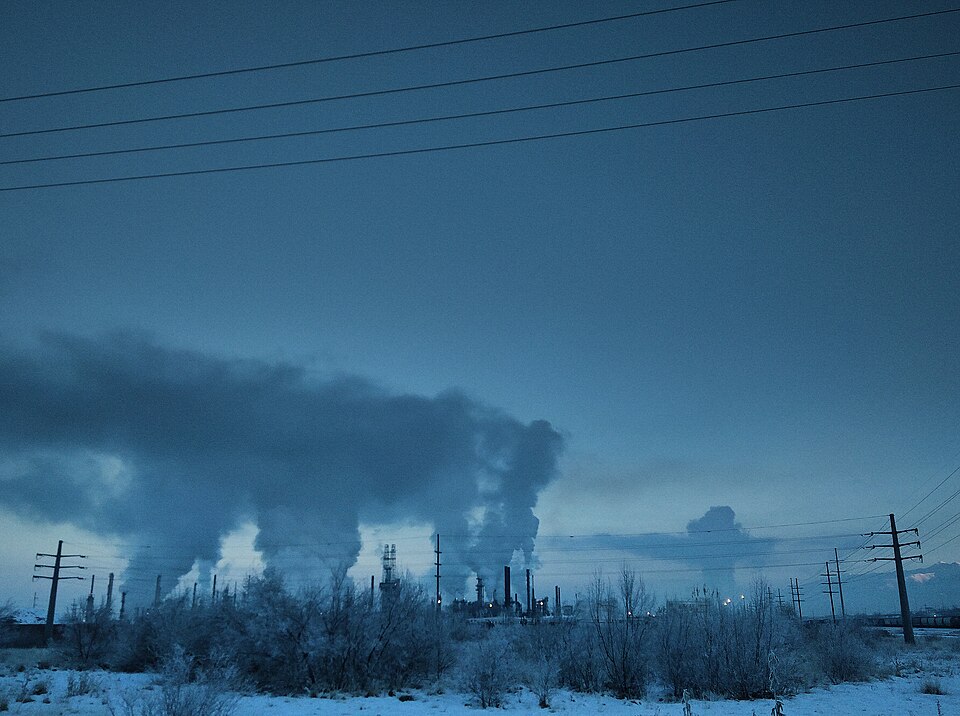
- Being misled by the word 'density' into thinking of water or fog
- Confusing a visual opacity chart with instrument-based methods like PM sensors or decibel meters
UPPSC and UPSC pair a measuring tool or unit with the quantity it measures — Ringelmann → smoke, decibel → noise, BOD → water — so the exam rewards matching each scale to the right pollutant.
- practice — not a real PYQ
On the Ringelmann scale, a reading of 0 corresponds to smoke that is:
- (a)Completely black
- (b)White / clear (no visible smoke)
- (c)Grey at 50% opacity
- (d)Blue-tinged
Answer(b) White/clear — the scale runs from 0 (white) to 5 (fully black), so 0 means no visible smoke. - practice — not a real PYQ
Which unit is used to measure the intensity of noise pollution?
- (a)Decibel (dB)
- (b)Ringelmann number
- (c)Parts per million (ppm)
- (d)Nephelometric Turbidity Unit (NTU)
Answer(a) Decibel (dB) — noise is measured in decibels; the Ringelmann number grades smoke, not sound.