
The concept of 'Marginal Man' was propounded by
- (a)Robert E. Park
- (b)Robert Redfield
- (c)Louis Wirth
- (d)Louis Dumont
Correct — A, Robert E. Park. The American sociologist Robert Ezra Park, a founder of the Chicago School, introduced the idea of the 'marginal man' in his 1928 essay 'Human Migration and the Marginal Man'. The marginal man is a person living simultaneously in two distinct cultural worlds — typically produced by migration and cultural contact — who belongs fully to neither. Park's student Everett V. Stonequist later elaborated the idea in his 1937 book 'The Marginal Man', but the concept was propounded by Park.
- (b)Robert Redfield — Wrong — Redfield is known for the 'folk-urban continuum' and his studies of the 'little community' / 'folk society' (e.g., Tepoztlan, Yucatan), not the marginal man.
- (c)Louis Wirth — Wrong — Wirth, also of the Chicago School, is famous for 'Urbanism as a Way of Life' (1938) and his study of the ghetto, not for the marginal-man concept.
- (d)Louis Dumont — Wrong — Dumont was a French anthropologist best known for 'Homo Hierarchicus', a study of the Indian caste system; he did not propound the marginal man.
In the sociology of migration and race relations, the 'marginal man' is an individual poised on the border of two cultures without full membership in either — a position that brings both psychological strain and a broader, cosmopolitan outlook. The idea grew out of the Chicago School's early-20th-century studies of immigration and urban life.
All four options are real social theorists, so the question tests attribution of a concept to its author. The reliable method is to anchor each name to its signature idea: Park→marginal man, Redfield→folk-urban continuum, Wirth→urbanism as a way of life, Dumont→caste/Homo Hierarchicus.
- Robert E. Park introduced 'marginal man' in his 1928 essay 'Human Migration and the Marginal Man'
- Park was a central figure of the Chicago School of sociology
- Everett V. Stonequist, Park's student, developed the idea in 'The Marginal Man' (1937)
- The marginal man lives on the margin of two cultures, belonging completely to neither
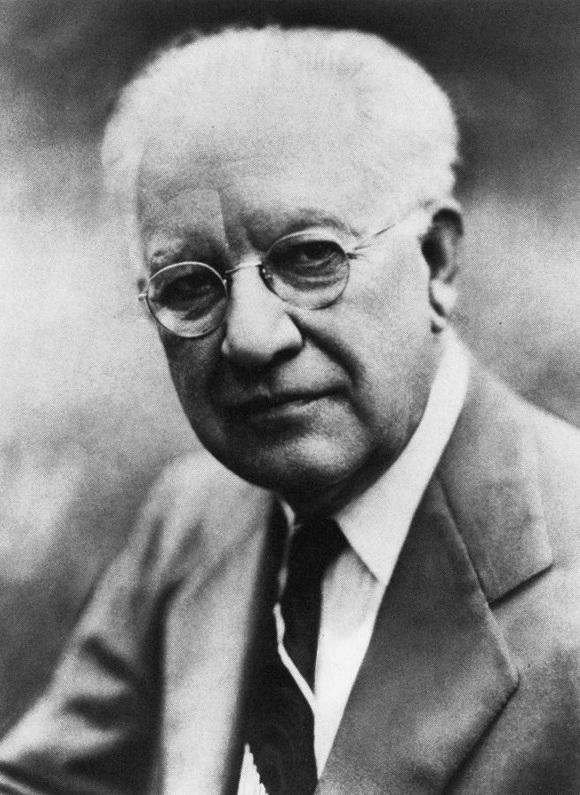
- Crediting Everett Stonequist (who wrote the 1937 book) instead of Park (who coined the concept)
- Mixing up the Chicago-School theorists — Park, Wirth and Redfield each have a different signature idea
UPPSC/UPSC ask 'who propounded/gave the concept of X' — attribute the idea to its originating theorist.
- practice — not a real PYQ
The concept of the 'folk-urban continuum' is associated with which theorist?
- (a)Robert Redfield
- (b)Robert E. Park
- (c)Louis Wirth
- (d)Emile Durkheim
Answer(a) Robert Redfield — he developed the folk-urban continuum from his Mexican community studies. - practice — not a real PYQ
The book 'Homo Hierarchicus', a study of the Indian caste system, was written by
- (a)M. N. Srinivas
- (b)Louis Dumont
- (c)G. S. Ghurye
- (d)Andre Beteille
Answer(b) Louis Dumont — his structural study of caste and hierarchy in India.