
Which of the following are the impacts of Global Warming? 1. Rise in sea level 2. Melting of glaciers 3. Spread of diseases 4. Bleaching of Coral reefs Select the correct answer using the codes given below.
- (a)1, 2 and 3 only
- (b)2 and 3 only
- (c)1, 3 and 4 only
- (d)1, 2, 3 and 4
Correct — D, all four. Every item listed is a documented consequence of global warming. Warming causes (1) sea-level rise through thermal expansion of ocean water plus meltwater from land ice; (2) the retreat and melting of mountain glaciers and polar ice sheets; (3) a wider spread of vector-borne diseases (malaria, dengue) as warmer, wetter conditions expand the range of mosquitoes and other vectors; and (4) coral bleaching, where heat-stressed corals expel their symbiotic zooxanthellae algae and turn white. Since 1, 2, 3 and 4 are all genuine impacts, the answer is 1, 2, 3 and 4.
- (a)1, 2 and 3 only — Wrongly drops (4) coral bleaching, which is one of the best-known marine impacts of ocean warming — the mass bleaching of the Great Barrier Reef is the classic example.
- (b)2 and 3 only — Omits both (1) sea-level rise and (4) coral bleaching, two of the most widely cited impacts of global warming.
- (c)1, 3 and 4 only — Excludes (2) melting of glaciers, yet glacier retreat is one of the most visible and directly measured signatures of a warming climate.
Global warming — the long-term rise in Earth's average surface temperature driven by greenhouse-gas build-up — sets off a chain of physical and biological effects. Warmer oceans expand (thermal expansion) and land ice melts, so seas rise; mountain and polar ice shrinks; ecological ranges shift, letting disease vectors reach new areas; and heat-stressed corals bleach. These are treated as standard, cumulative 'impacts' rather than mutually exclusive options.
The trap in a 'which of these are impacts' question is to assume one listed item is unrelated and hunt for the odd one out. Here all four are real, well-established consequences, so the safest reasoning is to test each item on its own merits — and each survives — making 'all of them' correct.
- Sea-level rise comes from thermal expansion of warming seawater plus meltwater from glaciers and ice sheets.
- Glacier and ice-sheet retreat is a direct, measurable indicator of a warming climate.
- Warming expands the geographic range of vector-borne diseases such as malaria and dengue.
- Coral bleaching occurs when heat-stressed corals expel their symbiotic zooxanthellae algae and lose colour.
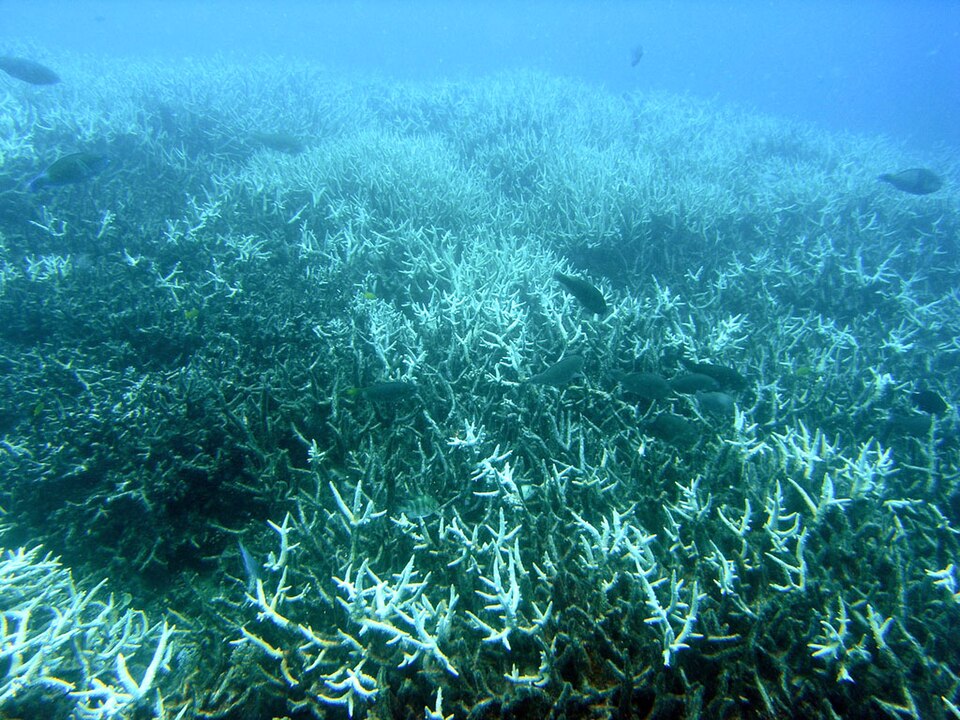
- Assuming coral bleaching is caused only by pollution and not by warming — heat stress is the primary trigger.
- Thinking sea-level rise is only about melting ice, forgetting thermal expansion of seawater.
UPPSC/UPSC frame this as 'which of the following are impacts/consequences of global warming' — a checklist where nearly all listed effects are genuine, so 'all of the above' is common; distinguish causes (greenhouse gases) from impacts (sea-level rise, bleaching, etc.).
- practice — not a real PYQ
Which of the following processes contribute to sea-level rise due to global warming? 1. Thermal expansion of ocean water 2. Melting of land-based glaciers and ice sheets 3. Melting of floating sea ice
- (a)1 and 2 only
- (b)2 and 3 only
- (c)1 and 3 only
- (d)1, 2 and 3
Answer(a) 1 and 2 only — thermal expansion and land-ice melt raise sea level; melting of floating sea ice does not add much because it already displaces its own weight. - practice — not a real PYQ
Coral bleaching primarily results from:
- (a)Loss of symbiotic zooxanthellae algae under heat stress
- (b)Excess sedimentation smothering the reef
- (c)Over-harvesting of reef fish
- (d)A drop in ocean salinity
Answer(a) Loss of symbiotic zooxanthellae algae under heat stress — warming seas make corals expel the algae that give them colour and food.