
Match List - I with List - II and select the correct answer using the codes given below the lists List - I (Typhoon/Hurricane August-September 2019) A. Dorian B. Hagibis C. Lekima D. Mitag List - II (Most affected country) 1. Bahamas 2. China 3. Jeju, South Korea 4. Japan Codes :
- (a)A-1, B-2, C-4, D-3
- (b)A-1, B-4, C-2, D-3
- (c)A-4, B-2, C-3, D-1
- (d)A-3, B-4, C-2, D-1
Correct — B, A-1, B-4, C-2, D-3. Dorian (A) was a North Atlantic hurricane that made landfall on the Bahamas on 1–2 September 2019 as a Category 5 storm, the strongest on modern record for the north-western Bahamas; it killed around 74 people and caused about USD 3.4 billion in damage, making it the costliest disaster in Bahamian history — hence A-1. Hagibis (B) was the north-west Pacific typhoon that struck Japan in October 2019, with a confirmed toll of 139 dead in Japan (118 direct and 21 post-disaster, with 3 missing) and about USD 17.3 billion in damage, the costliest of the four — hence B-4. Lekima (C) hit China in August 2019 and ranks as the second-costliest storm in Chinese history — hence C-2. Mitag (D) tracked past Taiwan and eastern China in late September and early October 2019 before hitting the Korean peninsula, with Jeju island worst affected; about 14 deaths in South Korea and 22 across the storm's whole track — hence D-3. One honest note on the paper's own wording: the List-I header says 'August-September 2019', but Hagibis and Mitag actually peaked in October 2019. Match by country, not by the month printed in the heading.
- (a)A-1, B-2, C-4, D-3 — It gets Dorian and Mitag right but swaps the two east Asian typhoons — it sends Hagibis to China and Lekima to Japan. It is the reverse of the truth: Hagibis was the October storm that battered Japan, and Lekima was the August storm that struck the Chinese coast. This is the closest option to the key and the one that catches candidates who remember only that 'both were Asian typhoons'.
- (c)A-4, B-2, C-3, D-1 — Every pair is wrong. It places Dorian in Japan, Hagibis in China, Lekima in Jeju and Mitag in the Bahamas. The single fastest disqualifier is the first pair: Dorian was a North Atlantic hurricane and could not possibly have made landfall in Japan, which sits in the north-west Pacific basin.
- (d)A-3, B-4, C-2, D-1 — It gets the middle two right — Hagibis to Japan and Lekima to China — but reverses the outer pair, sending Dorian to Jeju and Mitag to the Bahamas. Once again the Atlantic-versus-Pacific test kills it: an Atlantic name like Dorian never reaches Korea, and a north-west Pacific name like Mitag never reaches the Caribbean.
Hurricanes, typhoons and cyclones are the same phenomenon — a warm-core tropical low with organised convection spiralling around an eye — labelled differently by basin. It is a hurricane in the North Atlantic and the north-eastern Pacific, a typhoon in the north-western Pacific, and a cyclone in the North Indian Ocean and the South Pacific; older regional terms include the Australian willy-willy and the Philippine baguio. Names come from pre-agreed rotating lists maintained by the World Meteorological Organization's regional bodies, and each basin's list has its own flavour: the Atlantic list is a set of alphabetical personal names, while the north-west Pacific list is contributed by the fourteen members of the ESCAP/WMO Typhoon Committee, which is why those names are Asian-language words rather than Anglophone first names. For India, the North Indian Ocean list is coordinated by the Regional Specialised Meteorological Centre at New Delhi, run by the India Meteorological Department, with names supplied by its member countries.
This looks like four separate facts, but the naming convention turns it into one. Dorian is the only Atlantic-style personal name on the list; Hagibis, Lekima and Mitag are all north-west Pacific names. So A must pair with the only non-Asian country in List II, the Bahamas — A-1. That single deduction eliminates options (c) and (d) outright, and the question collapses to a straight choice between (a) and (b), decided by one memory: Hagibis was the October 2019 storm that hit Japan. This is the standard structure of a current-affairs match question — a candidate who has not memorised all four can still reach the answer by classification plus one recalled fact. Note also that the four storms were exceptional in scale rather than routine, which is why the exam picked them: Dorian was the Bahamas' costliest disaster ever, Lekima the second-costliest storm in Chinese history, and Hagibis the costliest of the set at about USD 17.3 billion.
- Dorian — North Atlantic hurricane; Category 5 landfall on the Bahamas on 1–2 September 2019, the strongest on modern record for the north-western Bahamas; about 74 deaths and USD 3.4 billion in damage, the costliest disaster in Bahamian history.
- Hagibis — north-west Pacific typhoon; struck Japan in October 2019; confirmed toll 139 dead in Japan (118 direct, 21 post-disaster, 3 missing) and about USD 17.3 billion in damage — the costliest of the four storms. (Provisional late-October-2019 reports circulated a figure of about 98 deaths; the final count is higher.)
- Lekima — north-west Pacific typhoon; struck China in August 2019 and ranks as the second-costliest storm in Chinese history.
- Mitag — north-west Pacific typhoon of late September–early October 2019; passed Taiwan and eastern China and hit the Korean peninsula, with Jeju island worst affected; about 14 deaths in South Korea and 22 across the storm's whole track.
- Same storm, different labels by basin: hurricane (North Atlantic, north-east Pacific), typhoon (north-west Pacific), cyclone (North Indian Ocean, South Pacific); willy-willy in Australia and baguio in the Philippines.
- North-west Pacific storm names come from a list contributed by the fourteen members of the ESCAP/WMO Typhoon Committee — which is why Hagibis, Lekima and Mitag are Asian-language words.
- Names of the North Indian Ocean cyclones are coordinated by RSMC New Delhi, run by the India Meteorological Department, from names supplied by member countries.
- The lists rotate on a fixed cycle, but the name of an exceptionally deadly or costly storm is struck off and replaced so that it is never reused.
- The List-I header in the paper reads 'August-September 2019', but Hagibis and Mitag actually peaked in October 2019 — the printed window is loose.
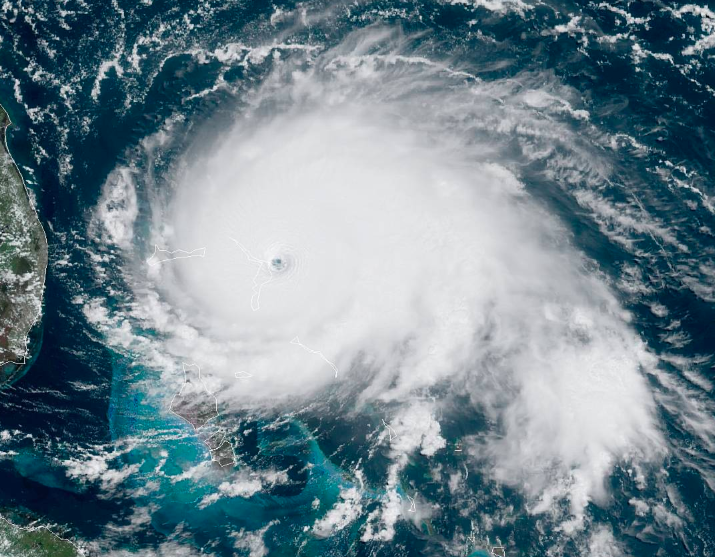
- Treating hurricane, typhoon and cyclone as three different phenomena — they are the same storm named by basin, and that is exactly what makes 'Dorian' identifiable as Atlantic.
- Swapping Hagibis and Lekima — Hagibis was the October storm in Japan, Lekima the August storm in China.
- Trusting the month window printed in the question: it says August–September, yet Hagibis and Mitag were October storms, so the country is the reliable clue, not the date.
UPPSC has served this area in two consecutive papers — a storm-to-country match here in 2019 and a local-name-to-country match in 2020 — so the naming conventions plus that year's big storms are a recurring pair; UPSC leans towards the physics, as in its question on why cyclones do not originate in the South Atlantic, but has also asked plain recall of hurricane names that were recently in the news.
Consider the following names : 1. Ike 2. Kate 3. Gustav Which of the above are the names of hurricanes that had occurred very recently ?
- (a) 1 and 2 only
- (b) 2 and 3 only
- (c) 1 and 3 only
- (d) 1, 2 and 3
Answer(c) 1 and 3 only
The identical current-affairs habit a decade earlier — UPSC set the previous season's hurricane names as the whole question. Both papers reward a candidate who tracks the year's major storms by name and location.
Willy Willy is
- (a) a type of tree grown in temperate regions
- (b) a wind that blows in a desert
- (c) a tropical cyclone of north-west Australia
- (d) a kind of common fish found near Lakshadweep islands
Answer(c) a tropical cyclone of north-west Australia
The naming-by-basin idea in its purest form. It is the same knowledge that lets you tell at a glance that Dorian belongs to the Atlantic while Hagibis, Lekima and Mitag belong to the north-west Pacific.
In the South Atlantic and South-Eastern Pacific regions in tropical latitudes, cyclone does not originate. What is the reason?
- (a) Sea surface temperatures are low
- (b) Inter-Tropical Convergence Zone seldom occurs
- (c) Coriolis force is too weak
- (d) Absence of land in those regions
Answer(b) Inter-Tropical Convergence Zone seldom occurs
The conceptual counterpart: which ocean basins produce tropical cyclones at all, and why. Knowing the active basins is what makes the Atlantic-versus-Pacific split in this matching question usable.
Match List – I with List – II and select the correct answer using the codes given below the lists : List – I (Tropical cyclones) A. Baguios B. Hurricanes C. Typhoons D. Willy-Willies List – II (Country) 1. Australia 2. China 3. Philippines 4. United States of America Codes :
- (a) A-3 B-4 C-1 D-2
- (b) A-3 B-4 C-2 D-1
- (c) A-2 B-3 C-4 D-1
- (d) A-2 B-1 C-3 D-4
Answer(b) A-3 B-4 C-2 D-1
The very next UPPSC paper repeated the storm-to-country match, this time using the regional names themselves — baguio, hurricane, typhoon, willy-willy. It is the general rule behind this 2019 item, where the same rule had to be applied to four named storms.
- practice — not a real PYQ
A tropical cyclone occurring in the north-western Pacific Ocean is known as a
- (a)hurricane
- (b)typhoon
- (c)willy-willy
- (d)baguio
Answer(b) Typhoon — the same storm is called a hurricane in the North Atlantic and north-east Pacific, a cyclone in the North Indian Ocean and South Pacific, a willy-willy in Australia and a baguio in the Philippines.
- practice — not a real PYQ
Which agency assigns names to tropical cyclones forming over the North Indian Ocean?
- (a)Joint Typhoon Warning Centre, Hawaii
- (b)Regional Specialised Meteorological Centre, New Delhi (India Meteorological Department)
- (c)National Hurricane Centre, Miami
- (d)World Meteorological Organization Secretariat, Geneva
Answer(b) RSMC New Delhi, run by the India Meteorological Department — it is the WMO's regional centre for the North Indian Ocean and maintains the naming list contributed by the member countries of the basin.