
Which of the following temples is also known as Khajuraho of Vidarbha ?
- (a)Markandeshwar
- (b)Kailash
- (c)Manudevi
- (d)Bhimashankar
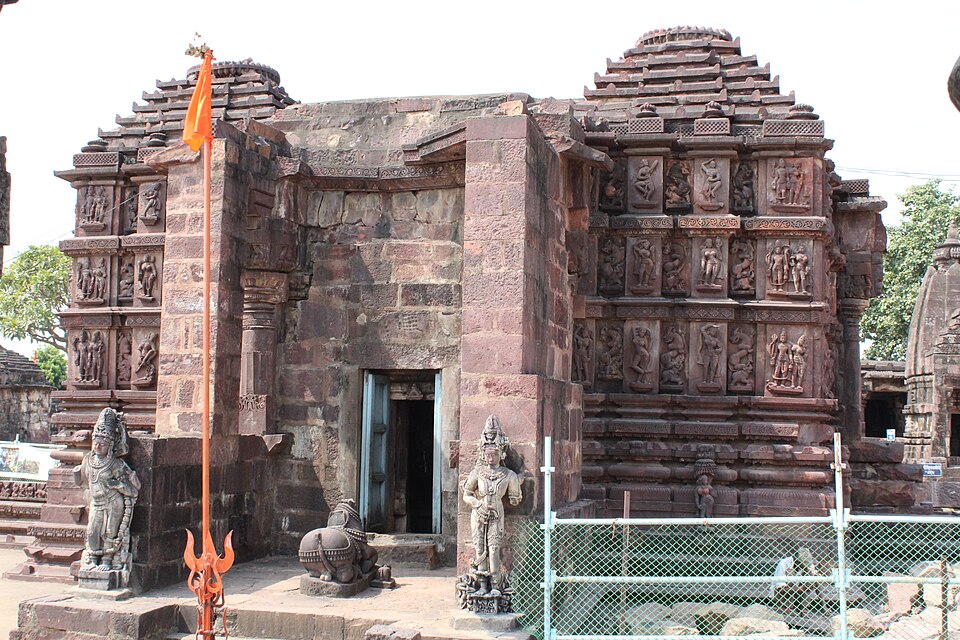
Correct — A, Markandeshwar. The Markandeshwar or Markanda temple complex stands at Markanda village in Chamorshi tehsil of Gadchiroli district, on the bank of the Wainganga river in eastern Maharashtra — that is, squarely inside Vidarbha. It is a group of Nagara-style stone temples of roughly the ninth to twelfth centuries, locally called Hemadpanthi, with Shaiva, Vaishnava and Shakta shrines; something like two dozen structures once stood there and a handful are open to visitors today. The nickname 'Khajuraho of Vidarbha' comes from the density and quality of the figure sculpture on the walls, which invites comparison with the Chandella temples at Khajuraho in Bundelkhand. The complex was in the news around the time of this exam because the Archaeological Survey of India was restoring it, including the main shikhara, which had partly collapsed after a lightning strike about two centuries ago. None of the other three temples on the list is either in Vidarbha or known for Khajuraho-like sculptural ornament.
- (b)Kailash — The Kailasa temple is Cave 16 at Ellora, carved out of a single basalt scarp from the top downwards under the Rashtrakuta king Krishna I in the eighth century. It is in the Chhatrapati Sambhajinagar (Aurangabad) district — Marathwada, not Vidarbha — and it is part of the UNESCO World Heritage property inscribed as the Ellora Caves, so it is never described as the 'Khajuraho' of anywhere. Its fame rests on monolithic rock-cut engineering rather than on the ornamental sculpture that earns Markandeshwar its nickname.
- (c)Manudevi — The Manudevi temple is a Devi shrine in the Satpura foothills of Jalgaon district, which lies in Khandesh in northern Maharashtra, not in Vidarbha. It is a popular pilgrimage and picnic spot set beside a waterfall, but it is not an early medieval Nagara temple complex covered in figure sculpture, so the Khajuraho comparison does not arise.
- (d)Bhimashankar — Bhimashankar is one of the twelve Jyotirlingas, located in the Sahyadri range of Pune district in western Maharashtra — again outside Vidarbha. It is famous as a Jyotirlinga and for the wildlife sanctuary around it, the stronghold of the Indian giant squirrel, rather than for sculptural richness. Candidates pick it because it is the best-known temple name on the list, which is precisely the trap.
Vidarbha is the eastern region of Maharashtra — the Nagpur and Amravati divisions, drained by the Wainganga, Wardha, Penganga and Pranhita, with Nagpur as the state's winter capital. It is the least-visited quarter of Maharashtra's heritage map, which is why its most ornate temple group is publicised through a borrowed name. 'Khajuraho of X' is a media and tourism formula applied to any temple site whose walls carry dense figurative carving in a broadly Nagara idiom, the benchmark being the tenth-to-twelfth-century Chandella temples at Khajuraho in Bundelkhand, a UNESCO World Heritage Site. The Markandeshwar group belongs to the northern (Nagara) tradition, distinguished by a curvilinear shikhara over the sanctum, as against the pyramidal vimana and gateway gopurams of the southern Dravida style and the hybrid Vesara of the Deccan.
Solve it geographically first, then stylistically. Of the four names, three can be placed outside Vidarbha immediately — Ellora's Kailasa is in Marathwada, Manudevi is in Khandesh, Bhimashankar is in the Western Ghats near Pune — which leaves Markandeshwar without any need to recall the nickname at all. Only then does the second test matter: the site being compared to Khajuraho must be a sculpted temple complex, and among these only Markandeshwar is. The reason this question appeared in a December 2019 paper is topical: ASI conservation at Markanda, including the rebuilding of the collapsed shikhara, was widely reported through 2019, and UPPSC habitually converts a year's heritage news into a one-line recall item.
- Markandeshwar (Markanda) temple complex — Markanda village, Chamorshi tehsil, Gadchiroli district, Maharashtra, on the bank of the Wainganga river.
- It lies in Vidarbha, the eastern region of Maharashtra made up of the Nagpur and Amravati divisions.
- Nagara-style stone temples of about the ninth to twelfth centuries, locally described as Hemadpanthi, with Shaiva, Vaishnava and Shakta shrines.
- Around two dozen structures once stood in the group; only a few are open to visitors today.
- The main shikhara partly collapsed after a lightning strike roughly two centuries ago; ASI restoration of the complex was in the news through 2019.
- The nickname 'Khajuraho of Vidarbha' comes from the density of its wall sculpture, compared with the Chandella temples at Khajuraho in Bundelkhand.
- The three distractors are all real Maharashtra temples in other regions: Kailasa at Ellora (Marathwada), Manudevi in Jalgaon (Khandesh) and Bhimashankar in Pune district (western Maharashtra).
- Five of the twelve Jyotirlingas are in Maharashtra — Bhimashankar, Trimbakeshwar, Grishneshwar, Aundha Nagnath and Parli Vaijnath.
- Picking the most famous temple on the list — Kailash at Ellora and Bhimashankar are far better known than Markandeshwar, and neither is in Vidarbha.
- Confusing Maharashtra's regions: Vidarbha is the east; Ellora is in Marathwada and Jalgaon is in Khandesh, so both distractors fail on geography before style.
- Assuming a 'Khajuraho of' nickname implies the same builders — Markandeshwar is not a Chandella monument, the comparison is purely stylistic.
UPPSC likes the one-line nickname or epithet — 'which temple is known as X' — and place-to-region pairs, so heritage sites in that year's news are worth a scan; UPSC prefers to test the same monuments through style or dynasty, as with its Nagara–Dravida–Vesara question and its Chandella–Khajuraho matching item.
Consider the following pairs: Famous place : Region 1. Bodhgaya : Baghelkhand 2. Khajuraho : Bundelkhand 3. Shirdi : Vidarbha 4. Nasik (Nashik) : Malwa 5. Tirupati : Rayalaseema Which of the pairs given above are correctly matched?
- (a) 1, 2 and 4
- (b) 2, 3, 4 and 5
- (c) 2 and 5 only
- (d) 1, 3, 4 and 5
Answer(c) 2 and 5 only
The same place-to-region skill, and it uses both halves of this question's nickname: Khajuraho is correctly placed in Bundelkhand, while Shirdi is wrongly placed in Vidarbha — a reminder that Vidarbha is eastern Maharashtra, where Gadchiroli and Markandeshwar are.
Match List I with List II and select the correct answer using the code given below the lists: List I I. Gupta II. Chandella III. Chalukya IV. Pallava List II A) Badami B) Panamalai C) Khajuraho D) Deogarh Codes:
- (a) I–D, II–C, III–A, IV–B
- (b) I–D, II–B, III–C, IV–A
- (c) I–B, II–C, III–D, IV–A
- (d) I–C, II–D, III–A, IV–B
Answer(a) I–D, II–C, III–A, IV–B
This supplies the benchmark behind the nickname: Khajuraho is the Chandella site, and it is the sculptural standard against which the Markandeshwar group in Vidarbha is measured.
The Nagara, the Dravida and the Vesara are the
- (a) three main racial groups of the Indian subcontinent
- (b) three main linguistic divisions into which the languages of India can be classified
- (c) three main styles of Indian temple architecture
- (d) three main musical Gharanas prevalent in India
Answer(c) three main styles of Indian temple architecture
The classification that makes the comparison meaningful — both Khajuraho and Markandeshwar belong to the northern Nagara tradition, with its curvilinear shikhara, which is why the two look alike enough for the nickname to stick.
Match list-I with list-II and choose the correct answer using the code given below the lists - List-I (Archaeological site): (A) Nevasa (B) Isampur (C) Didwana (D) Gudiyam cave List-II (Present location): (1) Rajasthan (2) Tamil Nadu (3) Maharashtra (4) Karnataka
- (a) A-(3), B-(2), C-(4), D-(1)
- (b) A-(4), B-(3), C-(1), D-(2)
- (c) A-(3), B-(4), C-(1), D-(2)
- (d) A-(3), B-(4), C-(2), D-(1)
Answer(c) A-(3), B-(4), C-(1), D-(2)
The same underlying demand — knowing which state a named heritage or archaeological site sits in. Here it is four sites across four states; in 2019 it was one temple that had to be placed inside Vidarbha.
- practice — not a real PYQ
The Markandeshwar temple complex, called the 'Khajuraho of Vidarbha', stands on the bank of which river?
- (a)Wardha
- (b)Wainganga
- (c)Penganga
- (d)Indravati
Answer(b) Wainganga — the complex is at Markanda village in Gadchiroli district on the Wainganga. The Wardha and the Wainganga later unite to form the Pranhita, the Penganga is a Wardha tributary, and the Indravati runs along Gadchiroli's eastern boundary.
- practice — not a real PYQ
The monolithic Kailasa temple at Ellora was built under the patronage of which dynasty?
- (a)Chandella
- (b)Rashtrakuta
- (c)Chalukya of Badami
- (d)Yadava of Devagiri
Answer(b) Rashtrakuta — the Kailasa temple, Cave 16 at Ellora, was excavated top-down from a single basalt outcrop in the eighth century under Krishna I. The Chandellas built Khajuraho, the Badami Chalukyas built at Badami, Aihole and Pattadakal, and the Yadavas ruled the Deccan much later.