
Match List – I with List – II and select the correct answer using the codes given below the lists : List – I (Different name of tropical cyclone) A. Willy-Willies B. Taifu C. Baguio D. Hurricanes List – II (Country) 1. Philippines 2. Australia 3. Japan 4. U.S.A. Codes :
- (a)A-3, B-4, C-1, D-2
- (b)A-2, B-3, C-4, D-1
- (c)A-1, B-3, C-2, D-4
- (d)A-2, B-3, C-1, D-4
Correct — D, A-2, B-3, C-1, D-4. Tropical cyclones are one weather system with many regional names, and each name belongs to a definite part of the world. 'Willy-Willies' is the Australian term, associated especially with the storms of the north-west Australian coast, so A-2. 'Taifu' (台風) is simply the Japanese word for typhoon — the tropical cyclone of the north-west Pacific as Japan names it — so B-3. 'Baguio' (Filipino bagyo) is the Philippine term, so C-1. 'Hurricane', from the Carib/Taino huracán, is the name used for the tropical cyclones of the North Atlantic, the Caribbean, the Gulf of Mexico and the eastern North Pacific — the storms that strike the United States — so D-4.
- (a)A-3, B-4, C-1, D-2 — Only Baguio–Philippines is right. It sends 'Willy-Willies' to Japan and 'Hurricanes' to Australia — i.e. it swaps the two southern-hemisphere/American entries — and gives Japan's own word 'Taifu' to the U.S.A.
- (b)A-2, B-3, C-4, D-1 — The first two pairs are correct, but the last two are interchanged: it makes 'Baguio' an American name and 'Hurricanes' a Philippine one. Baguio is unmistakably Filipino — it is also the name of a well-known city in Luzon.
- (c)A-1, B-3, C-2, D-4 — Taifu–Japan and Hurricanes–U.S.A. are right, but A and C are swapped: 'Willy-Willies' is pushed to the Philippines and 'Baguio' to Australia. The A and C entries are swapped against the key's code, which is exactly why this option catches half-prepared candidates.
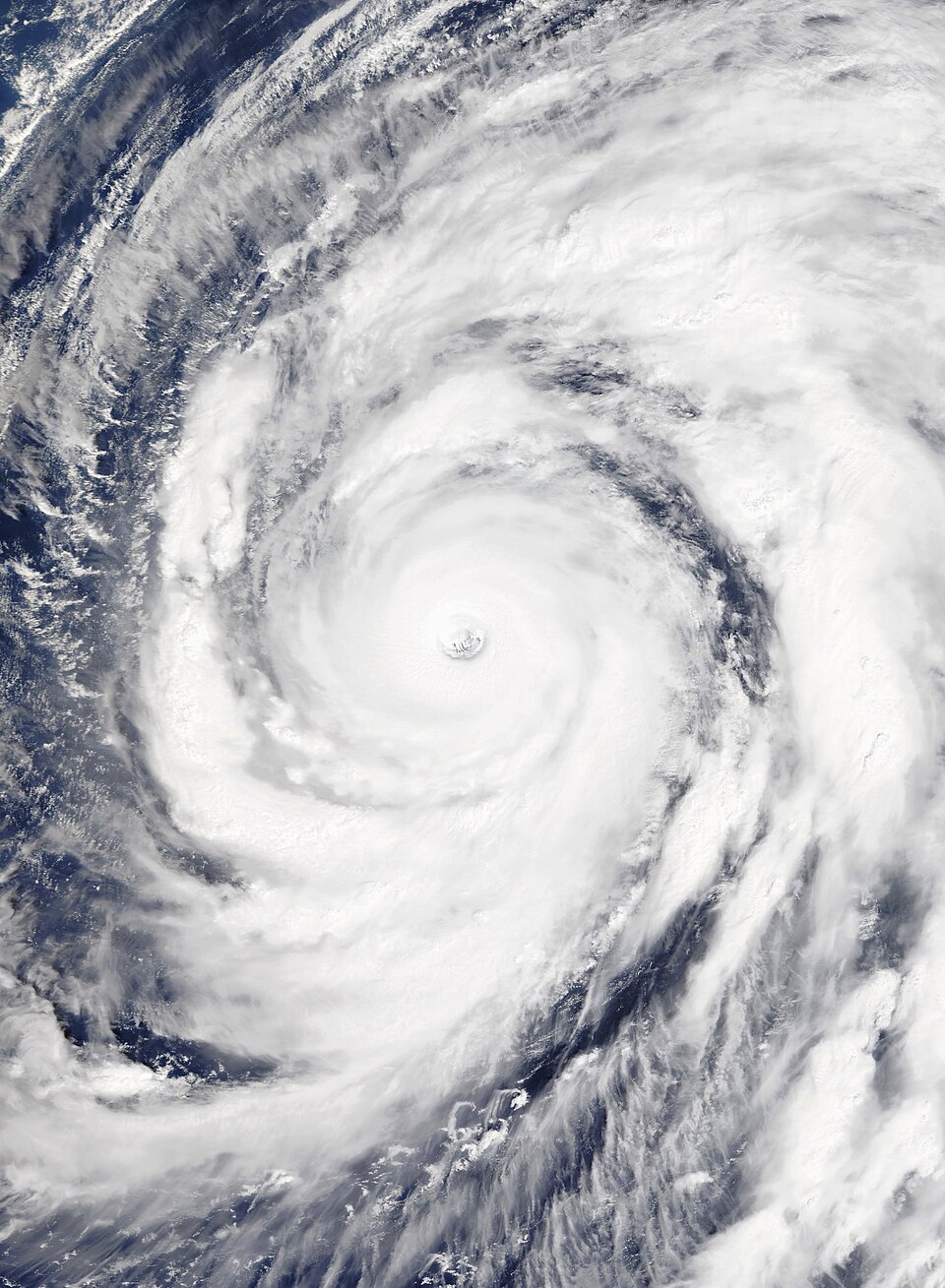
A tropical cyclone is a warm-core, low-pressure storm system that forms over warm ocean water (roughly 26–27 °C or more) at least a few degrees away from the equator, where the Coriolis force can impart rotation. The physics is identical everywhere; only the local name changes with the ocean basin. Hurricane (North Atlantic, Caribbean, eastern North Pacific), Typhoon/Taifu (north-west Pacific), Baguio (Philippines), Willy-Willy (Australia) and simply Cyclone (North Indian Ocean and the south-west Indian Ocean) are regional labels for the same phenomenon.
Two of the four names carry their own geographical clue. 'Baguio' is a Philippine word (and a Philippine city), and 'Taifu' is unmistakably Japanese in form. Fix those two first and the code narrows sharply: only (a) and (d) keep Baguio with the Philippines, and of those only (d) also keeps Willy-willies with Australia — so (d) is the one code that holds every pair, the answer, before you even settle Willy-Willies. Note also the UPPSC habit of shifting the name it uses for the north-west Pacific storm: in this 2019 paper 'Taifu' is matched with Japan, while the 2020 paper matched the English word 'Typhoons' with China. Both are defensible because the same basin borders both countries — the exam disambiguates through the spelling it chooses.
- Regional names for the same storm: Hurricane — North Atlantic, Caribbean and eastern North Pacific; Typhoon/Taifu — north-west Pacific; Baguio — Philippines; Willy-Willy — Australia; Cyclone — North Indian Ocean.
- 'Hurricane' derives from huracán, a Carib/Taino word for the storm god, carried into European languages through Spanish.
- In current Australian meteorological usage 'willy-willy' more often means a small dust whirl (dust devil), while the big storms are simply called cyclones — but the older literature that Indian exam syllabi follow uses willy-willy for the north-west Australian tropical cyclone, and that is the sense tested here.
- Tropical cyclones need a sea-surface temperature of about 26–27 °C, a deep layer of warm water, weak vertical wind shear and a location away from the equatorial belt where the Coriolis force vanishes.
- 2019 — the exam year — was a heavy season in the north-west Pacific: Typhoon Hagibis struck Japan in October and Typhoon Lekima hit China in August.
- Reading 'Baguio' as a place rather than a storm name and pairing it with a country other than the Philippines.
- Assuming 'Typhoon' can only mean Japan. The north-west Pacific basin borders Japan, China, Taiwan, Korea and the Philippines, so exams pin the name down by spelling — 'Taifu' for Japan, 'Baguio' for the Philippines.
- Confusing willy-willy (Australia) with the Australian local WIND names — Brickfielder and Southerly Buster are winds, not cyclones.
This is one of the most repeated match-list items in Indian state PSC and UPSC prelims — regional cyclone names against countries. UPPSC has asked it in more than one year with the lists reshuffled, so learn the pairs, never the code letters.
Willy Willy is
- (a) a type of tree grown in temperate regions
- (b) a wind that blows in a desert
- (c) a tropical cyclone of north-west Australia
- (d) a kind of common fish found near Lakshadweep islands
Answer(c) a tropical cyclone of north-west Australia
UPSC tested the single pair that decides this UPPSC code — willy-willy as the Australian name for a tropical cyclone, with a desert wind planted as the standard decoy.
Match List – I with List – II and select the correct answer using the codes given below the lists : List – I (Tropical cyclones) A. Baguios B. Hurricanes C. Typhoons D. Willy-Willies List – II (Country) 1. Australia 2. China 3. Philippines 4. United States of America Codes :
- (a) A-3 B-4 C-1 D-2
- (b) A-3 B-4 C-2 D-1
- (c) A-2 B-3 C-4 D-1
- (d) A-2 B-1 C-3 D-4
Answer(b) A-3 B-4 C-2 D-1
UPPSC repeated the very same match-list the next year with the lists reshuffled — note that 2020 pairs the English word 'Typhoons' with China while 2019 pairs the Japanese 'Taifu' with Japan.
- practice — not a real PYQ
The tropical cyclones of the North Atlantic and the Caribbean Sea are known as
- (a)Typhoons
- (b)Hurricanes
- (c)Willy-Willies
- (d)Baguios
Answer(b) Hurricanes — from the Carib word huracán; typhoons belong to the north-west Pacific, willy-willies to Australia and baguios to the Philippines.
- practice — not a real PYQ
Which one of the following is NOT a necessary condition for the origin of a tropical cyclone?
- (a)Sea-surface temperature of about 27 °C or more
- (b)Location on or very close to the equator
- (c)Weak vertical wind shear in the troposphere
- (d)A pre-existing low-pressure disturbance
Answer(b) Location on or very close to the equator — the Coriolis force is zero at the equator, so tropical cyclones do not form within about 5° of it.