
Which of the following Direct Benefit Scheme (DBT) has been recognized by the 'Guinness Book of World Record' as the world's largest Direct Benefit Scheme ?
- (a)MGNREGA
- (b)PAHAL
- (c)NSAP
- (d)None of the above
Correct — B, PAHAL. PAHAL — Pratyaksh Hanstantarit Labh, the modified Direct Benefit Transfer for LPG (DBTL) scheme of the Ministry of Petroleum and Natural Gas — is the scheme Guinness World Records certified as the largest cash-transfer (direct benefit transfer) programme in the world. The recognition rested on the number of households actually receiving transfers: 12.57 crore as on 30 June 2015. The scheme was launched in 54 districts on 15 November 2014 and extended to the whole country on 1 January 2015. Its mechanics are what make it a true DBT rather than a price subsidy: the consumer buys the refill cylinder at the market rate from the distributor, and the subsidy amount is credited directly into her bank account, either through the Aadhaar-linked route or, for consumers without Aadhaar, straight into the bank account linked to the LPG consumer number. That design cut out the leakage that a subsidised counter price invites — ghost and duplicate connections, and diversion of subsidised domestic cylinders into the commercial market.
- (a)MGNREGA — The intended trap. MGNREGA is a wage-employment guarantee created by the Mahatma Gandhi National Rural Employment Guarantee Act, 2005, and its wages are indeed paid electronically into workers' bank and post-office accounts. But it is commonly described as the world's largest public-works or employment-guarantee programme — a different superlative. The Guinness recognition for the largest direct benefit transfer / cash-transfer scheme was given to PAHAL, not to MGNREGA.
- (c)NSAP — The National Social Assistance Programme, launched in 1995 under the Ministry of Rural Development, gives social-assistance pensions to the elderly, widows and persons with disabilities, plus a family benefit on the death of a breadwinner. It gives effect to Article 41 of the Directive Principles, and its payments do flow through DBT — but it is far smaller in reach than the LPG subsidy transfer and holds no such record.
- (d)None of the above — Wrong because option (b) is right — PAHAL is precisely the scheme Guinness World Records recognised.
Direct Benefit Transfer replaces subsidies delivered through a controlled price or through goods with money sent straight into a beneficiary's bank account. It rests on what the Economic Survey christened the JAM trinity — Jan Dhan bank accounts, Aadhaar for de-duplicated identity, and mobile phones for authentication and alerts — coordinated across ministries by the DBT Mission. LPG was the flagship test case: instead of the distributor selling the cylinder below cost, the consumer pays the market price and the government credits the subsidy to her account. Because every transfer must land in an identified bank account, duplicate and non-existent consumers drop out of the system, which is where the savings come from.
Two things make this question answerable even for a candidate who has not memorised the Guinness citation. First, the question says 'Direct Benefit Scheme' — of the three named, only one exists purely to move a subsidy into a bank account; MGNREGA is an employment guarantee and NSAP a pension programme, and DBT is only their payment channel, not their identity. Second, the LPG subsidy touches over twelve crore households — an order of magnitude that no pension scheme matches. The trap works on candidates who remember reading 'world's largest' next to MGNREGA; that phrase belongs to a different category, the world's largest public-works programme.
- PAHAL stands for Pratyaksh Hanstantarit Labh; it is the modified DBTL (Direct Benefit Transfer for LPG) scheme of the Ministry of Petroleum and Natural Gas.
- Launched in 54 districts on 15 November 2014 and rolled out nationwide on 1 January 2015.
- Guinness World Records recognised it as the world's largest cash-transfer (direct benefit transfer) scheme, on the basis of 12.57 crore households receiving transfers as on 30 June 2015.
- How it works: the consumer buys the refill at the market price and the subsidy is credited directly to the Aadhaar-linked bank account, or to the bank account linked to the LPG consumer number where the consumer has no Aadhaar.
- DBT rests on the JAM trinity — Jan Dhan accounts, Aadhaar and mobile — and is used across ministries for scholarships, pensions, wages and fertiliser payments.
- The 'GiveItUp' campaign, launched alongside PAHAL, invited well-off consumers to voluntarily surrender their LPG subsidy so it could be redirected to poorer households.
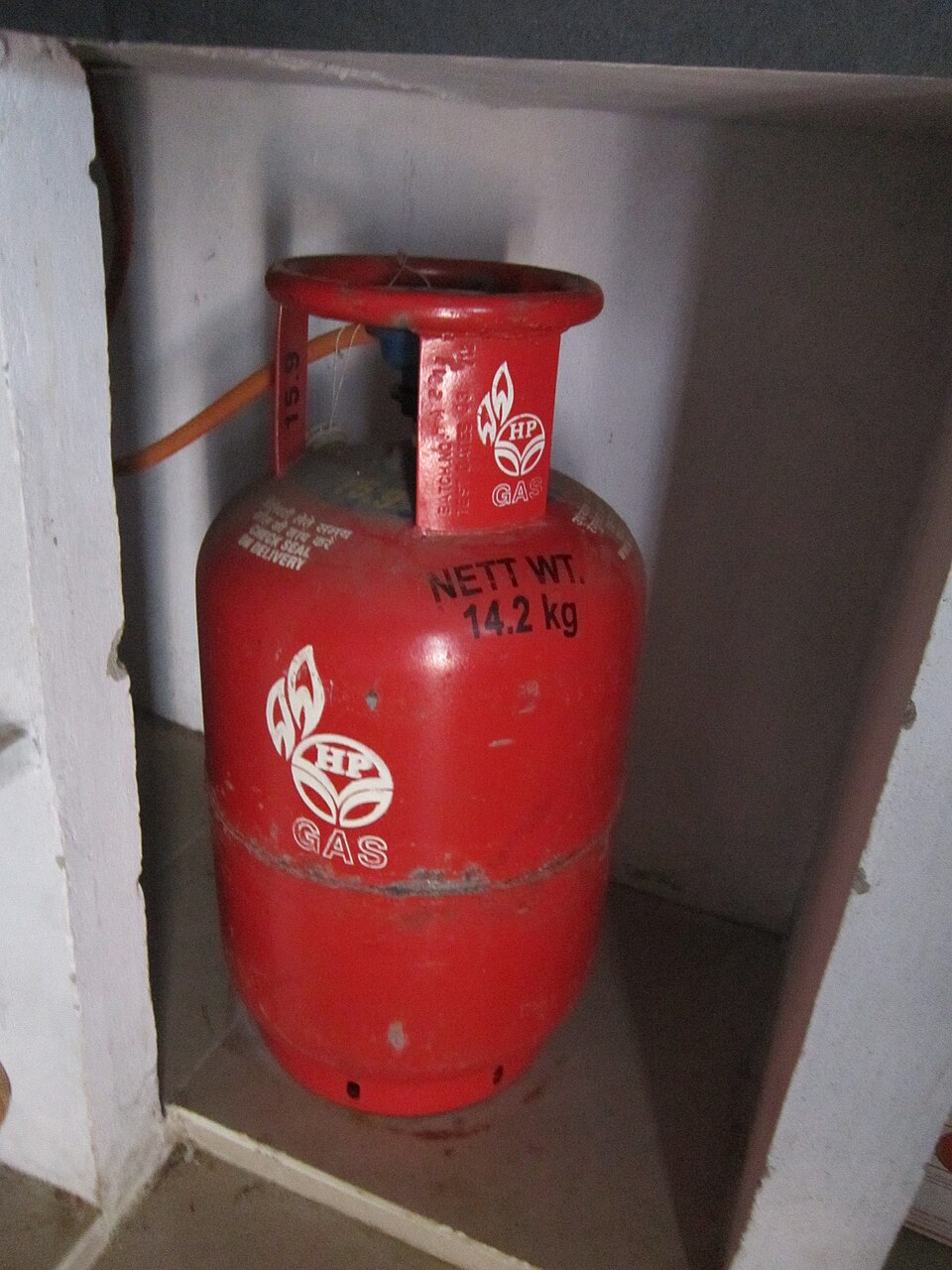
- Confusing 'world's largest direct benefit transfer scheme' (PAHAL) with 'world's largest public-works / employment-guarantee programme' (MGNREGA) — two different superlatives.
- Assuming PAHAL sells the cylinder at a subsidised counter price; it does not — the consumer pays the market rate and the subsidy arrives separately in the bank account.
- Treating Aadhaar as compulsory for PAHAL — a consumer without Aadhaar can receive the transfer through the bank account linked to the LPG consumer number.
UPPSC asks scheme-identification and scheme-superlative questions ('which scheme was recognised as...', 'scheme-year matching'); UPSC prefers the mechanism — how DBT changes the delivery route of a subsidy and what Aadhaar linkage does or does not require.
Consider the following statements: 1. The Oil Pool Account of Government of India was dismantled with effect from 1-4-2002. 2. Subsidies on PDS kerosene and domestic LPG are borne by Consolidated Fund of India. 3. An expert committee headed by Dr. R.A. Mashelkar to formulate a national auto fuel policy recommended that Bharat Stage-II Emission Norms should be applied throughout the country by 1 April, 2004. Which of these statements given above are correct?
- (a) 1 and 2
- (b) 2 and 3
- (c) 1 and 3
- (d) 1, 2 and 3
Answer(a) 1 and 2
The same domestic-LPG subsidy an era earlier: after the administered pricing mechanism was dismantled in 2002 the subsidy was carried as a price subsidy on the Consolidated Fund — PAHAL (2014-15) is what replaced that route with a transfer into the consumer's own bank account.
- practice — not a real PYQ
PAHAL, often mentioned in the context of Direct Benefit Transfer, relates to the subsidy on which of the following?
- (a)PDS kerosene
- (b)Domestic LPG
- (c)Urea and other fertilisers
- (d)Foodgrains under the National Food Security Act
Answer(b) Domestic LPG — PAHAL (Pratyaksh Hanstantarit Labh) is the modified DBTL scheme under which the LPG subsidy is credited directly to the consumer's bank account.
- practice — not a real PYQ
The Pradhan Mantri Ujjwala Yojana, providing LPG connections to women of poor households, was launched in May 2016 from which place?
- (a)Ballia, Uttar Pradesh
- (b)Varanasi, Uttar Pradesh
- (c)Patna, Bihar
- (d)Ranchi, Jharkhand
Answer(a) Ballia, Uttar Pradesh — the scheme was launched there on 1 May 2016, making Uttar Pradesh the starting point of the LPG-access push that followed the PAHAL subsidy reform.