
Which of the following is associated with biological nitrogen fixation ?
- (a)Red algae
- (b)Brown algae
- (c)Green algae
- (d)Blue-green algae
Correct — D, Blue-green algae. Biological nitrogen fixation — the conversion of inert atmospheric nitrogen (N2) into ammonia that plants can use — is carried out only by prokaryotes, because only they possess the enzyme nitrogenase. Blue-green algae are not true algae at all: they are cyanobacteria, prokaryotes, and they are the one group in this list that qualifies. Heterocystous forms such as Anabaena, Nostoc, Aulosira and Tolypothrix fix nitrogen in thick-walled specialised cells called heterocysts, which keep out oxygen because nitrogenase is destroyed by it. They do this free-living in the standing water of paddy fields, and also as symbionts — Anabaena azollae lives inside the leaf cavities of the water fern Azolla, which is why Azolla is spread on flooded rice fields as a biofertiliser. This is exactly why blue-green algae are promoted as biofertilisers for rice, and why the answer is (d).
- (a)Red algae — Red algae (Rhodophyceae) are eukaryotes and have no nitrogenase, so they cannot fix atmospheric nitrogen. They are economically important for a different reason — they are the source of agar and carrageenan.
- (b)Brown algae — Brown algae (Phaeophyceae), the group that includes the large marine kelps and Sargassum, are also eukaryotic and do not fix nitrogen; their commercial value lies in algin and their use as manure and fodder.
- (c)Green algae — Green algae (Chlorophyceae) such as Spirogyra, Chlorella and Ulothrix are eukaryotic photosynthesisers with no nitrogen-fixing ability; UPSC has separately tested that Spirogyra is not used as a biofertiliser while the cyanobacterium Nostoc is.
Nitrogen makes up about four-fifths of the atmosphere but is unusable by plants in its gaseous form, because the triple bond in N2 is extremely stable. Breaking it requires either industrial conditions of high temperature and pressure (the Haber-Bosch process), a lightning discharge, or the enzyme nitrogenase — and nitrogenase exists only in prokaryotes. That single fact organises the whole topic: every nitrogen fixer is a bacterium or a cyanobacterium, whether free-living (Azotobacter in aerobic soils, Clostridium in anaerobic ones, cyanobacteria in water), or symbiotic (Rhizobium in the root nodules of legumes, Frankia in Casuarina and Alnus, Anabaena azollae inside Azolla). No plant, fungus or eukaryotic alga fixes nitrogen on its own.
The four options are a classification ladder in disguise. Red, brown and green algae are all eukaryotic algae; blue-green 'algae' are the odd one out — prokaryotes, and therefore the only candidates for a prokaryote-only ability. Whenever a question offers three members of one biological class and one member of another, the outsider is usually the answer. Anchor it with the practical Indian example: cyanobacterial biofertilisers and Azolla in paddy fields, both of which rest on nitrogen fixation by blue-green algae.
- Blue-green algae are cyanobacteria — prokaryotes — and biological nitrogen fixation is confined to prokaryotes because only they have nitrogenase.
- In filamentous cyanobacteria such as Anabaena and Nostoc, fixation occurs in heterocysts, thick-walled cells that exclude oxygen, which would otherwise inactivate nitrogenase.
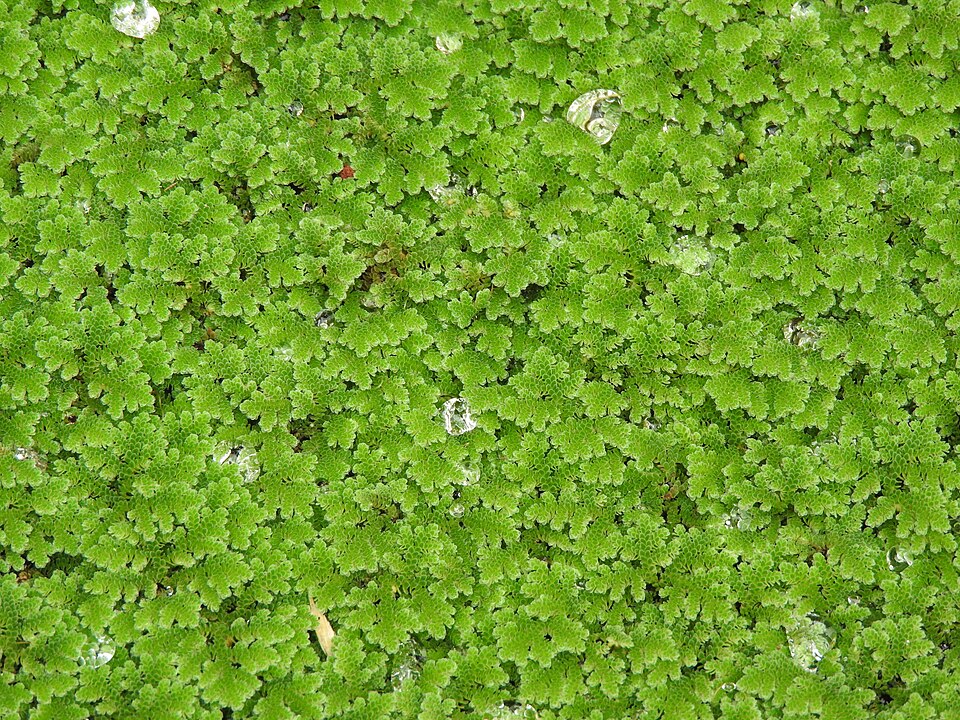
- The water fern Azolla carries the cyanobacterium Anabaena azollae in its leaf cavities and is used as a biofertiliser in water-logged rice fields.
- Other nitrogen fixers: Rhizobium in legume root nodules, Frankia in Casuarina and Alnus, and the free-living Azotobacter (aerobic) and Clostridium (anaerobic).
- Red, brown and green algae are eukaryotic and do not fix nitrogen; their importance lies elsewhere — agar and carrageenan, algin, and food or fodder use.
- Treating blue-green algae as true algae; they are cyanobacteria, prokaryotes, which is precisely why they can fix nitrogen.
- Assuming any photosynthetic organism can fix nitrogen — photosynthesis and nitrogen fixation are unrelated abilities.
- Confusing nitrogen fixation (N2 to ammonia) with nitrification (ammonia to nitrite and nitrate, done by different bacteria such as Nitrosomonas and Nitrobacter).
UPPSC asks the identification directly — which organism, which plant, which biofertiliser; UPSC prefers the mechanism, asking which feature of blue-green algae makes them useful as biofertilisers or which listed organisms qualify.
Which feature of some species of blue-green algae helps promote them as bio-fertilizers ?
- (a) They convert atmospheric methane into ammonia which the crop plants can absorb readily.
- (b) They induce the crop plants to produce the enzymes which help convert atmospheric nitrogen to nitrates.
- (c) They have the mechanism to convert atmospheric nitrogen into a form that the crop plants can absorb readily.
- (d) They induce the roots of the crop plants to absorb the soil nitrates in larger quantities.
Answer(c) They have the mechanism to convert atmospheric nitrogen into a form that the crop plants can absorb readily.
Exactly the same fact, asked as a mechanism rather than an identification — blue-green algae matter agriculturally because they fix atmospheric nitrogen.
Which one of the following organisms can serve as a biofertilizer for rice crop?
- (a) Blue-green algae
- (b) Rhizobium sp
- (c) Mycorrhizal fungi
- (d) Azotobacter sp
Answer(a) Blue-green algae
The same organism and the same underlying ability, tested through its application in paddy cultivation.
Consider the following organisms: 1. Agaricus 2. Nostoc 3. Spirogyra Which of the above is/are used as biofertilizer/biofertilizers?
- (a) 1 and 2
- (b) 2 only
- (c) 2 and 3
- (d) 3 only
Answer(b) 2 only
Separates the nitrogen-fixing cyanobacterium Nostoc from a green alga and a fungus — the same eukaryote-versus-prokaryote line that decides this UPPSC question.
The aquatic plant commonly used as bio fertilizer in the water-logged rice field is -
- (a) Wolfia
- (b) Trapa
- (c) Azolla
- (d) Lemna
Answer(c) Azolla
UPPSC's 2023 version of the same concept: Azolla is a biofertiliser only because of the nitrogen-fixing blue-green alga Anabaena azollae living inside it.
- practice — not a real PYQ
In filamentous blue-green algae such as Anabaena, biological nitrogen fixation takes place in a specialised cell called the
- (a)heterocyst
- (b)akinete
- (c)chloroplast
- (d)root nodule
Answer(a) Heterocyst — a thick-walled cell that excludes oxygen and so protects the nitrogenase enzyme, which oxygen would otherwise destroy.
- practice — not a real PYQ
Azolla is applied to water-logged rice fields as a biofertiliser mainly because
- (a)it suppresses weeds by shading the water surface
- (b)it harbours the nitrogen-fixing cyanobacterium Anabaena azollae in its leaf cavities
- (c)its roots release phosphorus from soil minerals
- (d)it raises the temperature of the standing water
Answer(b) It harbours the nitrogen-fixing cyanobacterium Anabaena azollae in its leaf cavities — the fixed nitrogen is released to the field as the fern decomposes. (Azolla mats do also shade out some weeds, but the nitrogen is the reason it is called a biofertiliser.)