
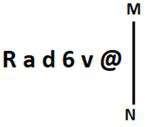
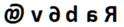
Select the correct mirror image of the given figure when the mirror is placed at MN as shown below.
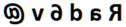
- (a)
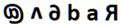
- (b)
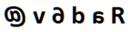
- (c)
- (d)
Answer
Why
Correct — A. Rule: the mirror at MN reverses left and right — the character nearest the mirror leads, and each character is flipped about a vertical axis.
The string is R a d 6 v @ with MN to its right, so the image runs @, v, 6, d, a, R with every glyph turned over: R becomes a reversed R, d becomes b, a becomes a reversed a, and v is unchanged because v is symmetric side-to-side.
Hold each option to a mirror and only option (a) returns Rad6v@ exactly.
Why the others are wrong
- (b)Its v is upside-down, drawn as an inverted v, and its a is left the normal way round. A lateral mirror leaves v alone, because v already reads the same both ways across.
- (c)Its R is printed the normal way round instead of reversed. Everything else is mirrored, which makes this the option you pick if you flip the string and forget its far end.
- (d)Its d is still a d. A mirror moves the bowl to the other side of the stem, turning d into b, so this option has reversed the order without flipping that character.
Concept
A mirror image is two operations, and the wrong options are each built from dropping one.
The sequence reverses first: with MN on the right, the last character of the string becomes the first of the image.
Then each character is flipped about a vertical axis. Symmetric shapes survive — v, w and x among lower-case letters, A, H, I, M, O, T, U, V, W, X and Y among capitals — while R, d, a and 6 all change shape.
The @ sign is asymmetric too: its tail curls the other way in the image, which is often the fastest single check on the page.
Key facts
- A vertical mirror reverses character order and flips each character about a vertical axis.
- R reflects to a reversed R, d reflects to b and q reflects to p.
- Lower-case v, w and x are unchanged by a vertical mirror.
- Flipping a character top to bottom produces a water image, not a mirror image.
Study next
Common traps
- Reversing the order but leaving one glyph — often the end letter — unflipped
- Turning a glyph upside-down, so d becomes p instead of b
- Flipping every glyph while keeping the original left-to-right order
SSC prints a short alphanumeric string beside the line MN and asks for the mirror image. The same stem is used at Reasoning Q.14 here, and at 10 Sep 2024, 09:00, Reasoning Q.2 and Q.21.
Related PYQs
No directly related past PYQ was found.