
In a right angle ABC, , if tanA = 1, then 4 sinA cosA =_________________.
- (a)

- (b)

- (c)

- (d)

Answer
Why
Correct — D. The four choices are printed as images: option (a) shows 1⁄2, option (b) shows 4, option (c) shows 1, and option (d) shows 2.
tan A = 1 means the side opposite A equals the side adjacent to it, so A = 45°.
sin 45° = 1⁄√2 and cos 45° = 1⁄√2
4 sin A cos A = 4 × (1⁄√2) × (1⁄√2)
= 4 × 1⁄2
= 2 → option (d)
One-line check with the double angle: 4 sin A cos A = 2 sin 2A = 2 sin 90° = 2.
Why the others are wrong
- (a)Option (a) shows 1⁄2, which is sin A cos A by itself. The stem multiplies that product by 4, and 4 × 1⁄2 = 2.
- (b)Option (b) shows 4, the value obtained by treating sin A cos A as 1. At A = 45° that product is 1⁄2, so the 4 is halved.
- (c)Option (c) shows 1, which is 2 sin A cos A — that is sin 2A = sin 90° = 1. The stem asks for 4 sin A cos A, twice as much.
Concept
In a right triangle only one acute angle has tangent 1, and that is 45°, because tan A = 1 forces the opposite and adjacent sides to be equal.
With ∠B = 90° and ∠A = 45°, angle C is 45° too, so the triangle is isosceles right-angled and its sides run 1 : 1 : √2.
The expression itself is a disguised double angle. sin 2A = 2 sin A cos A, so 4 sin A cos A is just 2 sin 2A — and with 2A = 90° the sine is 1 and the value is 2, with no surds handled at all.
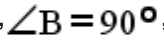
The stem is printed partly as small images. The triangle sign and the clause reading ∠B = 90° are pictures, which is why the text of the row shows a gap and a stray comma after 'ABC'.
Read whole, it sets a right-angled triangle ABC with the right angle at B and tan A = 1. The four options are also images, each showing a single number.
Key facts
- tan A = 1 has exactly one solution for an acute angle, A = 45°.
- sin 45° = cos 45° = 1⁄√2, so their product is 1⁄2.
- sin 2A = 2 sin A cos A, which makes 4 sin A cos A equal to 2 sin 2A.
- In a right triangle the two acute angles add to 90°, so tan A = 1 forces both to be 45°.
Study next
Common traps
- Answering 1⁄2, the bare product sin A cos A, without applying the factor 4.
- Answering 1, which is 2 sin A cos A and one factor of 2 short.
- Taking the equal legs as 1 and 1 and then calling the hypotenuse 2 rather than √2.
SSC hides a standard angle behind a ratio — here tan A = 1 — and then asks for an expression that collapses to a whole number the moment the angle is named.
Quant Q.21 of 17 Sep 2024, 09:00 runs the reverse move: it gives an unfamiliar ratio, sec θ = 29⁄20, and makes you rebuild the triangle before any identity helps.
Related PYQs
No directly related past PYQ was found.