
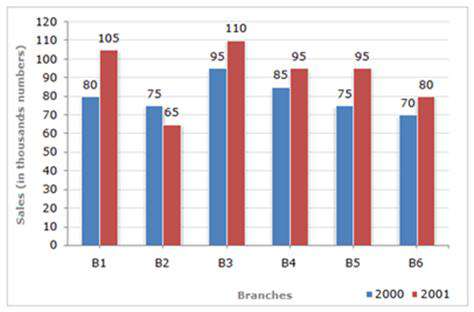
Study the given bar-graph and answer the question that follows. The bar-graph shows the sales of books (in thousands) from six branches (B1, B2, B3, B4, B5 and B6) of a publishing company during two consecutive years 2000 and 2001. The total sales of branch B6 for both the years is what percentage of the total sales of branch B3 for both the years (correct up to two decimal places)?
- (a)69.25%
- (b)73.17%
- (c)70.69%
- (d)82.26%
Answer
Why
Correct — B. Read only the two branches the question names; the other four pairs of bars are there to slow you down.
B6: 2000 = 70, 2001 = 80 → two-year total 150
B3: 2000 = 95, 2001 = 110 → two-year total 205
The ask puts B6 on top:
150 ⁄ 205 × 100
Cancel by 5 before dividing:
150 ⁄ 205 = 30 ⁄ 41
30 ⁄ 41 = 0.731707…
× 100 = 73.17% to two decimal places → option (b).
Why the others are wrong
- (a)69.25% — 69.25% of 205 is about 142, so this answer needs B6's two bars to add to 142. They are labelled 70 and 80, which is 150.
- (c)70.69% — 70.69% implies a B6 total near 145, five thousand short of the graph. B6's 2000 bar carries the label 70, not 65.
- (d)82.26% — 82.26% implies a B6 total near 169. The bars give 150 against B3's 205, a ratio comfortably under four-fifths.
Concept
A two-year bar graph tests reading before it tests arithmetic. Each branch owns a pair of bars, one per year, and most wrong answers come from pairing the wrong ones or answering for a single year.
"Total sales for both the years" means add the branch's two bars. "A is what percentage of B" puts A on top: 150 ⁄ 205, never 205 ⁄ 150.
Then cancel before dividing. Both 150 and 205 carry a factor 5, and 30 ⁄ 41 turns into a decimal far more easily than the four-figure division does.
The vertical axis is labelled in thousands, so B6's 150 is 150,000 books.
The unit cancels inside a ratio, which is why the printed numbers can be used directly here. If a follow-up asked for a count rather than a percentage, the thousand would have to go back in.
Key facts
- B6's bars read 70 (2000) and 80 (2001), a two-year total of 150 thousand.
- B3's bars read 95 (2000) and 110 (2001), a two-year total of 205 thousand.
- 150 ⁄ 205 reduces to 30 ⁄ 41, which is 73.17% correct to two decimal places.
Study next
Common traps
- Inverting the ratio to 205 ⁄ 150 and getting 136.67%, which is not offered.
- Using a single year: 70 ⁄ 95 is 73.68% and 80 ⁄ 110 is 72.73%, both close enough to 73.17% to feel right.
- Miscounting the pairs from the left and reading B5 or B4 as B6.
The graph stays put; the ask moves.
In this shift the same reading skill appears as an above-average count at Quant Q.22 (a bar graph of bike production) and as a ratio against an average at Quant Q.9 (a table of books). Read the ask first, then the bars.
Related PYQs
No directly related past PYQ was found.