
Which branch of science deals with the observation, understanding and prediction of weather and atmospheric conditions?
- (a)Climatology
- (b)Oceanography
- (c)Meteorology
- (d)Seismology
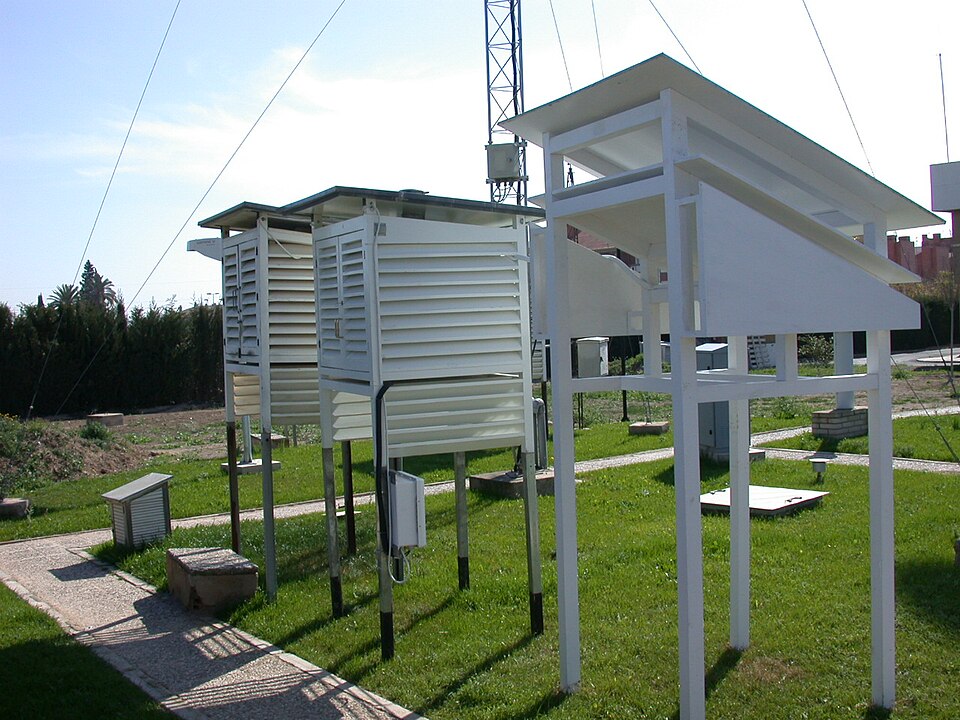
Correct — C, Meteorology. Meteorology is the branch of atmospheric science that observes the current state of the atmosphere — temperature, pressure, humidity, wind, cloud and rainfall — explains the processes behind it, and uses that understanding to forecast weather. Every national weather service, including the India Meteorological Department (IMD), is built on exactly this three-step chain: observation, understanding, prediction.
- (a)Climatology — Climatology also studies the atmosphere, but at a very different time scale — it deals with the long-term average behaviour and statistics of weather over decades (the WMO standard reference period for climate normals is 30 years). It does not do day-to-day weather observation and forecasting, which is the tempting trap in this question.
- (b)Oceanography — Oceanography is the study of the oceans — their physics, chemistry, biology and sea-floor structure. Ocean conditions do feed into weather (through air–sea heat and moisture exchange), but the discipline itself is not the science of weather prediction.
- (d)Seismology — Seismology is the study of earthquakes and of the seismic waves that travel through the Earth's interior. It is a solid-earth science and has nothing to do with the atmosphere or with weather forecasting.
Meteorology and climatology are sister sciences separated by time scale: meteorology asks 'what is the atmosphere doing now and what will it do in the next few hours or days?', while climatology asks 'what does the atmosphere do on average over decades?'. Meteorology therefore owns the whole forecasting chain — surface observatories, radiosonde balloons and Doppler weather radar feed data into numerical weather-prediction models, which produce the forecasts and warnings issued to the public. Oceanography and seismology are separate domains entirely: one studies the sea, the other studies earthquakes.
This is a straight discipline-naming question, so the safest route is elimination by subject matter — sea (oceanography), earthquakes (seismology), long-term averages (climatology), day-to-day atmosphere (meteorology). The designed trap is climatology, because the words 'atmospheric conditions' in the stem sound climate-like; the give-away is 'observation ... and prediction of weather', which is short-range work and therefore meteorology.
- Meteorology = the science of the atmosphere and of weather, including forecasting
- Climatology = the statistics of weather over long periods; WMO climate normals use 30-year reference periods
- India's national weather service is the India Meteorological Department (IMD), established in 1875
- The World Meteorological Organization (WMO) is the UN specialised agency for weather, climate and water, headquartered in Geneva
- Discipline map to memorise: oceans → oceanography; earthquakes → seismology; weather → meteorology; climate → climatology
- Treating meteorology and climatology as interchangeable — the difference is the time scale (hours-to-days versus 30-year averages)
- Reading 'atmospheric conditions' in the stem and jumping to climatology without noticing the word 'prediction of weather'
MPPSC and UPSC both use the plain 'which branch of science studies X' format and its reverse ('the study of fossils is called...'), so learn the discipline↔subject pairs as one block rather than one at a time.
Which of the following weather conditions is indicated by a sudden fall in barometer reading?
- (a) Stormy weather
- (b) Calm weather
- (c) Cold and dry weather
- (d) Hot and sunny weather
Answer(a) Stormy weather
The same idea from the practitioner's side — this is exactly the 'observe the atmosphere, then predict the weather' work that defines meteorology, here done with a barometer reading.
- practice — not a real PYQ
The study of earthquakes and of the seismic waves passing through the Earth's interior is called:
- (a)Seismology
- (b)Volcanology
- (c)Pedology
- (d)Speleology
Answer(a) Seismology — volcanology studies volcanoes, pedology studies soils, and speleology studies caves. - practice — not a real PYQ
Which of the following best states the difference between weather and climate?
- (a)Weather is the state of the atmosphere at a place at a given time; climate is the average of weather over a long period
- (b)Weather refers only to rainfall, while climate refers only to temperature
- (c)Weather is measured over 30 years, while climate is measured over 24 hours
- (d)There is no scientific difference between the two
Answer(a) Weather is the short-term atmospheric state; climate is its long-term average (conventionally over about 30 years).