
Which of the following is not correct about the Governor of Madhya Pradesh?
- (a)The Governor is appointed by the President.
- (b)The Governor has the power to appoint the Judges of the High Court.
- (c)During emergency, he acts as the representative of the President.
- (d)The Governor is the head of the State Executive.
Correct — B, 'The Governor has the power to appoint the Judges of the High Court.' This is the false statement, so it is the answer to a 'not correct' question. Under Article 217(1), every Judge of a High Court is appointed by the President by warrant under his hand and seal, after consultation with the Chief Justice of India, the Governor of the State, and (for a judge other than the Chief Justice) the Chief Justice of that High Court. The Governor is only a consultee — he has no power of appointment. The Governor's real judicial appointment power is one rung lower: under Article 233 he appoints district judges, in consultation with the High Court.
- (a)The Governor is appointed by the President. — This is TRUE, so it cannot be the answer. Article 155: the Governor of a State is appointed by the President by warrant under his hand and seal — he is not elected, directly or indirectly.
- (c)During emergency, he acts as the representative of the President. — This is TRUE as standard textbook doctrine, so it cannot be the answer. When President's rule is imposed in a State under Article 356, the Governor carries on the administration on behalf of the President — he functions as the President's agent in the State.
- (d)The Governor is the head of the State Executive. — This is TRUE, so it cannot be the answer. Article 154(1) vests the executive power of the State in the Governor, exercised by him directly or through officers subordinate to him — exactly parallel to Article 53 for the President at the Union level.
The Governor is the constitutional head of the State executive (Article 154) and a nominee of the Centre (Article 155), holding office during the pleasure of the President (Article 156). His appointing powers are wide on the executive side — Chief Minister and Ministers, Advocate General, Chairman and members of the State Public Service Commission, and district judges — but they stop short of the higher judiciary. Judges of a High Court are appointed by the President; the Governor is merely consulted.
The trap works because the Governor 'looks like' the President of the State — he appoints the CM, addresses the House, gives assent to Bills — so students extend the analogy to High Court judges. Fix the ladder instead: Supreme Court and High Court judges → President; district judges → Governor (in consultation with the High Court); subordinate judicial service → Governor, in consultation with the High Court and the State Public Service Commission.
- Article 155 — the Governor is appointed by the President by warrant under his hand and seal
- Article 154(1) — the executive power of the State is vested in the Governor
- Article 217(1) — High Court judges are appointed by the President, after consulting the CJI, the Governor and the High Court's Chief Justice
- Article 233 — district judges are appointed by the Governor in consultation with the High Court
- Under President's rule (Article 356) the Governor administers the State as the President's agent
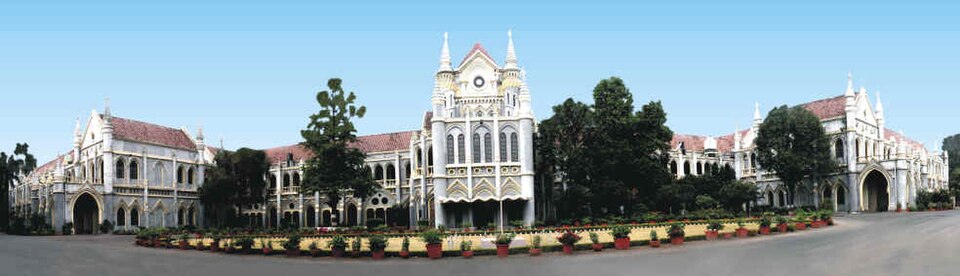
- Madhya Pradesh's High Court sits at Jabalpur, with benches at Indore and Gwalior
- Assuming the Governor appoints High Court judges because he is 'head' of the State — the President does, the Governor is only consulted
- Forgetting that the Governor DOES appoint district judges (Article 233) — the two facts look contradictory but sit at different levels of the judiciary
- Reading 'holds office for five years' as a guaranteed term — the Governor actually holds office during the pleasure of the President
MPPSC and UPSC both favour the 'which statement is NOT correct about the Governor' format, and the planted falsehood is almost always an appointment or a removal power — check every 'appointed by' clause against the exact Article before eliminating.
Which one of the following statements is correct?
- (a) In India, the same person cannot be appointed as Governor for two or more States at the same time
- (b) The Judges of the High Court of the States in India are appointed by the Governor of the State just as the Judges of the Supreme Court are appointed by the President
- (c) No procedure has been laid down in the Constitution of India for the removal of a Governor from his/her post
- (d) In the case of a Union Territory having a legislative setup, the Chief Minister is appointed by the Lt. Governor on the basis of majority support
Answer(c) No procedure has been laid down in the Constitution of India for the removal of a Governor from his/her post
UPSC planted the identical misconception as a wrong option — its option (b) says High Court judges are appointed by the Governor, which is exactly the false statement MPPSC 2026 asks you to spot.
Consider the following statements: 1. The highest criminal court of the district is the Court of District and Sessions Judge. 2. District Judge are appointed by the Governor in consultation with the High Courts. 3. A person to be eligible for appointment as a District Judge should be an advocate or a pleader of seven years' standing or more, or a member of a judicial service of the State. 4. When the Sessions Judge awards death sentence, it must be confirmed by the High Court before it is carried out. Which of these statements given above are correct?
- (a) 1 and 2
- (b) 2, 3 and 4
- (c) 1 and 3
- (d) 1, 2, 3 and 4
Answer(d) 1, 2, 3 and 4
The complementary half of the same rule — its statement 2 confirms the Governor appoints district judges (Article 233), while High Court judges go to the President under Article 217.
The Chairman and members of a State Public Service Commission are appointed by
- (a) the Governor
- (b) the Chief Minister
- (c) the President
- (d) the Chairman of the Union Public Service Commission
Answer(a) the Governor
MPPSC's recurring 'who appoints whom at the State level' test — the same appointing-authority mapping that decides this 2026 question.
- practice — not a real PYQ
Under which Article of the Constitution of India is the Governor of a State appointed by the President?
- (a)Article 153
- (b)Article 155
- (c)Article 156
- (d)Article 163
Answer(b) Article 155 — appointment by the President by warrant under his hand and seal. Article 153 only provides that there shall be a Governor for each State; Article 156 deals with the term of office. - practice — not a real PYQ
District judges in a State are appointed by:
- (a)the President, on the advice of the Chief Justice of India
- (b)the Chief Justice of the concerned High Court
- (c)the Governor of the State, in consultation with the High Court
- (d)the State Public Service Commission
Answer(c) the Governor of the State, in consultation with the High Court — Article 233.