
What is Kohbar?
- (a)Marriage ritualistic wall painting
- (b)Marriage costume
- (c)Food
- (d)Jewellery
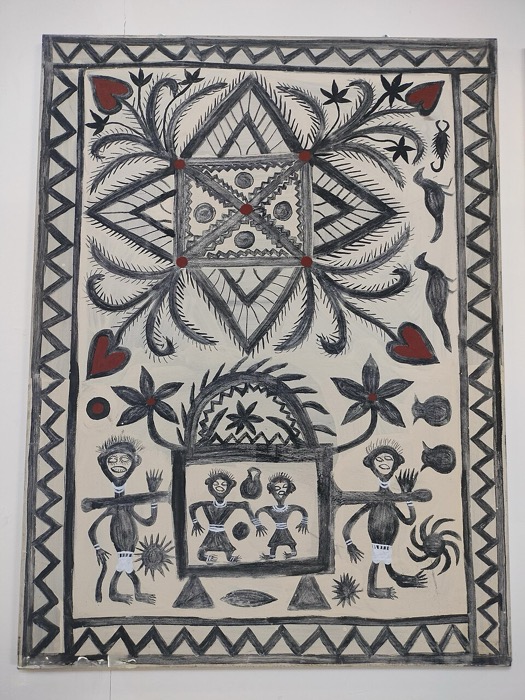
Correct — A, marriage ritualistic wall painting. Kohbar (the painted 'kohbar ghar') is a ritual wall/floor painting made in the nuptial chamber as part of Hindu wedding rites, closely associated with the Madhubani/Mithila painting tradition of Bihar, using motifs of fertility and auspiciousness — lotus creepers, bamboo groves, fish, birds, sun and moon — believed to bless the couple.
- (b)Marriage costume — Kohbar is a painting made for the wedding rite, not an item of bridal or groom's clothing.
- (c)Food — Not a wedding dish or delicacy — Kohbar denotes a ritual artwork, not food.
- (d)Jewellery — Not an ornament — Kohbar is a painted ritual motif, not something worn.
Kohbar is a genre of ritual folk painting made on the wall (or floor) of the room where a newly married couple's rites are performed, closely associated with the Madhubani/Mithila painting tradition of Bihar. Its recurring motifs — lotus, bamboo, fish, parrots, sun and moon — are fertility and auspiciousness symbols rather than mere decoration.
Culture questions often name a specific ritual object and ask for a one-line identification — the trap is picking a plausible but wrong category (costume/food/jewellery) instead of recognising it as a painting tradition.
- Kohbar: a ritual wall painting made in the nuptial/wedding chamber (kohbar ghar) as part of Hindu marriage customs.
- Closely linked to the Madhubani/Mithila painting tradition of Bihar.
- Common motifs: lotus, bamboo grove, fish, birds, sun and moon — symbols of fertility and auspiciousness.
- Confusing Kohbar (a painting) with a wedding costume, food item or jewellery, since the name alone gives no obvious category clue.
- Conflating Kohbar with Madhubani painting in general — Kohbar is specifically the nuptial-chamber genre within/around that tradition.
MPPSC/UPSC name a specific ritual art/craft term and ask 'what is it' with plausible-but-wrong categories as distractors — anchor the term to its exact category (painting vs costume vs food vs ornament).
No directly related past PYQ was found.
- practice — not a real PYQ
Madhubani painting, a traditional folk-art form using natural dyes and pigments, originated in which state?
- (a)Bihar
- (b)Odisha
- (c)West Bengal
- (d)Rajasthan
Answer(a) Bihar — the Mithila region.
- practice — not a real PYQ
Gond painting, a tribal art form using dots and lines to depict nature and folklore, is traditionally associated with which state?
- (a)Madhya Pradesh
- (b)Kerala
- (c)Punjab
- (d)Assam
Answer(a) Madhya Pradesh.