UPSC Current Affairs

15 topicsGS-1: 3GS-2: 6GS-3: 6
0/15 done
GS-2Polity

1.ECI-SEC National Declaration on Elections (Electoral Coordination)

Indian Express

What & Where

National Declaration 2026: resolution of ECI–State Election Commissioners conference, New Delhi, first meet after 27 years

Objective: federal coordination of election laws & processes for Parliament, State Legislatures, Panchayats, Municipalities

Focus areas: pure electoral rolls, shared tech platforms, annual round-table, 3-month state/UT roadmaps

Quick Facts for MCQs

Legal & Policy

  • Harmonisation: proposed synergy of constitutional articles 243K & 324 powers through common procedures
  • Review: joint team to align state laws with national electoral standards
  • Declaration: commits to transparent, efficient, error-free elections across governance tiers

Tech & Schemes

  • ECINET: unified portal for roll management, inter-agency data exchange
  • EVM pooling: central stock to be lent for Panchayat/Municipal polls, cutting state costs
  • IIIDEM access: structured training modules for SEC officials, poll staff

Institutional Coordination

  • Annual forum: National Round-Table to monitor implementation, share innovations
  • International linkage: SECs invited to ECI-led global democracy events for best practices
  • State maps: individual action plans to track progress on roll purity & tech adoption

Key Data Points

FeatureData-Point
Conference gap27 years (last joint meet 1999)
Adopting bodiesElection Commission of India + all State ECs
Core principle“Pure electoral rolls” termed bedrock of democracy
Roadmap deadline3 months for state/UT specific plans
Round-table cycleAnnual, synced with ECI global conferences
Tech offeredECINET portal, EVM infrastructure, IIIDEM training
Joint task forceLegal + technical team to vet SEC suggestions
Publication“A Confluence of Democracies” on IICDEM 2026 & Delhi Declaration 2026

Related UPSC Prelims PYQs

GEO_GS, NDA_GAT 2021PYQ 1

Which one of the following statements about the Election Commission of India is NOT correct?

GEO_GS, NDA_GAT 2025PYQ 2

BHARATPOL portal has been developed by
GS-2Misc

2.Daily UPSC Current Affairs Digest (Current Affairs)

The Hindu
Illustration for Daily UPSC Current Affairs Digest (Current Affairs)

What & Where

Indian Ocean archipelago of seven atolls, 60+ islands; administered as British Indian Ocean Territory (BIOT).

Coral islands sit atop volcanic Chagos–Laccadive Ridge; low-lying atolls encircle turquoise lagoons.

~500 km south of Maldives; mid-ocean location offers prime shipping-lane and defence vantage.

Quick Facts for MCQs

Legal & Policy

  • ICJ-2019: UK occupation illegal, urged swift decolonisation.
  • 2024 UK-Mauritius accord: sovereignty transfer, 99-year Diego Garcia leaseback.
  • 2026 ratification stalled amid US security objections.

Strategic Dimension

  • Location enables surveillance of West Asia, Africa, Indo-Pacific sea-lanes.
  • Diego Garcia hosts bombers, submarines, satellite tracking; backbone of US CENTCOM reach.
  • Mid-ocean runway shielded from most regional missile threats.

Environmental Impact

  • Great Chagos Bank harbours resilient coral, key bleaching-resistance lab.
  • Marine Protected Area safeguards sharks, turtles, 300+ coral species.
  • Minimal habitation maintains near-pristine ecosystems for climate research.

Key Data Points

FeatureData-Point
Administering powerUnited Kingdom (BIOT)
Competing claimantMauritius; ICJ 2019 declared UK presence illegal
Largest islandDiego Garcia – 32.5 km²
Atoll superlativeGreat Chagos Bank – world’s largest coral atoll
Distance to Maldives≈ 500 km south
Key facilityJoint US-UK naval & air base

Related UPSC Prelims PYQs

CDS_GK, GS1 2002PYQ 1

In the map given below, four islands of Indian Ocean region, i.e. A) Seychelles, B) Chagos, C) Mauritius and D) Socatra are marked as 1, 2, 3 and 4. Match them and select the correct answer from the codes given below.

CDS_GK, GS1 2020PYQ 2

Which one of the following Indian Ocean island nations has recently declared a state of environmental emergency due to oil spill from a grounded ship?

GS-3Editorial

3.Reverse Brain Drain Initiatives (Talent Repatriation)

The Hindu

What & Where

Brain-circulation: policy push to lure skilled NRIs/OCIs back for domestic R&D, startups, leadership.

Enablers: upgraded economic, social, research infrastructure across metro & Tier-2 India.

Geography: chief outflow corridor is U.S. H-1B; landing hubs are Indian GCC cities.

Quick Facts for MCQs

Tech & Schemes

  • GATI; single-window onboarding of overseas Indian experts into strategic sectors.
  • VAJRA; 1–3-month funded research residencies for NRI scientists in public labs.
  • eMigrate V2.0; portal managing exit, re-entry, documentation for professionals.

Economic Opportunities

  • GCC expansion; >2,000 centres now deliver global aerospace, AI, semiconductor R&D.
  • SovereignTech missions; IndiaAI offers subsidised compute, billion-scale datasets.
  • Startup ecosystem; Maharashtra 2025 policy backs 50,000 startups, demanding global mentorship.

Implementation Challenges

  • Family-readiness; limited international schools, pricey housing in Bengaluru, Mumbai.
  • Private R&D lag; services bias restricts high-intensity roles for PhD returnees.
  • Institutional gatekeeping; senior science posts often favour entrenched local networks.

Key Data Points

FeatureData-Point
H-1B approvals share71 % of 399,395 in FY 2024 were Indians
Master’s degree among H-1B57 % in 2021; 31 % in 2000
Ivy League returnee rise30 % more graduates seeking India roles in 2024
Global Capability Centres1,600 units employing 1.66 million people
India R&D spend0.64 % of GDP; US 3.47 %, Israel 5.71 %

Related UPSC Prelims PYQs

GEO_GS, GS1 2021PYQ 1

India is a destination for global outsourcing. Which of the following is/are the more appropriate reason(s) for making the multinational corporations choose India for outsourcing their services?

GEO_GS, GS1 2006PYQ 2

What is IndoNext which was launched in January, 2005?

GS-3EconomyQuick Bite

4.RBI Government Securities Switch Auction (Debt Management)

Business Standard

What & Where

Switch auction-RBI swaps near-maturity G-Secs for longer-tenor papers

Conducted in India’s government securities market by Reserve Bank of India

Targets FY27 redemption bulge, smooths debt profile beyond FY32

Quick Facts for MCQs

Debt Management

  • Switch auction postpones repayment, eases refinancing risk during FY27 spike
  • Longer tenors distribute redemptions evenly across future years

Fiscal Impact

  • Reduces need for large cash outgo amid record borrowing plan
  • Supports fiscal stability by smoothing interest and principal schedules

Monetary Operations

  • Conducted via competitive auction; investors exchange old for new securities
  • Complements OMOs, buybacks, Treasury bills in RBI toolkit

Key Data Points

FeatureData-Point
Latest switch auction sizeRs 25,000 crore
Earlier FY26 switch volumeRs 84,804 crore
Targeted heavy redemption yearFY27
Bonds maturing in FY27Rs 5.47 lakh crore
Post-switch maturity horizonAfter FY32
FY26 gross market borrowingRs 17.2 lakh crore
GS-1Environment

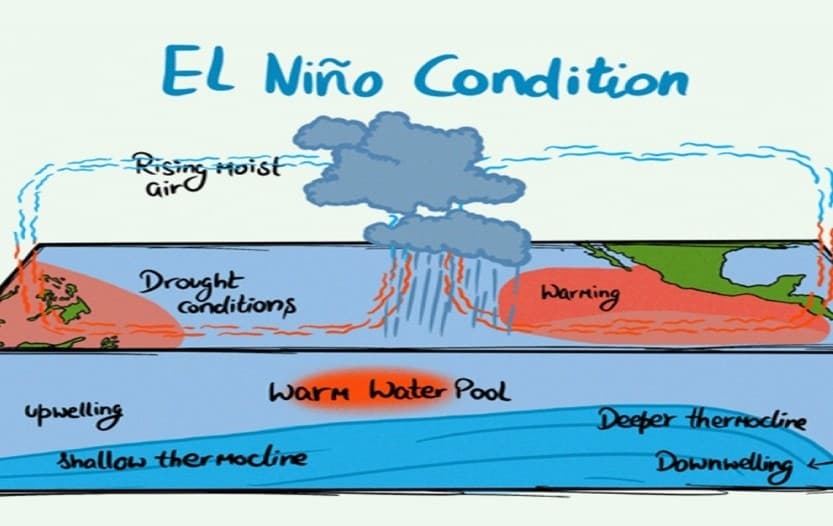
5.El Niño Climate Phenomenon (ENSO Cycle)

IT
Illustration for El Niño Climate Phenomenon (ENSO Cycle)

What & Where

Climate event El Niño: anomalous warming of central–eastern tropical Pacific, warm ENSO phase, recurs every 2–7 years

Geography 5° N–5° S, Peru–Ecuador coast to dateline, influences global jet streams

Process Weakened trade winds shift warm pool eastward, suppressing South American upwelling

Quick Facts for MCQs

Drivers & Mechanics

  • Trade-wind weakening initiates eastward warm-pool migration
  • Ocean-atmosphere coupling positive feedback intensifies surface warming
  • Rossby & Kelvin waves transport subsurface heat across Pacific basin

Salinity Research

  • Duke study links lower surface salinity to reduced density, enhancing stratification and heat retention
  • Models show salinity-driven stratification can raise peak SST by ≈20 %
  • Finding adds salinity to ENSO predictors alongside winds and thermocline

India Impact

  • Monsoon suppression pulls moisture away, raising drought odds to 60 %
  • Agriculture faces grain shortfall; 2023 event contributed to food inflation
  • Elevated summer temperatures and prolonged heatwaves commonly accompany strong El Niño

Key Data Points

FeatureData-Point
Salinity amplification≈20 % rise in El Niño intensity (Duke Univ)
Typical periodicity2–7 years
Trade-wind changeWeakening/reversal triggers event
Thermocline roleDeeper layer supplies more heat, strengthening anomaly
India drought likelihood≈60 % during strong El Niño
2023 monsoon outcomeDriest August in years; food inflation spike

Related UPSC Prelims PYQs

CDS_GK, GS1 2002PYQ 1

For short-term climate prediction, which one of the following events, detected in the last decade, is associated with occasional weak monsoon rains in the Indian sub-continent?

CDS_GK, GS1 2022PYQ 2

Which one of the following is not a resultant of the El Nino effect?

GS-1Mapping

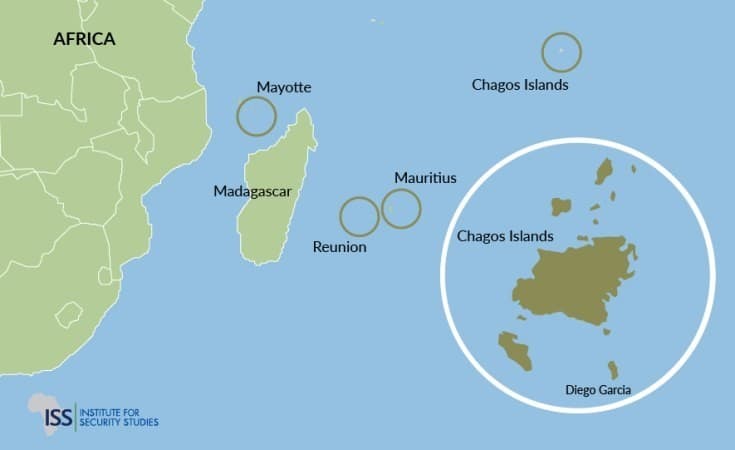
6.Chagos Islands Territorial Dispute (Indian Ocean Islands)

TG
Illustration for Chagos Islands Territorial Dispute (Indian Ocean Islands)

What & Where

Archipelago: seven atolls, 60+ islands, administered as British Indian Ocean Territory

Location: Indian Ocean, ~500 km south of Maldives, on volcanic Chagos–Laccadive Ridge

Formation: coralline atolls encircle Great Chagos Bank, world’s largest atoll structure

Quick Facts for MCQs

Colonial & Post-Colonial History

  • Treaty 1814: France cedes Chagos to UK via Treaty of Paris
  • Split 1965: UK detaches archipelago before granting Mauritius independence
  • Removal 1967-73: Chagossians forcibly relocated for future military use

Legal & Policy

  • ICJ 2019: advisory opinion brands UK administration unlawful, urges decolonisation
  • Accord 2024: UK and Mauritius sign deal to restore sovereignty, lease base back
  • Pause 2026: UK ratification stalled after US security objections

Security Dimension

  • Facility: Diego Garcia houses critical UK-US naval and air logistics hub
  • Geography: mid-ocean site enables surveillance across Indian Ocean sea-lanes
  • Lease: proposed 99-year arrangement preserves uninterrupted military presence

Environmental Assets

  • Atoll size: Great Chagos Bank is globe’s largest coral atoll system
  • Resilience: reefs considered among world’s healthiest, supporting rich marine biodiversity

Key Data Points

FeatureData-Point
Largest islandDiego Garcia (32.5 km²)
Administering powerUnited Kingdom (BIOT)
Claimant stateMauritius
Detachment from Mauritius1965
Native expulsion1967 – 1973
ICJ advisory ruling2019 (UK occupation illegal)
Sovereignty transfer announcedOct 2024
Planned leaseback term99 years for Diego Garcia base

Related UPSC Prelims PYQs

GS1 2002PYQ 1

In the map given below, four islands of Indian Ocean region, i.e. A) Seychelles, B) Chagos, C) Mauritius and D) Socatra are marked as 1, 2, 3 and 4. Match them and select the correct answer from the codes given below.

GS1 2022PYQ 2

Which one of the following statements best reflects the issue with Senkaku Islands, sometimes mentioned in the news?

GS-3Scheme

7.International Climate Initiative Funding (Climate Finance)

New Indian Express

What & Where

IKI – German grant facility for climate mitigation, adaptation, biodiversity actions in 150+ developing/emerging nations

Thematic scope – emission cuts, climate adaptation, REDD+ carbon-sink conservation, biodiversity protection

India focus – €20 mn Large Grant for Himalayas, Western Ghats, North-East, Islands, Lower Gangetic plains

Quick Facts for MCQs

Finance & Funding

  • Blended-finance, biodiversity credits, climate insurance encouraged to crowd-in private capital
  • Large Grant classification permits high-risk, high-impact pilots up to €20 mn
  • MEL frameworks mandatory for scalability, accountability

Project Focus Areas

  • Forest restoration for carbon sinks and corridor connectivity
  • Groundwater recharge and flood-control structures against monsoon variability
  • Biodiversity corridors enabling species migration under rising temperatures

International Collaboration

  • Germany supplies funds; Indian ministries, NGOs, research institutes execute via consortia
  • Alignment with Paris NDCs and Convention on Biological Diversity targets
  • Experience sharing among IKI’s 150+ partner states for policy upscaling

Key Data Points

FeatureData-Point
Establishment year2008
Primary donorGermany
Partner countries150 +
Priority nations count14 (incl. India)
Key themesMitigation, Adaptation, REDD+, Biodiversity
Core toolConsortium-based project funding
Adaptation approachEcosystem-Based Adaptation (EbA)
New India grant size€20 million ≈ ₹180 crore
Implementing windowInternational Climate Initiative Large Grant
Indian target zonesHimalayas, Western Ghats, North-East, Islands, Lower Gangetic floodplains
GS-3Environment

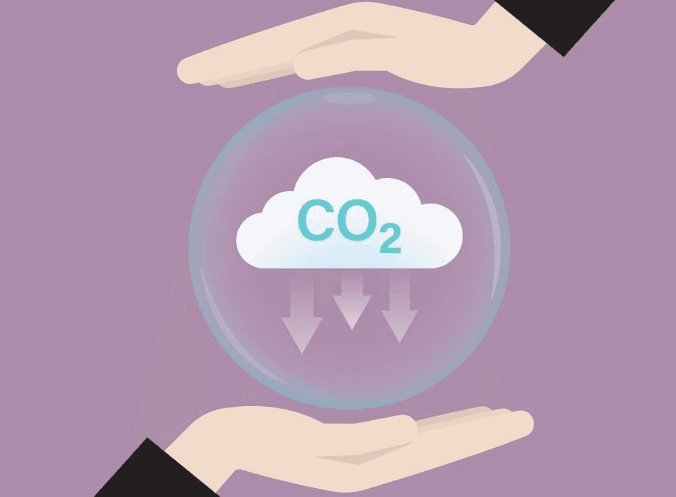
8.Carbon Capture and Utilisation Technologies (CCU Technologies)

The Hindu
Illustration for Carbon Capture and Utilisation Technologies (CCU Technologies)

What & Where

Definition: CCU captures CO₂ from flue gas/air and converts it into marketable fuels, chemicals, or building materials.

Key processes: Capture → Compression & Transport → Conversion via Direct, Chemical, Biological, or Mineralisation routes.

Geography/policy: India earmarked ₹20,000 crore in Union Budget 2026 to scale CCUS nationwide over five years.

Quick Facts for MCQs

Tech & Schemes

  • Budget2026 introduces first large-scale Indian CCUS programme; implementation details awaited.
  • Retrofitting feature allows brownfield steel, cement, refineries to join without new builds.
  • Versatile application spans aviation SAF, fertiliser grade urea, carbon-negative bricks.

Economic Angle

  • Revenue stream from CCU products can offset high capture cost, unlike pure CCS storage.
  • Carbon treated as industrial feedstock, promoting circular economy and potential new value chains.

Environmental Impact

  • Mineralisation locks CO₂ in stable solids, minimising leakage and long-term monitoring needs.
  • Biological conversion simultaneously captures carbon and yields renewable biofuels, aiding Net-Zero targets.

Key Data Points

FeatureData-Point
Budget allocation₹20,000 crore
Funding window2026-2031 (5 years)
Core goalDecouple growth from CO₂ via circular carbon economy
Capture optionsPoint-source flue gas or Direct Air Capture
Main stagesCapture; Compression & Transport; Conversion
Direct use exampleCarbonated drinks, Enhanced Oil Recovery
Chemical productsMethanol, urea, polymers, synthetic fuels
Biological routeAlgae/bacteria making biomass, biofuels, feed
Mineralisation outputMagnesium/calcium carbonates for green concrete
RetrofittingAdd-on to existing plants; avoids shutdown

Related UPSC Prelims PYQs

GS1 2023PYQ 1

Consider the following activities:

GS-3S&T

9.Large Language Models Overview (AI Language Models)

The Hindu

What & Where

Large Language Model: transformer-based AI trained on huge text corpora to predict next token

Indigenous launch: Sarvam AI, Bengaluru unveiled 35 B & 105 B parameter models at AI Impact Summit 2026

Sovereign AI push: strengthens India’s quest for domestic foundational models

Quick Facts for MCQs

Model Architecture

  • Tokenization splits text into subword tokens enabling rare word handling
  • Embeddings place tokens in high dimensional space capturing semantics and syntax
  • Stacked transformer layers refine representations from grammar to reasoning

Training Techniques

  • Pre-training uses petabytes of raw text predicting next word
  • Fine-tuning employs narrow high quality datasets for domain tasks
  • RLHF ranks responses to improve helpfulness safety

Compute Demand

  • Training LLMs needs massive GPU clusters and high electricity use
  • Cost implications often reach multi million dollars per model
  • Compute intensity central to sovereign AI capability gaps

Capabilities

  • Generative outputs include prose, code, summaries, poetry
  • In-context learning follows user instructions or style with few examples
  • Multilingual performance dependent on corpus diversity enabling translation tasks

Key Data Points

FeatureData-Point
Indigenous models released35 B & 105 B parameters
Launch eventAI Impact Summit 2026, Bengaluru
Core architectureTransformer with self-attention
Token unit handledSubword tokens / characters
Major training stagesPre-training, Fine-tuning, RLHF
Key hardwareLarge GPU clusters
Energy cost rangeUp to millions of dollars
Sample capabilitiesGenerative text, zero-shot reasoning
GS-3S&T

10.AI Driving Rural Transformation (Rural AI Applications)

PIB

What & Where

Artificial Intelligence: social-purpose tech executing cognitive tasks as part of rural Digital Public Infrastructure.

Key rural processes: precision agriculture, multilingual governance, asset monitoring, decentralized documentation.

Geography: pan-India roll-out; pilots in Karnataka & Madhya Pradesh; aim-cover 7 lakh villages by 2047.

Quick Facts for MCQs

Tech & Schemes

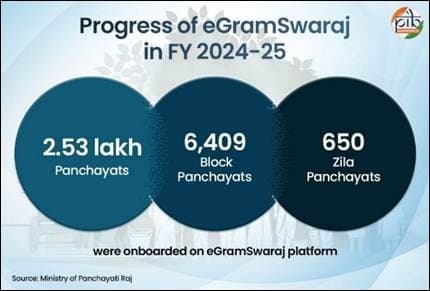
  • Mission-level: IndiaAI, BharatGen, Adi Vaani, YUVAI, eGramSwaraj-Gram Manchitra integration.
  • Compute access: subsidized GPUs and open datasets lower startup barriers.
  • Sovereign stack: multilingual LLMs ensure data residency and cultural alignment.

Opportunities

  • Precision-farming: AI weather-pest forecasts boost yields, cut input losses.
  • Governance inclusion: voice-AI enables PM-Kisan access despite literacy gaps.
  • Asset tracking: geospatial AI verifies MGNREGA works, curbs ghost projects.

Challenges

  • Infrastructure gap: erratic power, broadband limit cloud-AI in hilly regions.
  • Skill deficit: low digital literacy heightens misinformation, deepfake risks.
  • Ethical risk: biometric surveillance concerns under DPDP Act litigation.

Way Forward

  • Connectivity: LEO satellites plus hybrid networks ensure real-time rural AI.
  • Data labs: 570 regional centres to build diverse, explainable datasets.
  • Capacity-building: integrate AI modules into PMGDISHA for grassroots literacy.

Key Data Points

FeatureData-Point
IndiaAI Mission outlay₹10,372 crore
BharatGen launch year2025; supports 22 languages
BHASHINI coverage23+ services; 14+ voice languages
SabhaSaar reach2.5 lakh Panchayats minutes auto-generated
National Pest SurveillanceSatellite-AI advisories; Karnataka pilot
Suman Sakhi ChatbotMaternal health; WhatsApp; Madhya Pradesh
BhuPRAHARI functionMonitors MGNREGA assets incl. Amrit Sarovars
YUVAI target groupClass 8-12 students
Proposed AI Data Labs570+ Tier-2/3 city centres
Connectivity solutionLow-latency LEO satellites for shadow areas

Related UPSC Prelims PYQs

ESE_GS 2020PYQ 1

Which one of the following is not the vision area of Digital India as a program to transform India into a digitally empowered society and knowledge economy?

ESE_GS 2026PYQ 2

Which Ministry released the India AI Governance Guidelines in 2025?

GS-2Editorial

11.US Reciprocal Trade Agreements Shift (Bilateral Trade Deals)

The Hindu

What & Where

Agreements on Reciprocal Trade (ARTs): US-led, WTO-outside bilateral pacts forcing steep tariff cuts and digital concessions.

Process: negotiated under threat of punitive US tariffs (up to 50%), omit MFN & WTO dispute settlement.

Geography: already signed with Bangladesh, Malaysia, Cambodia, El Salvador; interim framework floated with India.

Quick Facts for MCQs

Legal & Policy

  • Erosion: ARTs bypass WTO notification, scrap third-party dispute settlement, dilute MFN norm.
  • Clause: “Poison pill” bars partners from deals with non-market economies, mainly targeting China.
  • Oversight: ARTs remain invisible to WTO committees, blocking collective scrutiny.

Economic Angle

  • Coercion: tariff threat compels wide market opening, risks flooding local agriculture & MSMEs.
  • Fragmentation: bilateral hubs replace predictable multilateral supply chains, raising transaction costs.
  • Resilience: India leveraging PLI, infrastructure upgrades to absorb GVC re-routing (“China + 1”).

Digital & Tech

  • Ban: ARTs prohibit digital taxes/equalisation levies, eroding fiscal space of data-rich countries.
  • Data: mandatory free cross-border flows undermine localisation, privacy, and domestic cloud growth.
  • Sovereignty: India lobbying for balanced global rules preserving policy space on data, AI, semiconductors.

India’s Strategy

  • Expansion: FTAs under negotiation/inked with EU, UK, UAE, aiming high-value market access.
  • Diversification: multi-continent partnerships cut overdependence, enhance strategic autonomy.
  • Coalition: pushes Global-South consensus to restore WTO appellate function and defend S&DT rights.

Key Data Points

FeatureData-Point
GATT launch1947
WTO establishment1995
WTO Appellate Body paralysisSince Dec 2019
Core WTO voting principleOne-country-one-vote
Allowed MFN exceptionGATT Art XXIV (FTAs/CUs)
Max US threatened tariff under ART talks≈50 %
India’s FTA export-basket coverage22 % (2019) → 71 % (proj 2026)
India total exports 2024-25USD 825.25 bn
Foreign Trade Policy 2023 export goalUSD 2 tn by 2030
India FTA utilisation rate≈25 %

Related UPSC Prelims PYQs

CDS_GK, GS1 2024PYQ 1

If India enters into Free Trade Agreements (FTAs) with other nations, then the growth of exports of India would depend upon which of the following?

CDS_GK, GS1 1997PYQ 2

One of the important agreements reached in the 1996 Ministerial Conference of WTO relates to

GS-2Polity

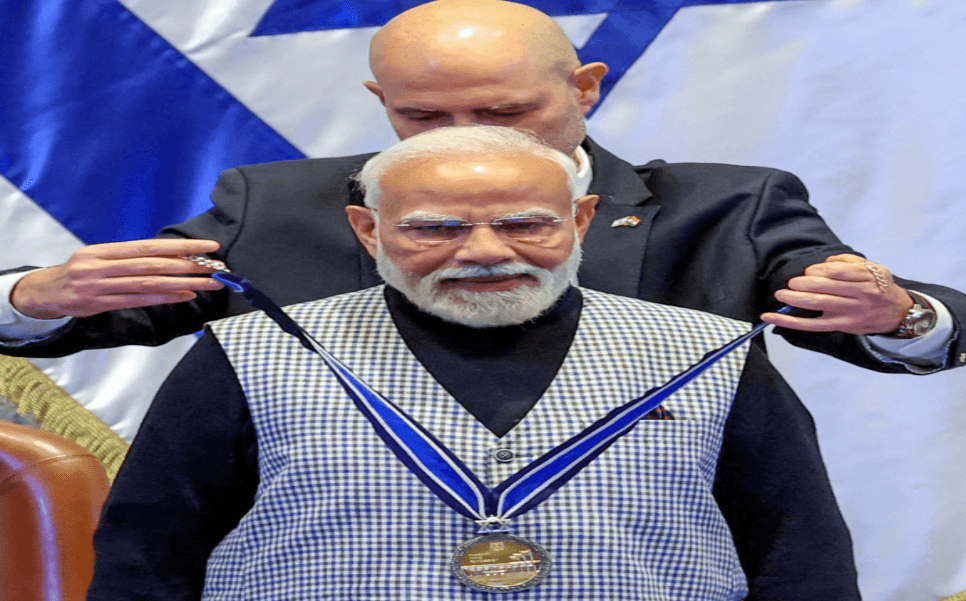
12.Speaker of Knesset Medal (Israeli Parliament Honour)

DD News
Illustration for Speaker of Knesset Medal (Israeli Parliament Honour)

What & Where

Speaker of the Knesset Medal – highest parliamentary honour of Israel, bestowed by the legislature’s presiding officer.

Award given in the Knesset, Jerusalem, to global figures enhancing Israel or Jewish people; PM Modi latest awardee.

Knesset – unicameral national legislature of Israel, elected via nationwide proportional representation, four-year norm.

Quick Facts for MCQs

Award Features

  • Highest honour carries legislative, not executive, validation
  • Medal designed as formal parliamentary distinction, recently institutionalised
  • Current Speaker Amir Ohana presented award post PM Modi address

Strategic Partnership

  • Defence collaboration spans missiles, UAVs, counter-terror and cyber security
  • Joint innovation funds target agriculture, water, startups, high-tech
  • Historic Indian Jewish communities reinforce cultural linkage

Knesset Structure

  • 120-member house can dissolve early via no-confidence or failed budget
  • Committees oversee defence, finance, foreign affairs, ensuring executive accountability
  • Lawmaking power includes constitutional-level Basic Laws, amendable by simple majority unless entrenched

Key Data Points

FeatureData-Point
Honour typeParliamentary medal
Awarding authoritySpeaker of the Knesset
Status in IsraelHighest legislative honour
Recognised fieldsStrategic, political, tech, cultural, security cooperation
Latest recipientPM Narendra Modi
Legislature modelUnicameral (Knesset)
Seats120 members
Electoral systemClosed-list proportional representation
Normal term4 years
Coalition patternFrequent due to low threshold
GS-2S&T

13.Sweden–India AI Corridor SITAC (Tech Diplomacy)

PIB

What & Where

Statement of Intent (SoI) signed (Feb 2026) between IndiaAI Mission & Business Sweden.

Creates Sweden–India Technology & Artificial Intelligence Corridor (SITAC) for structured bilateral AI engagement.

Announced at India AI Impact Summit 2026, New Delhi.

Quick Facts for MCQs

Legal & Policy

  • SoI provides non-binding yet formal blueprint for bilateral AI cooperation.
  • 2018 Innovation Partnership acts as foundational legal umbrella for tech projects.
  • ITP 2023 extends collaboration to climate-aligned industrial regulation.

Tech & Schemes

  • SITAC envisioned as flagship platform linking govt, industry, startups, academia.
  • IndiaAI Mission targets national AI ecosystem: compute clusters, open datasets, skilled workforce.
  • AI tools expected in smart cities, heavy-industry optimisation, green energy.

Economic Angle

  • Partnership aims innovation-led growth, sustainable development, new market opportunities.
  • Joint R&D and pilot projects reduce costs of low-carbon tech adoption.
  • Corridor expected to attract investment and upscale Indo-Swedish startup collaborations.

Key Data Points

FeatureData-Point
Signing partiesIndiaAI Mission & Business Sweden
InstrumentStatement of Intent (SoI)
Summit venueIndia AI Impact Summit 2026
Corridor nameSweden–India Technology and Artificial Intelligence Corridor (SITAC)
Core aimReal-world AI solutions for industry & society
India strengthCompute, data, talent via IndiaAI Mission
Sweden strengthIndustrial innovation, advanced R&D, responsible AI
2018 frameworkIndia-Sweden Innovation Partnership for a Sustainable Future
2023 initiativeIndia–Sweden Industry Transition Partnership (ITP)
ITP focusDecarbonising steel & cement with AI, hydrogen, CCS

Related UPSC Prelims PYQs

ESE_GS 2026PYQ 1

What is the name of the initiative launched by India and Denmark in November 2025 to enhance bilateral ties?

GS-2Scheme

14.CBDC-Based Food Subsidy Pilot (Digital Rupee DBT)

PIB

What & Where

Pilot: CBDC-based food subsidy delivery under PM-Garib Kalyan Anna Yojana (PMGKAY).

Process: Programmable e₹ tokens credited to beneficiary wallets; spendable only at Fair Price Shops.

Geography: Launched Puducherry; phased rollout planned to other Union Territories.

Quick Facts for MCQs

Tech & Schemes

  • Programmability: Token code restricts spend to entitled foodgrain quantities.
  • Wallets: Bank-provided mobile apps hold e₹-R balances for beneficiaries.
  • UPI link: Same QR at FPS accepts both bank UPI and e₹ payments.

Governance & Accountability

  • Traceability: Full audit trail curbs diversion and ghost beneficiaries.
  • DBT integration: PFMS pushes subsidy instantly, bypassing middlemen.
  • Expansion plan: After UTs, could absorb broader welfare payouts.

Economic Angle

  • Leakage saving: Eliminates cash withdrawal and commodity pilferage costs.
  • Settlement risk: None, as liability rests directly with central bank.
  • Administrative cost: Reduced paperwork and reconciliation for PDS operators.

Key Data Points

FeatureData-Point
Currency formDigital Rupee (e₹), RBI-issued CBDC
Token naturePurpose-bound, non-transferable outside FPS
Initial schemePMGKAY via Public Distribution System
First pilot locationPuducherry UT
Core partnersGovt of Puducherry, RBI, PFMS, Canara Bank
Settlement speedInstant wallet-to-wallet; no bank ledger needed
InteroperabilityWorks with existing UPI QR codes
Interest on e₹ balanceNil, mimics physical cash
Retail versus Wholesalee₹-R for public; e₹-W for financial institutions

Related UPSC Prelims PYQs

CAPF_GAI, GS1 2020PYQ 1

PAHAL, an initiative to transfer the subsidy to direct bank account of the beneficiaries, is related to

CAPF_GAI, GS1 2017PYQ 2

Which of the following is a most likely consequence of implementing the ‘Unified Payments Interface (UPI)’?

GS-1Editorial

15.India’s Adolescent Mental Health Crisis (Youth Mental Health)

The Hindu

What & Where

Issue: Rising adolescent mental-health disorders; 7-10 % teens diagnosable, 70-92 % treatment gap.

Locus: Higher prevalence in urban India (13.5 %) than rural (6.9 %); suicide major cause age 15-29.

Context: Digital overuse, exam stress, family dysfunction amplify vulnerability post-Covid.

Quick Facts for MCQs

Drivers

  • Academic-pressure: Board-exam focus, social-mobility expectations, chronic anxiety peaks in higher classes.
  • Digital-impact: Excess screen time spurs cyberbullying, body-shaming, sleep loss, blurred online-offline boundaries.
  • Family-dynamics: Parental discord, over-control, neglect elevate feelings of inadequacy, depression.

Policy & Schemes

  • Flagship: National Mental Health Programme, Tele-MANAS, Kiran Helpline, Manodarpan for students.
  • Legal: Mental Healthcare Act 2017 guarantees rights, decriminalises suicide attempt.
  • Budget 2026-27: Second NIMHANS campus (North India); Ranchi, Tezpur institutes to be regional apex.

Gaps & Needs

  • Workforce: Only 0.75 psychiatrists/100k; WHO standard unmet by 75 %.
  • Funding: Mental-health share <2 % of health budget; need district-level DMHP expansion.
  • Data: Call for longitudinal adolescent surveillance, state-wise disaggregation for targeted interventions.

Regulatory Moves

  • Social-media: Proposal to curb under-16 access; cites Australia’s national ban precedent.
  • School-safety: NCPCR 2024 guidelines against bullying, mandate counsellors & SEL curricula nationwide.

Key Data Points

FeatureData-Point
Smartphone users (2025 est.)800 million+
Adolescent prevalence7-10 % diagnosable disorders
ADHD in schoolchildren5-7 %
Suicide rate India12.6 per 100,000 (global avg 9.2)
Urban vs rural prevalence13.5 % vs 6.9 %
Treatment gap range70-92 %
Psychiatrists availability0.75 per 100k (WHO norm 3)
DALY burden2,443 DALYs /100k
Economic loss forecastUSD 1.03 trillion, 2012-30
National helpline24×7 “Kiran” – 1800-599-0019

Related UPSC Prelims PYQs

GEO_GS 2025PYQ 1

Which one of the following statements about Tele MANAS App is correct?

Ready to practice?

Test your knowledge with our UPSC test series.

Start Free Trial