UPSC Current Affairs

12 topicsGS-1: 2GS-2: 5GS-3: 5
0/12 done
GS-2Polity

1.Kerala Renaming to Keralam (State Renaming)

PIB

What & Where

Renaming move: Kerala to native Malayalam “Keralam” via Article 3 state-alteration Bill.

Geography: Southwestern coastal state between Gokarnam and Kanyakumari, Arabian Sea frontage.

Procedure: State resolution → MHA vetting → Presidential reference → simple-majority Parliament Bill → First Schedule update.

Quick Facts for MCQs

Legal & Policy

  • Authority: Article 3 empowers Parliament to alter state names, areas, boundaries by ordinary legislation.
  • Consultation: President must seek state legislature views; Parliament may accept or reject them.
  • Amendment-status: Bill not a constitutional amendment; needs only simple majority and Presidential assent.

Historical Evolution

  • SRC-Report: 1955 proposed unified Malayalam state, realised on 1 Nov 1956.
  • Movement: Aikya Kerala of 1920s pushed integration of Malabar, Kochi, Travancore.
  • Constitution-Entry: Anglicised “Kerala” recorded; native “Keralam” omitted in 1950 text.

Linguistic Roots

  • Etymology: “Cher” join + “Alam” land; Keralam denotes integrated region.
  • Scholarship: Herman Gundert traced shift from Cheram/Cheralam to Keralam.
  • Assembly-Demand: 2024 resolution wants uniform “Keralam” in all 22 official languages.

Key Data Points

FeatureData-Point
Article invokedArticle 3
Bill titleKerala (Alteration of Name) Bill 2026
State resolution year2024
Required majoritySimple majority
President’s rolePrior recommendation + final assent
Schedule amendedFirst Schedule
NOC agenciesRailways, IB, Posts, SoI, Registrar General
Past renamesUttaranchal→Uttarakhand 2007; Orissa→Odisha 2011
Earliest mention“Keralaputra”, Ashoka Edict II 257 BCE
State formed1 Nov 1956 (Kerala Piravi)
GS-2Polity

2.Election Commission Independence Concerns (Election Commission)

The Hindu

What & Where

Election Commission of India (ECI): Article 324 body conducting Lok Sabha, Assembly, President & Vice-President polls

Appointment process: 2023 Act puts PM + LoP + PM-nominated Cabinet Minister in selection committee for CEC/ECs

Special Intensive Revision (SIR): door-to-door voter roll purge in Bihar, West Bengal; ~65 lakh names flagged for deletion

Quick Facts for MCQs

Legal & Policy

  • SupremeCourt Anoop Baranwal 2023 favoured PM-LoP-CJI collegium; statute later replaced CJI with Minister
  • Model Code of Conduct non-statutory; enforcement relies on moral persuasion
  • Vineet Narain 1997 barred CEC from suo-motu recommending EC removal

Institutional Safeguards

  • Security: CEC tenure & pay cannot be altered to disadvantage post-appointment
  • Multi-member design upheld in T N Seshan 1995; CEC first among equals
  • President may appoint Regional Commissioners after ECI consultation for large polls

Current Concerns

  • Executive dominance: 2:1 majority in new panel risks partisan appointments
  • ECs’ weaker removal shield creates hierarchy pressure within Commission
  • Post-retirement offers (governor, commissions) seen as potential conflict of interest

Reform Proposals

  • Law Commission 255th: equal impeachment process for ECs, permanent independent Secretariat
  • Shift ECI budget to “charged” category to ensure financial autonomy
  • Extend electronic footage preservation minimum 180 days for credible post-poll audits

Key Data Points

FeatureData-Point
Constitutional anchorArticle 324(1)
CEC removalSame as SC judge; parliamentary impeachment
EC removalPresidential order on CEC recommendation
Appointment panel under 2023 ActPM + LoP LS + Cabinet Minister chosen by PM
ECI budget statusVoted expenditure, not charged on Consolidated Fund
ECI order on CCTV/webcast storageDestroy after 45 days if no court case

Related UPSC Prelims PYQs

CDS_GK, GS1 2022PYQ 1

Which one of the following statements with regard to the Election Commission is not correct ?

CDS_GK, GS1 2002PYQ 2

Consider the following statements with reference to India:

GS-3Economy

3.India-France Double Taxation Treaty Update (Tax Treaties)

PIB

What & Where

DTAC: bilateral tax treaty ensuring income isn’t taxed twice between Source & Resident countries.

Parties: India–France; original pact 1992, Protocol updated 2024.

Relief routes: Exemption Method or Tax-Credit Method apportioning taxing rights.

Quick Facts for MCQs

Legal & Policy

  • MFN deletion ends interpretational disputes; treaty benefits confined to negotiated text.
  • BEPS MLI clauses add Principal Purpose Test, anti-abuse wording.
  • Expanded Exchange-of-Information aligns with OECD standards.

Tax Provisions

  • Capital gains on share sale taxable only in company-resident State.
  • Dividend article shifts from flat 10 % to 5 %/15 % tiered regime.
  • Service PE inclusion widens taxable presence for cross-border projects.

Economic Angle

  • Clearer rules enhance FDI appeal for both markets.
  • Legal certainty aids portfolio investors, multinationals planning exits.
  • Stronger collection & info exchange curb profit-shifting and fiscal evasion.

Key Data Points

FeatureData-Point
Original India–France DTAC year1992
Latest Amending Protocol year2024
Capital-gains taxing rightFully with share-issuing company’s State of residence
New dividend rate (≥10 % holding)5 %
New dividend rate (<10 % holding)15 %
MFN clause statusDeleted
BEPS MLI provisionsIntegrated
Added Permanent Establishment typeService PE
New cooperation toolAssistance in Collection of Taxes

Related UPSC Prelims PYQs

GS1 2010PYQ 1

A great deal of Foreign Direct Investment (FDI) to India comes from Mauritius than from many major and mature economies like UK and France. Why?

GS-3Economy

4.Green Ammonia Energy Transition (Green Ammonia)

The Hindu

What & Where

Green ammonia → nitrogen + green hydrogen (renewable-powered electrolysis); near-zero carbon footprint

Displaces grey ammonia (natural-gas feedstock) in fertiliser, shipping fuel, energy storage

India focus: 13 fertiliser plants & coastal hubs Kandla, Paradip, V.O. Chidambaranar for export/bunkering

Quick Facts for MCQs

Economic Angle

  • Record price halves European rate, narrows green-grey gap
  • Import substitution shields fertiliser sector from gas volatility
  • Long-term 10-yr offtake contracts boost developer bankability

Tech & Schemes

  • SIGHT Programme offers production-linked incentives to green H₂/ammonia makers
  • Ports Deendayal, Paradip, VOC notified as dedicated hydrogen hubs
  • Hybrid solar-wind-storage pilots target round-the-clock ammonia synthesis

Challenges

  • Cost gap persists despite incentives; no mandatory blending yet
  • Ports lack dedicated bunkering, storage; demand currently insufficient for scale
  • High electrolyser, cracking-unit capex; safety risks from corrosive, toxic ammonia

Key Data Points

FeatureData-Point
SECI discovered price₹49.75–₹64.74 per kg (≈$572–$744 / t)
EU H2Global benchmark$1,153 / t
Auctioned demand7.24 lakh t per year
Grey ammonia cost≈$515 / t
Import reduction goal30 % of India’s ammonia imports
CO₂ avoided by 203050 MMT per year (NGHM)
SIGHT PLI outlay₹17,490 crore
NGHM capacity target5 MMTPA green hydrogen by 2030
Energy-sector investment cue$500 billion flagged by PM

Related UPSC Prelims PYQs

CAPF_GAI, GS1 2025PYQ 1

Which of the statements given below is/are correct?

CAPF_GAI, GS1 2023PYQ 2

Consider the following heavy industries:

GS-1Mapping

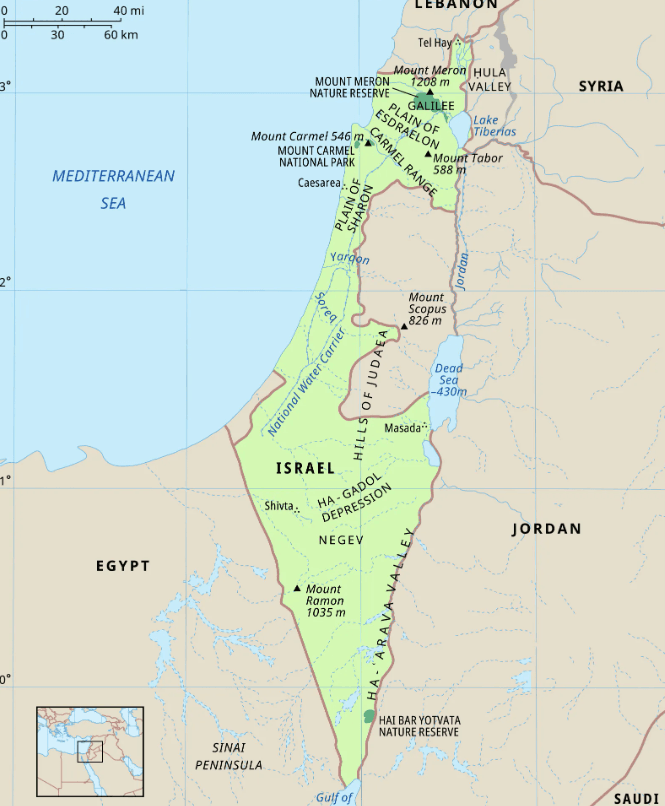
5.Israel Geographic Profile (Israel Geography)

Hindustan Times
Illustration for Israel Geographic Profile (Israel Geography)

What & Where

Resilient parliamentary democracy in the Levant, eastern Mediterranean; only Jewish-majority state since 1948.

Borders Lebanon, Syria, Jordan, West Bank, Egypt, Gaza Strip & Mediterranean Sea; government institutions seated in Jerusalem.

Geography spans coastal plain, central hills, Great Rift Valley & Negev Desert; lies on Dead Sea Transform fault.

Quick Facts for MCQs

Physical Geography

  • Regions: Mediterranean plain, Galilee–Samaria–Judea hills, Jordan Rift Valley, Negev Desert south.
  • Dead Sea: hypersaline, landlocked, Earth’s lowest exposed point.
  • Rift Valley corridor connects Red Sea to Lebanon, influencing climate gradients.

Water Management & Innovation

  • Desalination: five coastal plants supply majority domestic water.
  • Drip-irrigation: Israeli invention enabling high-efficiency arid farming, exported worldwide.
  • R&D spend per capita highest globally, dominant in cyber, AI, quantum tech.

Security & Strategic

  • India: key defense partner; joint missile, UAV, radar collaborations.
  • IIAP centres showcase Israeli micro-irrigation, protected cultivation techniques across Indian states.
  • Indigenous systems: Iron Dome, Arrow, Barak underscore advanced air-defense capability.

Key Data Points

FeatureData-Point
Capital seatJerusalem
Independence year1948
Lowest pointDead Sea ≈ 430 m bsl
Largest freshwater lakeSea of Galilee
Major fault systemDead Sea Transform
Chief desertNegev
Tech monikerStartup Nation
Indian linkageTop-tier defense supplier

Related UPSC Prelims PYQs

GS1 2015PYQ 1

Which one of the following countries of South-West Asia does not open out to the Mediterranean Sea?

GS-3Environment

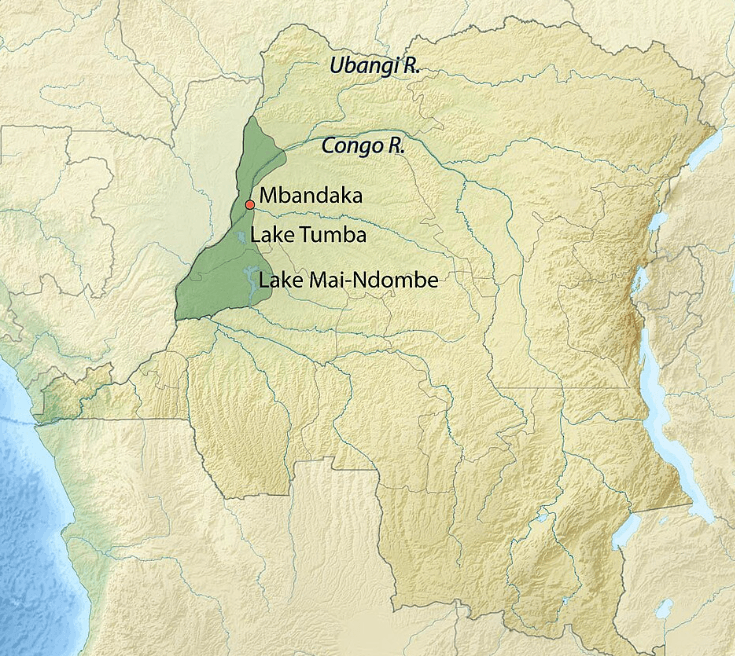
6.Mai Ndombe-Tumba Peatland Lakes Emissions (Peatland Lakes)

DD News
Illustration for Mai Ndombe-Tumba Peatland Lakes Emissions (Peatland Lakes)

What & Where

Blackwater lakes Mai Ndombe & Tumba: large, tea-coloured, floodplain-origin waterbodies within dense swamp-forest peatlands

Location: Cuvette Centrale depression, Democratic Republic of Congo; core of Congo Basin river system

Ramsar tag: integral to Tumba-Ngiri-Maindombe, world’s largest Wetland of International Importance

Quick Facts for MCQs

Physical Features

  • Shallow-depth plus high dissolved humic acids give dark, low-oxygen waters
  • Acidic blackwater sustains endemic fish adapted to pH 4–5.5, low light
  • Continuous waterlogging enabled thick peat accumulation around lake margins

Carbon Emission Findings

  • Radiocarbon tracing confirms ancient peat carbon now venting via lake surface
  • Emission signifies peat decomposition reactivated after millennia of burial
  • Highlights hidden feedback loop beyond deforested or drained peatlands

Drivers & Risks

  • Drying: Lower water tables expose peat, accelerate aerobic decomposition
  • Climate change: Higher drought frequency and temperatures stress swamp hydrology
  • Land-use conversion: Deforestation, agriculture drainage enlarge carbon-release zones

Key Data Points

FeatureData-Point
Lake typeShallow blackwater floodplain lakes
Average depth3–5 m
Water pH4.0 – 5.5
Seasonal size changeMai Ndombe can 2–3× during rains
CountryDemocratic Republic of Congo
BasinCongo River, Cuvette Centrale
Ramsar statusPart of Tumba-Ngiri-Maindombe site
Surrounding peatland area0.3 % of global land surface
Tropical peat carbon stored≈ 30 billion t (one-third of total)
CO₂ from >3 000-yr peatUp to 40 % of lake emissions

Related UPSC Prelims PYQs

GS1 2024PYQ 1

One of the following regions has the world’s largest tropical peatland, which holds about three years worth of global carbon emissions from fossil fuels; and the possible destruction of which can exert detrimental effect on the global climate. Which one of the following denotes that region?

GS-3S&T

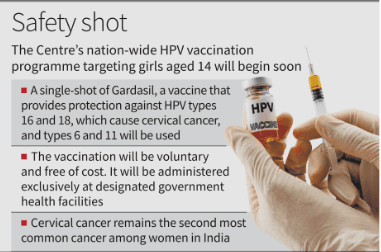
7.Nationwide HPV Vaccination Programme (HPV Vaccine)

The Print
Illustration for Nationwide HPV Vaccination Programme (HPV Vaccine)

What & Where

HPV vaccine recombinant virus-like particles targeting high-risk strains

National cervical cancer prevention drive across India via government health facilities

Administration as single dose to girls aged 14 before likely virus exposure

Quick Facts for MCQs

Disease Burden

  • Mortality about 42 000 deaths yearly India
  • Incidence roughly one cervical cancer death every eight minutes
  • Progression window 10–15 years from infection to malignancy

Programme Design

  • Voluntary free shots at Ayushman Arogya Mandirs and district hospitals
  • Digital scheduling U-WIN streamlines beneficiary tracking and reminders
  • Single-dose regimen lowers logistics, cold-chain and follow-up needs

Vaccine Profile

  • Non-infectious recombinant vaccine elicits immunity without live virus
  • Quadrivalent protection includes oncogenic types 16 & 18 plus low-risk 6 & 11
  • Manufactured by Merck marketed as Gardasil-4

WHO Guidance

  • WHO 2022 evidence validates single dose efficacy for 9–14 age bracket
  • WHO classifies cervical cancer as highly preventable via vaccination and screening

Key Data Points

FeatureData-Point
Cervical cancer rank in India2nd most common female cancer
National incidence~80,000 new cases/year
National mortality>42,000 deaths/year
Global burden share≈20 % of world total
Causative agentPersistent high-risk HPV infection
High-risk strainsHPV-16, HPV-18
Vaccine brandGardasil-4 (Merck)
HPV types covered6, 11, 16, 18
Dose regimenSingle dose
Target cohortGirls turning 14 years
Cost at govt sitesFree & voluntary
Registration platformU-WIN
Efficacy against cancer90–95 % risk reduction

Related UPSC Prelims PYQs

CDS_GK 2023PYQ 1

Which one of the following statements about Mission Indradhanush, launched by the Government of India in 2014, is correct?

CDS_GK 2025PYQ 2

Which one of the following platforms marks a transformative step in India's immunization efforts by digitizing vaccination records for pregnant women and children up to 16 years?

GS-2EconomyQuick Bite

8.India’s Path to IEA Membership (IEA Membership)

Indian Express

What & Where

Inter-governmental International Energy Agency (IEA) formed 1974 by 17 OECD states after 1973–74 Arab oil embargo.

Core task: secure stable oil supply; manages energy emergencies via compulsory 90-day strategic oil stocks.

Now monitors full energy mix, climate transitions, critical minerals; membership: OECD-only full members + non-OECD associates.

Quick Facts for MCQs

Membership & Structure

  • Full membership limited to OECD; associates join discussions but lack voting power.
  • Colombia to gain full membership upon IEA ratification after OECD entry.
  • All members obligated to maintain emergency stocks and coordinate release during supply shocks.

India Angle

  • Seeks full IEA membership without OECD accession; talks welcomed by IEA in 2026.
  • Projected to register highest absolute energy demand growth next three decades.
  • India’s inclusion critical for agency legitimacy covering bulk of future demand.

Mandate Evolution

  • Shifted from oil-security body to platform on renewables, decarbonisation and critical minerals governance.
  • Expanding analytical scope aligns with Paris Agreement and net-zero trajectories.
  • Publications drive policy benchmarks and investment signals worldwide.

Key Data Points

FeatureData-Point
Establishment year1974
Founding trigger1973–74 Arab oil embargo / Yom Kippur War
Founding members count17 OECD countries
Strategic reserve norm≥ 90 days of net oil imports
Full members (2024)32 OECD nations
Next expected memberColombia (joined OECD 2020)
Associate category launch2015
Associate members count13
India’s IEA statusAssociate since 2017
India’s global energy rank3rd-largest consumer
IEA + associates demand share~80 % of world demand
Key flagship reportsWorld Energy Outlook; World Energy Investment; Global Energy Review
GS-2EconomyQuick Bite

9.India–GCC Free Trade Agreement Talks (GCC FTA)

PIB

What & Where

India–GCC FTA: proposed free-trade pact between India and six-nation Gulf Cooperation Council.

GCC geography: Bahrain, Kuwait, Oman, Qatar, Saudi Arabia, UAE; HQ – Riyadh.

Purpose: deepen economic, security, cultural ties; FTA talks relaunched Feb 2026 via Joint Statement.

Quick Facts for MCQs

Economic Angle

  • Trade-volume skew: energy imports form ~68 % of bilateral value.
  • FTA expected to lower tariffs, boost Indian engineering and agri exports.
  • GCC investments pivotal for India’s infrastructure and energy transition.

Diaspora & Soft Power

  • Remittances: GCC Indians remit multi-billion USD annually, reinforcing forex reserves.
  • Cultural outreach: Bollywood, culinary, yoga bolster India’s soft footprint.
  • Diaspora acts as “living bridge”, easing corporate market entry.

Institutional Details

  • Supreme Council decisions binding; meets annually.
  • Ministerial Council handles implementation, meets every quarter.
  • Secretariat led by Secretary-General, coordinates economic integration plans.

Key Data Points

FeatureData-Point
GCC formation year1981
Original trigger events1979 Iranian Revolution; 1980-88 Iran–Iraq War
Member statesBahrain, Kuwait, Oman, Qatar, Saudi Arabia, UAE
India–GCC trade share15.42 % of India’s global trade
FY 2024-25 bilateral tradeUSD 178.56 bn
India’s exports FY 24-25USD 56.87 bn
India’s imports FY 24-25USD 121.68 bn
5-yr trade CAGR15.3 %
GCC GDP rank9th globally; USD 2.3 tn
GCC population61.5 mn
Cumulative GCC FDI in IndiaUSD 31.14 bn (Sep 2025)
Indian diaspora in GCC≈ 10 mn
GCC headquartersRiyadh, Saudi Arabia
Top Indian exportsEngineering goods, rice, textiles, machinery, gems & jewellery
Top Indian importsCrude oil, LNG, petrochemicals, gold
GCC apex bodySupreme Council with rotating presidency

Related UPSC Prelims PYQs

CAPF_GAI, CDS_GK 2024PYQ 1

If India enters into Free Trade Agreements (FTAs) with other nations, then the growth of exports of India would depend upon which of the following?

CAPF_GAI, CDS_GK 2022PYQ 2

Recently, with which one of the following countries did India sign the 'Comprehensive Economic Partnership Agreement'?

GS-3Security

10.Dharma Guardian and Vajra Prahar Exercises (Joint Exercises)

Economic Times
Illustration for Dharma Guardian and Vajra Prahar Exercises (Joint Exercises)

What & Where

Military exercises: bilateral training to boost interoperability, readiness, strategic cooperation among partner armies.

2024 focus: Exercise DHARMA GUARDIAN (India–Japan) and Exercise VAJRA PRAHAR (India–US Special Forces).

Locations: Chaubattia Foreign Training Node, Uttarakhand; Special Forces Training School, Bakloh, Himachal Pradesh.

Quick Facts for MCQs

Security Dimension

  • Deterrence: Joint drills reinforce Indo-Pacific security architecture with Quad members Japan, USA.
  • Readiness: Enhances rapid, coordinated response to regional contingencies.
  • Partnership: Deepens defence diplomacy, trust, strategic signalling.

Training Focus

  • Cordon-search: DHARMA GUARDIAN practices house intervention, temporary operating base setup.
  • Special-ops: VAJRA PRAHAR sharpens high-altitude infiltration, endurance, extraction.
  • Mission-planning: Both exercises stress joint staff procedures, harmonised ROE.

Technology & Interoperability

  • ISR-grid: Drones, sensors employed for real-time surveillance in DHARMA GUARDIAN.
  • Heliborne: Rotary-wing assets tested for troop insertion and CASEVAC.
  • Communication: Secure networks validated for cross-national data sharing.

Key Data Points

FeatureData-Point
Exercise DHARMA GUARDIAN partnerJapan Ground Self-Defense Force
Exercise VAJRA PRAHAR partnerUnited States Green Berets
Indian venuesChaubattia (Uttarakhand); Bakloh (Himachal Pradesh)
Terrain focusSemi-urban (DG); Mountainous (VP)
Core drillsCordon-search, heliborne ops (DG); Special-ops TTPs, mission planning (VP)
FrequencyAnnual for both exercises
Tech highlightISR grid development (DG)

Related UPSC Prelims PYQs

CDS_GK, NDA_GAT 2024PYQ 1

Which one among the following Joint Military Exercises was NOT conducted between India and USA?

CDS_GK, NDA_GAT 2023PYQ 2

The 16th edition of Indo-Nepal annual joint training exercise in jungle warfare and counter-terrorism operations was held in December 2022 at Nepal Army Battle School, Saljhandi. What is the name of this exercise?

GS-2Scheme

11.Employees’ State Insurance Corporation Anniversary (ESI Scheme)

PIB
Illustration for Employees’ State Insurance Corporation Anniversary (ESI Scheme)

What & Where

ESIC; statutory social-security body administering Employees’ State Insurance Scheme across India.

Scheme; offers medical, sickness, maternity, disablement and dependents benefits to organised-sector workers.

Geography; launched at Kanpur & Delhi, now pan-India via hospitals, dispensaries, tie-up facilities.

Quick Facts for MCQs

Legal & Policy

  • Statutory; ESIC enjoys autonomous corporation status under ESI Act, 1948.
  • Governance; tripartite board representing employers, employees, governments.
  • Anniversary; 75th year underscores continuity of social-security legislation.

Benefits Package

  • Medical; primary to tertiary care for insured worker & family.
  • Cash; sickness, maternity, permanent disablement, dependents pensions mitigate wage loss.
  • Preventive; newly added annual screenings integrate with labour codes.

Institutional History

  • Genesis; Adarkar report (1944) termed author ‘Chhota Beveridge’.
  • Launch; inaugurated by Nehru, making him policy’s first beneficiary symbol.
  • Leadership; Dr Katial steered early expansion as inaugural DG.

Modernisation Efforts

  • Digital; Ayushman Bharat convergence targets portability & wider empanelment.
  • Quality; NABL partnership upgrades diagnostics to national standards.
  • Expansion; focus on uninsured gig workers under forthcoming labour codes.

Key Data Points

FeatureData-Point
Parent ministryLabour & Employment
Governing Act year1948
Scheme inauguration date24 Feb 1952
Foundation Day24 Feb every year
2024 milestone75th Foundation Year
First launch citiesKanpur, Delhi
First honorary insuredPM Jawaharlal Nehru
First Director GeneralDr C L Katial
Foundational reportB. P. Adarkar’s 1944 Health Insurance
Core benefits countFour cash, one medical
New preventive stepAnnual health check-up at 40+ yrs
Convergence MoUAyushman Bharat with NHA
Quality MoUNABL for lab standards

Related UPSC Prelims PYQs

GS1 2012PYQ 1

Consider the following:

GS-1Editorial

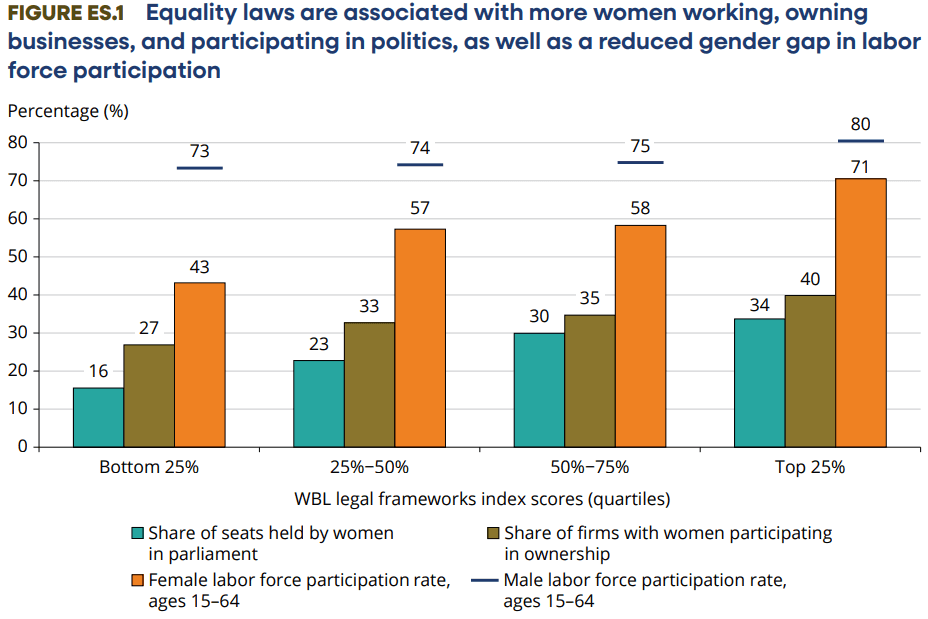
12.Women, Business and Law 2026 Findings (Gender Equality Laws)

Down to Earth
Illustration for Women, Business and Law 2026 Findings (Gender Equality Laws)

What & Where

Report: 11th World Bank “Women, Business and the Law 2026” gauges women’s economic-equality legislation.

Coverage: Benchmarks 190 economies via WBL 2.0’s three-pillar scorecard.

Pillars: Legal Frameworks, Supportive Frameworks, Enforcement Perceptions assessing statutes, services, real-world application.

Quick Facts for MCQs

Scores & Gaps

  • Safety: lowest pillar; only one-third laws exist, 80 % enforcement failure.
  • Implementation: supportive frameworks average <50 %, signalling institutional shortfalls.
  • Equality reach: merely 4 % women live under 90+ scores across all pillars.

Best Practices

  • Integration: leading economies tie reforms to budgets, specialised gender police or agencies.
  • Care incentives: subsidies plus paid parental leave markedly raise female labour participation.
  • Procurement: Viet Nam embeds gender-responsive clauses to favour women-led firms.

Challenges

  • Motherhood: lack of affordable childcare drives workforce exits, widening wage gaps.
  • Finance: cultural bias and absent anti-discrimination statutes limit women’s credit access.
  • Data: scant gender-segregated monitoring hides real impacts of equal-pay or safety laws.

Way Forward

  • Capacity: fund institutions to operationalise supportive frameworks and ensure compliance.
  • Safety systems: roll out 24×7 hotlines, specialised courts, survivor legal aid nationwide.
  • Data use: mandate granular gender statistics to target enforcement deficiencies and guide policy.

Key Data Points

FeatureData-Point
Global legal score67.9 / 100
Supportive score47.3 / 100
Enforcement score53.4 / 100
Economies analysed190
Women under 90+ regimes4 % of global female population
GDP boost if gap closed>20 % within 10 years
Childcare support in low-income states1 % of required mechanisms
Economies with equal credit laws≈ 50 %
Positive reforms (2022-24)113 laws in 68 economies
Sub-Saharan Africa reforms33 (regional lead)
Safety law enforcement failure~80 % cases

Related UPSC Prelims PYQs

GEO_GS 2024PYQ 1

Consider the following statements with reference to a Report titled 'The Paths to Equal', published in 2023, prepared by 'UN Women' and 'UNDP' (United Nations Development Programme):

Ready to practice?

Test your knowledge with our UPSC test series.

Start Free Trial