UPSC Current Affairs

14 topicsGS-1: 3GS-2: 2GS-3: 9
0/14 done
GS-3Economy

1.GDP Base Year 2022-23 (GDP Revision)

Business Standard

What & Where

GDP base‐year revision; constant-price series now anchored to FY23 enabling inflation-free output tracking

Executed by MoSPI/NSO for entire Indian economy, aligning with 2008 System of National Accounts

Core processes: granular sector-specific deflators, double deflation, Supply-Use Tables reconciliation

Quick Facts for MCQs

Inflation Adjustment

  • Granular deflators use specific CPI/WPI items, discarding broad composite indices
  • Double deflation deflates outputs and inputs separately, isolating real value added
  • Unit-value indices applied to commodity groups with high price volatility

Informal & Gig Sector

  • ASUSE and PLFS replace outdated proxies, refreshing unincorporated sector estimates
  • New occupational codes capture platform workers such as delivery agents, aggregator drivers
  • Enhanced coverage expected to lift services and labour-intensive sector weightage

Data Integration & Consistency

  • GST filings cross-verify corporate turnover and state-wise activity allocation
  • SUT framework reconciles production and expenditure GDP, cutting statistical discrepancy
  • Proportional Denton method smooths quarterly series, removing artificial step jumps

Key Data Points

FeatureData-Point
Implementing ministryMoSPI / National Statistical Office
New base year2022-23 (FY23)
Previous base year2011-12
Price indicators count~600 (earlier ~180)
Deflation approachDouble deflation for manufacturing & agriculture
Household data sourcesASUSE + PLFS annual estimates
Big-data inputsGST, e-Vahan, PFMS
Consumption classificationCOICOP 2018 compliant
Quarterly smoothingProportional Denton method
Reconciliation toolSupply & Use Tables (SUT)

Related UPSC Prelims PYQs

GS1 2000PYQ 1

The new Gross Domestic Product (GDP) series released by the Central Statistical Organisation (CSO) in February 1999 is with reference to base price of

GS1 2001PYQ 2

The new series of Wholesale Price Index (WPI) released by the Government of India is with reference to the base prices of
GS-3Economy

2.NSIC Upgrade to Schedule-A (CPSE Categorization)

PIB
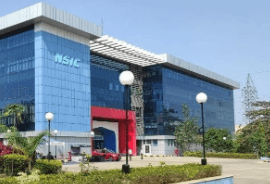
Illustration for NSIC Upgrade to Schedule-A (CPSE Categorization)

What & Where

CPSEs: ≥51 % Central Govt equity, placed in Schedules A-D by Dept. of Public Enterprises (DPE).

National Small Industries Corporation (NSIC) under MSME now promoted to Schedule ‘A’.

Schedule ‘A’ entities enjoy maximal board powers, higher IDA pay scales, fewer Ministry approvals.

Quick Facts for MCQs

Legal & Policy

  • Categorisation regulates board hierarchy, autonomy, salary under DPE guidelines.
  • Promotion decided by Cabinet Committee on Economic Affairs based on DPE proposal.

Evaluation Parameters

  • Quantitative: capital employed, net sales, PBT, investment, workforce size.
  • Qualitative: national importance, tech complexity, expansion prospects.

Governance & Pay

  • Schedule ‘A’ CMD in ₹200 000–370 000 IDA band; lower bands for B-D.
  • Higher schedule permits wider board composition, independent directors, quicker capex nods.

Key Data Points

FeatureData-Point
Nodal categorisation agencyDepartment of Public Enterprises, Min. of Finance
Governing legal frameCompanies Act 2013 / specific Parliamentary Acts
Year schedules began1965 (Committee on Top Posts)
Total schedulesFour: A, B, C, D
Minimum govt holding in CPSE51 %
Performance window for evaluationLast five financial years
Latest CPSE upgradedNSIC, from B ➔ A
Ministry overseeing NSICMinistry of MSME
GS-3Economy

3.Budget 2026-27 Tourism Initiatives (Sustainable Tourism)

PIB

What & Where

Tourism push in Union Budget 2026-27; treats sector as strategic economic driver

Key packages: Buddhist circuits, eco-trails, medical hubs, heritage sites, guide upskilling

Focus geographies: Northeast, Purvodaya belt, Himalayas-Western Ghats corridors, coastal Odisha-Karnataka-Kerala

Quick Facts for MCQs

Budget Initiatives

  • BuddhistCircuit scheme across six Northeast states with amenities, connectivity, interpretation centres
  • EcoTrails mapped in Himalayas, Western & Eastern Ghats, turtle sites, Pulicat Lake birding
  • NationalHospitalityInstitute upgrade at Noida to bridge academia-industry skill gap

Challenges

  • InfrastructureGap: weak last-mile links, overloaded Vyas Valley, Goa, Char Dham corridors
  • EnvironmentalStress: overcrowding causes waste, erosion, biodiversity loss in fragile zones
  • VisaHurdles: e-visa delays, overseas promotion funding cut from ₹33 cr to ₹3.07 cr

Action Agenda

  • ConnectivityBoost: high-speed rail, UDAN regional airports, multimodal corridors beyond metros
  • TourismReady certification to benchmark cleanliness, safety, sustainability for all destinations
  • RuralIntegration: agri-tourism, Paryatan Mitra/Didi programs ensuring community revenue share

Key Data Points

FeatureData-Point
Tourism GDP impact5.22 %
Direct GDP share2.72 %
Employment share13.34 % of total jobs
Foreign tourist arrivals 20241 crore
Thailand arrivals 20243.5 crore
Swadesh Darshan projects76 sanctioned, 75 completed
Tourist guides upskill10,000 guides; 20 destinations
Global Big Cat Summit2026; 95 range nations
Regional medical hubs5 proposed
Electric buses support4,000 units

Related UPSC Prelims PYQs

GS1, NDA_GAT 2025PYQ 1

The scheme PRASHAD (Pilgrimage Rejuvenation & Spiritual Heritage Augmentation Drive) provides assistance for

GS1, NDA_GAT 1999PYQ 2

Tourism industry in India is quite small compared to many other countries in terms of India’s potential and size. Which one of the following statements is correct in this regard?

GS-3Infrastructure

4.National Industrial Corridor Programme (Industrial Corridors)

PIB
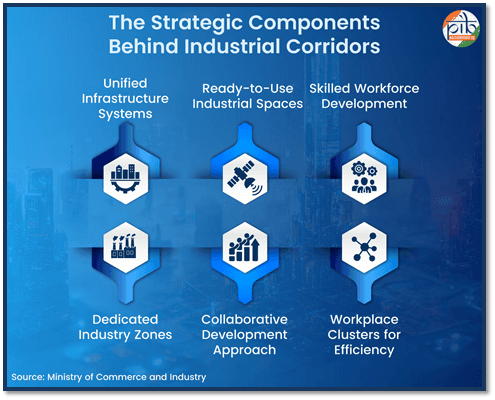
Illustration for National Industrial Corridor Programme (Industrial Corridors)

What & Where

Industrial corridors: planned linear economic belts with rail, road, port and smart-city integration for seamless freight movement.

Spatial spread: 11 corridors nationwide; new East Coast Industrial Corridor node at Durgapur strengthens eastern manufacturing arc.

Core aim: cut logistics costs, offer plug-and-play industry zones, drive balanced regional industrialisation.

Quick Facts for MCQs

Major Corridors

  • DMIC: WDFC spine; smart cities Dholera, Shendra-Bidkin; targets EVs, electronics, renewables.
  • CBIC: Links Bengaluru–Chennai; nodes Tumakuru, Krishnapatnam; strong in automobiles, precision engineering.
  • VCIC: India’s first coastal corridor; boosts port-led growth between Vizag & Chennai.

Sectoral Focus

  • AKIC: Agro-processing, heavy engineering, steel clusters aligned to EDFC.
  • OEC: Steel, aluminium, mineral downstream leveraging Paradip & Dhamra ports.
  • HBIC: Aerospace, defence, semiconductor assembly between Hyderabad–Bengaluru.

Budget & Governance

  • Budget push: ₹3,000 crore accelerates corridor trunk infrastructure and Durgapur node.
  • NICDP: Central platform syncing corridors with PM GatiShakti & Dedicated Freight Corridors.
  • Phase-I plug-and-play sites already attracting EV, renewables, pharma investors.

Key Data Points

FeatureData-Point
Network size11 Industrial Corridors (NICDP)
Completed Phase-I cities4
Projects nearing completion4
Phase-I investment₹2.02 lakh crore
New projects sanctioned12; cost ₹28,602 crore
Direct jobs expected≈1 million
Budget 2026-27 grant₹3,000 crore to NICDIT

Related UPSC Prelims PYQs

GS1, NDA_GAT 2012PYQ 1

What is/are the recent policy initiative(s) of Government of India to promote the growth of manufacturing sector?

GS1, NDA_GAT 2021PYQ 2

Bharatamala Pariyojana is related to

GS-1History

5.Revolutionary Chandrashekhar Azad (Freedom Fighters)

DD News
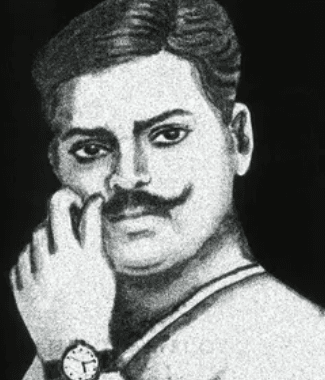
Illustration for Revolutionary Chandrashekhar Azad (Freedom Fighters)

What & Where

Identity Most famous militant revolutionary of India’s 1920-30s youth movement, vowed to die free

Geography Born Bhabra village, Alirajpur district, Central Provinces; martyred Alfred Park, Allahabad, United Provinces

Scope Operated chiefly Uttar Pradesh, Madhya Pradesh, Punjab while steering HRA later HSRA networks

Quick Facts for MCQs

Early Life

  • Poverty upbringing, mother Jagrani wished priesthood, instead attracted to nationalism in Varanasi Sanskrit pathshala
  • First flogging after Non-Cooperation, gave satyagrahi reply naming self Azad, father Swatantra, address Jail
  • Marked psychological shift towards militant tactics post Chauri Chaura withdrawal

Revolutionary Actions

  • Kakori train loot seized govt treasury to fund arms, only Azad evaded arrest
  • Lahore plot avenged Lala Lajpat Rai, killing Saunders with Bhagat Singh, Rajguru
  • Network maintained secret shooting practice in Orchha forests, Bundelkhand

Organisational Links

  • Joined Ram Prasad Bismil’s HRA 1924, later re-christened group HSRA with socialist programme 1928
  • Operated as chief strategist, issued communiqués under Balraj, emphasised propaganda of deed
  • Inspired recruits like Bhagwati Charan Vohra, Sukhdev Raj, ensuring continuity after senior arrests

Martyrdom

  • Betrayal by informant; surrounded by police led by DSP Nott-Bower, Alfred Park, Allahabad
  • Gunfight lasted over 30 minutes; enabled comrade Sukhdev Raj escape, depleted ammunition
  • Final act self-inflicted bullet to uphold pledge never to be captured alive

Key Data Points

FeatureData-Point
Birth date23 July 1906
Birth villageBhabra, Alirajpur (Madhya Pradesh)
Original nameChandra Shekhar Sitaram Tiwari
Adopted titleAzad (Free) since 1921 arrest
Popular nicknameQuick Silver
First arrest age15 years, Non-Cooperation
Key organisationsHRA, later HSRA
Alias for statementsBalraj
Famous robberiesKakori train hold-up 1925
Saunders actionLahore Conspiracy 1928 with Bhagat Singh
Education stintSanskrit school, Varanasi
Disguise professionTeacher Harishankar in Jhansi
Martyrdom date27 Feb 1931
Martyrdom siteAlfred Park, Allahabad
Age at death24 years

Related UPSC Prelims PYQs

GEO_GS, NDA_GAT 2023PYQ 1

Who among the following revolutionaries founded the Hindustan Socialist Republican Army?

GEO_GS, NDA_GAT 2024PYQ 2

Freedom Fighter Kanaklata Barua sacrificed her life while participating in

GS-1HistoryQuick Bite

6.Veer Savarkar Death Anniversary (Freedom Movement)

PIB
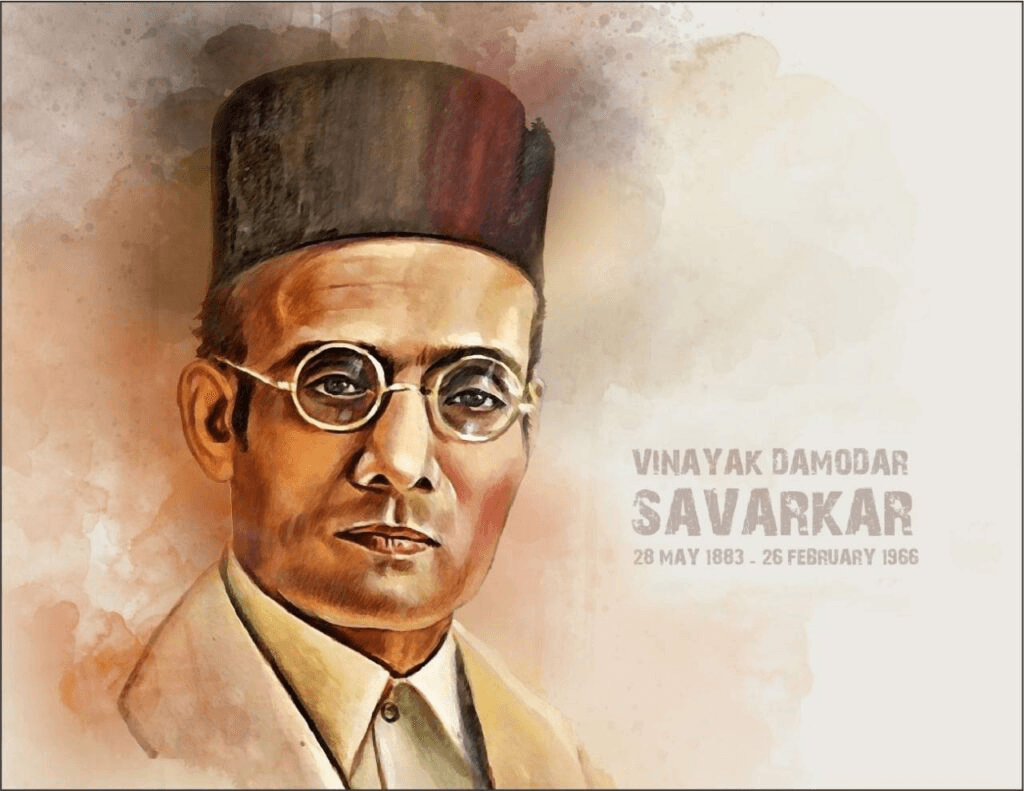
Illustration for Veer Savarkar Death Anniversary (Freedom Movement)

What & Where

VD Savarkar: Maharashtrian revolutionary-writer (1883 Bhagur – 26 Feb 1966 Mumbai) central to early 20th-century Indian nationalism.

Propounded Hindutva, organised secret militant cells in India & London, later led Hindu Mahasabha.

Jailed at Andaman Cellular Jail (Kala Pani) before political activity across western India.

Quick Facts for MCQs

Revolutionary Activities

  • Founded Abhinav Bharat 1904 advocating armed resistance to British rule.
  • Linked with India House & Free India Society fostering expatriate student revolutionaries in London.
  • Authored 1909 book recasting 1857 uprising as first national independence war.

Imprisonment

  • Arrested 1911 for anti-British conspiracy; transported to Kala Pani.
  • Endured rigorous confinement; penned multiple clemency pleas 1911-20.
  • Released 1924, formally bound by restrictions on political mobilisation.

Political Ideology

  • Coined Hindutva emphasising cultural unity, Hindu Rashtra vision.
  • Led Hindu Mahasabha 1937-43; campaigned against partition, advocated Hindu military training.
  • Ideological framework later shaped many right-wing nationalist discourses.

Key Data Points

FeatureData-Point
Full nameVinayak Damodar Savarkar
Birth year/place1883, Bhagur (Nashik)
Death26 Feb 1966, Mumbai
Key ideologyHindutva: cultural-civilisational Hindu Rashtra
Revolutionary societyAbhinav Bharat Society, 1904
London linksIndia House & Free India Society
Landmark bookThe First War of Indian Independence – 1857 (1909)
Cellular Jail sentence50 years, awarded 1911
Actual release1924 after mercy petitions 1911-20
Hindu Mahasabha rolePresident 1937-43

Related UPSC Prelims PYQs

CDS_GK, GS1 1999PYQ 1

'Abhinav Bharat' a secret society of revolutionaries was organised by

CDS_GK, GS1 2023PYQ 2

Who among the following is the author of the book, Bandi Jivan?

GS-1Mapping

7.Druzhba Oil Pipeline Network (Oil Pipeline)

RT
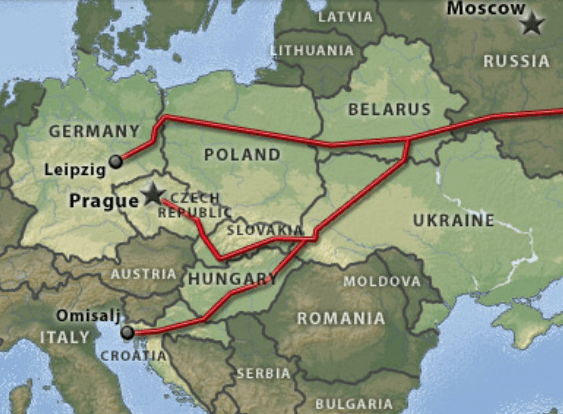
Illustration for Druzhba Oil Pipeline Network (Oil Pipeline)

What & Where

Soviet-era crude network; among world’s longest, named “Friendship”.

Origin Almetyevsk, Tatarstan; splits at Mazyr, Belarus into northern and southern branches.

Feeds Poland, Germany, Ukraine, Hungary, Slovakia, Czech Republic; historic offshoots to Lithuania, Latvia.

Quick Facts for MCQs

Route Geography

  • Northern branch: Belarus → Poland (Płock) → Germany (Schwedt)
  • Southern branch: Ukraine → Hungary (Duna), Slovakia, Czech Republic; connected to Odesa-Brody
  • Historical offshoots: lines to Lithuania, Latvia inactive since 2006

Infrastructure & Capacity

  • Scale: ~4,000 km crossing 45 rivers, 200+ rail/highway intersections
  • Capacity: peak >1 mn bpd, roughly 1 % of global crude supply
  • Bypass: Russia built Baltic Pipeline System-2 reducing reliance on Belarus-Ukraine transit

Security & Geopolitics

  • Drone attacks: recent strikes halted flows, exposing network vulnerability
  • Sanctions: Hungary, Slovakia vetoed new EU measures after supply disruption
  • Dependence: landlocked Central Europe relies on pipeline for affordable, seaborne-independent energy security

Key Data Points

FeatureData-Point
Name meaningFriendship
Origin cityAlmetyevsk, Tatarstan
Length~4,000 km
Peak capacity>1 mn barrels/day
Share of global supply≈1 % at peak
Transit hub (split)Mazyr, Belarus
BranchesNorth & South
Northern end refineriesPłock (Poland), Schwedt (Germany)
Southern supply countriesHungary, Slovakia, Czech Republic
Rivers crossed45
Rail/road crossings200+
Bypass pipelineBaltic Pipeline System-2
Primary feedstockRussian & Kazakh crude
Construction era1960s
GS-3Environment

8.State of India’s Environment 2026 (SOE 2026 Report)

Down to Earth

What & Where

Planetary Boundaries framework defines safe Earth-system limits across nine processes.

Key processes: climate change, biosphere integrity, land-system change, freshwater use, biogeochemical flows, novel entities, ocean acidification, aerosol loading, ozone depletion.

SOE-India 2026 signals seven limits breached, flags rising human–tiger conflicts in lantana-invaded Indian forests.

Quick Facts for MCQs

Planetary Boundaries

  • Seven boundaries breached: climate, biosphere, land, freshwater, biogeochemical, novel entities, ocean acidification
  • Ocean acidification now transgressed; acidity up 30-40 %, weakening marine carbon sink
  • Aerosol loading, ozone layer within safe limits but regional aerosol risk rising

Climate Crisis

  • World nearing 1.5 °C threshold sooner than earlier IPCC timelines
  • Early disruptions pushing coral reefs, Amazon rainforest toward tipping points
  • Overuse of freshwater plus altered monsoons amplify heat stress in India

Biodiversity & Forests

  • Global forest cover fallen to 59 %, impairing carbon sequestration, habitat security
  • Species extinction exceeds safe limit tenfold, driven by habitat loss and pollution

Human–Tiger Conflict

  • Lantana camara invasion suppresses native grasses, reducing wild ungulate prey
  • Resulting cattle depredation elevates human-tiger encounters around forest fringes

Policy & Governance

  • Report urges strengthening NGT and revamping clearance process toward ecological substance
  • Calls for integrating planetary boundaries into national accounts; push full-stack decarbonisation
  • Advocates landscape-scale governance treating local communities as core conservation stakeholders

Key Data Points

FeatureData-Point
Report year2026
Released byCSE & Down To Earth
Total boundaries9
Breached boundaries7
Concept proposed2009
Newly crossed boundaryOcean acidification
Ocean acidity rise30–40 % since industrial era
Global forest cover59 % land area
Safe forest threshold75 %
Extinction rate>100 / million species-years
Lantana spread in India≈50 % forest & scrubland

Related UPSC Prelims PYQs

GS1 2014PYQ 1

The scientific view is that the increase in global temperature should not exceed 2 °C above the pre-industrial level. If the global temperature increases beyond 3 °C above the pre-industrial level, what can be its possible impact/impacts on the world?

GS1 2018PYQ 2

The term “sixth mass extinction/sixth extinction” is often mentioned in the news in the context of the discussion of

GS-3Species

9.Macaque Species Overview (Old World Monkeys)

Indian Express
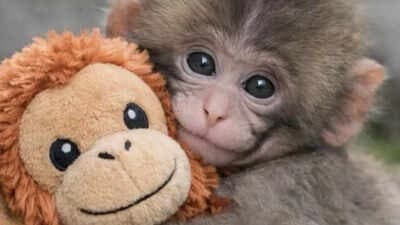
Illustration for Macaque Species Overview (Old World Monkeys)

What & Where

Old World monkeys of genus Macaca, family Cercopithecidae; >20 recognised species, among the most widespread primates

Native chiefly to Asia; habitats span rainforests, alpine snow, cliffs, urban areas; Barbary macaque only African-European member

Notable species: Japanese (Snow) macaque, Rhesus macaque, Lion-tailed macaque, Crested Black macaque

Quick Facts for MCQs

Physical Traits

  • Build robust; forelimbs and hindlimbs roughly equal length; tail length species-dependent
  • Muzzle rounded dog-like; nostrils positioned on upper surface
  • Cheek-pouches large; allow temporary food storage during foraging

Social Structure

  • Hierarchy strict; high-ranked individuals display aggression to reinforce status
  • Female status matrilineal; youngest sister often outranks older siblings
  • Male dominance set by alliances and fighting ability, not birth

Conservation & Use

  • Lion-tailed macaque Endangered on IUCN list; endemic Western Ghats
  • Rhesus macaque model species in vaccine, neurology, spaceflight research
  • Punch case spotlights captive welfare and social integration challenges

Key Data Points

FeatureData-Point
FamilyCercopithecidae
GenusMacaca
Species countMore than 20
Largest speciesTibetan macaque ≈ 18 kg male
Only non-Asian speciesBarbary macaque (North Africa, Gibraltar)
Unique feeding aidLarge cheek-pouches for food storage
Female hierarchyMatrilineal; youngest sister rule in Japanese macaque
Infant comfort needDependence on maternal touch; may cling to surrogates
GS-3EnvironmentQuick Bite

10.India-Nepal Transboundary Conservation MoU (Transboundary Wildlife)

PIB

What & Where

Bilateral MoU (Feb 2026) between India’s MoEFCC and Nepal’s Ministry of Forests & Environment.

Applies across shared Terai, Himalayan and riverine ecosystems; stresses landscape-level, transboundary conservation.

Targets flagship fauna: elephant, Gangetic dolphin, rhinoceros, snow leopard, tiger, vultures.

Quick Facts for MCQs

Legal & Policy

  • MoU enables joint action plans, data sharing, periodic review mechanisms.
  • References international conventions to align national laws with CBD & CITES obligations.

Transboundary Ecology

  • Restoration priority for wildlife corridors connecting protected areas across Indo-Nepal border.
  • Seeks continuous habitat mosaics reducing genetic isolation of wide-roaming species.

Species Focus

  • Elephant and Rhino: emphasize anti-poaching surveillance along Terai grasslands.
  • Gangetic dolphin: cooperative river stretch monitoring for flow, pollution, fishing nets.

Security Dimension

  • Joint training modules for forest guards, custom officials on illegal wildlife trade routes.
  • Intelligence exchange planned through existing SA-WEN (South Asia Wildlife Enforcement Network).

Key Data Points

FeatureData-Point
Signatory ministriesMoEFCC-India & MoFE-Nepal
Conservation scaleLandscape-level across borders
Flagship species listElephant, Tiger, Rhino, Snow leopard, Gangetic dolphin, Vultures
Sample corridorKhata: Bardia NP (Nepal) ↔ Katarniaghat WLS (UP, India)
Tiger linkageValmiki TR (Bihar) ↔ Chitwan NP & Parsa WR (Nepal)
Wildlife-crime focusCapacity building for frontline enforcement
Multilateral tie-insIBCA, CBD 1992, CITES 1973
Crime targetsRhino horn, Tiger parts, Elephant ivory
Core themesForests, Wildlife, Environment, Biodiversity, Climate change
Region category (UPSC)India & its Neighbourhood; GS-2 / GS-3

Related UPSC Prelims PYQs

GS1 2017PYQ 1

Recently there was a proposal to translocate some of the lions from their natural habitat in Gujarat to which one of the following sites?

GS-3S&T

11.ASTraM AI Traffic Management (AI Traffic Tech)

The Hindu

What & Where

Platform; ASTraM is AI-driven big-data engine for macro-level urban traffic management

Developers; Joint project of Bengaluru Traffic Police and Dutch consultancy Arcadis

Location; Piloted at Bengaluru Traffic Management Centre, Karnataka, India

Quick Facts for MCQs

Tech & Schemes

  • AI-engine: predicts both recurring bottlenecks and sudden disruptions using pattern mining
  • BOT-module: auto-logs accidents/obstructions, cutting manual paperwork delay
  • Dashboard-analytics: guides long-term road design, signal timing, infrastructure upgrades

Data Pipeline

  • Integration: ingests CCTV, ANPR, crowd-sourced open datasets into single big-data pool
  • Processing: machine-learning models classify congestion types, severity, probable evolution
  • Communication: 15-minute localized alerts enable on-ground officers to divert or regulate flow

International Collaboration

  • Partnership: Dutch firm Arcadis supplies design, algorithms; Indian police supply domain data
  • Diplomacy: Former Dutch PM Dick Schoof’s visit signals global interest in Bengaluru model
  • Scalability: Framework envisioned for adaptation by other congested world metros

Key Data Points

FeatureData-Point
Full formActionable Intelligence for Sustainable Traffic Management
Core aimShift policing from reactive complaints to proactive, data-led control
Developer duoBengaluru Traffic Police + Arcadis (Netherlands)
Data feedsCCTV, Automatic Number Plate Recognition, open data sources
Alert frequencyBatched automated messages every 15 minutes
Key toolsPredictive analytics, incident-reporting BOT, event-impact simulator
Dashboard utilityCitywide real-time situational awareness & planning analytics
GS-2Editorial

12.India–Israel Special Strategic Partnership (Bilateral Ties)

MEA
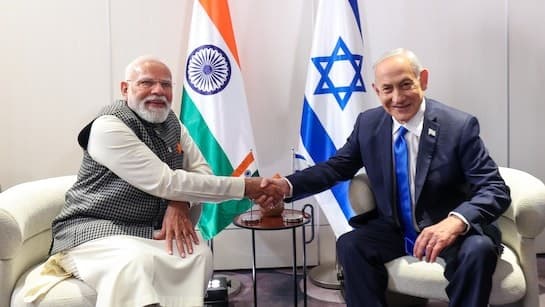
Illustration for India–Israel Special Strategic Partnership (Bilateral Ties)

What & Where

Special Strategic Partnership: India–Israel pact upgraded 2024 for Peace, Innovation & Prosperity

Scope: defence, frontier tech, cyber, fintech, agriculture, water, labor mobility

Geography: South Asia (India) engaging Mediterranean West Asia (Israel) for Indo-Abrahamic regional stability

Quick Facts for MCQs

Strategic & Institutional

  • Elevation: declared Special Strategic Partnership ensuring long-term, whole-of-government engagement
  • Mechanisms: India-Israel Academic Cooperation Forum and Parliamentary Friendship Group created for sustained dialogue
  • Foresight: joint AI-based Strategic Scanning to anticipate tech and economic trends

Tech & Schemes

  • Semiconductors: CET initiative targets joint design, potential support for Dholera fabs
  • Cybersecurity: LoI for Centre of Excellence; multi-year Security-by-Design roadmap with joint simulations
  • Space: ISRO-ISA to incubate private start-ups beyond launch services

Economic Angle

  • Payments: real-time cross-border transactions via UPI–Israeli system to boost tourism and SME trade
  • Infrastructure: Indian firms invited to Israeli metro, rail, desalination mega-projects
  • IMEC: corridor envisioned to use Israel as Mediterranean gateway for Indian exports

Security Dimension

  • Counter-terror: shared condemnation of Oct 7 and 2025 Pahalgam attacks; intelligence cooperation deepened
  • Labor safety: 2023 Framework secures rights of 50k Indian workers in Israel construction and nursing sectors
  • Balance: India maintains two-state support while expanding Israeli defence co-development

Key Data Points

FeatureData-Point
Year of full diplomatic ties1992
First Indian PM visit to Israel2017
Centres of Excellence (agri)35
Indian farmers trained1 million+
Additional Indian workers planned50,000 in 5 yrs
I4F industrial R&D fundKey driver of joint start-ups
CET initiative leadsBoth National Security Advisors
AI MoU focusIndustrial use & education
UPI–Israel fast pay linkAgreed 2024
FTA statusNegotiations fast-tracked post-2025 BIA
I2U2 membersIndia, Israel, UAE, USA

Related UPSC Prelims PYQs

CAPF_GAI, ESE_GS 2022PYQ 1

Recently, with which one of the following countries did India sign the 'Comprehensive Economic Partnership Agreement'?

CAPF_GAI, ESE_GS 2026PYQ 2

What is the name of the initiative launched by India and Denmark in November 2025 to enhance bilateral ties?

GS-3SecurityQuick Bite

13.CERT-In Space Cybersecurity Framework (Space Cybersecurity)

PIB

What & Where

Framework: CERT-In–SIA advisory on Space Cyber Security for India’s satellites, ground stations, links, user terminals

Focus: secure-by-design architecture, proactive risk management against jamming, spoofing, firmware tampering, ground compromise

Geography: applicable pan-India across government, private, vendor and service-provider stakeholders in space ecosystem

Quick Facts for MCQs

Security Dimension

  • Controls: authentication, encryption, access control, intrusion detection mandated segment-wise
  • Threats: jamming, spoofing, unauthorized uplink, firmware manipulation, ground-station breach identified for mitigation

Governance & Roles

  • Appointment: every SatCom entity to designate a CISO for end-to-end cyber oversight
  • Reporting: 24×7 CERT-In help-desk to receive incident notifications per defined timeline

Supply-Chain & Standards

  • Provision: compulsory vendor risk assessment, hardware-software certification before deployment
  • Alignment: mirrors NIST and ITU practices ensuring international interoperability and trust

Key Data Points

FeatureData-Point
Issuing bodiesCERT-In + SatCom Industry Association (SIA-India)
Release year2026
Legal statusAdvisory, non-mandatory
Coverage segmentsSpace, ground, communication links, user terminals
Key roles mandatedChief Information Security Officer (CISO)
Incident protocolAligns with CERT-In Directions
Supply-chain clauseRisk assessment & equipment certification
Global frameworks mappedITU, CCSDS, NIST, SPACE-Shield, TREKS, SPARTA
CERT-In statuteSection 70B, IT Act 2000
CERT-In ministryMeitY, since 2004
GS-2Infrastructure

14.Rail Tech Policy & e-RCT Digitization (Railway Digital Policy)

PIB

What & Where

RailTech Policy 24x7 digital single-window for innovators to submit, prototype and scale railway technologies

e-RCT Digitization online filing, tracking and storage for Railway Claims Tribunal cases under 1987 Act

Coverage pan-India rail network; all 23 RCT benches including Principal Bench Delhi

Quick Facts for MCQs

Legal & Policy

  • Tribunal quasi-judicial, handles death, injury, goods loss, fare refund claims
  • RailTech eliminates multi-stage vendor selection with single-stage digital process
  • Reforms align with broader Reforms Express transparency agenda

Tech & Schemes

  • AI detects elephant intrusion, fire, fog obstruction, broken rails
  • Drone inspection and sensor-based parcel-van load measurement funded focus areas
  • Scale-up grants tripled, attracting startups and industry consortia

Citizen Benefits

  • Anywhere e-filing removes jurisdiction confusion for cross-state passengers
  • Instant SMS/email, real-time tracking cut adjournments, travel and document costs
  • Successful tech assured long-term orders, boosting safety and service quality

Implementation Timeline

  • One structural reform every week through calendar 2026
  • All 23 RCT benches paperless within 12 months
  • Proven innovations to be rolled out network-wide after trials

Key Data Points

FeatureData-Point
Launch year2026
Parent ministryRailways
Umbrella drive52 Reforms in 52 Weeks
Portal nameRail Tech Portal
RailTech funding shareUp to 50 % of development cost
Prototype grantDoubled; scale-up grant >3×
Key innovation areas6 (AI, drones, sensors, etc.)
e-RCT core modulese-Filing, CIS, DMS
Tribunal Act year1987
Benches digitised23
Digitisation deadlineWithin 12 months

Ready to practice?

Test your knowledge with our UPSC test series.

Start Free Trial