UPSC Current Affairs

8 topicsGS-1: 3GS-2: 1GS-3: 4
0/8 done
GS-3Economy

1.SAARG Panel Reviews NPS Investments (NPS Investment)

PIB

What & Where

SAARG Committee: expert panel to overhaul National Pension System (NPS) investment guidelines

Constituted by: Pension Fund Regulatory & Development Authority (PFRDA), New Delhi

Scope: Government & Non-Government NPS portfolios invested in Indian and global capital markets

Quick Facts for MCQs

Legal & Policy

  • Review adequacy of existing NPS regulations against leading global pension systems
  • Suggest prudential limits and governance reforms for all NPS intermediaries
  • Examine custodial architecture for end-to-end regulatory compliance

Economic Angle

  • Recommend optimal allocation across equity, debt, money market, alternatives to boost long-term returns
  • Propose inclusion of new asset classes for diversification and resilience
  • Reform performance benchmarking to sharpen fund manager accountability

Risk Management

  • Design comprehensive market, credit, liquidity, operational risk frameworks matching pension liabilities
  • Develop asset-liability management guidelines for long-term solvency
  • Suggest evaluation metrics to track risk-adjusted performance

Sustainability Element

  • Embed climate transition risk assessment in investment decisions
  • Chart pathways for NPS portfolios toward India’s net-zero commitments
  • Encourage disclosure of ESG metrics across pension funds

Key Data Points

FeatureData-Point
Committee full nameStrategic Asset Allocation & Risk Governance (SAARG)
ChairpersonNarayan Ramachandran
Constituting bodyPFRDA, statutory pension regulator
Reporting deadline9 months from formation
Core mandateModernise NPS investment framework, align with global best practices
CoverageEquity, debt, money market, alternative assets
Key outputRevised strategic asset allocation & risk norms
Sustainability askIncorporate climate transition & net-zero pathways

Related UPSC Prelims PYQs

ESE_GS 2022PYQ 1

Which one of the following statements is NOT correct regarding the Pension Fund Regulatory and Development Authority (PFRDA)?
GS-1History

2.Lakkundi Neolithic Excavation Finds (Archaeological Site)

The Hindu

What & Where

ASI-led excavation at Kote Veerabhadreshwar Temple, Lakkundi village, Gadag district, Karnataka

Objective: expose buried structures, cultural layers to bolster UNESCO World Heritage nomination

Site: historic Lokkigundi; 12 km from Gadag town in Deccan plateau

Quick Facts for MCQs

Archaeological Findings

  • Stratigraphy confirms continuous human occupation from Neolithic to 13th c.
  • Buried temple bases, inscriptions supplement visible monuments for holistic site mapping
  • Artefacts anchor prehistoric timeline, expanding heritage narrative beyond medieval fame

Historical Significance

  • Flourished 10th–13th c. as economic-religious hub under Chalukyas, Hoysalas
  • Multifaith monuments illustrate Deccan religious pluralism and patronage networks
  • Queen Attimabbe’s contributions position Lakkundi as major Jain cultural centre

UNESCO & Conservation

  • Prehistoric evidence strengthens Outstanding Universal Value dossier for World Heritage listing
  • ASI excavation aids conservation planning, structural stability, visitor management strategies
  • State leveraging new findings to fast-track nomination among India’s tentative UNESCO sites

Key Data Points

FeatureData-Point
Supervising bodyArchaeological Survey of India (ASI)
Cultural phases foundNeolithic, Early Historic, Medieval
Key Neolithic findsGrey pot sherds, stone axe, cowrie shells, cross-shaped pedestal
Early-medieval findStone pedestal with Jina (Jain) carving
Dominant dynastiesKalyana Chalukyas; later Hoysalas
Architectural hallmark“Lakkundi school” of Chalukyan temple design
Historic epithet“Village of a hundred wells and temples”
Noted patronQueen Attimabbe, 11th c. Jain philanthropist
Religious footprintHindu temples, Jain basadis, stepwells, Muslim dargah
UNESCO statusProposed group nomination by Karnataka govt.
GS-1MiscQuick Bite

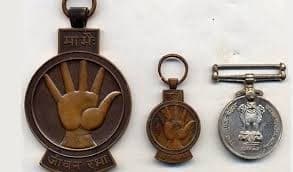
3.Jeevan Raksha Padak Gallantry Awards (Civilian Awards)

News on Air
Illustration for Jeevan Raksha Padak Gallantry Awards (Civilian Awards)

What & Where

Civilian gallantry series honouring life-saving acts under personal risk across India.

Instituted 1961; three tiers – Sarvottam, Uttam & Jeevan Raksha Padak.

Conferred annually by President on PM-approved list.

Quick Facts for MCQs

Categories

  • Sarvottam: conspicuous courage, “very great” danger to rescuer.
  • Uttam: courage & promptitude under “great” danger.
  • Jeevan Raksha: courage with grave bodily-injury risk.

Eligibility & Nomination

  • Open to all genders, civilians & uniformed personnel.
  • Acts accepted: drowning, fire, accidents, electrocution, mines, natural calamities.
  • Nominations routed via States/UTs & Union Ministries each year.

Approval Process

  • Committee examines proposals; submits to PM for clearance.
  • President gives final assent; awards presented in national ceremony.

Significance

  • Promotes civic courage & humanitarian ethos.
  • Provides formal state recognition to ordinary lifesavers, boosting public responsibility.

Key Data Points

FeatureData-Point
Governing MinistryHome Affairs
Year started1961
Total 2025 awardees30 (6 + 6 + 18)
Posthumous honours 20256
Sarvottam allowance₹2 lakh one-time
Uttam allowance₹1.5 lakh one-time
Jeevan Raksha allowance₹1 lakh one-time
Award componentsMedallion + Certificate + Cash; no service perks
Recommendation windowWithin 2 years of act
Scrutiny bodyJeevan Raksha Padak Awards Committee
GS-1HistoryQuick Bite

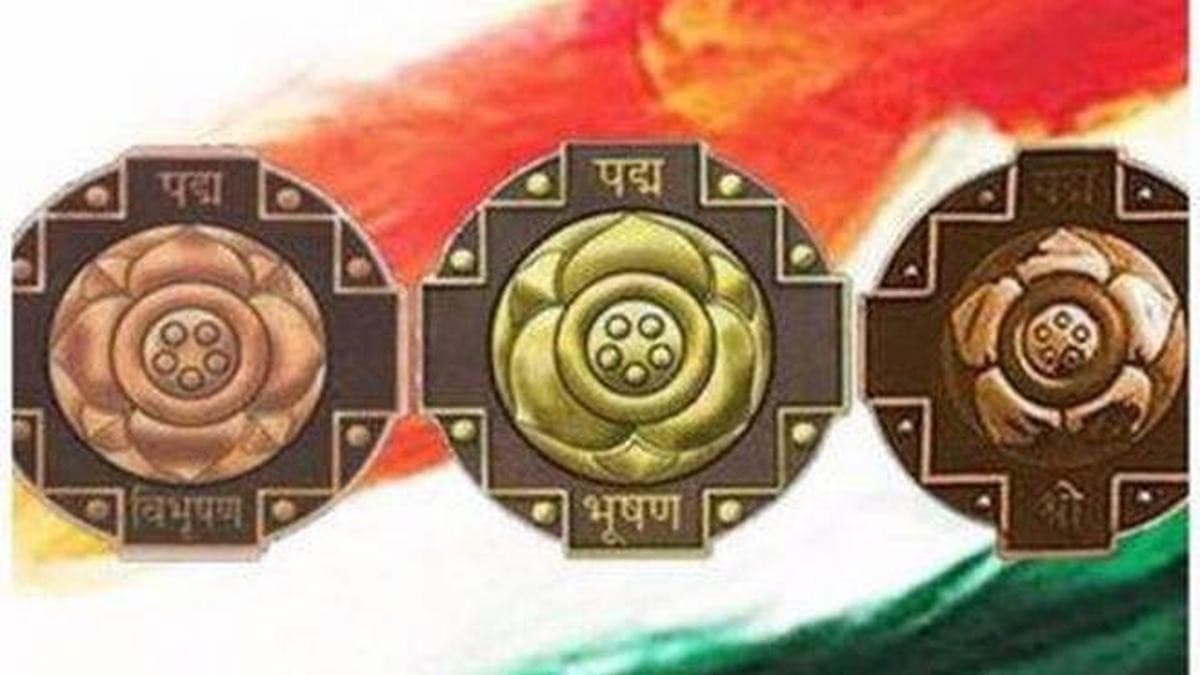
4.Padma Awards Hierarchy and Eligibility (Padma Awards)

Hindustan Times
Illustration for Padma Awards Hierarchy and Eligibility (Padma Awards)

What & Where

Civilian-honour recognising exceptional public service across fields; instituted 1954, India

Three tiers: Padma Vibhushan, Padma Bhushan, Padma Shri; announced annually on Republic Day

Conferred at Rashtrapati Bhavan by President; selection via Padma Awards Committee

Quick Facts for MCQs

History & Evolution

  • Origin 1954; Padma Vibhushan initially three classes beneath Bharat Ratna
  • 1955 reclassification created current Padma trio
  • No awards issued 1978-79, 1993-97

Eligibility & Criteria

  • Open to all nationalities, genders, occupations; most Govt employees excluded
  • Five-year cooling-off before promotion to higher Padma; relaxable for stellar merit
  • Posthumous awards permitted only in truly exceptional cases

Administration & Selection

  • Committee yearly formed by PM; chaired by Cabinet Secretary with experts
  • Inputs from states, ministries, public nominations and self-nominations
  • President gives final assent; foreign/NRI/OCI awards outside 120 cap

Award Mechanics

  • President presents Sanad and lotus-shaped medallion; no cash, no title usage
  • Recognised fields span art, social work, science, industry, medicine, sports, environment etc.
  • Evaluation based on excellence plus demonstrable public-service impact, not longevity alone

Key Data Points

FeatureData-Point
Year instituted1954
Original civilian honoursBharat Ratna + 3-class Padma Vibhushan
Present nomenclature adopted1955
Annual announcement day25 Jan (eve of Republic Day)
Yearly award cap120 (excl. posthumous & foreign)
Minimum gap for higher tier5 years
Govt-service eligibilityOnly doctors & scientists
Ceremony venueRashtrapati Bhavan

Related UPSC Prelims PYQs

GS1 2004PYQ 1

Param Padam, which was in news recently, is

GS-3Species

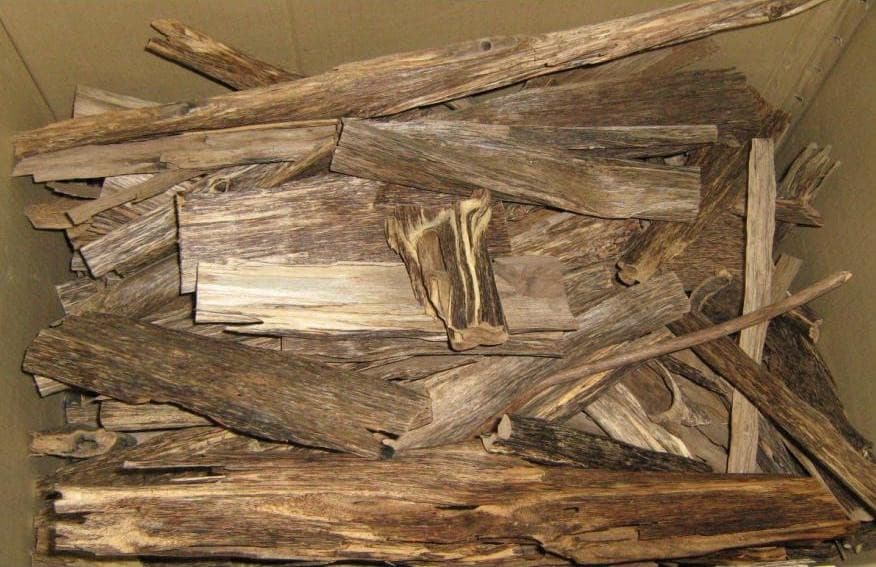
5.Agarwood Value Chain Development Scheme (Agarwood Trade)

Economic Times
Illustration for Agarwood Value Chain Development Scheme (Agarwood Trade)

What & Where

Highly fragrant, resinous heartwood of wounded Aquilaria trees; called oud, gaharu, aloeswood

Resin occurs in ≈10 % wild trees; artificial biological/chemical/physical induction now common

Native to tropical evergreen/semi-evergreen forests of South & Southeast Asia; Indian hotspots Tripura, Assam, Northeast

Quick Facts for MCQs

Tech & Schemes

  • Artificial induction methods—biological, chemical, physical—speed resin formation, bypass decades-long wait
  • 2024 ₹80-crore Agarwood Value Chain Development Scheme launched in Tripura for farm-to-global-market support

Economic Angle

  • Premium agarwood oil among world’s costliest forest products; key demand centre Middle East perfumery
  • Value-chain project targets higher farmer income and export growth via Tripura processing hub

Legal & Policy

  • Agarwood listed under CITES Appendix II; international trade requires permits
  • Overexploitation and illegal logging triggered tighter trade controls across producing countries

Key Data Points

FeatureData-Point
Botanical genusAquilaria
Natural resin incidence≈10 % of wild trees
Time for natural agarwood20–50 years
International protectionCITES Appendix II
New GoI scheme cost₹80 crore
Core Indian statesTripura, Assam, other Northeast
GS-3Species

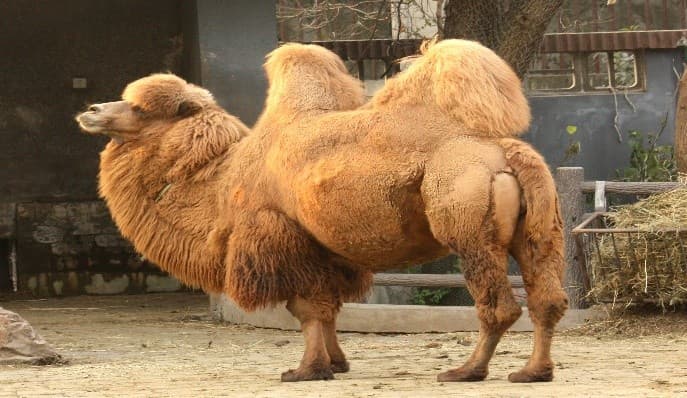
6.Bactrian Camel Cold-Desert Adaptations (Bactrian Camel)

NDTV
Illustration for Bactrian Camel Cold-Desert Adaptations (Bactrian Camel)

What & Where

Double-humped camel adapted to cold-arid Central Asian deserts; only Indian pocket in Nubra Valley, Ladakh

Two lineages: wild Camelus ferus (critically endangered) and domestic Camelus bactrianus (common)

Republic Day Parade 2026 to showcase pair Galwan & Nubra on Kartavya Path, spotlighting Ladakh heritage

Quick Facts for MCQs

Conservation Status

  • Wild population globally under 1,000; drastic decline from habitat loss and hybridisation
  • Indian presence entirely domestic; no wild individuals reported in Ladakh

Physiological Adaptations

  • Fat-filled humps enable energy use during scarce forage
  • Broad feet prevent sand sinking; triple eyelid shields eyes from blizzards
  • Leathery lips browse thorny, saline vegetation avoided by other ungulates

Historical Role

  • Caravan backbone for Silk Road linking India, Central Asia, China
  • Facilitated movement of jade, spices, Buddhist monks across trans-Himalayan passes

Republic Day Spotlight

  • First Bactrian camel inclusion since Army animal contingent revival
  • Symbolises cold desert culture and strategic importance of Ladakh borders

Key Data Points

FeatureData-Point
Common nameBactrian camel
Domestic scientific nameCamelus bactrianus
Wild scientific nameCamelus ferus
IUCN listing (wild)Critically Endangered
Indian rangeNubra Valley, Ladakh only
Global rangeMongolia, China, Kazakhstan, Central Asia
Humps countTwo (fat storage)
Water intake≈ 35 gallons at once; tolerates saline water
Coat traitLong shaggy winter hair, sheds in summer
Domestication age5,000–6,000 years ago
Named afterAncient region Bactria
Parade appearanceRepublic Day 2026
Animal contingent namesGalwan, Nubra
Key trade routeSilk Road caravans

Related UPSC Prelims PYQs

GS1 2016PYQ 1

What is/are unique about 'Kharai camel', a breed found in India?

GS-3S&T

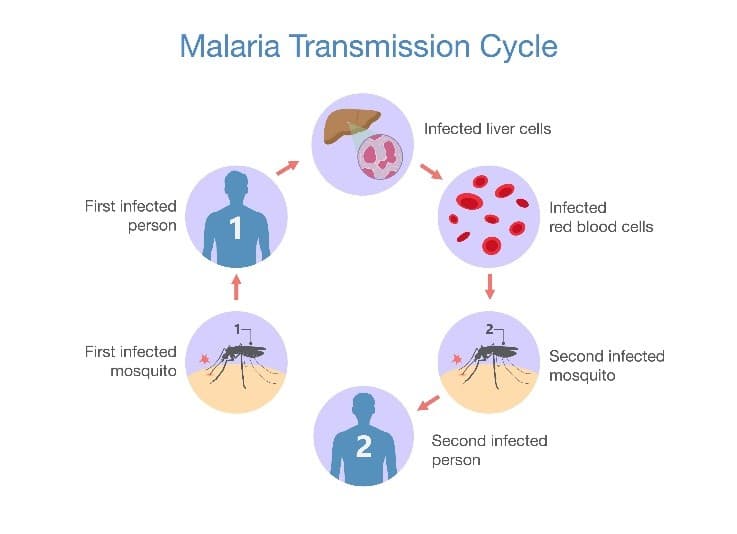
7.India's Malaria Elimination Progress (Malaria Elimination)

The Hindu
Illustration for India's Malaria Elimination Progress (Malaria Elimination)

What & Where

Elimination of malaria = zero indigenous human-parasite cases; differs from worldwide eradication

India’s heavy-burden belt: Odisha, Chhattisgarh, Jharkhand, West Bengal (>85 % cases)

160 districts in 23 States/UTs kept zero transmission 2022-24

Quick Facts for MCQs

Epidemiological Trends

  • Incidence plunged 9.4 lakh in eight years; mortality lowest ever at 83 in 2023
  • Surveillance intensified; ABER rose 21 %, highlighting proactive testing despite fewer fevers
  • High-burden now geographically limited, enabling focused containment operations

National Strategy

  • Framework 2016-30 groups states by transmission, aligns resources to risk level
  • Strategic Plan 2023-27 drives Test-Treat-Track; aims nationwide zero indigenous cases by 2027
  • Integrated Vector Management supplied crore-scale LLINs, expanded Indoor Residual Spraying in tribal/forest zones

Operational Challenges

  • P. vivax liver dormancy fuels relapses; persists even under strong net coverage
  • Artemisinin partial resistance flagged in West Bengal, Northeast; threatens ACT cornerstone therapy
  • Urban vector Anopheles stephensi thrives in tanks, overhead tanks; complicates control in growing metros

Key Data Points

FeatureData-Point
Confirmed cases 201511.69 lakh
Confirmed cases 20232.27 lakh
Case drop 2015-2380.5 %
Deaths 202383
Death drop 2015-2378.3 %
ABER 20159.58
ABER 202311.62
P. vivax share≈40 %
Zero-case districts160
National zero-indigenous target2027

Related UPSC Prelims PYQs

CDS_GK, GS1 2021PYQ 1

Which one of the following countries has recently been awarded a malaria-free certification by the WHO?

CDS_GK, GS1 2010PYQ 2

Widespread resistance of malarial parasite to drugs like chloroquine has prompted attempts to develop a malarial vaccine to combat malaria. Why is it difficult to develop an effective malaria vaccine ?

GS-2Editorial

8.India-EU Trade and Security Partnership (India-EU Relations)

The Hindu
Illustration for India-EU Trade and Security Partnership (India-EU Relations)

What & Where

India–EU “Fit Partnership”; pursuit of strategic autonomy through trade, tech and rules-based order

Proposed India–EU FTA & Security-Defence Pact; talks relaunched 2022, target signing by 2026

Connective geography spans EU-27 and India via planned India-Middle East-Europe Economic Corridor (IMEC)

Quick Facts for MCQs

Trade Trends

  • EU retains top goods partner status; trade growth outpaces India–US trajectory
  • Composition shift toward electronics, machinery, specialty chemicals under China Plus One strategy
  • Services boom led by Indian IT, consulting and R&D outsourcing to European clients

Sectoral Opportunities

  • Textiles gain cost edge once 10 % duty scrapped, tapping EU fast-fashion demand
  • Auto-EV synergy: EU platforms plus Indian low-cost manufacturing to build global green supply chain
  • Pharma and specialty chemicals exports positioned to cut EU dependence on Chinese supplies

Regulatory Challenges

  • CBAM could negate tariff cuts, raising Indian steel and aluminium costs from 2026
  • Strict EU labour, deforestation and sustainability rules strain MSME compliance, notably leather and footwear
  • Data localisation versus GDPR creates friction for European fintech and cloud service providers

Strategic & Security

  • New pact promotes joint R&D and co-production in cyber, drones, semiconductors beyond naval drills
  • IMEC corridor aimed at shorter, diversified sea-land route between India and Europe
  • Talent Partnership to channel skilled Indian youth into EU ageing labour markets

Key Data Points

FeatureData-Point
Goods trade 2024-25≈ US$136 billion
Services trade 2023US$53 billion
EU FDI stock in India€140 billion
European firms in India>6,000
5-year goods trade rise36 %
EU tariff on garments10 %
CBAM carbon levy20–35 %
Indian duty on wine & spirits>100 %
Textile hubs benefittingTiruppur, Noida
Planned FTA completionMid-2026

Related UPSC Prelims PYQs

CAPF_GAI, CDS_GK 2022PYQ 1

Which of the following statements is/are correct?

CAPF_GAI, CDS_GK 2024PYQ 2

If India enters into Free Trade Agreements (FTAs) with other nations, then the growth of exports of India would depend upon which of the following?

Ready to practice?

Test your knowledge with our UPSC test series.

Start Free Trial