UPSC Current Affairs

13 topicsGS-1: 1GS-2: 5GS-3: 7
0/13 done
GS-2Polity

1.Jharkhand Implements PESA Rules in Scheduled Areas (PESA Rules)

Down to Earth

What & Where

PESA 1996 extends Part IX (Panchayati Raj) to Fifth Schedule tribal areas in 9 states, incl. Jharkhand

Empowers Gram Sabha as apex body for land, forests, resources, culture in Scheduled Areas

Jharkhand issued PESA Rules Jan 2026, enabling tribal self-governance after 25-year delay

Quick Facts for MCQs

Legal & Policy

  • Provision: Gram Sabha decisions override Panchayat tiers in Scheduled Areas
  • Safeguard: Illegal land transfers can be annulled via PESA Section 4(m)(iii)
  • Convergence need: Harmonise with FRA 2006 & Samata judgment for mining consent

Success Stories

  • Gadchiroli federated Gram Sabhas boosted tendu, bamboo incomes by removing middlemen
  • Rarang village enforced sustainable Chilgoza harvest, curbing contractor exploitation
  • Vadagudem sand cooperative redirected profits to schools, healthcare infrastructure

Implementation Gaps

  • Dilution: State rules often reduce Gram Sabha to advisory status, retaining bureaucratic control
  • Circumvention: Mining, infrastructure projects exploit legal loopholes to skip consent requirement
  • Awareness: Legal literacy remains low, limiting community assertion of PESA rights

Prescribed Remedies

  • Finance: Direct untied funds plus village secretariats for independent budgeting
  • Oversight: Dedicated quasi-judicial body for speedy PESA violation redressal
  • Transparency: Regular civil-society social audits to track resource utilisation

Key Data Points

FeatureData-Point
Parliamentary Act year24 Dec 1996
Constitutional baseArticle 243 & Fifth Schedule
States coveredAP, Chhattisgarh, Gujarat, HP, Jharkhand, Maharashtra, MP, Odisha, Rajasthan
Jharkhand notificationJan 2026
Core institutionGram Sabha (village assembly)
Key resource rightOwnership of Minor Forest Produce
Land acquisition rulePrior Gram Sabha consent mandatory
Market regulationGram Sabha controls haats, liquor, money-lending
Women’s participationOne man + one woman vote model in some villages
Oversight bodiesGovernor & Tribal Advisory Council

Related UPSC Prelims PYQs

GS1 2012PYQ 1

In the areas covered under the Panchayat (Extension to the Scheduled Areas) Act, 1996, what is the role/power of Gram Sabha?

GS1 2013PYQ 2

The Government enacted the Panchayat Extension to Scheduled Areas (PESA) Act in 1996. Which one of the following is NOT identified as its objective?
GS-3EconomyQuick Bite

3.India’s Growing FTA Trade Deficit (FTA Trade Balance)

Indian Express

What & Where

NITI Aayog “Trade Watch” Quarterly tracks India-FTA merchandise flows.

Snapshot: Q1 FY26 (Apr-Jun 2025) trade deficit trends with ASEAN, UAE, China, others.

Maps export pivot from petroleum to fast-growing electronics.

Quick Facts for MCQs

Economic Angle

  • Deficit: Import-skewed utilisation; rising 59 % despite overall export uptick elsewhere
  • Electronics: Sunrise sector partially offsets petroleum slump, yet import surge outpaces gains
  • Services cushion: Large USD 341 bn services exports ease current-account pressure

Geopolitical Context

  • Negotiations: Ongoing EU, US talks; recent pacts—UK 2025, Oman, NZ—shape stance
  • ASEAN: Lapsed 2025 review weakens hand to address tariff asymmetry
  • Gulf dynamics: UAE CEPA drives gold-compound and petroleum inflows

Sectoral Trends

  • Electronics: Smartphone/PCB shipments lift category 47 % YoY
  • Gold compounds: New tariff lines post-CEPA inflate UAE imports
  • Petroleum: Export contraction mirrors price softening, refinery turnarounds

Key Data Points

FeatureData-Point
FTA deficit widening Q1 FY2659.2 %
Exports to FTA partnersUSD 38.7 bn (-9 % YoY)
Imports from FTA partnersUSD 65.3 bn (+10 % YoY)
Electronics export growth47 %; 11 % share in total exports
ASEAN export contraction16.9 %
Malaysia export fall39.7 %
Singapore export fall13.2 %
UAE import surge28.7 %
China import growth16.3 %
India total exports 2023-24USD 778.21 bn
Merchandise vs services 2023-24USD 437.10 bn vs 341.11 bn
Top export destinationUnited States
Main import sourceChina
ASEAN FTA review deadline missed2025

Related UPSC Prelims PYQs

CDS_GK, GS1 2024PYQ 1

If India enters into Free Trade Agreements (FTAs) with other nations, then the growth of exports of India would depend upon which of the following?

CDS_GK, GS1 2020PYQ 2

With reference to the international trade of India at present, which of the following statements is/are correct?

GS-3Environment

4.Aerosol Impact on North India Fog (Air Pollution)

Times of India
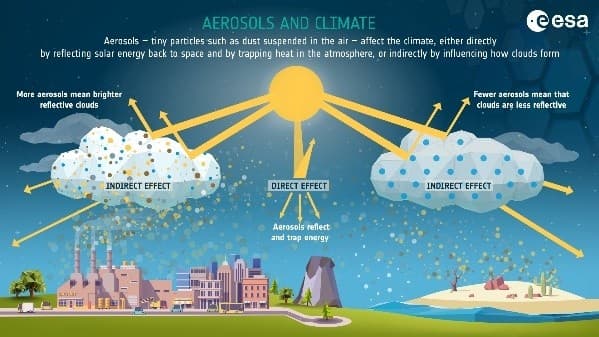
Illustration for Aerosol Impact on North India Fog (Air Pollution)

What & Where

Aerosols = tiny solid/liquid particles suspended in air, act as condensation nuclei influencing fog, clouds, radiation.

Key types : primary (dust, soot) & secondary (formed from SO₂, NOₓ); reflective sulphates vs heat-absorbing black carbon.

Hotspot noted by IIT-Madras study : winter fog belt of North India, now intensified and prolonged by rising aerosol load.

Quick Facts for MCQs

Environmental Impact

  • Fog formation; aerosols boost droplet number, reducing visibility and prolonging fog episodes.
  • Cloud albedo effect; brighter, longer-lived clouds alter regional rainfall patterns.
  • Mixed radiative forcing; reflective species cool surface, black carbon warms atmosphere.

Health Concerns

  • Respiratory penetration; sub-micron particles aggravate asthma, COPD, cardiac disorders.
  • Chronic exposure; linked to higher infection and mortality rates in polluted urban clusters.
  • Transport reach; long atmospheric life spreads health risk beyond emission zones.

Source Profile

  • Natural; Thar desert dust, Bay sea-salt, Himalayan forest fires contribute baseline load.
  • Human; Indo-Gangetic Plain biomass burning, vehicular and industrial emissions dominate winters.
  • Secondary formation; SO₂, NOₓ convert in situ to sulphates/nitrates, raising fine-particle fraction.

Tech & Research

  • Satellite retrievals plus ground lidar used by IIT-Madras to quantify aerosol-fog interactions.
  • Findings support stricter PM₂.₅, NOₓ, SO₂ curbs to mitigate fog-related disruption.

Key Data Points

FeatureData-Point
Typical sizeSub-micron to few microns
Atmospheric stayDays – weeks; long-range transport
Residence roleProvide surfaces for water vapour condensation
Cooling agentsSulphate, sea-salt, organic aerosols scatter sunlight
Warming agentsBlack carbon, dust absorb solar radiation
Natural sourcesDesert dust, sea spray, volcanic ash, forest fires
Anthropogenic sourcesVehicles, industries, biomass, coal, diesel
Study journalScience Advances (2023)
Lead institutionIIT Madras
Impact mappedDenser, longer winter fog over North India

Related UPSC Prelims PYQs

CDS_GK, GS1 2022PYQ 1

Which one of the following is the most important factor for the formulation of smog?

CDS_GK, GS1 2019PYQ 2

In the context of which of the following do some scientists suggest the use of cirrus cloud thinning technique and the injection of sulphate aerosol into stratosphere?

GS-3Environment

5.Conserving Grasslands for Climate and Livelihoods (Grassland Ecosystems)

The Hindu
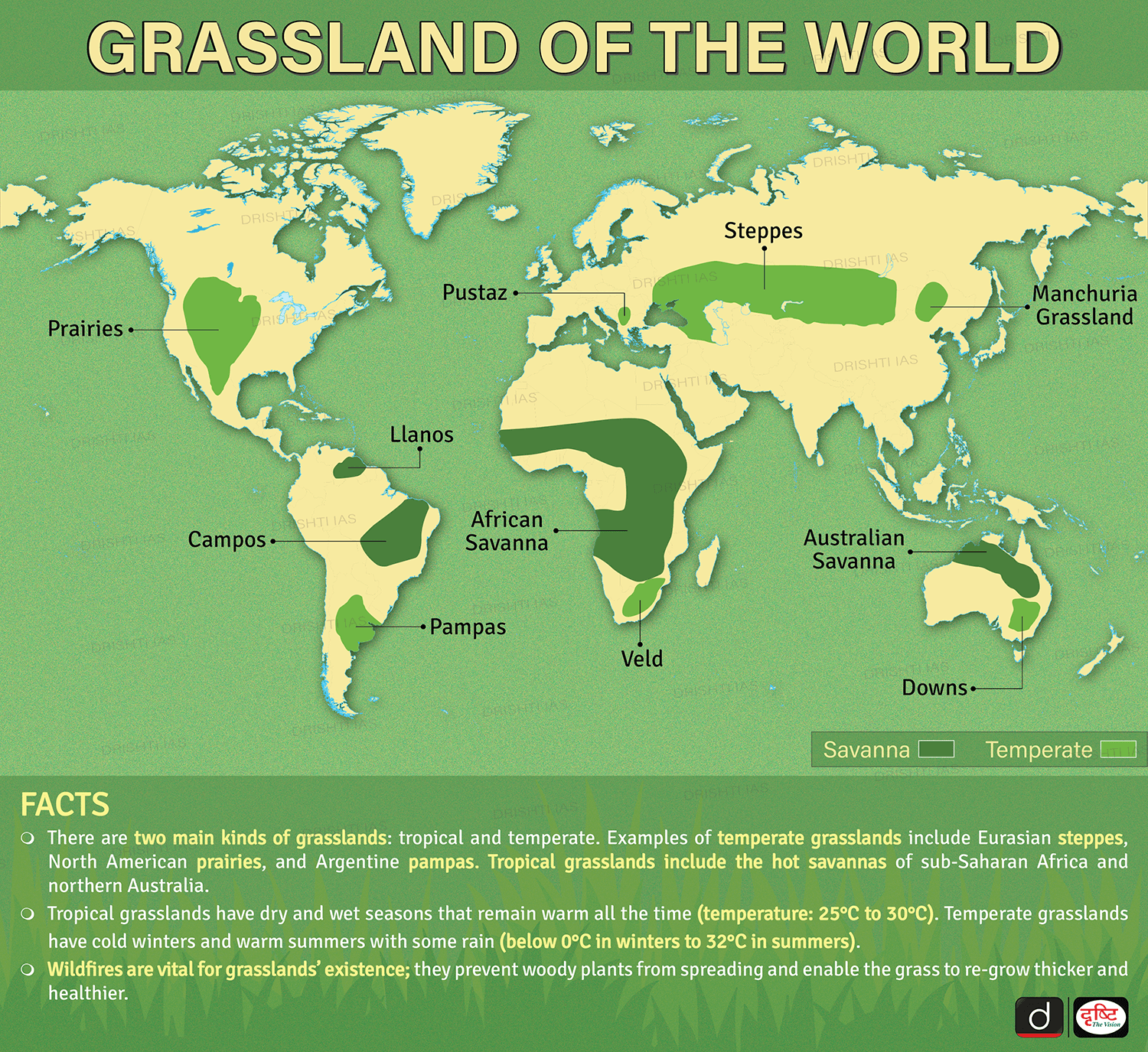
Illustration for Conserving Grasslands for Climate and Livelihoods (Grassland Ecosystems)

What & Where

Definition : open, fire-grazing adapted lands with <10 % tree cover; wooded grasslands hold 10–40 % canopy.

Global spread : ~40.5 % of ice-free land; tropical–subtropical belts dominate carbon storage.

Indian loci : 24 % area across Rajasthan-Gujarat Deccan plateau, Terai-Duar, alpine Ladakh; Banni, Kutch is Asia’s largest.

Quick Facts for MCQs

Ecological Significance

  • Carbon-sink : deep-root soils sequester more stable carbon than many forests.
  • Hydrology : enhance groundwater recharge and curb erosion in semi-arid belts.
  • Biodiversity : specialised fauna like Great Indian Bustard require open habitats.

Policy Gaps

  • Mislabeling : often tagged wasteland or degraded forest, enabling plantation diversion.
  • Governance : 18-ministry overlap creates accountability vacuum, weak monitoring.
  • Data deficit : no national inventory, hindering evidence-based targets.

Reform Measures

  • Reclassification : notify grasslands as separate land-use category and include in NDC carbon sinks.
  • Legal frame : draft National Grassland Conservation & Grazing Policy with tenure security.
  • Community role : empower pastoral fire-grazing regimes via Gram Sabha stewardship.

International Note

  • UNCCD COP16 : Resolution L15 urges investment and tenure security for rangelands.
  • UNFCCC focus skew : REDD+ tree bias sidelines open ecosystems in climate finance.

Tools & Approaches

  • DPSIR framework : links drivers–pressures–state–impact–response for integrated grassland decisions.
  • Restoration : prioritise native grass reseeding, control invasives, avoid ill-suited tree planting.

Key Data Points

FeatureData-Point
Global grassland share40.5 % of terrestrial surface
Global soil carbon held≈15 % terrestrial carbon
People depending worldwide~20 % population
Indian coverage24 % geographical area
Indian legal protection<1 % grasslands in PA network
IYRP year2026 declared by UNGA
Rangeland global extent>50 % Earth land surface
Pastoralists supported>500 million persons
Largest Asian grasslandBanni, Kutch district, Gujarat
Ministries handling India~18 with overlapping mandates

Related UPSC Prelims PYQs

GEO_GS 2020PYQ 1

Biodiversity in terms of species richness is maximum in:

GEO_GS 2023PYQ 2

Which one of the following managed ecosystems has the highest amount of standing crop?

GS-3Mapping

6.Bannerghatta National Park Ecological Sensitivity (Protected Area)

Times of India

What & Where

Bannerghatta National Park: protected biodiversity hotspot, southern green lung of Bengaluru, part of Anekal hill range

Spans Bengaluru Urban & Ramanagara districts; ~22 km south of Karnataka capital

Reserve forest 1970, National Park 1974; zoo–safari Bannerghatta Biological Park carved out in 2002

Quick Facts for MCQs

Legal & Policy

  • CEC urged restoring 2016 ESZ, reversing 2020 reduction excluding critical elephant corridors
  • ESZ shrinkage enables quarrying, real estate, industry near park boundary
  • Larger ESZ invokes stricter Environment (Protection) Act norms, restricting red-category activities

Physical Geography

  • Terrain: rugged granite hills, moist deciduous valleys, dry scrub uplands across semi-arid landscape
  • Suvarnamukhi stream offers perennial water pockets vital in dry months
  • Anekal ridge topography channels natural drainage toward Cauvery basin

Ecological Importance

  • Southern green lung mitigates Bengaluru heat-island effect
  • Supports elephants, deer, predators; key stepping-stone in BR Hills–Sathyamangalam corridor
  • Habitat mosaic enhances biodiversity resilience to climate variability

Human–Wildlife Conflict

  • Peri-urban Bengaluru sprawl intensifying encounters, crop raids, injuries
  • Quarry blasts, traffic, noise disrupt animal movement, escalate stress
  • Restored ESZ expected to buffer settlements, lowering conflict hotspots

Key Data Points

FeatureData-Point
Draft ESZ area 2016268.9 sq km
Notified ESZ area 2020168.64 sq km
CEC recommendationJan 2026
Key watercourseSuvarnamukhi stream
Elephant corridor linkBR Hills–Sathyamangalam
Dominant geologyAncient granite sheets
Distance from Bengaluru~22 km
Districts coveredBengaluru Urban, Ramanagara
Biological Park creation2002

Related UPSC Prelims PYQs

GS1 2017PYQ 1

From the ecological point of view, which one of the following assumes importance in being a good link between the Eastern Ghats and the Western Ghats ?

GS1 2020PYQ 2

Which of the following Protected Areas are located in Cauvery basin ?

GS-3S&T

7.Greenwald Limit in Fusion Tokamaks (Nuclear Fusion)

The Hindu
Illustration for Greenwald Limit in Fusion Tokamaks (Nuclear Fusion)

What & Where

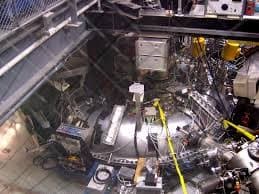
Greenwald limit: density ceiling for tokamak plasma, beyond which disruptive instabilities occur

Links maximum safe density to plasma current & minor radius; core to magnetic-confinement fusion design

EAST tokamak, Hefei (China) stably reached up to 1.65 × limit, redefining high-density operation

Quick Facts for MCQs

Tokamak Physics

  • Density–energy link: higher plasma density raises fusion collision rates, boosts net power output
  • Stability dependence: confinement time & magnetic shear degrade sharply beyond limit
  • Greenwald limit historically fixed design ceiling for ITER-class machines

EAST Techniques

  • Divertor cooling: cryopumped exhaust plates lower recycling, enabling denser core plasma
  • Impurity control: minimized tungsten sputtering, reducing radiation losses at high density
  • Real-time feedback: maintained shape & current to avoid disruptions during 403 MA m⁻² operation

Fusion Prospects

  • Density-free operation may relax size/current demands for future DEMO reactors
  • Success offers pathway to compact, cost-effective power plants without breaching engineering margins
  • Global programs (ITER, SPARC) likely to adopt similar impurity-mitigation strategies

Key Data Points

FeatureData-Point
First proposed1988 by Martin Greenwald
Reactor type concernedTokamak (doughnut-shaped)
Governing formulan_G ∝ I_p / πa²
Key variablesPlasma current (I_p), minor radius (a)
Typical overshoot resultSudden plasma disruption, wall damage
EAST peak density1.3–1.65 × Greenwald limit
Critical modificationCryogenic divertor cooling
Impurity managedTungsten reduction for cleaner plasma
New regime validatedPlasma–Wall Self-Organisation (PWSO)
Fusion aim aidedHigher collision rate → ignition likelihood
GS-3S&T

8.ISRO Polar Satellite Launch Vehicle Overview (ISRO Launch Vehicle)

Indian Express
Illustration for ISRO Polar Satellite Launch Vehicle Overview (ISRO Launch Vehicle)

What & Where

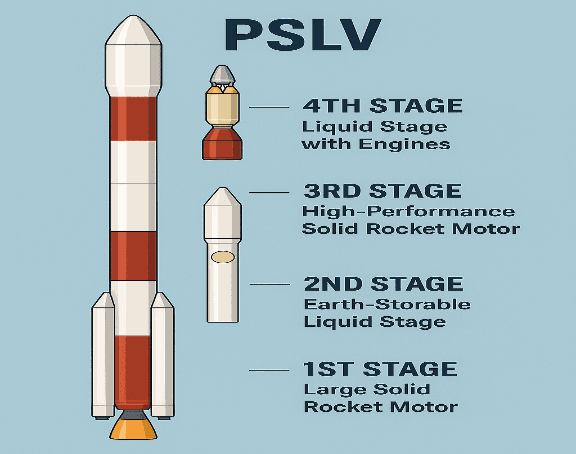
Polar Satellite Launch Vehicle (PSLV): ISRO’s 3rd-gen rocket for inserting payloads into Polar & Sun-Synchronous orbits from India.

Four-stage, alternating solid-liquid configuration; strap-on boosters on first stage for higher thrust.

Operated via Vikram Sarabhai Space Centre & Liquid Propulsion Systems Centre, Thumba & Valiamala, Kerala.

Quick Facts for MCQs

Stage Architecture

  • Alternating solid–liquid design maximises thrust impulse, guidance precision and cost economy.
  • Strap-on boosters augment PS1 lift against dense lower atmosphere.
  • PS4 enables multi-burn fine-tuning for precise orbital injection.

Recent Anomalies

  • PSLV-C62 failure traced to third-stage malfunction, second consecutive loss after C61.
  • Consecutive anomalies highlight need for PS3 motor review and quality assurance upgrades.
  • Failure impacts reliability statistics vital for foreign commercial payload confidence.

Applications & Commercial

  • PSLV underpins Indian earth-observation constellation, IRNSS navigation and small communication satellites.
  • Regular ride-share missions monetize excess capacity, earning forex via NSIL contracts.
  • Strategic launches bolster defence reconnaissance and assert autonomous access to space.

Key Data Points

FeatureData-Point
Developer–OperatorIndian Space Research Organisation (ISRO)
Rocket generationThird-generation Indian orbital launcher
Core mission orbitsPolar, Sun-Synchronous, Low-Earth, Geostationary Transfer
Total stages4 (PS1–PS4)
PS1 motor & fuelS139 solid; HTPB + strap-on boosters
PS2 engine & fuelVikas liquid; UDMH + N₂O₄
PS3 motor & fuelS7 solid; HTPB
PS4 engines & fuelTwin liquid; MMH + MON
Latest failurePSLV-C62, anomaly in PS3
Previous failurePSLV-C61, May 2025
Commercial arm servedNewSpace India Ltd (NSIL)
Key payload classesEarth-observation, navigation, communication, strategic satellites

Related UPSC Prelims PYQs

CDS_GK, GS1 2025PYQ 1

Which one of the following PSLVs, launched by ISRO, is not correctly matched with their Missions?

CDS_GK, GS1 2002PYQ 2

With reference to Indian satellites and their launchers, consider the following statements:

GS-2Editorial

9.US Withdrawal from International Organisations (US Multilateral Exit)

The Hindu

What & Where

Withdrawal: USA quit 66 global bodies (31 UN) citing “America First”.

Key exits span climate, health, human-rights — e.g., UNFCCC, IPCC, WHO, UNESCO.

Impact geography: vacuums in multilateral fora critical to Global South interests, incl. India.

Quick Facts for MCQs

Geopolitical Vacuum

  • Representation: China expanding in ITU, FAO, ICAO as US voice wanes.
  • Veto-loss: No US counterweight in technical norm-setting committees.
  • Funding cuts: Regular UN programmes face resource crunch, affecting agenda control.

Climate Governance & Finance

  • Treaty exit: Leaving UNFCCC ends formal US role in COP rule-making.
  • Finance hit: GCF & GEF contributions stall, widening North–South trust gap.
  • Diplomatic signal: Emboldens other laggards, hardens developing-country stands.

Economic Angle

  • Trade risk: US exporters exposed to foreign CBAMs without shaping rules.
  • Competitiveness: Higher compliance costs isolate American industry from new standards.
  • Technology transfer: Science, education exits curb Global South access to US know-how.

Human Security

  • Peacebuilding: Funding cuts weaken conflict-prevention, raise future military costs.
  • Health & rights: UNFPA defunding hurt reproductive programmes in Africa, Asia.
  • Migration: Climate displacement risk rises toward 200 million people.

India’s Response

  • Coalition-lead: Bolster ISA, CDRI to keep climate agenda moving.
  • Finance diversification: Tap EU, Japan, MDBs for GCF-like support.
  • Decarbonisation: Accelerate NGHM, Carbon Credit Trading to pre-empt CBAM impacts.

Key Data Points

FeatureData-Point
Total organisations exited66
UN agencies among them31
US share of historical CO₂≈ 24 %
US 2024 current CO₂ share12.7 %
UNESCO funding loss (2017)22 % gap
Annual adaptation finance needUSD 310–365 bn
Potential climate migrants by 2050up to 200 million
GS-2Economy

10.US-Led Pax Silica Supply Chain Alliance (Tech Supply Chains)

Indian Express
Illustration for US-Led Pax Silica Supply Chain Alliance (Tech Supply Chains)

What & Where

US-led Pax Silica: economic-security pact securing silicon, semiconductor & AI supply chains.

Scope spans entire tech chain—raw minerals to advanced fabs and data infrastructure—within a trusted partner bloc.

Geography: USA, Japan, ROK, Singapore, Netherlands, UK, Israel, UAE, Australia; India slated to join shortly.

Quick Facts for MCQs

Tech & Schemes

  • Coverage ensures sourcing, processing, fabrication, packaging, deployment under one cooperative framework.
  • Trusted-ecosystem model restricts sensitive tech access to vetted nations, limiting espionage risks.
  • Capacity-building incentives include new fabs, advanced packaging units across member states.

Security Dimension

  • Control over chips equated with twenty-first-century strategic power; bloc deters hostile leverage.
  • Coordination mechanism counters market flooding, political coercion, cyber-sabotage in critical tech supply.
  • Resilience objective reduces single-point failures, especially across Taiwan Strait contingencies.

Economic Angle

  • Stable demand signals attract global investors, enabling economies of scale for costly fab projects.
  • Anti-dumping cooperation protects domestic industries from price undercutting by non-member rivals.
  • Diversified sourcing lowers cost volatility of polysilicon and critical minerals.

India Outlook

  • Access to high-end chips can accelerate Digital India, defence electronics & AI start-ups.
  • Potential for joint fabs aligns with India’s Production-Linked Incentive (PLI) schemes.
  • Membership strengthens India-US strategic trade partnership post-iCET dialogues.

Key Data Points

FeatureData-Point
Lead agencyUS Department of State
Launch year2025 (first summit, Dec)
First summit venueUnited States
Core members8 (US, JP, KR, SG, NL, UK, IL, UAE, AU)
Guest partnersTaiwan, European Union, Canada, OECD
India statusFormal invitation due next month
Supply-chain spanRaw silicon → finished AI chips & data infra
Key policy toolsAnti-dumping & anti-coercion coordination
Strategic aimLink economic & national security via chip dominance
GS-3Security

11.DRDO Man-Portable Anti-Tank Guided Missile (ATGM System)

PIB
Illustration for DRDO Man-Portable Anti-Tank Guided Missile (ATGM System)

What & Where

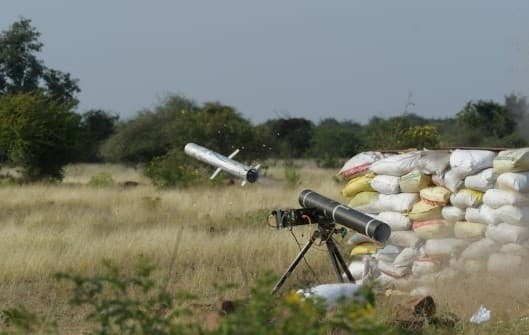
Third-generation, fire-and-forget, man-portable anti-tank guided missile developed by DRDO’s DRDL, Hyderabad

Designed to neutralise main battle tanks/armoured vehicles via shoulder, tripod or vehicle launch

Latest top-attack flight test conducted in India against a moving target

Quick Facts for MCQs

Technical Specs

  • Range 200–4,000 m ensures safe standoff for infantry
  • Tandem HEAT defeats reactive then base armour for >800 mm penetration (figure indicative in similar class)
  • IIR seeker enables lock-on before launch under day, night, low-visibility

Operational Advantages

  • Fire-and-forget lets operator relocate immediately, boosting survivability
  • Top-attack trajectory targets thinnest turret armour, raising kill probability
  • All-weather capability widens employment in varied terrains, incl. deserts, high-altitude, urban

Indigenisation & Strategy

  • Indigenous ATGM cuts reliance on imported systems, advancing Aatmanirbhar Bharat goals
  • Local production streamlines logistics, lifecycle support, and cost control
  • Strengthened infantry anti-armour deterrence elevates tactical flexibility along both active borders

Key Data Points

FeatureData-Point
DeveloperDRDO – Defence Research & Development Laboratory (Hyderabad)
GenerationThird
GuidanceFire-and-forget, IIR homing seeker
Attack profilesDirect & Top-attack
WarheadTandem HEAT
Effective range200 m – 4 km
PlatformMan-portable; tripod/vehicle mountable
Recent testSuccessful top-attack on moving target
Mission roleInfantry anti-tank & anti-armour
Import substitutionReplaces need for Spike, Javelin ATGMs

Related UPSC Prelims PYQs

CAPF_GAI, CDS_GK 2021PYQ 1

Which one of the following is correct about ‘Pinaka’?

CAPF_GAI, CDS_GK 2024PYQ 2

"Mission Shakti" (DRDO) is the name given by India to

GS-2PolityQuick Bite

12.Udai Mascot for Aadhaar Outreach (Aadhaar Mascot)

PIB
Illustration for Udai Mascot for Aadhaar Outreach (Aadhaar Mascot)

What & Where

Udai mascot launched by UIDAI to simplify citizen interface with Aadhaar services nationwide

Aadhaar 12-digit biometric ID issued by UIDAI under Aadhaar Act 2016; proof of identity/address, not citizenship

Core services cover updates, authentication, offline verification and selective information sharing

Quick Facts for MCQs

Legal & Policy

  • Legislation Aadhaar Act 2016 constitutes UIDAI providing statutory backing
  • Provision Section 9 states Aadhaar number confers no citizenship or domicile
  • Judiciary Supreme Court 2017 upheld constitutionality, mandated privacy safeguards

Eligibility & Coverage

  • Residency Anyone in India ≥182 days in last 12 months eligible, including foreign nationals
  • Documentation Enrolment needs one of 18 notified identity/address proofs
  • Age-Bar No minimum age; newborns enrolled with later biometric update

Services & Features

  • Benefit Direct Benefit Transfer, banking KYC, SIM activation, multi-sector services enabled
  • Verification Online authentication, offline QR, selective data sharing enhance privacy
  • Update Process Resident-friendly portals and centres allow demographic or biometric corrections

E-Governance Tool

  • Mascot Udai humanises Aadhaar, boosting awareness among residents
  • Communication Aim Simplify updates, encourage responsible usage, bridge digital literacy gaps

Key Data Points

FeatureData-Point
Issuing AuthorityUIDAI (statutory, Aadhaar Act 2016)
Mascot NameUdai
Unique ID Length12 digits
Eligibility Stay≥182 days in preceding 12 months
Identity Proofs Needed18 notified documents
Citizenship ProofNot accepted
Landmark CaseJustice K S Puttaswamy v Union of India 2017
Core UsesDBT, banking KYC, SIM, multiple services

Related UPSC Prelims PYQs

GS1 2018PYQ 1

Consider the following statements:

GS-1Editorial

13.Early Childhood Investment for Learning Outcomes (Early Childhood)

The Hindu
Illustration for Early Childhood Investment for Learning Outcomes (Early Childhood)

What & Where

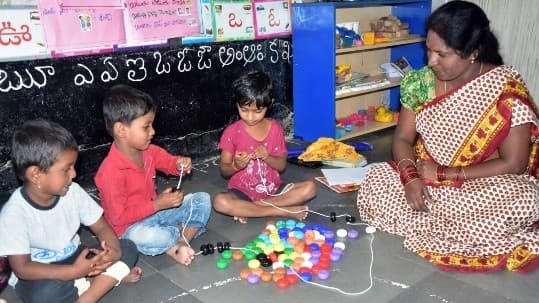
Early Investment: public & social inputs from pre-conception to 8 yrs covering nutrition, health, emotional care, early learning.

Key Processes: ICDS-Anganwadi service delivery, NIPUN foundational literacy-numeracy, POSHAN 2.0 nutrition-education convergence.

Geography: Implemented pan-India; FLN pilot data from Bihar, mother-tongue gains across linguistically diverse states.

Quick Facts for MCQs

Schemes & Policy

  • ICDS 1975 pioneers integrated nutrition-health-ECCE via 1.4 mn Anganwadis.
  • NEP 2020 introduces 5+3+3+4 structure, formalising ECCE inside schooling.
  • NIPUN Bharat targets universal Grade-3 literacy-numeracy by 2026-27.

Learning Outcomes

  • ASER shows enrolment near-universal yet primary learning weak.
  • Vidya Pravesh: one-third rural entrants can’t identify shapes/colours.
  • Quality preschool attendance linked to 20 % higher entry wages.

Capacity & Governance Gaps

  • Fragmented Data: health, nutrition, school records not interoperable.
  • Workforce: most Anganwadi workers lack play-based pedagogy skills.
  • Urban Preschools: ~50 % lack outdoor play areas, standards absent.

Economic Angle

  • Workforce productivity hinges on early cognitive-socio-emotional growth.
  • Strong ECCE correlates with lower future costs—crime, disease, dropout.
  • India eyes $30-trn economy by 2047; demographic dividend needs solid foundations.

Suggested Way Forward

  • ECCD Mission integrating pre-conception-8 yrs across ministries.
  • Co-located Anganwadi-primary hubs for seamless transition, resource sharing.
  • Parenting programmes to extend talk-read-play stimulation at home.

Key Data Points

FeatureData-Point
Brain wiring completed by85% by age 6
Heckman-type ROI₹1 spent saves ₹11 later
FLN mother-tongue pilot+12 % oral reading fluency
Upgraded Anganwadis (Mission Saksham)2 lakh+ centres
Rural Bihar Grade-5 needing remedial math~40 %
Rise in digital eye strain (4-8 yrs)15 %
ECCE allocation share of GDP≈0.1 %
Dropout fall where ECCE high25 % lower

Related UPSC Prelims PYQs

NDA_GAT 2024PYQ 1

Which of the following statements about 'ULLAS' scheme is/are NOT correct?

Ready to practice?

Test your knowledge with our UPSC test series.

Start Free Trial