Economy
1.Stricter Crypto KYC Framework (Crypto Regulation)
Times of IndiaFIU-India · PMLA · live selfie
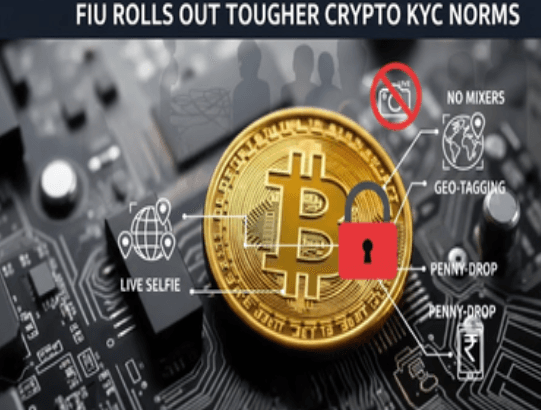
What & Where
Mandatory digital-KYC framework for users of Indian crypto exchanges
Enforced nationwide by Financial Intelligence Unit-India under Ministry of Finance
Operates within Prevention of Money Laundering Act ecosystem to curb illicit crypto flows
Quick Facts for MCQs
Legal & Policy
- FIU-IND designated Virtual Asset Service Providers as Reporting Entities under PMLA March 2023
- Non-compliance invites monetary penalty plus potential suspension of exchange operations
- Framework supplements existing RBI/SEBI investor warnings without recognizing crypto as legal tender
Tech & Schemes
- Selfie verification uses AI liveness tests; rejects static or morphed images
- Geo-tag plus IP pairing helps flag VPN or cross-border onboarding attempts
- Penny-drop confirms active bank linkage, blocking mule or dormant accounts
Security Dimension
- Ban on mixers, tumblers cuts off anonymization channels used by ransomware groups
- Traceable KYC enables quicker attachment of wallets/assets during terror-funding probes
- Multi-factor checks deter account takeovers and SIM-swap frauds
Global Context
- Aligns India with US FinCEN Travel Rule, EU MiCA traceability mandates
- Supports G20 call for “same risk, same regulation” in crypto sector
- Strengthens India’s case in upcoming FATF mutual evaluation 2025
Key Data Points
| Feature | Data-Point |
|---|---|
| Issuing authority | Financial Intelligence Unit-India (FIU-IND) |
| Parent law | Prevention of Money Laundering Act 2002 |
| Core verifications | Live selfie, geo-tag, PAN, penny-drop, OTP |
| Live selfie tool | Liveness detection to foil deepfakes |
| Geo-tag captures | Location + IP address at onboarding |
| Bank check method | ₹1 penny-drop into user account |
| KYC refresh | Periodic, risk-based; stricter for high-risk |
| Banned tools | Mixers, tumblers, privacy tokens |
| Global alignment | FATF Recommendation 15 on VASPs |
| Main objectives | Traceability, accountability, anti-terror & anti-laundering |