UPSC Current Affairs

14 topicsGS-1: 6GS-2: 3GS-3: 5
0/14 done
GS-3Infrastructure

1.Indigenous Hydrogen Fuel Cell Passenger Vessel (Green Shipping)

Hindustan Times
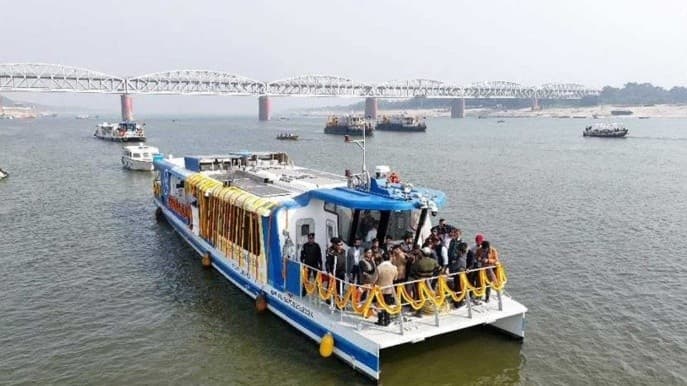
Illustration for Indigenous Hydrogen Fuel Cell Passenger Vessel (Green Shipping)

What & Where

Definition: 24-m indigenous hydrogen-fuel-cell AC catamaran for zero-emission passenger movement on inland waterways

Process: Low-temperature PEM fuel cell plus batteries and rooftop solar convert H₂ + O₂ to electricity, water

Geography: Commercial service started at Namo Ghat, Varanasi, on the Ganga (National Waterway-1)

Quick Facts for MCQs

Technology & Design

  • Catamaran hull offers high stability, wider deck, better seakeeping in shallow Ganga stretches
  • Electric drive ensures silent, vibration-free cruising suitable for urban riverfront operations

Environmental Impact

  • Zero tailpipe emissions preserve Ganga water quality and reduce urban air pollution load
  • Noise-free operation minimises disturbance to aquatic fauna and riverfront communities

Economic & Sectoral

  • Project showcases Make-in-India capability, supporting National Green Hydrogen Mission supply chain
  • Green tourism and passenger services on National Waterway-1 gain clean, cost-efficient propulsion option

Key Data Points

FeatureData-Point
Vessel typeHydrogen fuel cell catamaran
BuilderCochin Shipyard Ltd
Passenger seats50
Length overall24 metres
Cruising speed~6.5 knots
Endurance per refill≈8 hours
Propulsion techLow-temperature PEM stack
Energy mixFuel cell + battery + solar
Emission outputOnly water vapour
Hull formTwin-hull catamaran
Launch locationNamo Ghat, Varanasi

Related UPSC Prelims PYQs

CDS_GK 2024PYQ 1

Which of the following statements is not correct?

CDS_GK 2024PYQ 2

On which among the following is National Waterway No. 2 situated?
GS-1History

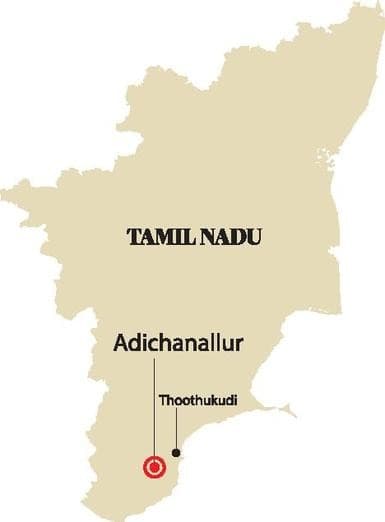
2.Adichanallur Iron Age Archaeological Site (Archaeological Site)

The Hindu
Illustration for Adichanallur Iron Age Archaeological Site (Archaeological Site)

What & Where

Site-type Iron Age urn-burial complex with skeletal, iron, bronze, gold finds indicating early South Indian urbanism

Location Thoothukudi district, Tamil Nadu, left bank Thamirabarani river, 24 km NW of Tirunelveli, near Srivaikuntam

Context Adjacent ancient port Korkai implies river-sea trade corridor across Gulf of Mannar

Quick Facts for MCQs

Legal & Policy

  • MadrasHC directs no sand mining within vicinity recognising heritage sensitivity under Ancient Monuments Act spirit
  • Order reinforces conservation precedence over mineral extraction in archaeologically notified zones
  • Judgment likely guides future buffer-zone notifications for other heritage sites

Archaeological Significance

  • CarbonDating confirms older strata than Keezhadi establishing early iron technology in deep south
  • MaterialCulture includes gold diadems, weapons, decorated pottery indicating craft specialisation
  • BurialCulture large urns with multiracial skeletons hint at inclusive, possibly urban, social setup

Trade & Connectivity

  • KorkaiLink situates settlement on pearl-trade node between Mediterranean and Southeast Asia
  • RiverAccess via Thamirabarani enabled hinterland resources to reach seaborne routes
  • Cosmopolitanism evidenced by diverse skeletal morphology and exotic artefact types

Key Data Points

FeatureData-Point
Carbon-dated span905 BCE – 696 BCE
Burial urns (ASI 2004-05)169
Antiquities recovered till date4,000 +
Excavated area≈ 4–5 % of site
Skeletal traitsNegroid, Australoid, Caucasoid, Mongoloid, Dravidian
Inaugural explorerDr Jagor (1876)
Major ASI campaignAlexander Rea 1899-1904
River nearbyThamirabarani
Closest port in antiquityKorkai
Recent court actionMadras HC bans sand mining around site
GS-1History

3.Italian Cuisine Gains UNESCO Recognition (UNESCO ICH)

CNN

What & Where

UNESCO inscribed “Italian cooking: Between sustainability & biocultural diversity” on Intangible Cultural Heritage List.

Decision taken by Intergovernmental Committee during its 20th session in New Delhi.

Covers entire Italian national cuisine; first such recognition globally.

Quick Facts for MCQs

Cultural & Social Traits

  • Conviviality; shared meals central to community bonding.
  • Emphasis on intimacy with food, respect for ingredient origin.
  • Traditions blend regional practices into unified national identity.

Sustainability Angle

  • Anti-waste philosophy mirrors circular, low-impact food systems.
  • Seasonal, local sourcing preserves biodiversity and agrobased ecosystems.
  • Recognition intended to safeguard biocultural diversity long-term.

Transmission & Education

  • Skills passed informally grandparent-to-grandchild within families.
  • Formal teaching via schools, universities, culinary academies reinforces standards.
  • Community cooking events sustain collective memory and techniques.

National Significance

  • Boosts Italian soft power and cultural diplomacy.
  • Reinforces political use of cuisine as symbol of pride and unity.
  • May drive culinary tourism and artisanal product protection.

Key Data Points

FeatureData-Point
List typeIntangible Cultural Heritage
Inscribed element“Italian cooking: Between sustainability and biocultural diversity”
Country honouredItaly
UniquenessFirst nation with whole cuisine recognised
Deciding bodyUNESCO Intergovernmental Committee for Safeguarding ICH
Session number20th
Session venueNew Delhi, India
Core valuesArtisanal methods, ingredient respect, conviviality
Sustainability focusAnti-waste, seasonal & local produce use
Knowledge transferFamily traditions + formal culinary institutes
GS-1History

4.Culture Ministry 2025 Heritage Achievements (Heritage Preservation)

PIB

What & Where

Heritage-Preservation 2025: Ministry of Culture drive combining repatriation, UNESCO listings, manuscript digitisation, mass outreach.

Key-Processes: legal diplomacy for relic return, nomination dossiers, craft-cuisine festivals, e-waste Swachhata audits.

Core-Geography: Piprahwa (UP), Maratha forts across 11 Maharashtra districts, Prayagraj Mahakumbh, Varanasi–Tamil Nadu connect.

Quick Facts for MCQs

Heritage Repatriation

  • Relic-Return: Piprahwa Buddha relics prevented from auction, brought back via court filings and diplomatic notes.
  • Cultural-Diplomacy: Success adds to 250+ artefacts reclaimed since 2014.
  • Soft-Power: Repatriations showcased in international exhibitions fostering Buddhist tourism.

UNESCO & Recognition

  • Maratha-Military-Landscapes: 12 forts, hill-ocean defence continuum; dossier highlighted agrarian support zones.
  • Inscription-Effect: India now holds 34 cultural, 10 natural World Heritage properties.
  • Draft-List: Vadnagar, Sacred Ensembles Gwalior, Satpura Tiger Reserve under preparation.

Festivals & Outreach

  • Kalagram: 20-acre craft village, 200 stalls, daily folk troupes during Mahakumbh peak bathing days.
  • Sewa Parv: Nation-wide wall art, 5-lakh volunteers, integrating Swachh Bharat with heritage aesthetics.
  • Tribal-Business Conclave: 150+ GI-tagged products, focus on value-chain financing.

Digital & Knowledge Initiatives

  • Gyan Bharatam: Targets digitisation of 10 million manuscripts by 2030 using AI-OCR in 22 languages.
  • Special-Campaign 5.0: Cleared 1.2 lakh pending files; e-waste auction generated ₹7 crore revenue.
  • Kambh Ramayana Revival: 50 scholarly lectures, new critical edition launched in Unicode Tamil.

Key Data Points

FeatureData-Point
Buddha relic return gap127 years (1898–2025)
New UNESCO inscriptionMaratha Military Landscapes, India’s 44th site
India’s global WH rank6th after 2025 inscription
Kashi Tamil Sangamam3rd edition, 2025
Kalagram venuePrayagraj, Mahakumbh 2025
Special Campaign 5.0 coverage599 cultural sites cleaned
Samvidhan Hatya Diwas date25 June 2025 (Emergency @50)
Gyan Bharatam outcomeDelhi Declaration on manuscript revitalisation
Project Mausam focusIndian Ocean maritime cultural routes
Project Gaja-Lok lead agencyINTACH

Related UPSC Prelims PYQs

GS1, NDA_GAT 2025PYQ 1

Which Ministry has initiated the “Dhara”, a special initiative dedicated to Indian Knowledge System (IKS)?

GS1, NDA_GAT 2024PYQ 2

यूनेस्को (UNESCO) द्वारा जारी विश्व धरोहर सूची में शामिल की गई निम्नलिखित संपदाओं पर विचार कीजिए :

GS-1History

5.Deepavali Added to UNESCO Heritage List (UNESCO ICH)

Indian Express
Illustration for Deepavali Added to UNESCO Heritage List (UNESCO ICH)

What & Where

UNESCO Intangible Cultural Heritage List safeguards living traditions under the 2003 Convention

States may propose one nomination every two years for inscription

20th Intergovernmental Committee session hosted at Red Fort, New Delhi, December 2025

Quick Facts for MCQs

UNESCO Mechanism

  • Inscription recognises cultural value, promotes awareness, ensures community-driven safeguarding
  • Committee reviews new files and periodic reports of listed elements
  • Mechanism strengthens international cooperation and capacity building among parties

Deepavali Significance

  • Festival symbolises light over darkness, celebrated on Kartik Amavasya
  • Supports seasonal livelihoods, craft production, social bonding, hygiene practices
  • Inclusion reinforces values of generosity, prosperity, community resilience

India’s ICH Portfolio

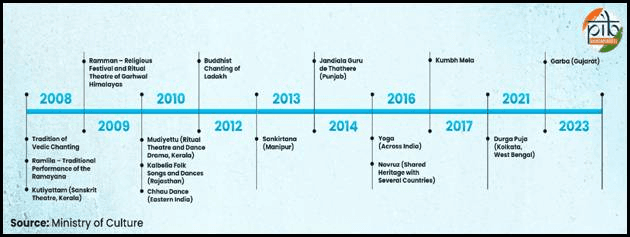
  • India now counts 15+ elements on Representative List including Yoga, Kumbh Mela, Durga Puja, Garba
  • Diverse entries span rituals, dances, theatre, craftsmanship across regions
  • Hosting session bolsters India’s soft power and global cultural leadership

Key Data Points

FeatureData-Point
Convention year2003
Latest Indian additionDeepavali
Nomination cycle2024–25
Session number20th
Host countryIndia
VenueRed Fort, New Delhi
OrganisersMinistry of Culture; Sangeet Natak Akademi
SDGs highlighted1, 3, 5, 11
Recent prior inscriptionGarba (2023)
Nomination limit1 per State/2 years

Related UPSC Prelims PYQs

GS1 2024PYQ 1

Which one of the following was the latest inclusion in the Intangible Cultural Heritage List of UNESCO?

GS1 2024PYQ 2

यूनेस्को (UNESCO) द्वारा जारी विश्व धरोहर सूची में शामिल की गई निम्नलिखित संपदाओं पर विचार कीजिए :

GS-1MappingQuick Bite

6.Nathu La High-Altitude Border Pass (Mountain Pass)

PTI

What & Where

Nathu La: high-altitude Himalayan pass (4,302 m) in East Sikkim on the India–China border

Silk-Road offshoot: one of two ancient Sikkim–Tibet links, the other being Jelep La

Strategic trade corridor: motorable route to Tibet and part of fully drivable Mansarovar pilgrimage

Quick Facts for MCQs

Historical & Cultural

  • Silk-Road legacy: facilitated yak wool, salt, silk, medicinal herb exchange across Himalayas
  • Pilgrimage linkage: key segment of Kailash–Mansarovar route, minimal trekking needed
  • Local heritage: long-standing trans-border kinship among Sikkimese and Tibetan communities

Trade & Livelihood

  • Pandemic impact: 2020 shutdown halted barter-style border trade affecting 900+ registered local traders
  • Seasonal window: officially operates May–Nov under duty-free quota when open
  • Commodity list: Indian exports include dairy items, tea, rice; imports largely wool, livestock products

Strategic & Security

  • Border management: joint deployment by Indian Army, ITBP, Chinese PLA at pass
  • Motorable advantage: among world’s highest paved roads enabling rapid troop and logistics movement
  • Diplomatic barometer: trade status often reflects broader India–China bilateral climate

Key Data Points

FeatureData-Point
Altitude4,302 m
Indian stateSikkim (East district)
ConnectsGangtok with Chumbi Valley, Tibet
Parallel passJelep La
Trade first closed1962 Sino-Indian War
Reopened for trade2006 bilateral pact
Current closure2020 (Covid-19 curbs)
Other Sikkim passesDonkia, Chiwabhanjang, Jelep La
Kailash route natureFully motorable till 35–40 km parikrama
Lok Sabha concernMP urged immediate trade resumption

Related UPSC Prelims PYQs

CDS_GK, GS1 2007PYQ 1

Which one of the following Himalayan passes was reopened in the middle of the year 2006 to facilitate trade between India and China?

CDS_GK, GS1 2023PYQ 2

Which one of the following passes is not located in Indian Himalayan region?

GS-3Environment

7.India's Escalating Air Pollution Crisis (Air Pollution)

The Hindu
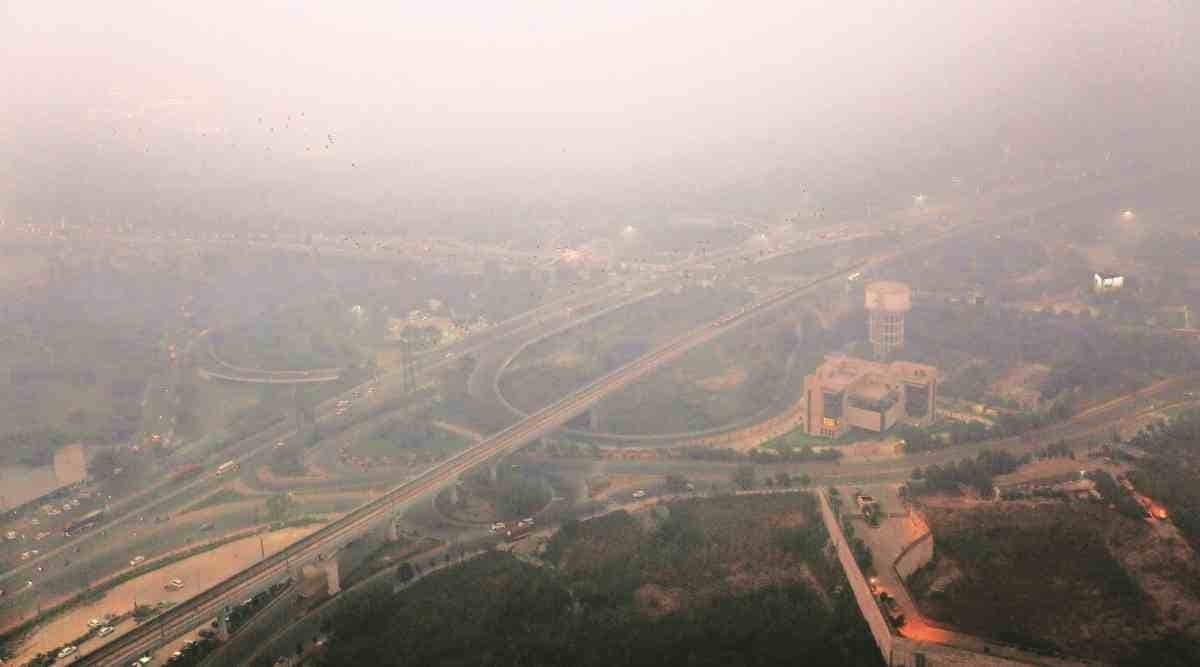
Illustration for India's Escalating Air Pollution Crisis (Air Pollution)

What & Where

Air pollution: nationwide, year-round build-up of PM2.5, NOx, SO₂; labelled India’s largest health threat

Key processes: vehicular exhaust, coal-industry smoke, biomass fires, construction dust, winter inversion

Core geography: Indo-Gangetic Plain worst hit; 150 / 256 cities breach PM2.5 limits

Quick Facts for MCQs

Sources

  • Vehicular emissions: rapid motorisation, ageing diesel fleets, chronic congestion
  • Industrial stacks: coal power, refineries, brick kilns release SO₂, NOx, metals year-round
  • Household biomass: firewood, dung, crop residue smoke dominates rural PM2.5

Seasonal Amplifiers

  • Stubble burning: Punjab–Haryana post-harvest fires spike particulates region-wide
  • Winter inversion: cold stagnant layers trap pollutants near surface for days
  • Festive fireworks: Diwali/New Year explosions add sudden toxic surges

Health Impact

  • Cardiovascular: PM2.5 inflames vessels, raising heart attack & stroke risk
  • Respiratory: 6 % Indian children asthmatic; lung capacity falls 10–15 % when exposed
  • Neurological: fine dust crosses blood–brain barrier; dementia risk rises 35–49 %

Policy & Schemes

  • NCAP: city plans, expanded monitoring, clean-mobility pilots since 2019
  • BS-VI fuels, EV push, GRAP stages manage Delhi-NCR episodes
  • Tighter industrial norms; construction dust rules; waste-burning bans

Governance Gaps

  • AQI cap hides extreme events; thresholds below WHO stringency
  • Pollution boards under-staffed; weak real-time enforcement
  • Rural air ignored despite heavy biomass combustion

Key Data Points

FeatureData-Point
Cities over PM2.5 limit (2025)150 of 256
Delhi winter PM2.5107–130 µg/m³
Indian annual PM2.5 norm60 µg/m³
WHO annual PM2.5 norm15 µg/m³
AQI display ceiling500 (real 600–1 000)
Life-years lost, north India3.5–8 years
NCAP PM10 cut target40 % in 131 cities
Mortality↑ per 10 µg/m³ PM2.58 %

Related UPSC Prelims PYQs

GEO_GS, GS1 2022PYQ 1

WHO के वायु गुणवत्ता दिशानिर्देशों के संदर्भ में, निम्नलिखित कथनों पर विचार कीजिए :

GEO_GS, GS1 2022PYQ 2

Which of the following major parameters are considered while deriving the Air Quality Index (AQI) of an area in India?

GS-3Species

8.Hard Coral Reef Builders Decline (Coral Reefs)

Down to Earth
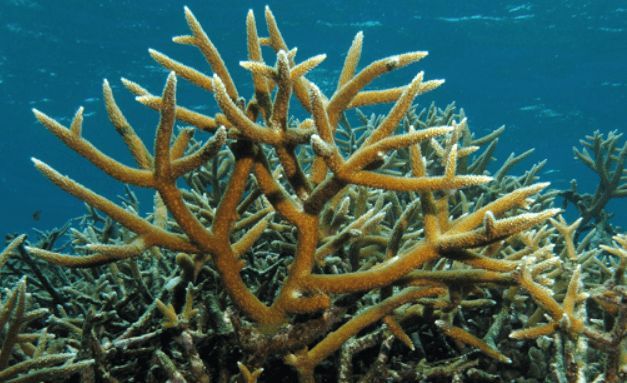
Illustration for Hard Coral Reef Builders Decline (Coral Reefs)

What & Where

Definition: Hard corals are marine animals secreting calcium-carbonate skeletons that build rigid, reef-forming rock.

Types: Reef-building hard corals (elkhorn, staghorn) versus flexible, non-reef soft corals (sea fingers, sea whips).

Geography: GCRMN reports 48 % decline in Caribbean hard-coral cover between 1980 – 2024.

Quick Facts for MCQs

Decline Trends

  • Loss: Caribbean hard-coral cover shrank 48 % over 44 years per GCRMN.
  • Phase: Steepest declines coincide with 1998, 2005, 2023-24 marine heatwaves.

Threat Drivers

  • Heatwaves: Extreme sea-surface temperatures induce mass bleaching, starving corals of zooxanthellae nutrients.
  • Disease: SCTLD spreads centimetres/day, fatal within weeks, labelled most devastating coral disease recorded.
  • Herbivore loss: Diadema die-off and parrotfish overfishing allow algal overgrowth, smothering juvenile corals.

Ecological Importance

  • Nursery: Reef frameworks shelter juvenile fish, sustaining regional fisheries productivity.
  • Protection: Reef ridges dissipate wave energy, reducing coastal erosion and storm damage.
  • Symbiosis: Coral polyps partner zooxanthellae algae, receiving up to 90 % metabolic energy via photosynthesis.

Key Data Points

FeatureData-Point
Monitoring bodyGlobal Coral Reef Monitoring Network
Study regionCaribbean Sea
Cover decline 1980-202448 %
Major bleaching years1998, 2005, 2023-24
Disease nameStony Coral Tissue Loss Disease
SCTLD reach>30 species; 30 Caribbean nations
Macroalgae increase85 % post-herbivore crash
Key herbivore lostSea urchin Diadema antillarum
Biodiversity share~33 % of marine species

Related UPSC Prelims PYQs

GS1 2022PYQ 1

"Biorock technology" is talked about in which one of the following situations ?

GS-3S&T

9.ISRO Launches BlueBird-6 Communication Satellite (Satellite Launch)

Times of India
Illustration for ISRO Launches BlueBird-6 Communication Satellite (Satellite Launch)

What & Where

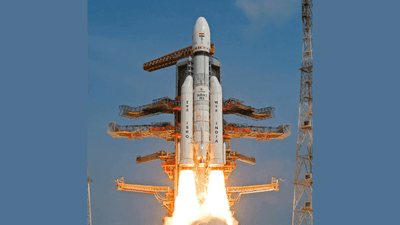
BlueBird-6: 6.5 t US Low-Earth Orbit communication satellite to be launched from SDSC-Sriharikota on 15 Dec

Launch Vehicle Mark-3 (LVM3): India’s three-stage heavy-lift rocket, baseline for Gaganyaan human flights

Mission delivers next-gen AST SpaceMobile constellation offering direct-to-device mobile broadband worldwide

Quick Facts for MCQs

Satellite Specifications

  • Mass 6.5 t Block-2 design, 3.5× larger than BlueBird-1-5
  • Antenna 2,400 sq ft phased array delivers 10 GHz bandwidth
  • Service enables intermittent direct-to-device links where terrestrial networks absent

Launch Vehicle Specs

  • Three stages: twin S200 solid, L110 liquid, C25 cryogenic with CE-20 engine
  • Capacity 8 t LEO, 4 t GTO; precise staging S200 sep 137 s, L110 sep 313 s
  • Proven with CMS-3 4.4 t; human-rating modifications underway

International Collaboration

  • AST SpaceMobile becomes heaviest US customer payload on Indian launcher
  • Follows OneWeb missions, strengthening ISRO commercial portfolio
  • Boosts India’s share in global heavy LEO communication launches

Human Spaceflight Plans

  • Human-rated LVM3 for Gaganyaan crewed mission targeted 2027
  • Upgrades include redundant avionics, strengthened structures, crew escape system
  • Current commercial launches supply data for reliability validation

Key Data Points

FeatureData-Point
Satellite mass6.5 tonnes
Orbit plannedLow-Earth Orbit
Antenna area≈2,400 sq ft phased array
Bandwidth per satUp to 10,000 MHz
Block-2 vs Block-13.5× size, 10× data capacity
Launch date15 Dec (tentative)
Launch siteSatish Dhawan Space Centre
Vehicle height43.5 m
Lift-off mass640 tonnes
Fairing diameter5 m
LEO payload8,000 kg
GTO payload4,000 kg
Strap-on boostersTwo S200 solid, 204 t propellant each
Core stageL110 liquid, twin engines
Upper stageC25 cryogenic, CE-20 engine
GTO injection time~974 s post-lift-off

Related UPSC Prelims PYQs

GEO_GS, GS1 2026PYQ 1

Consider the following statements:

GEO_GS, GS1 2018PYQ 2

भारत के उपग्रह प्रक्षेपित करने वाले वाहनों के संदर्भ में, निम्नलिखित कथनों पर विचार कीजिए :

GS-2International Relations

10.Bangladesh July National Charter Reforms (Bangladesh Reforms)

The Print
Illustration for Bangladesh July National Charter Reforms (Bangladesh Reforms)

What & Where

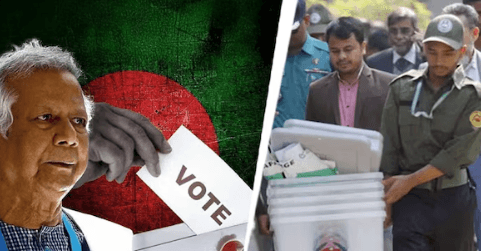
July National Charter: 28-point political declaration for democratic reforms after July 2024 mass uprising in Bangladesh.

Process: To be ratified by referendum alongside 13th general election on 12 Feb 2026, then enacted via constitutional amendments.

Geography: Drafted nationwide under interim govt of Muhammad Yunus with consensus of ~30 political parties.

Quick Facts for MCQs

Legal & Policy

  • Mandates constitutional, electoral, administrative, judicial overhauls via amendments, revised laws, new acts.
  • Provides legal safeguards to prevent reform reversal and ensure uninterrupted implementation.
  • Envisions full constitutional protection for every Charter clause.

Political Stakeholders

  • Backed by multi-party consensus; 30 parties participated, signalling broad societal buy-in.
  • Seeks to restore electoral integrity and rebuild public trust post-Hasina era.
  • National Consensus Commission monitors adherence and timelines.

Implementation Mechanism

  • Reforms to commence once elected govt takes oath; must finish within two years.
  • Binding timeline embedded in Charter; delay would breach constitutional safeguard.
  • Referendum outcome will grant direct popular mandate, strengthening enforceability.

Significance

  • Marks Bangladesh’s shift from perceived authoritarianism to participatory governance.
  • Potentially reshapes political architecture, boosts judicial independence, tightens anti-corruption mechanisms.
  • Serves as foundational text for post-crisis nation-building and democratic consolidation.

Key Data Points

FeatureData-Point
Referendum & election date12 February 2026
Reform document length28 points
Reform completion targetWithin 2 years of new govt
Interim leader during draftingMuhammad Yunus
Political parties supporting25–30
Oversight bodyNational Consensus Commission
Historic event recognisedJuly 2024 pro-democracy uprising
Safeguard promisedConstitutional protection of Charter provisions
GS-3SecurityQuick Bite

11.DSC A20 Indigenous Diving Support Craft (Naval Craft)

PIB
Illustration for DSC A20 Indigenous Diving Support Craft (Naval Craft)

What & Where

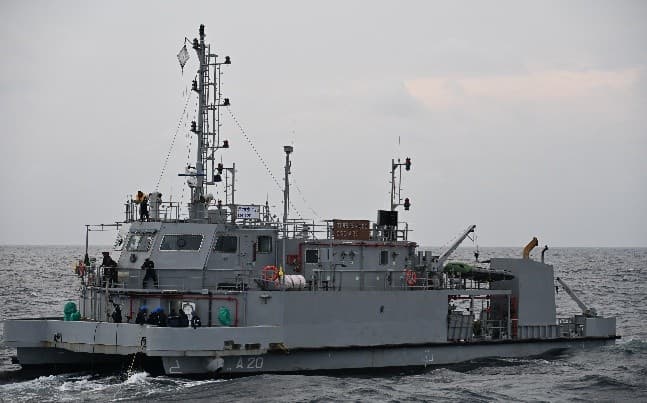
Purpose-built Diving Support Craft (DSC) A20 for underwater diving, inspection, repair and salvage operations.

Commissioned by Indian Navy at Kochi; to serve Southern Naval Command’s coastal duties.

First indigenously designed DSC; lead vessel in a planned five-craft series.

Quick Facts for MCQs

Technology & Design

  • Catamaran hull provides high stability, larger deck space, improved seakeeping.
  • Advanced diving systems meet highest safety and operational standards.
  • Hydrodynamic modelling executed at NSTL Visakhapatnam for performance validation.

Indigenous Manufacturing

  • Aatmanirbhar push enabled full design–build process within India.
  • TRSL constructed craft under Indian Register of Shipping naval rules.
  • Industry-research-Navy collaboration marks private sector entry into naval platforms.

Operational Significance

  • Southern Naval Command gains dedicated platform for coastal diving and salvage missions.
  • Rapid underwater inspection and repair capability reduces warship downtime.
  • Enhanced coastal security strengthens deterrence and maritime readiness.

Key Data Points

FeatureData-Point
DeveloperTitagarh Rail Systems Ltd, Kolkata
Displacement≈ 390 tonnes
Hull formCatamaran
Series size5 Diving Support Crafts
ClassificationNaval Rules & Regulations, Indian Register of Shipping
Testing agencyNSTL, Visakhapatnam (hydrodynamic & model tests)
Core tasksDiving, underwater inspection, repair, salvage
Primary commandSouthern Naval Command, Kochi

Related UPSC Prelims PYQs

CDS_GK, GS1 2024PYQ 1

Which one of the following statements about 'INS Tarmugli' is not correct?

CDS_GK, GS1 2016PYQ 2

Which one of the following is the best description of 'INS Astradharini', that was in the news recently?

GS-2Scheme

12.MGNREGA Revival for Rural Employment (MGNREGA)

Business Standard
Illustration for MGNREGA Revival for Rural Employment (MGNREGA)

What & Where

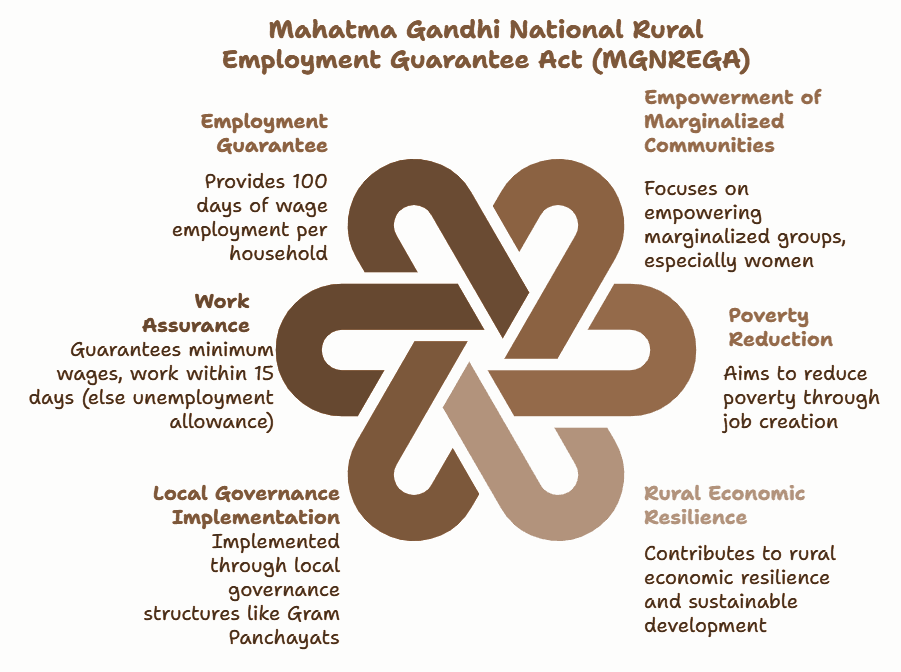
MGNREGS: statutory guarantee of 100 paid workdays per rural household; flagship of Ministry of Rural Development.

Centre resumed fund flow to West Bengal after 3-year Section 27 freeze triggered by corruption findings.

Scheme executed chiefly through Gram Panchayats across India.

Quick Facts for MCQs

Governance & Oversight

  • Section 27 invoked 2022; ₹7,500 cr withheld in WB for ghost cards, material diversion.
  • Fund restart conditional on 100 % e-KYC, APBS wage credit, quarterly labour-budget reviews.
  • District Magistrates act as Programme Coordinators ensuring transparency, audits, grievance redress.

Implementation Gaps

  • ABPS glitches and bank mismatches cause chronic wage delays; penalty rarely reaches workers.
  • Social audits ritualistic; retaliation fear plus weak auditor training mute irregularity exposure.
  • Assets often short-lived; earthwork bias and absent maintenance curb long-term usefulness.

Tech & Reforms

  • Mandatory geo-tagged photos; video evidence proposed for high-value works to curb misreporting.
  • Machine-learning and blockchain pilots suggested for anomaly detection and tamper-proof direct payments.
  • Recommendations: block-level technical cells, demand-based budgets, 10-15 % district contingency funds.

Key Data Points

FeatureData-Point
Launch year2005
Legal baseMGNREGA Act, 2005
Guaranteed employment100 days (+50 in disaster blocks)
Funding split100% unskilled wage Centre; 75:25 material Centre:State
Women quota≥33 % workers
Wage delay penalty0.05 % per day after day-15
Panchayat mandate≥50 % works via Gram Panchayat
Section 27 powerCentre may halt funds on misuse

Related UPSC Prelims PYQs

CDS_GK 2022PYQ 1

Which one of the following statements with regard to the National Rural Employment Guarantee Act, 2005 is correct?

CDS_GK 2020PYQ 2

मनरेगा (MGNREGA) का उद्देश्य निम्नलिखित में से कौन-सा एक नहीं है?

GS-2Scheme

13.UMEED Portal for Waqf Property Management (Waqf Management)

PIB

What & Where

UMEED Portal – central digital system for registration, geotagging and oversight of Waqf properties

Coverage – all States/UTs under Ministry of Minority Affairs, Government of India

Process – six-month authenticated-data upload ended 6 Dec 2025; non-compliant cases deemed disputed

Quick Facts for MCQs

Tech & Schemes

  • Centralised database replaces error-prone WAMSI ensuring single source of truth
  • Auto-flagging of duplicates and GIS mapping improves property traceability
  • Built-in legal awareness tools guide mutawallis and beneficiaries

Legal & Policy

  • Amended Act directs tribunals to examine all late or disputed entries
  • Waqf assets barred from sale, inheritance or transfer maintaining perpetual dedication
  • Women, children, EWS remain eligible despite ownership naming restrictions

Social Concerns

  • Digitisation expected to curb encroachment and mismanagement of community assets
  • Ownership safeguard prevents coercive conversion of women’s property into waqf
  • Transparent records aimed at equitable access for poorer beneficiaries

Key Data Points

FeatureData-Point
Launch date6 Jun 2025
Implementing ministryMinority Affairs
Data-upload window6 Jun – 6 Dec 2025
Old WAMSI disabled8 May 2025
Post-deadline statusFlagged disputed; sent to Waqf Tribunal
Registration dataPrecise area + GIS coordinates mandatory
Women-owned property ruleCannot be declared Waqf; women still beneficiaries
Waqf naturePerpetual charitable endowment; inalienable
GS-1Social Issues

14.Childcare Infrastructure for Economic Growth (Early Childhood Care)

Indian Express

What & Where

Childcare: organised early nutrition, learning, safety support via Anganwadis, crèches, preschools, community systems

Coverage: 1.4 million Anganwadi centres serve ≈23 million children across India

Urban focus: only 10 % centres fully functional in cities, deep gaps in migrant belts

Quick Facts for MCQs

Economic Angle

  • Growth-lever: childcare tagged soft infrastructure essential for 8–10 % GDP growth ambition
  • Productivity: reliable care raises female labour supply, cuts absenteeism across sectors
  • Demography: early investment vital as several states slip below replacement fertility

Gender Gap

  • Workload: women 426 vs men 163 daily unpaid-care minutes
  • Dropouts: missing childcare pushes mothers to reduce hours or exit paid work
  • Valuation: gendered care burden entrenches wage and leadership gaps

Schemes & Innovations

  • ICDS: nutrition, preschool, health services, world’s largest childcare programme
  • Poshan Tracker: digital guidance on stimulation, feeding for parents and workers
  • State tweaks: Tamil Nadu doubles preschool hours; Telangana raises honorarium; Meghalaya, Chandigarh deploy interns

Challenges

  • Wages: Anganwadi staff low pay, scant training, absent career ladders
  • Urban deficit: city centres scarce, overcrowded, time-restricted
  • Funding: India lags Scandinavia’s 1–1.5 % GDP childcare investment

Way Forward

  • Mission: propose unified National Early Childhood Care Mission for convergence
  • Spending: target ≥1 % GDP, upgrade centres to full-day with para-professionals
  • Hybrid model: mix community crèches with digital parent-support for first 1,000 days

Key Data Points

FeatureData-Point
ICDS launch year1975
Anganwadi centres1.4 million
Children reached23 million
Women unpaid care work426 min/day
Men unpaid care work163 min/day
Care‐worker pay band₹8,000–₹15,000 per month
Public ECCE spend0.4 % of GDP
Fully functional urban Anganwadis10 %
Palna crèches operational2,500 of 10,000 approved
Brain development window80 % by 1,000 days

Related UPSC Prelims PYQs

CDS_GK, GS1 2023PYQ 1

‘पोषण मुक्त भारत अभियान’ के अंतर्गत की जा रही व्यवस्थाओं के संबंध में, निम्नलिखित कथनों पर विचार कीजिए :

CDS_GK, GS1 2025PYQ 2

NEP 2020 के दिशा-निर्देश के अनुसार, 'पोषण और पढ़ाई पूर्व' (PPBP), निम्नलिखित में से किस कार्यक्रम के अंतर्गत प्रारंभ की गई है?

Ready to practice?

Test your knowledge with our UPSC test series.

Start Free Trial